Streamlight Strion Battery Lithium Review: Conditional Buy
The loudest “wow” moment wasn’t about brightness—it was survival: a duty-used Strion® LED reportedly sat “for over two months in snow, water and sub-zero temperatures,” then after drying and charging was “good as new!” That kind of field story is why the Streamlight Strion Battery Lithium earns a conditional thumbs-up for people already invested in the Strion ecosystem. Verdict: Conditional buy — 7.8/10.
Quick Verdict
For Strion owners, the lithium replacement battery is mostly about keeping a proven work light in service—fast swaps, less downtime, and staying compatible with existing cradles. The strongest praise is “OEM peace of mind,” while the most persistent complaints orbit longevity expectations and proprietary limitations.
| Decision | Evidence | Who it fits |
|---|---|---|
| Conditional Yes | OEM replacement “made by Streamlight” | Duty/work users already on Strion chargers |
| Watch-outs | Some buyers flag “runs down quickly” behavior | Infrequent users expecting months-long standby |
| Value call | Ratings are strong (4.7/5 shown for the battery listing) | People who’d rather pay for OEM consistency |
| Ecosystem benefit | “Fit into the already existing charging stations” | Shops with multiple Strion lights/bays |
Claims vs Reality
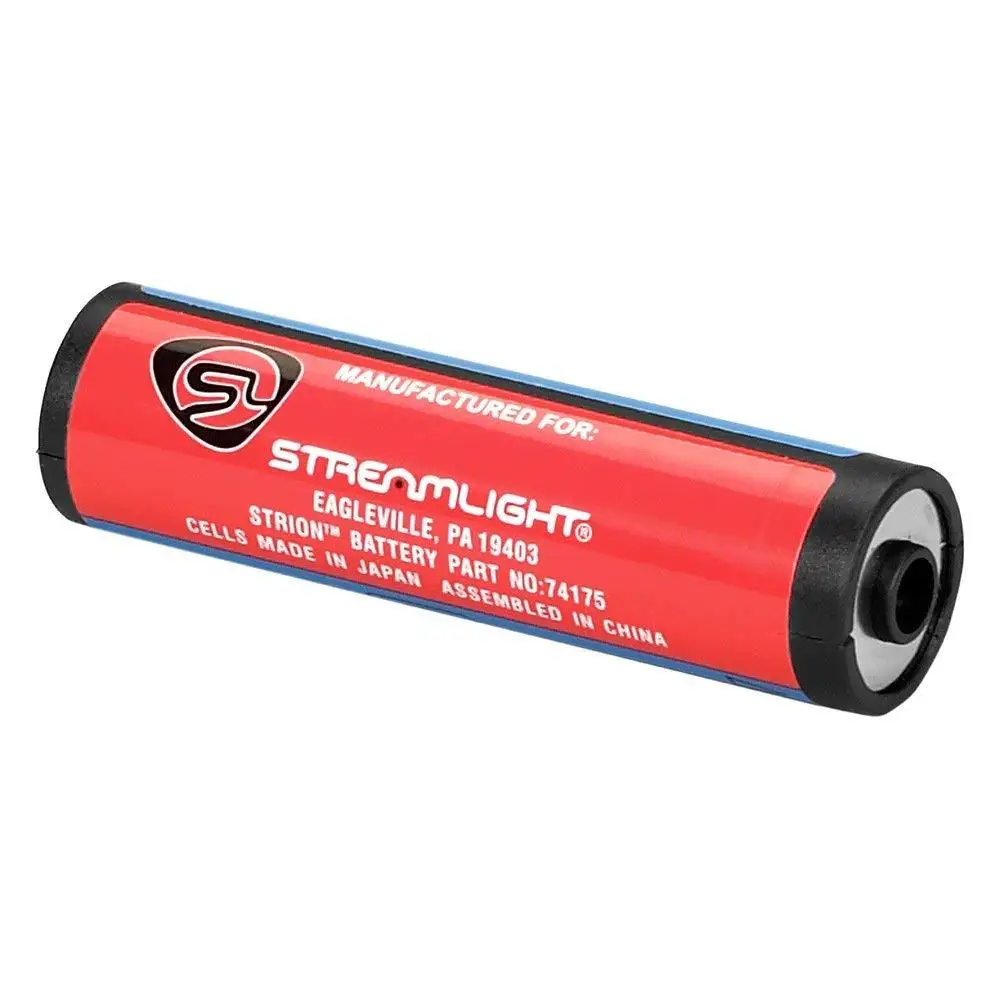
Streamlight positions the Strion family as compact, professional, and “rechargeable up to 1000 times” (for certain Strion Li‑ion packs and light packages), and the battery listing frames the Streamlight 74175 as the “original battery made by Streamlight.” Digging deeper into user reports, the “OEM” claim aligns with what buyers want most: confidence that the battery won’t cause weird behavior or charger incompatibilities.
On Amazon’s Strion battery listing, shoppers are explicitly buying it as “replacement batteries only for the strion rechargeable flashlight,” and it’s presented as the official part (“original battery made by streamlight”). That matches the community mindset: reliability over experimentation. In the Streamlight Strion collection thread, one Reddit commenter criticized “the 2600mah proprietary battery,” wishing for a standard “3500mah 18650,” which underscores the reality: users may accept OEM batteries, but they don’t always love the proprietary format.
Where the story gets messy is runtime expectations. Official Strion LED specs tout multi-hour run times depending on mode, but real-world use varies. One OpticsPlanet reviewer complained: “battery ran down before i used it after charging foe several days… runs down quickly!!” That doesn’t directly prove the battery itself is faulty—it could be storage conditions, age, or parasitic drain expectations—but it does show a gap between “I charged it” and “it’s still topped off when I need it.”
Cross-Platform Consensus
Universally Praised
A recurring pattern emerged around the reason people pay for the OEM Strion battery: it’s about keeping a work tool predictable. In maintenance and industrial settings, downtime is the enemy. In a Reddit work-use post about Streamlight gear, one user described how their lights “held up to the constant abuse of being covered in oil and chemicals or dropped.” While that post isn’t solely about the battery, it’s exactly the kind of environment where a spare charged pack matters: when the light body survives, the battery becomes the consumable that keeps the system alive.
Compatibility stories show up as a practical “ecosystem win.” The same Reddit user emphasized that Strion-type devices “fit into the already existing charging stations we have,” and also praised newer charging convenience: “or just use usb-c which is awesome!” For shop managers and fleet users who already have cradles mounted, the battery’s value isn’t theoretical—it’s continuity. The battery swap becomes part of routine tool readiness rather than a new workflow.
Long-term durability narratives indirectly elevate the battery’s role. The standout Streamlight community story (shared via an X/Streamlight press-style post) came from a K9 handler who lost their Strion LED in harsh conditions. They reported finding it later with “water in the lens,” cleaning it, charging it, and it returned “good as new!” That doesn’t isolate the battery as the hero, but it supports why owners stick with the platform: if the light can survive that, spending on the correct battery feels rational.
Even among enthusiasts, there’s evidence of appreciation for performance consistency. In the Strion collection thread, one user praised an older Strion LED for a “flat performance curve and a 2 hour runtime,” connecting satisfaction to predictable regulation. For users who care about stable output, the battery is part of that promise—less about peak output, more about reliable delivery.
Summary (after the stories):
- OEM fit/charger compatibility is a major driver (Amazon specs; Reddit shop charging-station story).
- Durability narratives make owners more willing to refresh batteries rather than abandon the platform (Streamlight community/X story; Reddit “decade” use case).
- Predictable runtime regulation matters to enthusiasts and professionals (Reddit “flat performance curve” remark).
Common Complaints
The most consistent tension isn’t that the battery “doesn’t work”—it’s that owners feel boxed into a proprietary pack. In the Strion collection thread, a Reddit commenter said they “hate the 2600mah proprietary battery,” arguing that a common 18650 would “stretch all of the runtimes considerably.” That’s a battery complaint framed as a design philosophy critique: people want more capacity and standardization, and some resent paying premium prices for a format they can’t easily replace with off-the-shelf cells.
Another complaint theme is real-world readiness versus theoretical runtime. On OpticsPlanet’s Strion reviews page, a frustrated reviewer wrote: “battery ran down before i used it after charging foe several days… runs down quickly!!” For infrequent users—say, someone who charges a flashlight and expects it to be “ready weeks later”—that kind of experience is confidence-shaking. It also hints at expectations mismatched to how Li‑ion packs and electronic switches behave in storage.
Heat and sustained high-output use also appear in community talk, which can affect battery satisfaction. In the Reddit work-light discussion, a commenter noted: “it usually lasts about 2-3 hours straight on high but it does get pretty hot.” While that’s about a different Strion-type light bar, it points to a common dynamic: long high-output sessions can create heat, and heat is where users start thinking about battery longevity, safety circuits, and whether their pack is aging faster than expected.
Summary (after the stories):
- Proprietary format frustration is real (Reddit: “hate the 2600mah proprietary battery”).
- Standby/holding-charge expectations vary; some report disappointment (OpticsPlanet: “runs down quickly!!”).
- High-output heat becomes part of the battery conversation for heavy users (Reddit: “does get pretty hot”).
Divisive Features
One divisive point is interchangeability across Strion generations and “higher capacity” packs. In the Strion collection thread, a user asked whether batteries were interchangeable, noting retailers “hinted you can’t use the 2020’s battery with older lights.” The reply pushed back: “fully interchangeable,” adding that marketing seems to frame the new battery as “for the 2020 only,” but “the only difference… is a higher capacity base cell.” For buyers, this matters because it determines whether upgrading a battery is a smart investment across multiple lights—or an expensive dead-end tied to one model year.
Another split is how people value OEM versus third-party. The Amazon listing positions the Streamlight pack as the safe choice—“original battery made by streamlight.” Meanwhile, in the “Streamlight Strion LED Battery” blog-style content, the author explicitly argues generic packs can be “subpar performance or even damage,” reinforcing the emotional appeal of OEM. That’s not the same as verified user feedback, but it mirrors the logic buyers use: pay more, worry less.
Trust & Reliability
Scam anxiety didn’t surface strongly in the provided sources, but trust issues did—just in a different direction. The harshest trust break was about service, not performance. On OpticsPlanet, one negative review complained: “Very dissatisfied with customer service,” alleging that because the user engraved initials on the flashlight, Streamlight “considered it used and would not replace it.” That kind of story can influence whether buyers choose OEM batteries: if warranty interactions feel unpredictable, some users may hesitate to keep investing in official parts.
On the durability front, long-term ownership stories lean heavily positive, suggesting many people keep these lights—and by extension their batteries—working for years. A reviewer on OpticsPlanet wrote: “i absolutely love this flashlight… it has served me well for years!!” Another said a Strion bought “a few years ago… is still working as well as day one.” For battery buyers, that points to a likely reality: the light body may outlast multiple battery cycles, making replacement packs a normal maintenance cost rather than a failure.
Alternatives
Competitor talk in the provided data mostly stays inside Streamlight’s own ecosystem rather than pushing other brands. Owners compare Strion choices to the Streamlight Stinger and newer Strion 2020 updates. One OpticsPlanet reviewer mentioned owning “a streamlight stinger” and described the Strion as “very durable and very bright,” implying the Strion form factor wins on carry comfort for some users.
Capacity comparisons also show up in enthusiast discussions. A Reddit commenter welcomed the “2020 battery” as “a nice update,” and another noted “3450mah battery is a nice update.” For buyers focused on battery value, the most meaningful “alternative” may simply be choosing a Strion model/battery generation that better matches their runtime needs—while staying compatible with existing chargers.
Price & Value
Pricing signals vary by item type, but the narrative is consistent: OEM parts cost more, and users often accept it for predictability. The Amazon battery listing shows the Streamlight 74175 priced around the low-$20s in the provided snippet, and it carries a strong rating (4.7/5 shown). That’s the core value proposition: a relatively modest spend to refresh a premium flashlight system.
Resale value cues come indirectly through eBay flashlight listings (Strion DS HL shown at a high asking price) rather than battery-specific resale. For battery buyers, that suggests the ecosystem retains value—people still pay for Strion lights—so maintaining your light with a fresh OEM pack can feel less like “throwing good money after bad” and more like preserving a tool that holds its place in the market.
Buying tips from the community also point toward operational efficiency. The shop-use Reddit post praised the ability to use existing charging stations, and Streamlight’s own spec language highlights “piggyback” style spare-battery charging concepts for some Strion packages. In practice, the “pro move” for heavy users is often to keep one battery in the light and one in rotation—minimizing downtime rather than chasing maximum lumen-hours per dollar.
FAQ
Q: Is the Streamlight Strion lithium battery (74175) an OEM replacement?
A: Yes. The Amazon listing describes it as an “original battery made by streamlight” and “replacement batteries only for the strion rechargeable flashlight.” Buyers typically choose it for predictable fit and charger compatibility rather than experimenting with third-party packs.
Q: Do Strion batteries work across different Strion models (including 2020)?
A: Some users say yes. In a Strion collection discussion, one Reddit user answered “fully interchangeable” when asked about using the 2020 battery in older lights, adding that retailers may market the higher-capacity pack as “for the 2020 only” despite appearing compatible.
Q: Will a charged Strion battery hold its charge for days or weeks?
A: Not always, based on user reports. One OpticsPlanet reviewer complained the “battery ran down before i used it after charging foe several days” and said it “runs down quickly.” That suggests standby expectations vary and some users experience faster-than-expected self-discharge.
Q: Is the Strion battery proprietary, and do users dislike that?
A: Yes, and some do. A Reddit commenter said they “hate the 2600mah proprietary battery,” wishing for a standard “3500mah 18650.” Others accept the proprietary pack as part of the Strion ecosystem because it keeps chargers and fit consistent.
Q: Does durability in harsh conditions show up in real stories?
A: Yes. A duty user story shared via Streamlight’s community press page reported a Strion LED sat “over two months” in snow and water, then after cleaning and charging was “good as new!” That supports the broader reputation that keeps owners buying replacement batteries.
Final Verdict
Buy if you’re a Strion owner who depends on charger compatibility and wants the lowest-risk way to keep a work light running—especially in shops and duty environments where, as one Reddit user put it, these lights “held up to the constant abuse.” Avoid if your top priority is standardized cells and maximum capacity per dollar, because some enthusiasts explicitly “hate the… proprietary battery.” Pro tip from the community: keep a spare pack rotating so your light is always ready, because downtime is the real enemy.