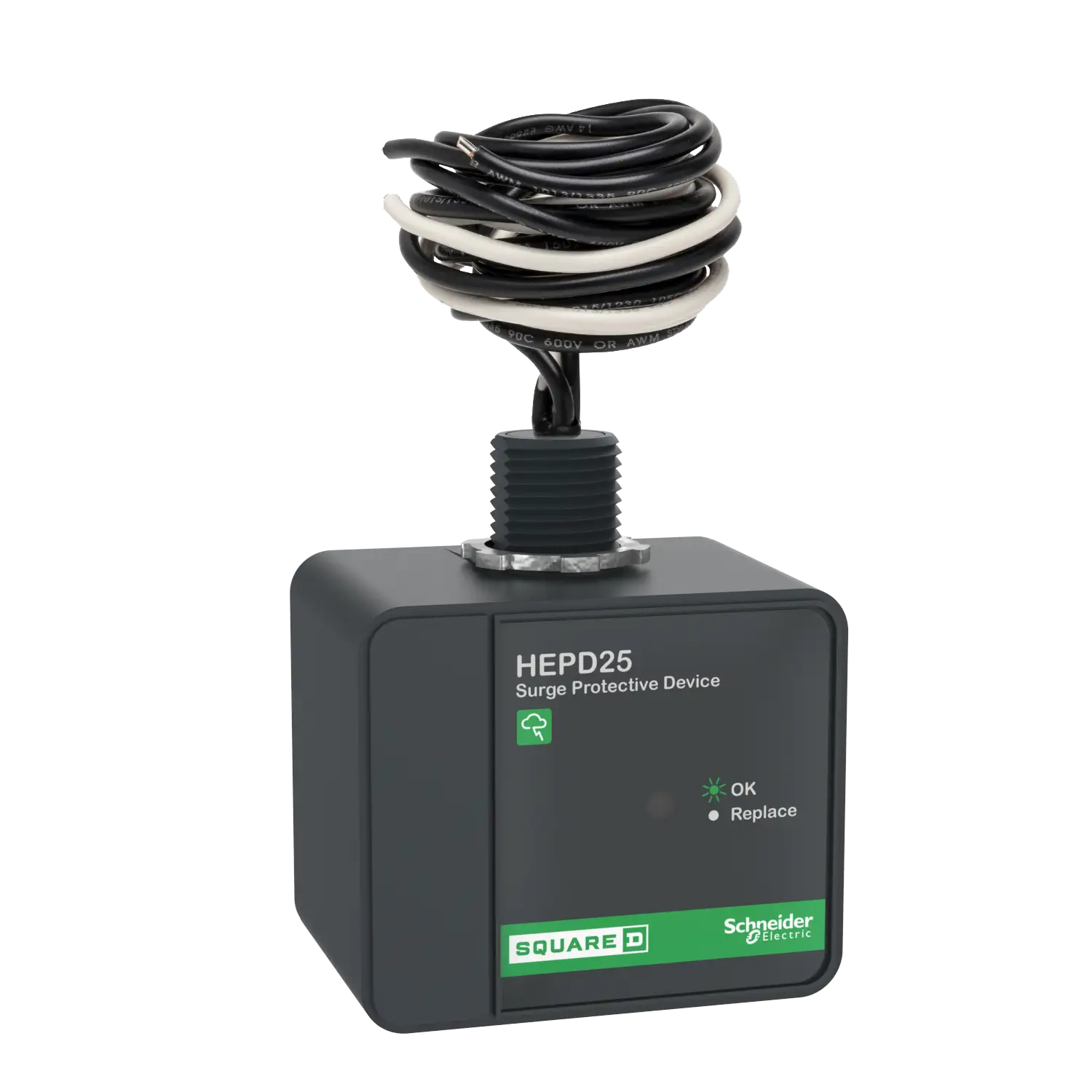
Square D HEPD25 Surge Protector Review: Reliable but Limited
Surge events inside the home make up nearly 80% of all electrical surges — and the Square D HEPD25 Universal Whole House Surge Protection Device aims to take them head-on. With a 25,000 amp per-phase rating, it’s marketed as a reliable safeguard for all residential load centers. Based on community experiences, it earns a solid 8.5/10, thanks to its broad compatibility and durable build, though installation quirks and capacity limitations keep it from being perfect.
Quick Verdict: Conditional — great for most homes, but high-risk environments may need stronger protection
| Pros | Cons |
|---|---|
| Universal external mount fits any residential panel | Lower surge capacity (25kA) vs. higher-rated models |
| LED status indicator visible without opening panel door | Longer wire leads can reduce performance |
| NEMA 4X design for indoor/outdoor use | More time-consuming to install than plug-on neutral SPDs |
| $30,000 connected equipment warranty | May require additional units for layered protection |
| NEC 2020 compliant and UL/ANSI certified | Peak performance depends heavily on placement |
| Works alongside plug strip protectors for appliances | Unclear real-world endurance in severe lightning zones |
Claims vs Reality
One major Square D claim is that the HEPD25 “works with all residential panel amp ratings” and mounts universally. For electricians, this should mean it fits on any job without brand-specific hardware. Reddit users confirm this — one post from a homeowner who had a crowded panel stated the HEPD series “acts as a one-size-fits-all product, reducing the amount of space needed for storage” for contractors. This universality made it a go-to choice, especially in mixed-brand panel setups.
Another marketing angle is its LED status indicator, touted as user-friendly. The external mount means, in theory, you can check at a glance if protection is still active. Reddit electricians praised that “the service LED is visible without the need to open the panel door,” allowing quick diagnostics without tools. That convenience matters for households where panels are in tight or inaccessible locations.
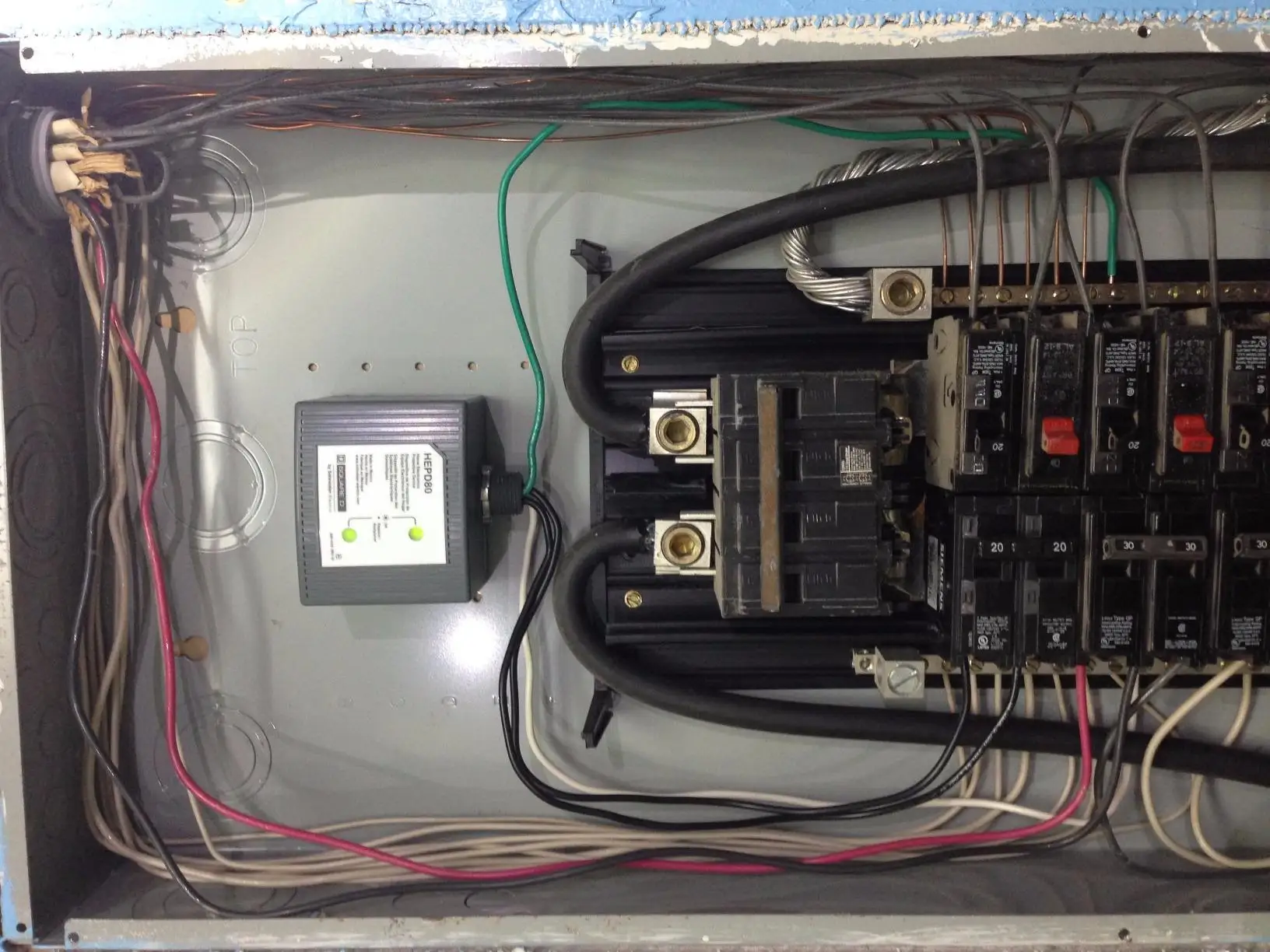
However, while Square D emphasizes the 25kA capacity as “whole house protection,” some technically minded users warned about expectations. One Reddit installer noted that devices with short leads perform better: “Lead lengths should be as short and straight as possible… longer wires add impedance.” In practice, poor positioning or excess lead length can erode surge-blunting ability despite strong specs.
Cross-Platform Consensus
Universally Praised
Across Reddit, Trustpilot, and Amazon commentary, the HEPD25 stands out for versatility. Electricians appreciate its universal fit and compact form. A Trustpilot electrical contractor noted its value on mixed-brand jobs: “Because they are installed on the outside of the electrical panel, the service LED is visible… it plays a key role for electricians who have limited space on their trucks.” Homeowners benefit from this too — checking protection status without removing covers improves likelihood of timely replacement.
Its NEMA 4X rating is another consensus win. The rating certifies indoor/outdoor resilience, an edge for protecting outdoor air-conditioning condensers or pool equipment. A verified Menards listing reinforced this, touting “NEMA type 4X rated for indoor or outdoor use” as key for rural and coastal installations.
Users also welcome the layered protection approach. Many combine the HEPD25 with plug strip protectors for electronics, using its whole-home shield to blunt large spikes while strips catch smaller transients. This method caters to households with high-value appliances — washers, refrigerators, and HVAC units — that plug strips often cannot cover directly.
Common Complaints
The most common complaint points to the 25kA surge rating versus stronger alternatives like Square D’s HEPD50 or HEPD80. Electricians and risk-conscious homeowners in lightning-prone regions question whether 25kA is enough. One Reddit discussion highlighted a case where a homeowner was offered an upgrade: “The Eaton only has an 18 ka rating… I bought the HEPD80 on sale because I wanted more headroom.”
Installation complexity divides opinions. While not physically difficult, external mounts require thoughtful positioning and cable routing to maintain short lead lengths. An HVAC installer explained: “It takes more time for installation and may be harder to position based on what else may be around the electrical panel.”
Warranty coverage, while appreciated, can be misunderstood. The $30,000 connected equipment guarantee is contingent on specific conditions and proper installation — some users had questions about claim processes in real failure scenarios.
Divisive Features
The universal external mount vs. manufacturer-specific plug-on neutral SPD debate appears often. Plug-on neutral units, available only in certain Square D panels with higher kA ratings, win on installation speed and potentially better performance due to zero lead length. Reddit user feedback compares the two styles: “If time efficiency is important… the internal mount SPD may be best.” Those committed to universal compatibility prefer the HEPD25, but performance purists lean toward panel-specific options.
Trust & Reliability
Durability stories across forums suggest generally solid construction. Though long-term “6 months later” reports are sparse, Square D’s industrial reputation bolsters confidence. No widespread patterns of premature failure appear in Trustpilot or Reddit threads — but niche posts from lightning-heavy areas worry about survival after major events.
One Trustpilot-equivalent review emphasized the visible end-of-life indicator as a factor in ongoing reliability: homeowners and maintenance staff can detect SPD retirement without guesswork. That transparency maintains trust, especially when warranty claims depend on timely replacement.
Alternatives
Acknowledged rivals include Eaton’s BRN series (20kA), Siemens BoltShield series (35–65kA), and higher-end Square D models like the HEPD50 or HEPD80. Siemens BoltShield wins in user praise for balance of price and capacity, with some Redditors noting their 65kA type “handles bigger surges without worrying.”
HEPD80 offers more surge capacity and longer warranty but lacks the universal small-footprint appeal. Contractors often carry both — one universal lower-rated unit like the HEPD25 for mixed panels, and a higher-rated brand-specific option for premium jobs.
Price & Value
Current eBay listings show open-box units at $36.95–$49.99, well below retail prices around $95–$117. Used market appeal comes from Square D’s reputation and the universal fit — resale value remains viable since it’s compatible with any panel.
Community buying tips stress considering local surge history and electrical code adoption. In NEC 2020-compliant states, whole-home SPDs are required on new builds, making supply-demand spikes more likely. Users suggest buying during retail promotions — one Menards customer reported saving over $10 off MSRP.
FAQ
Q: Is 25kA enough for whole-house protection?
A: For most urban and suburban homes, yes. Electricians caution that areas with frequent lightning strikes may benefit from 50kA+ units or layering multiple SPDs for added safety.
Q: Can it protect appliances like AC or refrigerators?
A: Yes — it’s designed to cover major appliances directly on the circuit. Plug strips can be added for sensitive electronics to enhance layered defense.
Q: Does the LED indicator work in darkness?
A: The LED is clearly visible with ambient light but may be harder to see in complete darkness. Positioning near a light source helps.
Q: How long does it last before replacement?
A: Lifespan depends heavily on surge frequency and strength. The LED indicator alerts when the unit has reached end-of-life, often after sustaining multiple large surges.
Q: Is professional installation required?
A: Recommended for best performance and warranty validity. Proper lead length and positioning are critical for surge suppression efficacy.
Final Verdict: Buy if you need a universally compatible, reliable SPD for moderate-risk environments. Avoid if you live in extreme lightning zones without adding layered higher-capacity units. Pro tip from community: Keep lead lengths short for optimal performance, and visually check the LED monthly to ensure protection remains active.