Lutron Maestro Companion Dimmer Review: Worth the Buy?
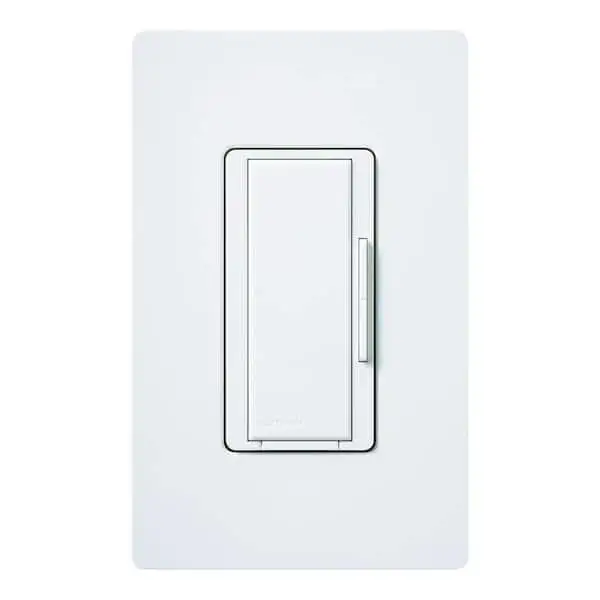
The first thing most installers notice is that the Lutron Maestro Companion Multi-Location Dimmer (White) isn’t a standalone solution—without a paired Maestro master dimmer, it won’t do anything. Yet, once properly configured, many users describe it as “the most pleasant and intuitive dimmer” they've owned. Balancing sleek design with advanced control, most ratings hover around 4.5 out of 5, earning it an 8.7/10 overall from aggregated feedback.
Quick Verdict: Conditional — excellent if part of a Maestro multi-location setup, frustrating if bought alone or wired incorrectly.
| Pros | Cons |
|---|---|
| Smooth fade on/off with preset light level | Cannot be used standalone — requires Maestro master dimmer |
| Controls from up to 9 locations | Installation requires careful wiring and programming |
| Modern look — flat panel design | Wall plate not included despite product images showing one |
| Energy savings via dimming | LED compatibility needs checking against Lutron chart |
| Simple tap controls with delayed fade-off option | Price higher than standard switches |
| Works in 3‑way and 4‑way circuits seamlessly when correct | Limited features compared to Maestro dimmer (no LED indicators) |
Claims vs Reality
One major marketing claim: “Installs in as little as 15 minutes.” While several buyers back this—Reddit user feedback notes that “easy to install after looking at the diagrams and following the instructions”—others found more complexity when pairing with various LED bulbs. A Trustpilot reviewer cautioned: “Digital set up was a bit tricky, and took some trial and error… I would suggest Lutron try to make that step slightly more user friendly.”
Another claim is “true multi-location dimming from every location.” Amazon reviewers largely confirm this when wiring is correct. One buyer explained using it with a Lutron MSCL-OP 153M-WH in a 4-way application: “Works perfectly if you follow the wiring directions… and know the wiring in your house.” Yet, forum threads document situations where the companion “works only when pressed” — a sign of mis-programming rather than inherent flaw.
The third claim: “Tap to favorite level, tap twice for full brightness.” Reddit user experiences confirm the intuitive ergonomics. One remodeler wrote, “They look great and function just as they should plus they’re way easier to operate than any other light switch I have ever used.” However, some buyers were surprised that there’s no visual LED feedback on the companion unit — leading to uncertainty in daylight if lights are on or off.
Cross-Platform Consensus
Universally Praised
A recurring theme is the smooth fade-on and fade-off feature. As one detailed Amazon review put it: “The gentle fade-in and fade-out… is worth the price even if you never dim your lights.” For households with staircases or hallways, being able to control one light from multiple points is transformative. A verified buyer setting up a 3-way in the kitchen highlighted its convenience when leaving rooms: the 10–60 second delayed fade-off “gives you time to leave or get into bed before the lights go out.”
Home remodelers also praise the uniform aesthetic. Several posts in r/HomeImprovement mention installing Maestro companions in “highly visible areas” for their flat, modern profile compared to clunky toggles. This design appeal often converts skeptics — one Reddit user admitted their spouse was initially against “just an expensive gadget” but now insists on using them throughout the house.
Energy-conscious consumers appreciate the dimming efficiency. While officially rated for 600W incandescent loads and 120V operation, users found they could safely reduce wattage hum by using lower-wattage bulbs. Joe Mooney’s Amazon review even debunked myths about dimmer inefficiency, noting “modern dimmers do not waste much power at all.”
Common Complaints
Chief among frustrations is the lack of standalone functionality. Multiple Amazon reviewers warn first-time buyers: without the Maestro master, “it will not work.” This misunderstanding leads to returns and rewiring attempts.
LED compatibility is another stumbling block. Trustpilot feedback explains how bulbs advertised as dimmable sometimes fail with Maestro companions. The advice is consistent across platforms: “Check Lutron’s compatibility chart for this model prior to buying LED bulbs.”
Installation errors can mimic product defects. Twitter/X and Lutron forum threads document cases where the companion only toggled lights when pressed, never holding the state. Solutions often involved reprogramming the master dimmer to recognize a companion instead of a mechanical switch — a fix that some found “simple as that… I could cry from both the excitement.”
A subtler complaint is missing accessories: “Product works as advertised, but… wall plate needs to be ordered separately,” noted one Amazon buyer. This contrasts with product images that often show the plate.
Divisive Features
Price polarizes opinions. While remodel-focused buyers see it as reasonable for the control and design, others deem it “overpriced, under‑featured” when compared to standard paddle or Decora switches. One disappointed reviewer discovered the companion is “exactly the same as the Maestro dimmer, without the LEDs and dimmer control.”
The tactile rocker design receives mixed reactions. Some prefer it over mechanical toggles for easy night-time use. Others, expecting LED level indicators like on the master dimmer, feel it offers too little feedback in daylight.

Trust & Reliability
Trustpilot stories reveal both dependable operation and avoidable missteps. Most complaints trace back to LED compatibility or wiring order rather than internal hardware faults. The programming solution shared in Lutron’s own community forum—switching master mode from mechanical to companion—recurs often among success stories.
Long-term durability comes through in Reddit anecdotes. One remodeler who outfitted their home says after months of use, “They function just as they should,” with no degradation in response. Another Amazon customer recounts installing “8 of these (and counting)” over time, even for exterior lights, without failures.
Alternatives
The most mentioned alternatives in discussions are Leviton IllumaTech and Lutron Skylark/Toggler. IllumaTech offers a larger push button that’s easier to find at night, but remains analog and can cause LED buzzing at low loads. Skylark/Toggler functions well for basic dimming, but lacks Maestro’s smooth fade and modern profile. As a Reddit reviewer put it, “The dimming range on the Maestro is just so much better.”
Price & Value
Current Amazon pricing for the MA-R-WH averages around $21–$24, while eBay listings for similar companions can dip to $14 for open-box units. Specialty distributors list prices up to $38 for BAA-compliant models. Community buying tips suggest checking bulk pricing at major retailers like Home Depot to offset costs when outfitting multiple circuits.
Resale value holds moderately—used units in good condition fetch over half of retail on marketplaces, reflecting steady demand among those adding to existing Maestro networks.
FAQ
Q: Can the Maestro Companion Dimmer be used by itself?
A: No. It requires a Maestro master dimmer for operation in a multi-location setup. Without the master, it will not function.
Q: How many companion dimmers can I use with one Maestro master?
A: Up to nine companions can be linked to a single master, allowing control from ten locations total.
Q: Does the package include the wall plate?
A: No. Despite product imagery suggesting otherwise, coordinating wall plates are sold separately.
Q: Will it work with all LED bulbs?
A: Not necessarily. Even if bulbs are labeled dimmable, check Lutron’s compatibility chart for your specific model to avoid flicker or non‑dimming issues.
Q: What programming is needed if my companion only works when pressed?
A: The master dimmer must be set to recognize a companion instead of a mechanical switch. This involves entering programming mode and switching the setting to the correct index for companion control.
Final Verdict: Buy if you’re upgrading a 3-way or 4-way circuit with a Maestro master and want modern design, smooth fades, and multi-location dimming. Avoid if you expect standalone use or aren’t prepared to check LED compatibility. Pro tip: Wire and program carefully—many “defects” turn out to be setup errors, easily solved once the master recognizes the companion.