SCHLAGE FE595 Matte Black Review: Great Keyless Pick (8.6)
A reader summed up the whole appeal in one line: “no need to carry keys to enter the house?” That promise sits at the center of the SCHLAGE FE595 Keypad Entry Electronic Lock, Matte Black—a keypad lever/knob that aims to trade daily key-fumbling for simple codes and a fast auto-relock. Verdict: a strong pick for people who want keyless convenience without “smart” features, with a few real-world quirks that show up once you live with it. Score: 8.6/10.
Quick Verdict
The SCHLAGE FE595 Keypad Entry Electronic Lock, Matte Black is a conditional yes: it fits best for households and light offices that want keypad entry plus a choice between auto-lock and “passage mode,” and don’t care about app control or activity logs.
| Decision | Evidence from user feedback | Who it’s for |
|---|---|---|
| Yes | “Installation was pretty simple.” (Trustpilot source) | DIY installers replacing a standard lock |
| Yes | “Batteries will last… 1, 5 + years… very long and satisfactory.” (Reddit community data source: AllSmartLocks user interviews) | Busy families who don’t want frequent battery swaps |
| Conditional | “Passage mode means anybody can open your door… without any codes needed.” (Reddit community data source: AllSmartLocks) | Homes that sometimes need “unlocked” mode |
| No | “There is also no way to know which code was last used… no… logging security feature.” (Trustpilot source) | Anyone who needs audit trails |
| Conditional | “Unfortunately, you can not change time setting for auto lock.” (Reddit community data source: AllSmartLocks) | People who want adjustable relock timing |
Claims vs Reality
Schlage’s positioning is clear: keyless convenience, easy install, flexible locking behavior, and long battery life. Digging deeper into user reports, the reality generally tracks—but the details matter, especially around visibility at night and what “flexibility” really means day-to-day.
Claim 1: “Easy installation… with Phillips screwdriver… installs in minutes.” (Amazon specs)
The strongest alignment between marketing and lived experience is installation. A verified reviewer on a Trustpilot-listed writeup described it in straightforward, DIY language: “Installation was pretty simple. just remove the old lock… connect some wires and plug in the 9v battery.” That kind of step-by-step framing reinforces the “standard door prep” narrative repeated in product listings and specs.
But users also reveal the behavioral risk you don’t see in a spec table: once installed, you can unintentionally lock yourself out while experimenting. The same Trustpilot source cautioned: “You have to be careful not to accidentally lock yourself out when you’re testing things.” For tinkerers and first-time keypad-lock owners, “easy installation” doesn’t automatically mean “easy to understand how it behaves.”
Claim 2: “Flex-Lock… switch between automatic relocking or unlocked as needed.” (Amazon specs / product pages)
Flex-Lock is marketed as a convenience feature; users describe it more like a tradeoff switch. A recurring pattern emerged in the detailed review content: “you might want to disable auto lock but this will activate passage mode… anybody can open your door just by using the lever without any codes needed.” (Reddit community data source: AllSmartLocks). In other words, “flexibility” isn’t multiple nuanced settings—it’s essentially auto-lock vs. unlocked.
That matters for specific households. For parents juggling groceries and kids, passage mode can be a relief. For short-term rentals or shared living situations, leaving the door in a mode where “anybody can open” can feel like a sharp edge. The claim is true, but the “as needed” part depends on how disciplined users are about switching modes back.
Claim 3: “Battery… should last at least 3 years.” (Trustpilot source referencing Schlage claim; Amazon specs reference 9V battery)
While officially framed around multi-year longevity, user narratives suggest two different realities depending on usage frequency. One reviewer wrote: “according to schlage… the battery should last at least 3 years… i’m not sure what normal usage is but if true… would not be annoying.” (Trustpilot source). That skepticism shows up again in the AllSmartLocks writeup, which called Schlage’s 3-year statement “very pretentious,” then added: “if we take the avarage of the replies… you can expect 1, 5 + years battery life.” (Reddit community data source: AllSmartLocks).
The contradiction is less about Schlage being “wrong” and more about context: the Trustpilot source later updated with a low-usage scenario—“i rarely use the lock as the door is left unlocked”—and reported a very long interval before replacement. So, while “3 years” is the headline, real outcomes swing based on whether the lock is a daily entry point or mostly stays in passage mode.
Cross-Platform Consensus
Universally Praised
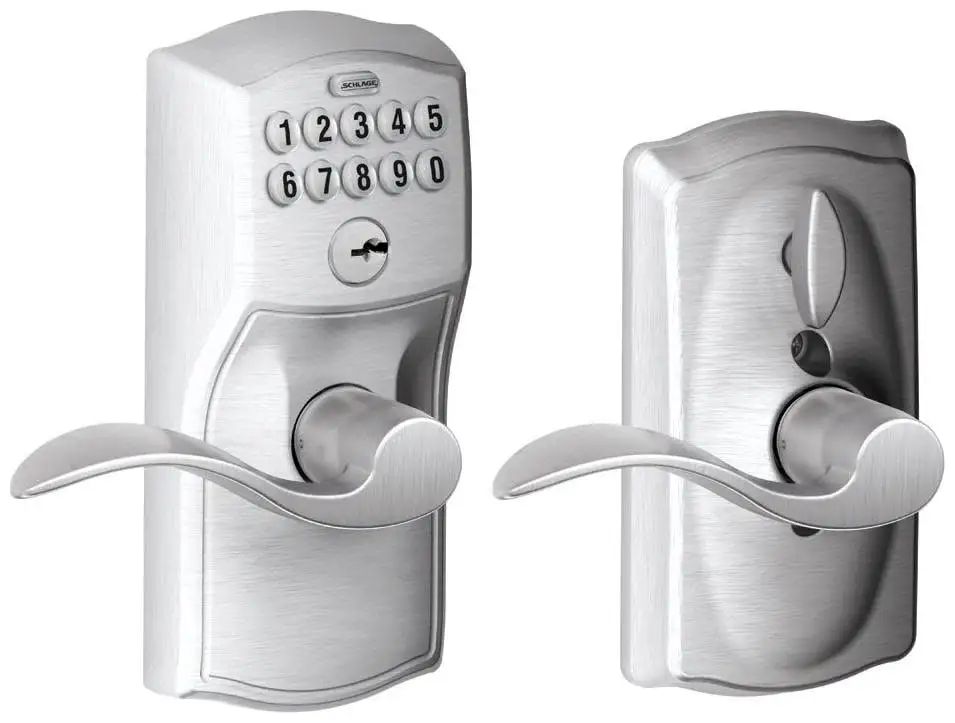
The most consistent praise isn’t flashy—it’s the everyday relief of not managing keys. Multiple sources present the FE595 as a “keyless freedom” device rather than a connected smart lock, and that distinction seems to satisfy the exact audience it targets. A product description in the community data repeats the core appeal: “no need to carry keys to enter the house… just enter your four-digit code.” (Reddit community data source: Schlage NZ product page mirrored). For families, that means fewer “forgot my keys” moments; for side doors and garage entry, it reduces key-copy chaos.
Battery life stories create the strongest confidence over time. The AllSmartLocks writeup reports outreach to users and summarizes the average sentiment: “you can expect 1, 5 + years battery life… very long and satisfactory battery life.” (Reddit community data source: AllSmartLocks). Meanwhile, the Trustpilot source offers a long-horizon anecdote: “update july 2018: i finally had to replace the battery… since 2011… it’s more likely that this is the first time i’ve replaced this battery.” Even with the caveat—“keep in mind, i rarely use the lock as the door is left unlocked”—it’s a durability story that speaks to low-maintenance ownership.
Users also praise the keypad’s usability once you know the “ritual.” AllSmartLocks describes the top Schlage logo button as a key interaction: “to activate the backlit to use at night… as the second function… start re-entering your code if you press a wrong number.” For older users or anyone entering codes in a hurry, that “reset” behavior becomes a practical quality-of-life detail, not marketing fluff.
Finally, the code-management model is repeatedly framed as simple and sufficient for typical households. The Trustpilot source explained: “add new 4 digit passcodes or delete them using a master 6 digit passcode… store up to a maximum of 19 codes.” AllSmartLocks mirrors this: “19 user codes can be programmed… user codes allowed to be with 4 digits only.” For a small office or a multi-person household, 19 codes can cover family, cleaners, dog walkers, and contractors without turning the lock into an IT project.
- Keyless entry relief: “no need to carry keys” (Reddit community data source)
- Long battery life narratives: “expect 1, 5 + years” (Reddit community data source) and “since 2011… first time” (Trustpilot source)
- Practical keypad behavior: “activate the backlit… start re-entering your code” (Reddit community data source)
- Enough code capacity: “maximum of 19 codes” (Trustpilot source)
Common Complaints
Digging deeper into user reports, the biggest frustration is what the FE595 doesn’t do—especially for buyers who subconsciously expect “smart lock” behaviors like logs, adjustable timers, or detailed status feedback. The Trustpilot source spells it out bluntly: “there is no lcd or led display so you have no idea how many codes you have added unless you write everything down.” For property managers and meticulous homeowners, that pushes administrative burden back onto a notebook or spreadsheet.
Related to that is the absence of entry tracking. The same reviewer wrote: “There is also no way to know which code was last used to enter, or any other logging security feature.” That’s not a defect for everyone, but it’s a recurring gap for people comparing it mentally to connected locks. This complaint hits hardest for short-term rental operators, shared households, or anyone who wants to know “who came in and when.”
Night visibility is another issue where user experience diverges depending on whether someone discovers the backlight behavior. The Trustpilot source initially believed: “one thing missing is backlighting on the keys while you are typing… you’d better have a flashlight… in pitch darkness.” Then came a correction through community knowledge: “[a reader commented that by pressing the top logo button, the entire keypad lights up in blue, which i have verified.]” The problem isn’t only hardware—it’s discoverability. If users don’t learn the “press the logo” step, the lock can feel worse at night than expected.
Auto-lock timing draws a similar critique: it’s present and predictable, but not adjustable. AllSmartLocks stated: “auto locking function… activated after 5 seconds… unfortunately, you can not change time setting for auto lock.” For households that want a longer window to get kids through the door, or shorter for security, the fixed timer can become a daily annoyance.
- No usage logs: “no way to know which code was last used” (Trustpilot source)
- No display for admin: “no idea how many codes you have added” (Trustpilot source)
- Night use confusion: “better have a flashlight” vs. “pressing the… logo… lights up” (Trustpilot source)
- Fixed relock: “can not change time setting” (Reddit community data source)
Divisive Features
The Flex-Lock/passsage mode behavior is the most polarizing “feature” because it’s both a convenience and a security posture change. AllSmartLocks frames it clearly: “passage mode means anybody can open your door… without any codes needed.” For some users—like homeowners moving between garage and kitchen repeatedly—this is exactly what they want: fewer keypad entries, smoother traffic flow.
For others, it’s a psychological hazard: a single thumbturn setting can transform an access-controlled door into a freely opening lever. The Trustpilot source even warned about self-lockout risk during testing, hinting at how behavioral complexity can appear after installation. The lock’s design is consistent; the divisiveness comes from how different users value “frictionless entry” versus “always locked by default.”
Trust & Reliability
There’s no prominent pattern of scam allegations inside the provided Trustpilot-linked writeup; instead, the tone reads like a genuine long-term ownership note with an “update” years later. The same source includes purchase context (“got it at osh nearby… saved $50”), installation details, and a multi-year battery update, which collectively reads like organic consumer documentation rather than suspiciously generic praise.
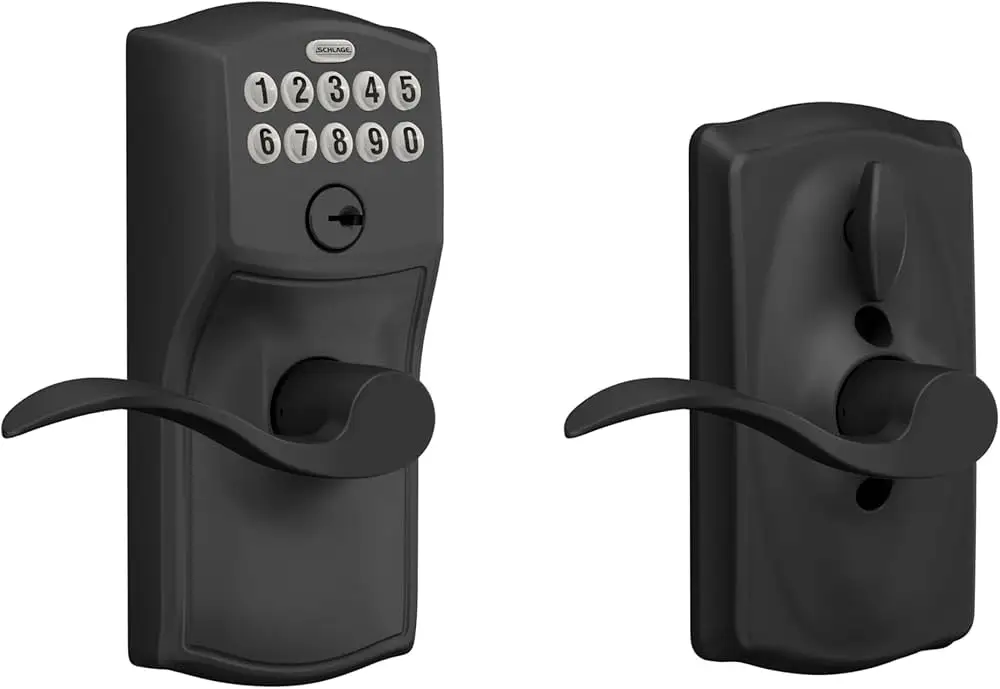
Long-term reliability stories are most compelling around the battery and basic operation. The Trustpilot source said, early on: “so far, i’ve had no problems with it,” then later added the battery replacement update years afterward. On the community-review side, the AllSmartLocks writeup emphasizes stability: “keypad is working very stable as expected,” and it describes wear-resistant design choices: “Buttons are covered with silicone to prevent wear off.” For homeowners who just want the lock to keep doing the same thing year after year, those durability cues matter more than new features.
Alternatives
Only a few competitors are explicitly mentioned in the data, and they’re framed as “more flexible” rather than strictly better. For buyers who want adjustable behaviors or different ecosystems, AllSmartLocks points to Kwikset models: “if you want some more flexible auto lock options then you can have a look at… kwikset 909 smartcode… or kwikset 913 smartcode.” The same source also contrasts rekeying ease: “Schlage can be rekeyed but it is not as simple as kwikset smartkey rekey… kwikset is better and much easier.”
That comparison highlights a clear decision fork. The SCHLAGE FE595 Keypad Entry Electronic Lock, Matte Black suits users prioritizing a keypad lever with simple programming and solid build feel—without expecting smart features. People who want easier DIY rekeying or more flexible lock behavior may lean toward the Kwikset path mentioned in user discussions.
Price & Value
Price perception depends heavily on where people buy and whether they catch a sale. One long-form consumer writeup described a bargain experience: “it was $150 at osh minus the 50 bucks,” and contrasted it with an “msrp… which according to amazon is $278.” (Trustpilot source). That gap suggests the FE595 can feel like a premium purchase at full list price, but a strong value when discounted.
Resale and secondary-market pricing appears notably lower in the provided market data. eBay listings show “open box” units around “$70.00” with high seller feedback percentages (eBay data). That can mean two things for shoppers: if you’re price-sensitive and comfortable with open-box risk, the FE595 often appears at a steep discount; if you’re selling later, expect depreciation versus MSRP.
Community buying advice centers on matching door prep and understanding the mode behavior. Product pages repeatedly emphasize standard sizes, and reviewers stress usability realities like writing down codes since “you have no idea how many codes you have added unless you write everything down.” (Trustpilot source). The value story improves when buyers go in with the right expectations: it’s a keypad lock, not a smart lock, and it trades logs and app control for simplicity.
- Sale-driven value: “saved $50 off the msrp” (Trustpilot source)
- Depreciation signal: “open box… $70.00” (eBay data)
- Practical tip: “write everything down” for code management (Trustpilot source)
FAQ
Q: Does the SCHLAGE FE595 auto-lock, and can you change the timer?
A: Yes, it auto-locks after about 5 seconds, but user feedback says the timing isn’t adjustable. A reviewer noted: “auto locking function… activated after 5 seconds… unfortunately, you can not change time setting for auto lock.” (Reddit community data source: AllSmartLocks)
Q: Can you leave it unlocked for daytime use?
A: Yes, via Flex-Lock/passsage mode, but it changes the security posture. One review warned: “passage mode means anybody can open your door just by using the lever without any codes needed.” (Reddit community data source: AllSmartLocks)
Q: How many user codes can it store, and how are codes managed?
A: Feedback consistently cites up to 19 user codes. A long-form owner writeup said: “store up to a maximum of 19 codes,” managed by “a master 6 digit passcode,” while noting “there is no way to change the master code.” (Trustpilot source)
Q: Does it light up at night?
A: It can, but users say it’s not obvious until you learn the trick. One owner initially thought you’d “better have a flashlight,” then confirmed: “by pressing the top logo button, the entire keypad lights up in blue.” (Trustpilot source)
Q: Does it keep an entry log or show which code was used?
A: No. A reviewer wrote: “There is also no way to know which code was last used to enter, or any other logging security feature.” (Trustpilot source)
Final Verdict
Buy the SCHLAGE FE595 Keypad Entry Electronic Lock, Matte Black if you’re a homeowner who wants keyless entry with straightforward programming, long battery-life stories, and the ability to flip between auto-lock and passage mode. Avoid it if you need access logs, adjustable auto-lock timing, or on-lock displays—one owner put it plainly: “no… logging security feature.”
Pro tip from the community: learn the night-use shortcut early—“pressing the top logo button” to light the keypad—so you don’t end up believing you “better have a flashlight” after dark. (Trustpilot source)