Philips Indoor TV Antenna Review: Budget Winner with Caveats
When a $10 gadget consistently manages to replace pricier indoor antennas, people start paying attention. The Philips Indoor TV Antenna (Black) has earned a 7.8/10 from aggregated user feedback — praised for value and compatibility, but hindered by reception inconsistencies and the constant need for fine-tuning in challenging environments.
Quick Verdict: Conditional — best for urban or near-tower setups, less ideal for remote or obstructed areas.
| Pros | Cons |
|---|---|
| Affordable price point, often under $12 | Highly placement-dependent performance |
| Supports both VHF and UHF reception | Short coaxial cable limits positioning |
| Works with 4K and 1080p HDTV signals | Occasional pixelation, especially for VHF channels |
| Easy setup, minimal assembly | May require amplifier for stable long-distance reception |
| Lightweight, compact design | Some reports of fragile build and poor cable quality |
Claims vs Reality
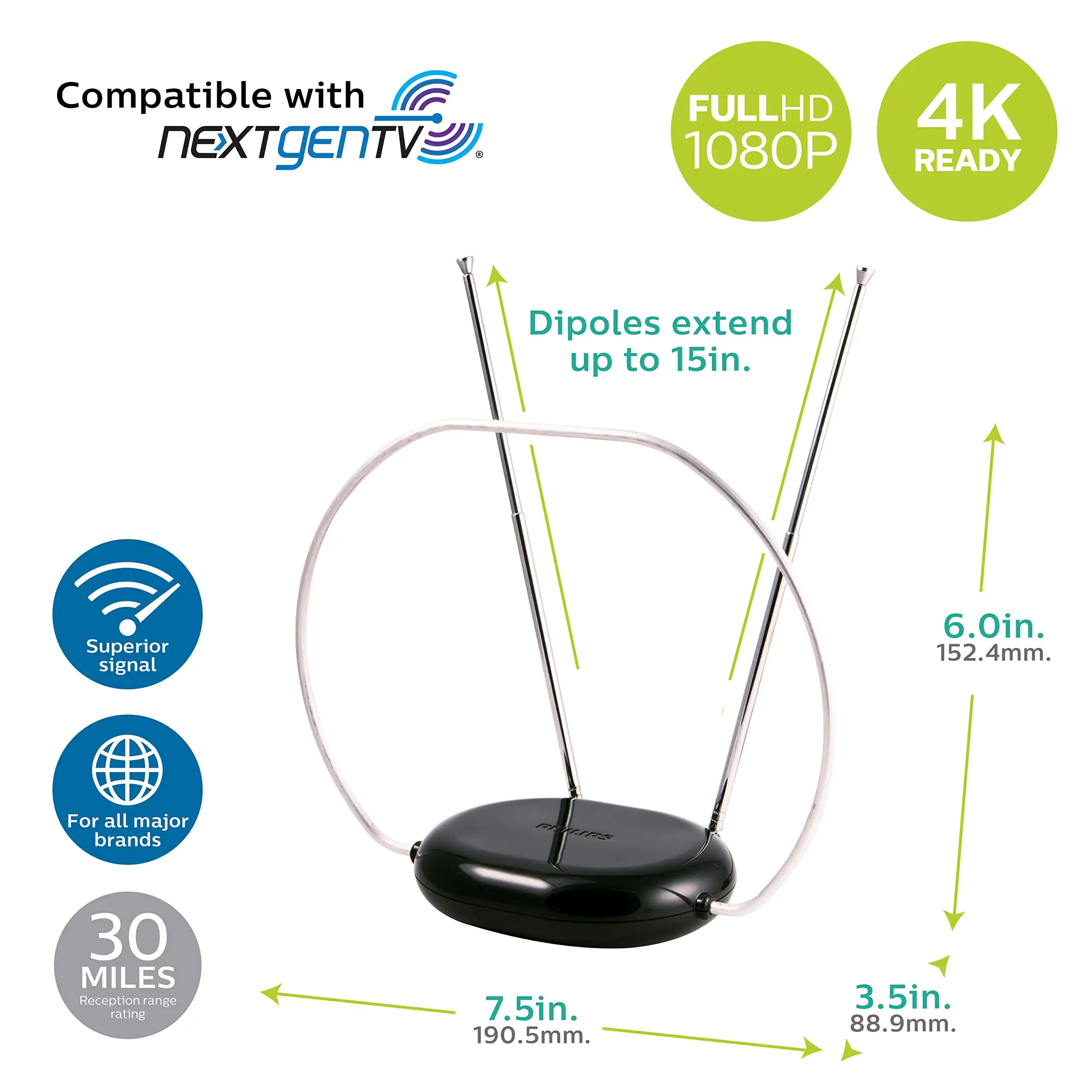
The manufacturer touts up to a 30-mile range with “superior reception” for both VHF and UHF channels, claiming it’s 4K Ultra HD ready and compatible with all HDTV brands. On paper, this sounds unbeatable for under $12. However, Reddit user feedback shows that while VHF reception does benefit from the extendable rabbit ears, those living beyond that radius or with physical obstructions often struggle.
One Trustpilot reviewer recounted, “I placed it by the window, and got 58 channels, but the video was pixelated on and off — only after adjusting the loop perpendicular to the signal direction did it clear up.” Users repeatedly stress that placement is everything, contradicting the impression of plug-and-play convenience.
Even the marketing’s “no monthly bill” pitch, while accurate in principle, overlooks the fact that free OTA reception varies dramatically by region. A verified buyer on Amazon noted, “For $10, I pick up local CBS, NBC, ABC plus 43 others — most I don’t care about, but the channels I wanted are crystal clear.” That satisfaction is common among city dwellers close to broadcast towers, but not in rural valleys or dense urban centers with multipath interference.
Cross-Platform Consensus
Universally Praised
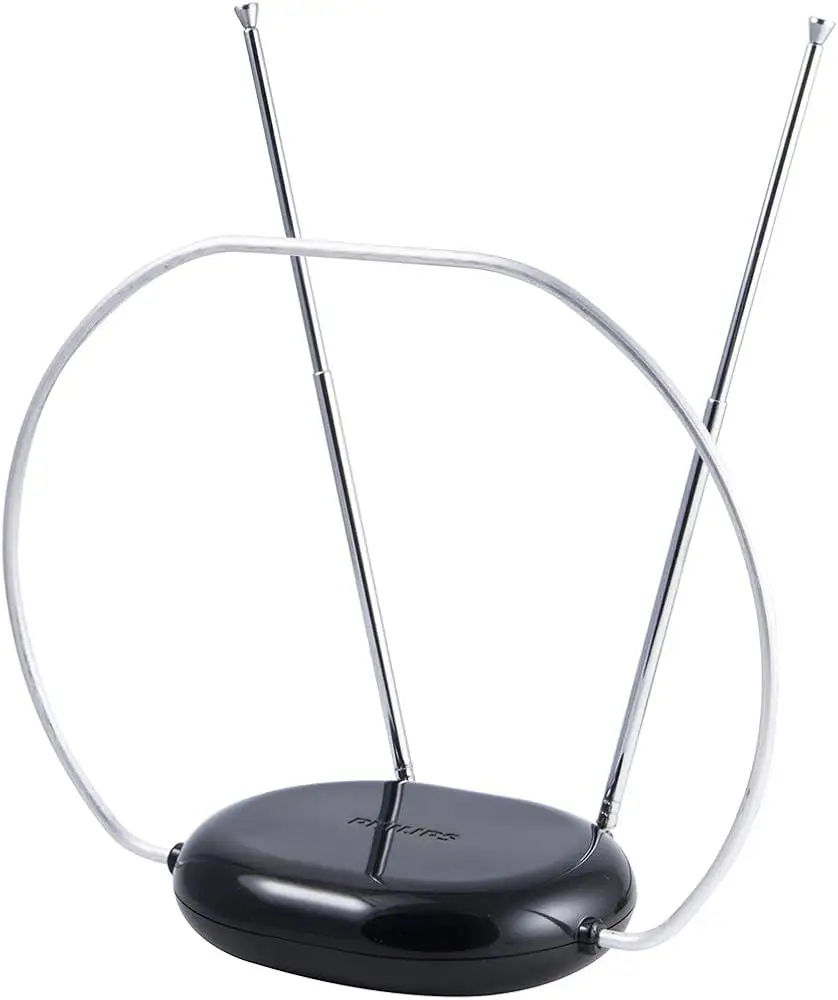
A recurring positive theme is affordability. Many users upgrading from cheap flat panel antennas found this Philips model brought in more channels thanks to its combined loop and rabbit ears design. One Amazon customer explained, “Flat panels fail on VHF — this picked up my PBS station thanks to the dipoles, and cost less than lunch.” Cord-cutters who need basic local coverage value that the antenna works across brands and older TVs with converter boxes.
Setup simplicity also earns praise. Reddit users advise plugging it in, extending the dipoles, and running a channel scan — no tools or tech know-how required. A Trustpilot reviewer summed up the experience: “I bought this for my mom, adjusted the ears, and it worked perfectly out of the box.”
Lastly, compatibility with both smart TVs and classic analog setups makes it attractive for budget-conscious households. The mixed-element design ensures coverage for various broadcast frequencies, benefiting viewers in markets with channels still on VHF high band.
Common Complaints
Reception reliability is the biggest sore spot. As one Trustpilot user stated, “It is not plug-and-play. You may need an extension antenna cable and spend hours repositioning for the best signal.” Those in suburban or rural settings more than 20–30 miles from towers often report pixelation or complete loss of certain channels.
Cable length is a consistent frustration — several users found the included 4-5 ft coaxial insufficient to reach optimal window placement. Some replaced it entirely due to poor connector quality. A verified Amazon review noted, “The RF cable it came with is cheap… one connector fell off. Once I swapped in a better cable, reception improved.”
Fragility concerns surface intermittently, with mentions of lightweight plastic construction prone to tipping or bending, and occasional dissatisfaction with build durability.
Divisive Features
The antenna’s small footprint divides opinions. Urban apartment dwellers appreciate that it fits on a windowsill without blocking views, but others see the compact size as limiting gain potential. The non-amplified nature is lauded for avoiding overloading tuners in strong-signal areas, yet remains a drawback for distant channels.
Performance without an amplifier is adequate in metro zones; with an amp, range and stability improve, though some reported decreased station count when signals were already strong. This echoes a Reddit consensus: “Don’t trust distance ratings — try with and without an amp to see what works.”
Trust & Reliability
Durability over time is mixed. Some buyers use the same unit for years with consistent results, while others experience cable failures or declining performance within six months. Reddit discussion warns against assuming longevity, advising keeping a backup or testing periodically.
Trustpilot entries show mostly genuine consumer experiences rather than coordinated spam patterns, with candid descriptions of trial-and-error setups. However, a Fakespot assessment of related Philips antennas flagged a portion of reviews as unreliable, cautioning buyers to separate marketing-heavy praise from tested reality.
Long-term reliability hinges heavily on environmental factors — near-tower users report “set it and forget it” stability, whereas mobile or multi-obstruction setups often require ongoing adjustments.
Alternatives
Competitors often mentioned include the Channel Master flat panel (better aesthetics, similar price) and GE indoor antennas, which some claim outperform Philips in fringe zones. One Trustpilot reviewer compared, “GE attic-mount under $40 blew past both the Philips and flat panel units in my rural area.”
RCA ANT111E and other combo loop/dipole designs are also cited in Reddit threads — essentially matching Philips’ architecture but differing in price and build.
Price & Value
Prices on Amazon hover around $8.99–$11.99 new, with eBay listings in the same range for used units. Given the low cost, even partial success in channel reception is seen as worthwhile. Resale value is minimal, but the low up-front cost deters concerns over depreciation.
Community buying tips include checking local channel maps before purchase, and, if possible, buying from a retailer with lenient return policies to test in your environment without risk.
FAQ
Q: How far can this antenna really receive signals?
A: While advertised at 30 miles, user reports show consistent results within 20 miles, sometimes extending beyond with optimal window placement or an amplifier.
Q: Does it work for VHF channels?
A: Yes, the rabbit ears improve VHF high-band reception. Many buyers switched from flat antennas for this reason.
Q: Will it work without an HDTV?
A: If your TV lacks a digital tuner, you’ll need a converter box. It’s compatible with both modern and older sets when properly connected.
Q: Can I improve weak reception?
A: Try replacing the stock coaxial cable, moving the antenna near a window facing towers, or adding a compatible amplifier.
Q: Is it good for rural areas?
A: Performance is mixed. Some rural users report zero improvement, while others succeed with an amplified attic placement.
Final Verdict
Buy if you’re an urban or near-tower viewer wanting a sub-$12 solution for local channels, especially if VHF reception is essential. Avoid if you’re more than 30 miles from broadcast sources or have heavy building obstructions. Community pro tip: “Placement is king — even moving it a foot can mean the difference between pixelation and perfect picture.”





