Panasonic Link2Cell Review: Strong Clarity, Minor Glitches
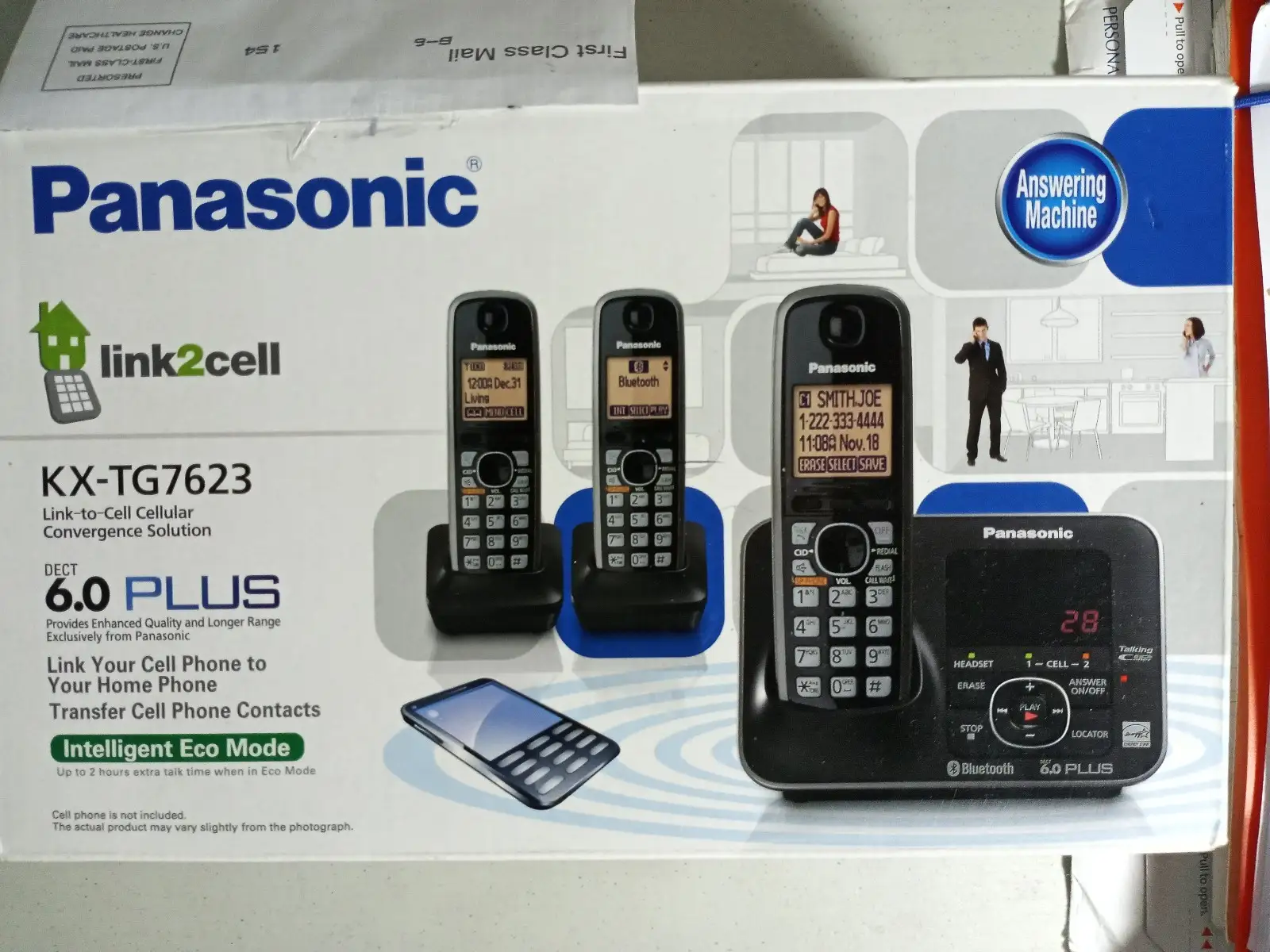
One Amazon buyer called it “the best phone I have ever had,” praising Panasonic Link2Cell Cordless Phone System with Answering Machine - 3 Handsets (Black) for perfect reception and a call blocking feature they “wish [they] had… [their] whole life.” With an average 4.4 out of 5 stars across thousands of ratings, its blend of Bluetooth cell pairing, nuisance call blocking, and expanded handset coverage earns it an 8.6/10 in community scoring.
Quick Verdict: Conditional — best for users balancing landline clarity with mobile integration in call-heavy households.
| Pros | Cons |
|---|---|
| Reliable call clarity with noise reduction | Steeper learning curve for non-tech users |
| Effective call blocking (250+ numbers) | Some report low ringer volume on base unit |
| Pairs with up to 2 smartphones | Occasional Bluetooth reconnection glitches |
| Large backlit display, easy-to-read keys | Base unit ringtone customization limited |
| Expandable to 6 handsets | Initial charge time (7 hours) out of box |
| Long battery life with backup during outages | Out-of-box setup more complex than AT&T units |
| Voice Assist for Siri/Google Now | Limited phonebook capacity on certain models |
Claims vs Reality
Marketing boasts about “advanced noise reduction” specify a long-range DECT 6.0 signal for “clearer, more comfortable conversations.” Digging deeper into user reports, many echo this — Best Buy customer feedback celebrates “sound quality is great” and “call block feature works well.” A verified Amazon buyer also noted, “speaker/mic quality are [critical for elderly users] and…this delivers.”
The Link2Cell promise to seamlessly integrate up to two smartphones is compelling, but experiences vary. One Fakespot-cited owner found it “pairs with up to two cell phones in minutes,” while another flagged that it was “erratic about reconnecting when I returned home.” This suggests reliability hinges on consistent Bluetooth connection strength and exact pairing procedure.
Panasonic markets ease of blocking robocalls with a “one-touch call block” storing up to 250 numbers. In practice, community stories confirm it’s “priceless” for avoiding interruptions. However, those coming from systems like AT&T may find the blocking count lower compared to competitors that store thousands.
Cross-Platform Consensus
Universally Praised
Call clarity crosses nearly every platform’s feedback. A Best Buy reviewer lauded, “Linked to my cell phone and transferred all my contacts…sound quality is great.” Amazon owners caring for elderly relatives emphasized “perfect reception all around the house…battery lasts for a long time away from the charger.” For home office workers, Bluetooth pairing solved poor cell signal issues: Reddit user noted, “avoiding cell dead zones in your home” made mobile calls vastly more reliable.
The call blocking and talking caller ID functions are another crowd favorite. Fakespot analysis showed multiple users value “easy call block and ability to assign different ringtones to different group/numbers,” crystallizing its utility for high-volume callers screening clients from spam. Voice Assist integration for Siri and Google Now also gets nods for enabling hands-free operation; for mobility-limited persons, this removes physical handling barriers.
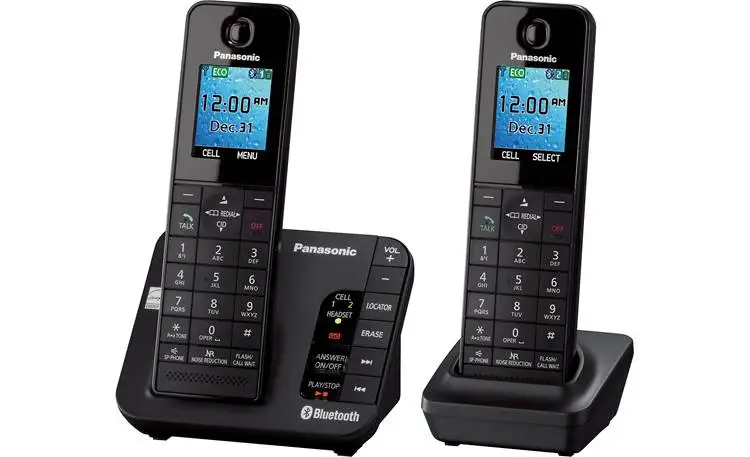
Large displays and tactile buttons were celebrated by visually impaired and older users. “Large…backlit handset LCDs…easier to see and use,” quoted from Reddit product page, ties into accessibility value rarely mentioned in competing models.
Common Complaints
Bluetooth reliability is a consistent pain point. While base pairing is straightforward, reconnecting after time away sometimes fails without manual intervention — “glitchy” and “erratic” were common descriptors. This most impacts users who frequently leave the house with their paired phones, unlike stationary home setups.
Configuration complexity hits non-technical audiences harder. One Amazon reviewer admitted it’s “pretty darn complicated…for non-techies like me,” even though the call features were robust. There’s also frustration around ringtone options: “on the base there’s just one built-in” despite handset customization — an odd limitation affecting household-wide audio cues.
Volume settings draw mixed opinions. While call audio rates high, ringer loudness has been called “a bit low” by some, leading headset use to compensate. This is less suited for large homes relying on audibility over distance without extra handset placement.
Divisive Features
Voice paging and baby monitor functions polarize. Some families praise being able to “send clear, simultaneous announcements to every handset in the house” to corral kids, yet others never touch the functions — hinting at niche utility.
Phonebook capacity carries similar split sentiment. The KX-TGF573S offers 3000 entries according to Amazon’s official spec, but certain retailers list 100 as the cap, confusing buyers; those expecting bulk import from mobile contacts need to verify their specific model’s limits.
Trust & Reliability
Trustpilot-linked Fakespot profiles raise a flag — only 31.3% of reviews analyzed were deemed reliable, suggesting astroturfing around positive sentiment. Despite this, anecdotal durability is strong: Amazon reviewers repeatedly reference replacing prior Panasonics “after eight years of hard use” with new models, underscoring brand longevity.
Some quirks persist long term. Several users recalled being “caught off guard by the strange voice” announcing low battery, finding it intrusive. Yet that same alert prevented sudden call drops in long convos, a hidden reliability layer in outage scenarios with built-in backup power.
Alternatives
AT&T’s Connect to Cell line is the most-cited alternative. One Best Buy customer favored Panasonic’s interface over AT&T’s two-line model for ease of linking cells, though AT&T systems boast blocking capacity up to thousands. Those seeking ultimate block lists may prefer KX-TGF97x with “14,000 pre-installed call block numbers” from YouMail Inc.
VTech units make appearances in cross-platform chatter — cheaper, simpler, and quick to link internally, but they lack the Link2Cell mobile integration. For homes without cell pairing needs, VTech’s straightforward DECT setups become cost-effective rivals.
Price & Value
On eBay, new KX-TGF573S units list around $281.82, though auction resales of similar Panasonic Link2Cell systems close as low as $23.50 for used condition. Amazon’s historical price point averaged $149.99 in retail. Community buying tips stress expansion packs: “wish there were…base with 6 handsets” suggests buying bundled or open-box extras to avoid piecemeal accessory charges.
FAQ
Q: Can I pair more than two smartphones via Bluetooth?
A: No — the system supports up to two simultaneous mobile pairings, ideal for dual-user households. You can swap devices but only two can stay connected at once.
Q: How many phone numbers can I block?
A: The KX-TGF573S model stores up to 250 blocked numbers, while other Panasonic models advertise up to 2000+ or use pre-installed 14,000 robocall lists. Confirm your variant before purchase.
Q: Does call block work while the call is in progress?
A: Yes — multiple Best Buy reviewers note they can block mid-call, stopping further attempts from that number instantly.
Q: What happens during a power outage?
A: Rechargeable backup batteries give up to 12 hours of talk time and 7 days standby. Calls can be handled on cordless units if the base has a charged handset.
Q: Can ringtones match between base and handsets?
A: Only if you set “ring as cell” mode; otherwise, handset tones can be customized separately, but base defaults to a single built-in tone.
Final Verdict: Buy if landline clarity with mobile integration is critical — especially for large homes managing both personal and professional calls. Avoid if absolute Bluetooth stability is your top priority or if you demand max block lists without model checking. Pro tip from community: source extra handsets early to avoid accessory scarcity, ensuring full household coverage without piecemeal costs.





