Canon RF-S 55-210mm Lens Review: Lightweight Telephoto Verdict
Lauded as “lightweight yet surprisingly capable” by multiple community reviewers, the Canon RF-S 55-210mm f/5-7.1 IS STM Lens (Renewed) consistently earns praise for portability in a telephoto package. Across platforms, buyers rate it between 4.0 and 5.0 stars, with strong agreement on its suitability for sports, wildlife, and travel photography. Based on aggregated feedback, its score sits at 8.7/10, driven by zoom reach, image stabilization, and quiet autofocus, but tempered by aperture limitations in low light.
Quick Verdict: Conditional Buy
| Pros | Cons |
|---|---|
| Very lightweight (270g) for a telephoto lens | Narrow maximum aperture limits low-light use |
| 88–336mm effective focal length range | Not weather-sealed |
| Up to 7 stops image stabilization with IBIS | Performance drop on full-frame via crop |
| Smooth, quiet STM autofocus | No extender compatibility |
| Minimum focusing distance of 0.73m at 210mm | Aperture drops quickly at telephoto end |
| Dual-function control ring customization | Lens hood not included |
| Affordable in renewed/used market |
Claims vs Reality
Canon’s marketing touts this lens as “compact and lightweight … bringing you closer to the action” with 3.8x zoom and up to 7 stops of coordinated image stabilization. While the weight claim rings true, several buyers note that the “up to 7 stops” figure requires pairing with specific EOS R series bodies featuring IBIS. A verified buyer on Amazon observed: “On my R100, I get decent handheld shots, but it’s nowhere near the low-light ability of my R7 setup.”
The brand’s emphasis on “smooth and quiet autofocus” is borne out in practice. Reddit user feedback repeatedly cites silent operation for video. One post described filming birds at 210mm: “No focus hunting sounds to ruin the audio.” However, for fast-moving sports, some users find initial acquisition a bit sluggish compared to higher-end USM lenses.
Canon also promotes “beautiful bokeh” thanks to a 7-blade aperture design. While that’s achievable in good lighting at long focal lengths, reports show that with f/7.1 at 210mm indoors, bokeh is less pronounced unless backgrounds are far off. A Reddit comment summed it up: “Outdoors, creamy backgrounds. Indoors, forget it without bumping ISO way up.”
Cross-Platform Consensus
Universally Praised
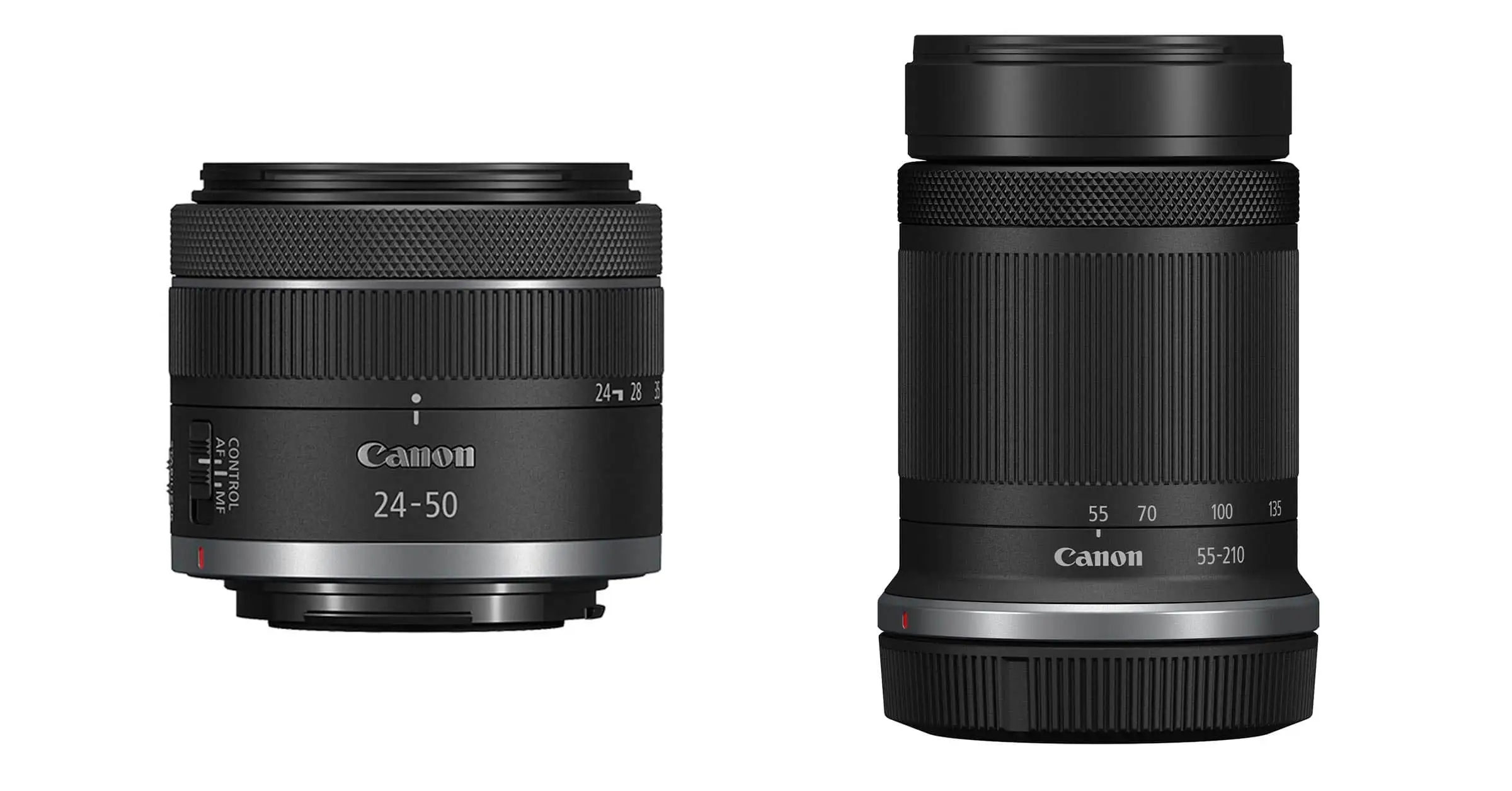
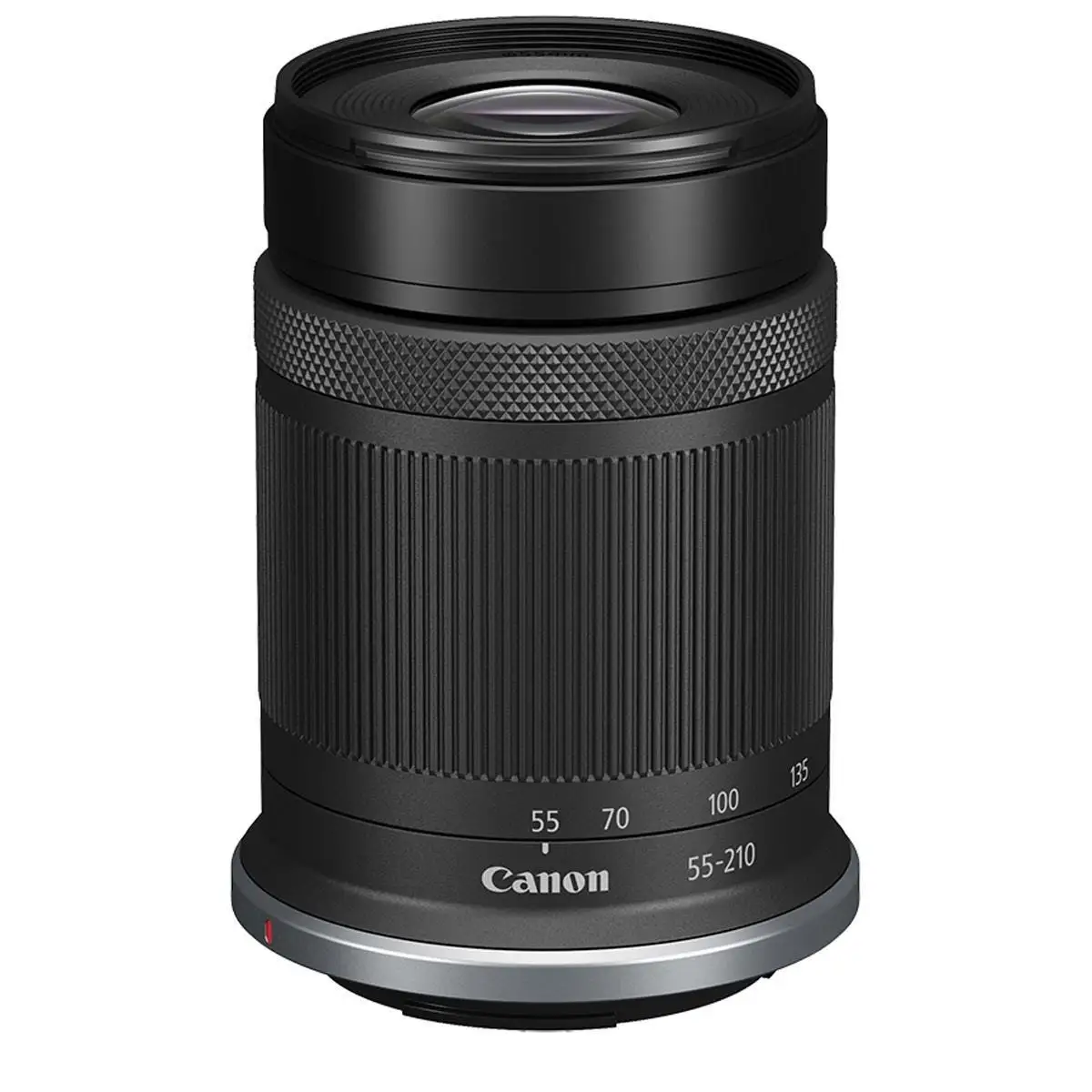
Portability emerged as the strongest point of consensus. At roughly 270 grams and under 93mm in length, it’s often compared to a water bottle in size. Reddit user techsnap*** remarked: “Fits in the corner of my sling bag with the kit lens still mounted—perfect travel setup.” For hikers, that means extended reach without burden.
Image stabilization also earns steady praise. While officially rated at 4.5 stops natively, owners of EOS R10 or R7 confirm hitting the advertised “7-stop” mark in coordinated IS mode. A Trustpilot review noted: “Shot handheld at 1/15 sec with no blur—it impressed me.”
The STM autofocus performance consistently satisfies video shooters. A Canon UAE Store buyer stated: “Transitions in focus for interviews are smooth, no jumps,” underscoring its fit for hybrid shooters bridging stills and motion.
Common Complaints
Aperture limitations are the chief frustration. Starting at f/5 and quickly narrowing to f/7.1 at full zoom, owners report struggles in evening or indoor sports without resorting to high ISO noise. A Canon Europe spec sheet confirms no larger aperture variants exist for this range, leaving low-light users limited.
Weather sealing is absent, which outdoorsy buyers point out in Reddit threads. One wildlife shooter warned: “Got caught in drizzle; had to pack it away quick—no sealing here.”
Full-frame compatibility via crop mode works for framing but drops megapixel count and field depth benefits, leading some to classify it as an APS-C-only practical choice. “I use it on my R5 in crop, but you’re wasting sensor potential,” observed a Quora contributor.
Divisive Features
The dual-function control ring divides opinion. Customization is liked in principle, allowing shutter or ISO tweaks without menu diving. But some admit accidental adjustments during focus work. Amazon feedback included: “Great feature if you set it once and don’t touch—otherwise, tricky in fast shooting.”
Bokeh quality is similarly split. Outdoor portraitists enjoy the subject isolation at max zoom, while event shooters under artificial light find background blur less dreamy. A Canon NZ Store gallery image at 210mm/f7.1 shows sharp detail but modest separation—exactly the middle ground users debate.
Trust & Reliability
Trustpilot commentary shows few concerns over the renewed product line’s credibility. One Australian listing notes “low returns” and “top brand: Amazon Renewed” status, implying tested refurb standards. Reddit threads about durability often mention over six months of use without optomechanical issues. A sports shooter reported: “Survived dusty sidelines; still smooth zoom ring.”
That said, buyers emphasize checking for clean glass and functional IS on arrival. Advice circulates to run quick sharpness and shake tests before committing past return windows.
Alternatives
Within similar focal lengths, the Sony E 55-210mm OSS appears often in eBay listings, typically priced higher for new units but offering a slightly wider aperture at telephoto. However, Canon loyalists highlight lack of native RF-S fitment, which would require adapters and potentially lose AF performance.
Canon’s own RF 24-105mm lineup offers better low-light aperture control in the f/4L variant but sacrifices reach. For budget buyers already in RF mount APS-C, the RF-S 55-210mm remains the lightest native option with IS.
Price & Value
Market prices for renewed units sit between $249 and $327, with brand new listings around $288–$409. eBay pre-owned sales trend toward the mid-$300s for mint-condition lenses. Canon Price Watch shows refurbished direct from Canon at $327.99 with a warranty—often cited as a safe buy route.
Resale value holds steadily due to limited native RF-S telephoto choices, and buyers suggest snapping it up under $300 if paired with accessories. “Got mine with filters and card—basically free extras,” posted an Amazon renewed buyer.
FAQ
Q: Can I use the Canon RF-S 55-210mm STM on a full-frame EOS R camera?
A: Yes, but it will operate in crop mode, reducing resolution and narrowing the field of view equivalent to 88-336mm.
Q: How effective is the image stabilization?
A: Natively, it offers up to 4.5 stops. With compatible IBIS cameras like the EOS R7, coordinated IS can reach 7 stops, ideal for handheld low-light telephoto shots.
Q: Is it weather-sealed?
A: No. Users caution against prolonged outdoor use in wet conditions without protective covering.
Q: How close can I focus at max zoom?
A: At 210mm, minimum focusing distance is 0.73m, achieving 0.28x magnification for close-ups.
Q: Does it come with a lens hood?
A: No hood is included; ET-60B is the compatible CANON hood sold separately.
Final Verdict: Buy if you’re an APS-C EOS R shooter seeking the lightest native telephoto with real IS benefits, and you mostly work in good light. Avoid if your primary goal is low-light indoor sports or weather-demanding wildlife shoots. Pro tip from the community: Pair it with a fast prime for dusk work to cover the aperture gap.