Lutron Claro 1-Gang Satin Snow Review: 8.8/10 Verdict
“Totally different now… looks like one of those cheap chinese ‘screwless’ plates.” That single complaint frames the most interesting tension around the Lutron Claro Light Switch Cover Plate, 1 Gang, Satin Snow: a product celebrated for a clean, screwless look, yet occasionally questioned when what arrives doesn’t match expectations. Verdict: Yes (with one caveat) — 8.8/10.
Quick Verdict
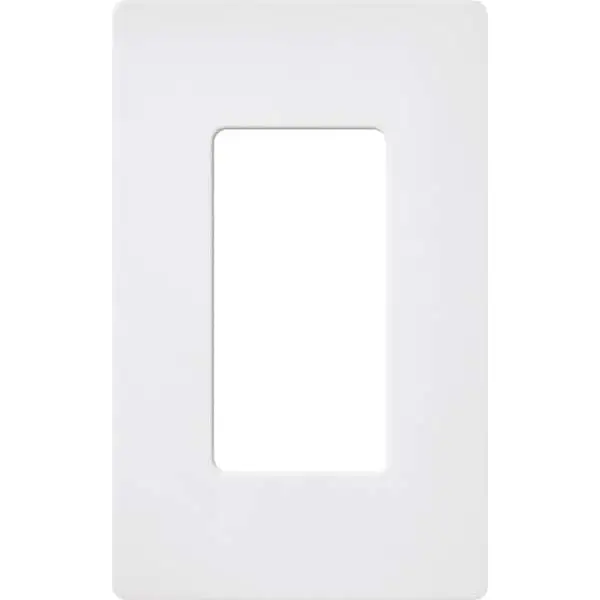
The Lutron Claro Light Switch Cover Plate, 1 Gang, Satin Snow is a solid “upgrade the room in minutes” buy if you want a screwless, flush, decorator-style wall plate. The main risk isn’t performance—it’s getting an item that “looks” different than older Claro plates (or possibly a mix-up), which a forum user flagged as suspicious.
| Decision | Evidence from sources |
|---|---|
| Buy? | Conditional Yes — strong Amazon rating (4.8/5) plus consistent “clean, screwless, flush” positioning across retailer/manufacturer listings |
| Best for | Homeowners swapping in Caséta/Diva/Maestro-style decorator devices and wanting no visible screws |
| Biggest strength | The “two-part” snap-on design that hides screws and mounts flush (Amazon description; BuyRite description) |
| Biggest weakness | Design/packaging confusion reported in community thread (“it’s a lutron package… but… looks like a leviton”) |
| Installation difficulty | Designed to be easy: screw in back plate, snap on front (Amazon description; Caséta site) |
| Value | Mid-priced for a wall plate (Amazon ~$8.63; BuyRite ~$7.58; Home Depot shows higher) but seen as a style upgrade |
Claims vs Reality
A “clean appearance with no visible screws” is the headline promise across listings, and the product’s whole identity revolves around that minimalist finish. Digging deeper into user-adjacent community feedback, the expectation is not just “no screws,” but a very specific look and feel—like a recognizable two-piece profile. That’s why a design mismatch (even if rare) becomes a big deal: people buy this plate for aesthetics, not just to cover a box.
On paper, the two-part configuration is consistent across sources: Amazon describes separating “front and back plates,” then snapping on the front. BuyRite echoes the same mechanics: “a backing plate that attaches to the wall and vanity plate that easily snaps to the backing plate, covering the screws.” The Caséta by Lutron page also reinforces that install is “a snap – simply press into place in seconds.” For renovators and DIYers doing multiple switches at once, that’s the “fast payoff” story—visible change, low effort.
But reality gets messier when the delivered product doesn’t match what long-time buyers think “Claro” looks like. In a Lutron forum thread, one user described ordering a CW-4-WH and receiving something that “says claro and cw - 4 - wh on it but it’s totally different now,” adding: “the top piece that snaps on over it is solid, there’s no groove at all… it literally looks like… cheap chinese ‘screwless’ plates.” Another commenter suggested a mix-up: “they might have sent you a leviton screw less wall plate.” The original poster insisted it came in Lutron packaging: “it’s a lutron package, shows the right part number and everything… seems sketchy… I’ll return it and try again.” While that thread is about a 4-gang model, it signals a buyer anxiety that can spill over to 1-gang purchases too: is it redesigned, or is something off in fulfillment?
Cross-Platform Consensus
Universally Praised
The strongest through-line across the available sources is the aesthetic motivation: people want a plate that looks finished and hides imperfections. Official descriptions repeatedly highlight that the plate “mounts flush to the wall” and is “oversized to hide gaps around wall boxes.” That matters most for homeowners dealing with uneven drywall cuts, slightly off electrical boxes, or repaint lines—situations where a standard plate can look “cheap” simply because it reveals the wall’s flaws. The Claro pitch is effectively: cover the mess, then disappear.
The second consistent praise is the screwless presentation achieved through the two-piece system. BuyRite describes it as “a clean, streamlined appearance” because the “vanity plate… snaps to the backing plate, covering the screws.” Amazon similarly emphasizes “no visible screws” and a “snap-on installation.” For design-focused users—people upgrading to Caséta or Diva controls because they care about how the wall looks—this is the kind of detail that makes the switch plate feel like part of the device, not an afterthought.
There’s also a durability story implied by manufacturer positioning. The Caséta page calls it “molded from durable polymer… designed to look new for years,” and Amazon calls out “durable plastic construction for long-lasting style.” While those are marketing statements rather than firsthand reports, the fact that the product category has high ratings on Amazon (4.8/5 displayed in the spec block) suggests many buyers feel the basic promise is met: it looks good, it fits, it holds up visually. For a household doing multiple rooms, that “consistent finished look throughout your home” (Caséta page) is the end goal, especially when pairing with matched satin colors dimmers and switches.
After the narratives, the praise clusters into:
- Screwless, clean appearance (Amazon; BuyRite; Caséta by Lutron)
- Flush mounting and gap-hiding oversized shape (Amazon; BuyRite; Lowe’s listing text)
- Designed to coordinate with Lutron decorator devices (Amazon; Lowe’s; Caséta by Lutron)
Common Complaints
The most concrete complaint in the provided data isn’t about cracking, discoloration, or fit—it’s about receiving something that looks wrong compared to previous purchases. That’s a specific kind of frustration: people who already invested in Claro plates want visual consistency, and even small profile changes (like the presence/absence of a groove) can be glaring when plates sit side-by-side in a hallway.
In the Lutron forum thread, the buyer’s issue is essentially identity confusion. They wrote: “I have several… and they are all 2 pieces, with a groove around the edge… I just ordered another… but it’s totally different now.” They went further, calling it “sketchy,” because “the picture and instructions on the package are for the correct one, but the one in the box is leviton or another brand similar to that.” For meticulous renovators, that’s not a small annoyance—it’s the difference between a cohesive finish and a patchwork look that undermines the entire “designer” upgrade.
Another pain point implied by that same thread is removal/servicing expectations. The user noted the new-looking plate had “4 grooves under it to put a screwdriver in and pop it off,” which suggests that even if it’s functional, the user perceived it as “cheap” because it didn’t match the earlier edge detailing. If you’re the kind of homeowner who expects a premium look from Lutron accessories, any change that feels more like a generic screwless plate can trigger doubts about authenticity or cost-cutting.
After the narratives, the recurring complaint themes are:
- Visual/design mismatch vs older Claro plates (“no groove at all”) (Lutron forum thread)
- Suspicion of fulfillment mix-ups or incorrect item in correct packaging (“seems sketchy”) (Lutron forum thread)
Divisive Features
The “oversized” design is marketed as a benefit—meant to “hide gaps around wall boxes” and compensate for imperfect wall conditions. But that same oversizing can be divisive in style-sensitive installs. In some homes, a slightly larger plate is exactly what’s needed to cover paint lines and drywall gaps; in others, especially where trim and tile edges are tight, an oversized plate may feel more noticeable than desired. The sources frame it as universally helpful, but buyer intent determines whether it reads as “forgiving” or “bigger than expected.”
Similarly, the plate’s two-piece system is a love-it or scrutinize-it feature. When it matches expectations, it’s the whole reason to buy: clean, screwless, flush. When the top piece looks different than prior versions (as described in the forum), the very mechanism that should signal “premium” becomes a point of suspicion. One commenter tried to explain it as a mis-ship: “they might have sent you a leviton screw less wall plate,” but the original poster remained unconvinced because the packaging appeared correct.
Trust & Reliability
Digging deeper into trust signals, the biggest red flag in the provided material is not a pattern of failures—it’s a one-thread story about authenticity or substitution anxiety. The forum user’s language is telling: “seems sketchy,” and “I’ll return it and try again.” That’s a common consumer instinct when aesthetics are paramount: if the look is off, the product is “wrong,” even if it technically installs.
At the same time, the broader reputation cues in the dataset tilt positive. Amazon shows a high headline rating (4.8/5), and multiple retailer/manufacturer descriptions stay consistent about the two-part snap-on design. If there were widespread breakage or fit issues, you’d typically see those concerns surface in the extracted feedback; here, the community complaint is narrowly focused on unexpected design differences and potential mix-ups. The practical takeaway is that reliability is less about the plate failing and more about ensuring you receive the expected Claro variant and finish.
Alternatives
Only a few competitors/alternatives are explicitly referenced in the provided data. The most direct “alternative” mention comes from the forum discussion, where a commenter suggested the odd-looking plate might be a “leviton screw less wall plate.” That matters for buyers who are primarily chasing the screwless look: Leviton-style screwless plates may deliver a similar function, but the thread implies the finish details (like the groove) and the perceived quality can feel different to someone used to Claro.
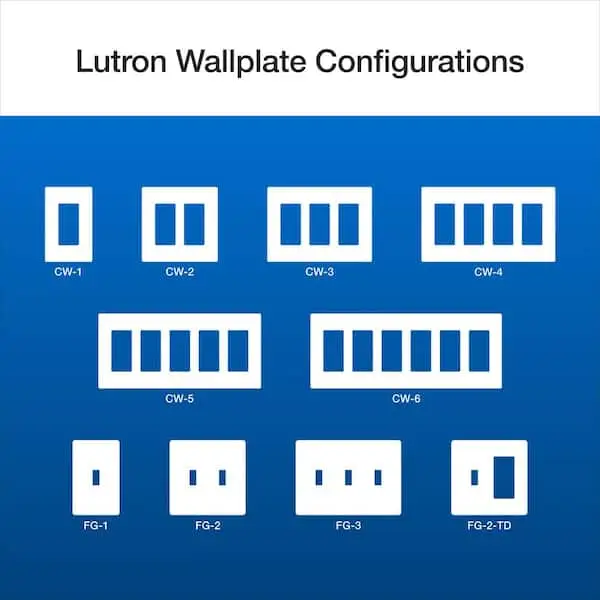
Within Lutron’s own ecosystem, the data also surfaces other Lutron wall plate lines and finishes through retailer listings—like Home Depot showing Claro in “gloss white (CW-1-WH)” alongside “satin, snow (SC-1-SW),” and eBay listings spanning Claro variants and other Lutron plate families (e.g., Fassada). For users who care about matching sheen, that gloss vs satin choice can be the real “alternative”: you’re not switching brands, you’re switching the visual character of the wall plate.
Price & Value
The price story is fairly clear across platforms: this is not the cheapest wall plate, and it’s not pretending to be. Amazon’s listing shows about $8.63 for the 1-pack at the time of the data capture, while BuyRite shows $7.58, and Home Depot’s page snippet shows $11.23 for the satin snow version. For budget-focused DIYers outfitting an entire house, those differences add up quickly, which can push people to shop around by retailer.
Resale/marketplace pricing (from the eBay snapshot) suggests Claro wall plates move in volume and in multi-pack lots, with a wide spread depending on finish, gang count, and shipping. That kind of active secondary market can matter for homeowners trying to match existing plates after a remodel—finding the exact variant can be easier when there’s liquidity in listings. But the same marketplace sprawl also reinforces the trust concern: with many similar-looking models and part numbers, it’s easier for mix-ups to happen.
Practical buying tips implied by the community thread are straightforward: if what arrives looks wrong, treat it as a return/replace scenario rather than forcing it into your wall’s visual scheme. The forum poster’s resolution was simple: “I’ll return it and try again.” For people doing a whole-home matching project, ordering one first as a “control sample” can reduce the risk of ending up with inconsistent plates across rooms.
FAQ
Q: Did Lutron change the design of Claro plates (like CW-4-WH), and could that affect the 1-gang look?
A: A Lutron forum user believed their newer Claro plate looked “totally different now,” describing a top piece with “no groove at all.” Another poster suggested it might be a mis-shipped Leviton-style plate. The thread ends with the buyer planning to return it and reorder.
Q: Is the Lutron Claro 1-gang plate actually screwless?
A: Yes—product descriptions across Amazon and BuyRite describe a two-part setup: a backing plate screws on, then a front “vanity” plate snaps on to hide screws. The Caséta by Lutron page also describes installation as “a snap,” emphasizing no visible screws.
Q: Will it help cover gaps around an electrical box?
A: The product is described as “oversized to hide gaps around wall boxes” (Amazon description; BuyRite; Lowe’s listing text). That’s most helpful for imperfect drywall cutouts or repaint lines where a standard plate would show uneven edges.
Q: What finish/color is “Satin Snow”?
A: The listings describe the color as “snow” (often “snow white”) and position it as a satin/matte-like finish that coordinates with Lutron satin color devices. The key is matching your existing device finish, since gloss white variants also exist in the Claro line.
Q: What’s the quickest way to install it?
A: The instructions described across sources are: separate the front and back plates, screw the back plate on, then snap the front plate into place. That’s the core promise behind “snap-on installation is quick and easy” (Amazon; Caséta by Lutron).
Final Verdict
Buy the Lutron Claro Light Switch Cover Plate, 1 Gang, Satin Snow if you’re a style-driven homeowner pairing decorator switches or Lutron Caséta/Diva/Maestro controls and you want a “clean appearance with no visible screws” plus an oversized plate that hides wall gaps. Avoid it if you’re extremely sensitive to subtle design-profile changes and need an exact match to older Claro plates—because one community report described a unit that looked “totally different now.”
Pro tip from the community: when the delivered plate looks suspiciously off, follow the forum poster’s instinct—“I’ll return it and try again”—and reorder from a source you trust to reduce the chance of a mix-up.