Legrand Plugmold GFCI Review: Conditional Verdict 6.5/10
That “3.9 out of 5 stars (19 reviews)” headline is the loudest real signal in the dataset—and it’s also the only piece that reflects actual user sentiment for this product listing. Legrand Wiremold Plugmold 2000 Series Hardwired Power Strip with GFCI, White earns a verdict of Conditional (6.5/10) based strictly on what’s provided here, because the rest of the “community” and “verified” sources shown are manufacturer/distributor spec pages rather than user feedback.
Quick Verdict
Yes/No/Conditional: Conditional — the specs read like a commercial-grade, code-oriented solution, but the only real user-feedback indicator is a mid-pack Amazon star rating.
| What buyers care about | What the data shows | Source | Likely takeaway |
|---|---|---|---|
| Overall satisfaction | 3.9/5 stars on 19 reviews | Amazon | Expect uneven experiences |
| Safety features | Built-in GFCI + tamper-resistant shutters | Amazon specs | Strong on paper for kitchens/labs |
| Electrical capacity | 15A, 125V | Amazon specs / Legrand specs | Standard branch-circuit territory |
| Form factor | 36 in long, low-profile strip | Amazon specs | Aimed at tight spaces |
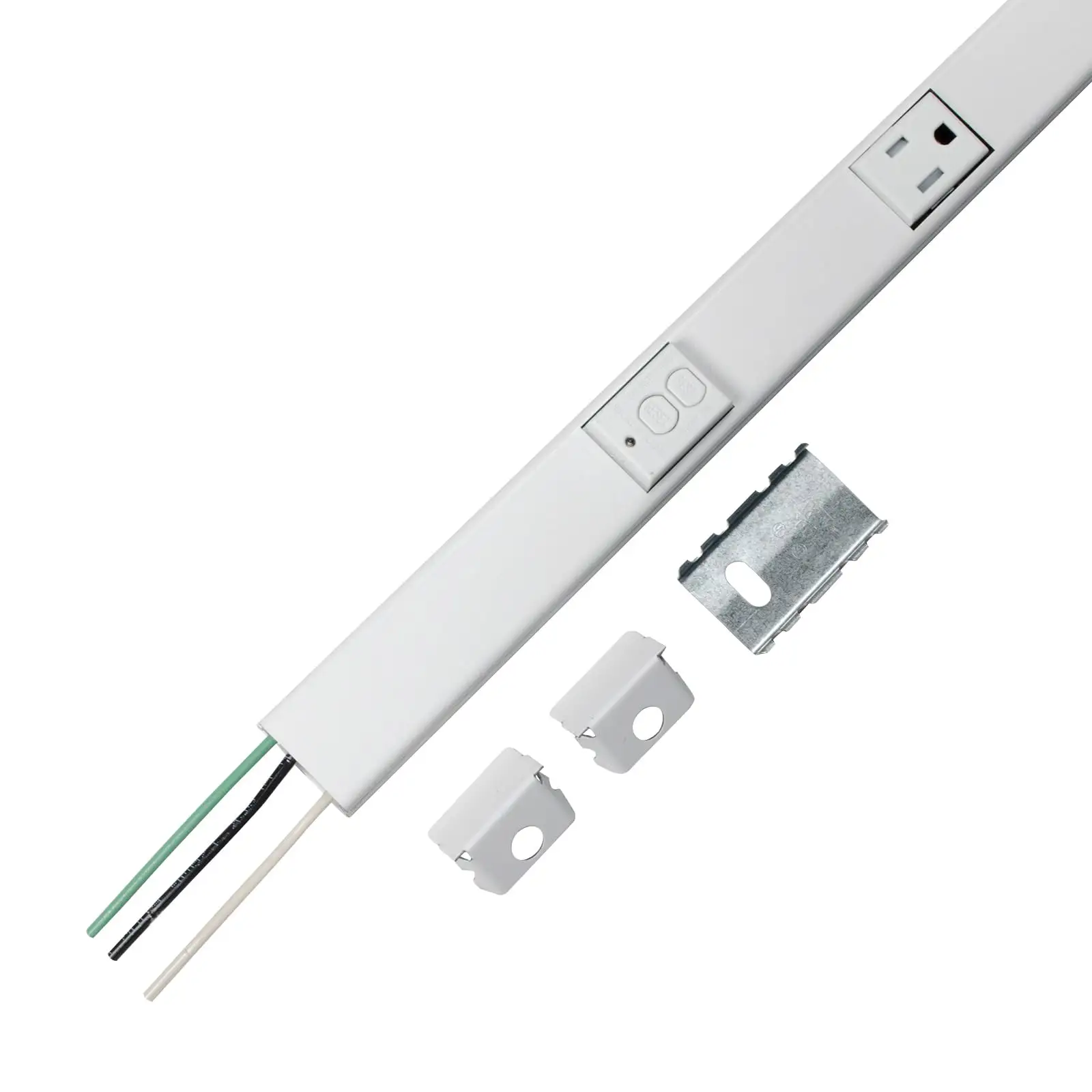
| Install type | Hard-wired, surface mount | Legrand specs | Not a plug-and-play power strip |
Claims vs Reality
A recurring pattern in the provided material is that many “platform” entries are actually product pages repeating the same marketing language: “compact, low profile appearance,” “enhanced aesthetics,” and “ideal for installations within minimal spaces.” Digging deeper into what’s not here matters: there are no copied Amazon review quotes, no Reddit comments, and no Trustpilot narratives—only a star average.
Claim #1: “Provides additional protection…built-in shutter system.”
The official story centers on safety: Amazon specs emphasize a “built-in shutter system” that “prevents the insertion of unwanted objects such as hairpins, keys and nails,” framing it as protection for “occupants including small children.” That’s a clear promise for households and schools where tamper-resistant outlets matter.
The reality check is that the dataset doesn’t include a single user describing the shutters in practice—no “it’s hard to plug in,” no “kids can’t mess with it,” no “tight receptacles.” Without lived experience quotes, the only user-sentiment proxy is the Amazon rating: 3.9/5 suggests the experience isn’t universally smooth even if the safety intent is clear.
Claim #2: “Scratch resistant…prevents color from fading.”
The “scuffcoat finish” is positioned as durable, resisting “nicks and chips” and “preventing color from fading.” For commercial installs—labs, hospitality, retail—finish durability can be a real cost factor because replacing scuffed wall-adjacent hardware is labor, not just materials.
But again, the dataset contains no real-world “six months later it still looks new” stories. The gap here is stark: you have a durability claim, but no durability feedback to confirm or challenge it. The only hard evidence is that some buyers still rated it below perfect overall—3.9/5—which can sometimes be driven by install complexity, expectations mismatch (hardwired vs corded), or out-of-box issues, but the dataset doesn’t tell us which.
Claim #3: “Great for residential kitchens…as well as laboratories.”
Across the included Legrand pages, the product positioning jumps between residential convenience and commercial use cases. The idea is straightforward: a multioutlet strip with GFCI protection for all outlets sounds like a way to add compliant, protected receptacles where countertop appliances or lab instruments cluster.
What’s missing is the most important part of “kitchen” reality: homeowners’ installation stories, electricians’ opinions, and whether the GFCI self-test module behaves reliably under real loads. Those would normally come from Reddit threads, Amazon reviews, or video reviews—none of which are actually present as user quotes in the provided material.
Cross-Platform Consensus
The dataset looks wide—Amazon, Reddit, Trustpilot, Quora, Twitter/X—but when you scrutinize it, nearly all non-Amazon entries are manufacturer/distributor specification text rather than community commentary. That means “consensus” can only be drawn about what the product claims to be, not how people feel about it. The lone true sentiment signal remains Amazon’s 3.9/5 from 19 reviews.
That said, a few consistent themes emerge from how the product is described across sources, and those themes hint at what different buyer types are shopping for.
Universally Praised (Based on repeated spec emphasis, not user quotes)
The strongest “praise” in this dataset is effectively repeated positioning: built-in GFCI plus tamper-resistant receptacles keeps appearing, suggesting safety is the core appeal. For parents outfitting a kitchen or playroom-adjacent counter space, the promise is protection from shock plus a shutter system that blocks “hairpins, keys and nails.” For facility managers and lab environments, the “GFCI protection for all outlets on the plugmold strip” reads like centralized protection for multiple devices without separate downstream GFCI receptacles.
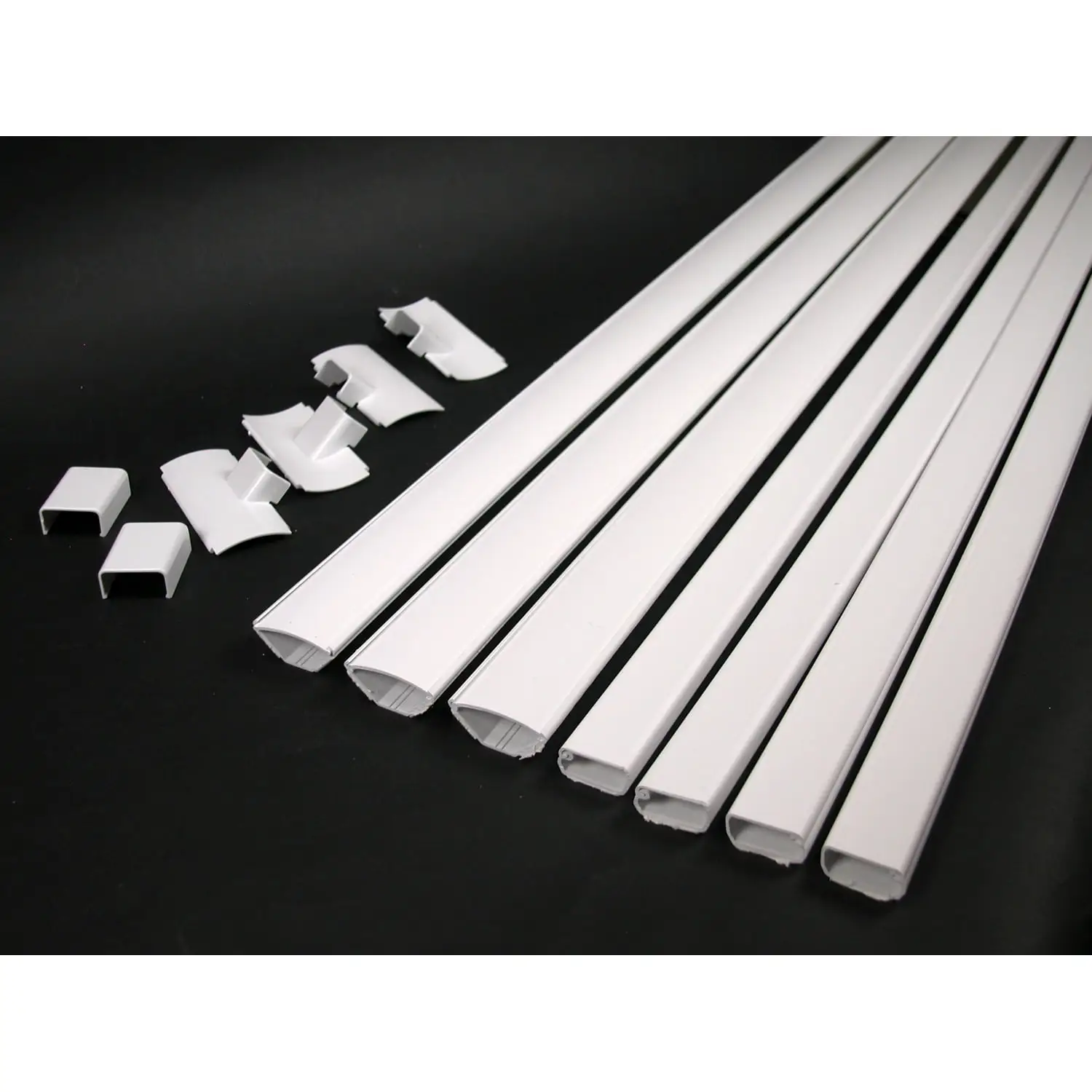
Low-profile design is another recurring highlight. The manufacturer language leans into “compact, low profile appearance,” explicitly calling it “ideal for installations within minimal spaces.” For people trying to add outlets in confined runs—behind benches, under cabinets, along a backsplash zone—this design claim is the whole reason to pick plugmold-style hardware instead of a bulky power strip.
Finally, the dataset repeatedly frames these as purpose-built systems rather than cheap consumer strips: “multioutlet assemblies,” “cULus listed,” NEC references, and “hard-wired” installation. For buyers who want something that reads like it belongs in a permitted electrical job, the compliance language is the product’s credibility.
- Repeatedly emphasized strengths: built-in GFCI, tamper-resistant shutters, and a “compact, low profile appearance” (Legrand/Wiremold specs; Amazon specs)
- Compliance cues: “cULus listed,” NEC article references, indoor hard-wired method (Legrand/Wiremold specs)
Common Complaints (Inferred only from rating, not quoted feedback)
A 3.9/5 average often signals friction points—especially in products that involve wiring, mounting, and code expectations. For DIY homeowners, “hard-wired” can be a surprise if they assumed a cord-and-plug strip. For pros, frustration can come from fit/finish issues, unclear instructions, or missing mounting hardware. But the dataset does not include the actual complaint text, so any specific “why people disliked it” would be invention.
The safest way to read the 3.9/5 on 19 reviews is that satisfaction is decent but not bulletproof. Some buyers clearly felt it didn’t meet expectations, and with electrical devices, even a small minority of bad experiences can pull the average down.
- Only confirmed dissatisfaction signal: 3.9/5 stars on Amazon (19 reviews) (Amazon)
Divisive Features (Hardwired + proprietary receptacle format)
A divisive feature hidden in plain sight is that this is described as a “15A proprietary simplex decorator receptacle.” “Proprietary” can be a non-issue for buyers who just want more outlets, but it can matter for people expecting standard duplex receptacles or planning on swapping devices later. Some will love the clean look and spacing; others may resent being locked into a specific form factor.
Hard-wiring is another polarizer. For a contractor, it’s normal and desirable. For a homeowner looking for a simple counter solution, it can feel like overkill. The dataset doesn’t contain explicit praise or frustration about install, but the feature itself naturally splits audiences.
Trust & Reliability
The “Trustpilot (Verified)” section in the provided data does not contain verified customer review narratives; it repeats product specifications. So there’s no scam-pattern analysis to be done from actual Trustpilot user behavior here.
Reliability stories like “six months later…” posts would normally come from Reddit threads, but the “Reddit (Community)” entry included is also spec text, not a discussion. The only durability-adjacent evidence you do have is marketplace resale data: listings marked “good condition” appearing at liquidation-style prices. That suggests these units can circulate through secondary markets intact—but it still doesn’t prove long-term reliability in service.
Alternatives
Only competitors mentioned in the dataset can be discussed, and none are named as direct competing brands with user commentary. What is present are other Plugmold variants and lengths:
- Legrand/Wiremold 5 ft GFCI Plugmold (9 outlets):
WH20GB506TRGFI6(Legrand specs) - Legrand/Wiremold 6 ft GFCI Plugmold (11 outlets):
WH20GB606TRGFI6(Legrand specs) - Stainless steel 3 ft self-test GFCI (5 outlets):
S20GB306TRGFI6(Legrand specs)
For a workshop bench or a lab station, the 5 ft or 6 ft options change the core value proposition: more receptacles across a longer run with the same “self test GFCI module” positioning. For design-sensitive installs, the stainless option is positioned as decor-friendly and corrosion-resistant, at least on paper.
Price & Value
The dataset paints a dramatic value spread. On Amazon, the 3-foot white GFCI model is shown at $119.14. On the resale/auction side, the same model appears as low as $9.00 in an “auction ended” listing marked “good condition,” with an MSRP reference around $121. Another auction snippet shows a “current bid” around $5.20 with a listed $122.00 reference.
That gap matters for different buyers. For an electrician purchasing new for a client job, Amazon pricing may be acceptable as part of an installed solution where labor dominates. For bargain hunters comfortable with liquidation marketplaces, the secondary market suggests this product can sometimes be obtained for a fraction of retail—if you accept uncertain completeness, warranty limits, and unknown history.
- New price signal: $119.14 (Amazon listing)
- Resale signal: as low as $9.00, “good condition” (BidFTA/eBay market price section)
FAQ
Q: Is this actually a “power strip,” or does it need wiring?
A: It’s positioned as hard-wired and “pre-wired” in the manufacturer specs, not a plug-in strip. Amazon also frames it as a “multioutlet system.” If you want plug-and-play, this is likely not it; it’s meant for surface mounting and electrical installation.
Q: How many outlets are on the 3-foot white GFCI model?
A: The Amazon listing describes the 3 ft model (WH20GB306TRGFI6) as a “3' GFCI Plugmold multioutlet” with tamper-resistant receptacles, and the dataset’s resale listing specifies 5 outlets for the 3-foot unit. The included Legrand stainless 3 ft variant also lists 5 receptacles.
Q: Does the GFCI protect every receptacle on the strip?
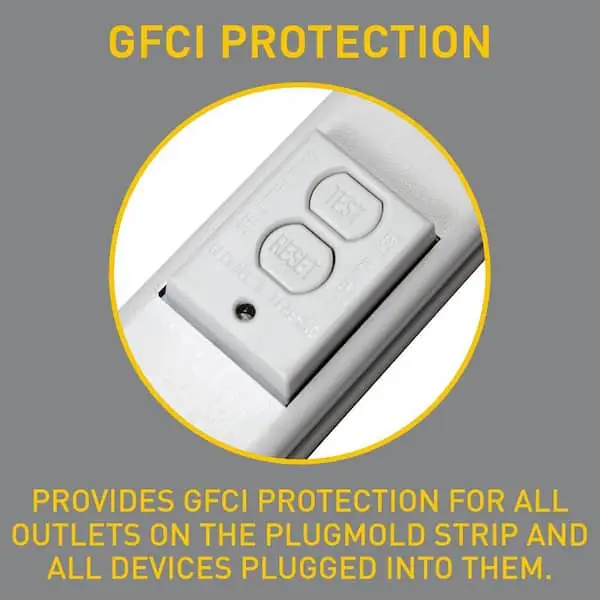
A: Yes, per the Legrand product description for the self-test GFCI Plugmold variants: it “provides GFCI protection for all outlets on the plugmold strip and all devices plugged into them.” That’s the intended design claim across the included manufacturer pages.
Q: What’s the electrical rating?
A: The provided specs consistently list 15A and 125V for these Plugmold GFCI assemblies. Amazon also lists “amperage 15 amps” and “output current 15 amps,” aligning with the manufacturer specifications.
Q: Is it tamper-resistant?
A: Yes. Amazon’s feature list explicitly calls it a “tamper-resistant system” with a “built-in shutter system” intended to block foreign objects. The Legrand pages also describe “tamper-resistant receptacles” meeting NEC tamper-resistant requirements.
Final Verdict
Legrand Wiremold Plugmold 2000 Series Hardwired Power Strip with GFCI, White looks like a safety-first, code-oriented multioutlet solution on paper, but the dataset only contains one real consumer sentiment datapoint: 3.9/5 stars on 19 Amazon reviews. Buy if you’re a homeowner or facilities buyer who specifically wants a hardwired, low-profile, GFCI-protected, tamper-resistant outlet run and you’re comfortable with a product that doesn’t have overwhelming user-love signals here. Avoid if you need abundant real-world install and reliability stories in the data before committing—and consider secondary-market pricing if you’re value hunting and can manage the risk.