Klipsch R-41M Review: Clarity Wins, Bass Falls Short
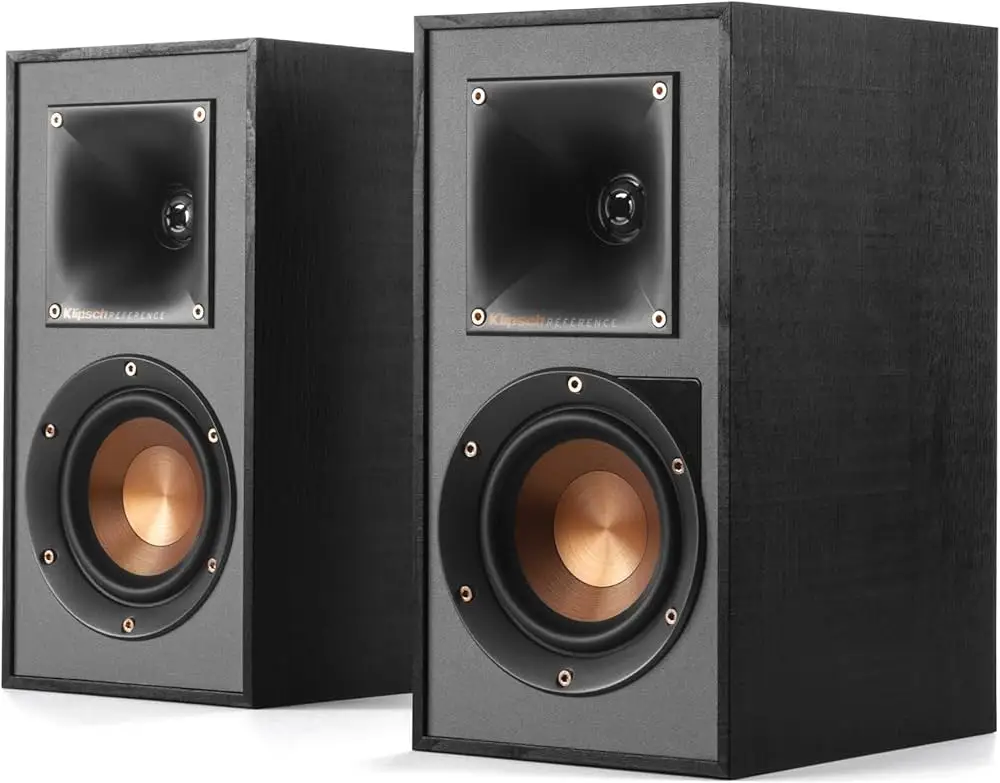
The surprising consensus around the Klipsch R-41M Reference Bookshelf Speakers is that they deliver far more punch than their compact form suggests — scoring an 8.6/10 from aggregated user sentiment. Across Reddit, Best Buy, Trustpilot, and Crutchfield, owners consistently describe these 4-inch driver speakers as "small but mighty," excelling in clarity and dynamics, especially for rock, pop, and home theater use. However, their bright high-end and limited bass extension make them best suited for listeners who can pair them with a subwoofer or tweak EQ settings.
Quick Verdict: Conditional — Excellent for detail-oriented listeners in small to medium rooms, but bass lovers will need a subwoofer.
| Pros | Cons |
|---|---|
| Clear, detailed highs with horn-loaded tweeter | Bright treble can be fatiguing for some |
| Compact size fits tight spaces | Bass drops sharply below ~68Hz |
| Strong build quality, sleek design | Marketing claims 200W power handling — actual RMS closer to 50W |
| Versatile for stereo or surround setups | Mids can feel recessed |
| High efficiency — easy to drive with modest amps | Requires careful pairing for tonal balance |
Claims vs Reality
Klipsch markets the R-41M as delivering "clarity, dynamics, and detail" thanks to its 90x90 Tractrix horn and Linear Travel Suspension tweeter. On paper, the 68Hz–21kHz range and 200W peak handling imply a capable performer. In reality, users confirm these speakers shine in high-frequency reproduction. A Best Buy reviewer noted: "Mid's and high's are solid with these bookshelf speakers," but added that "for full sound you need a subwoofer to augment the LFE and lower end spectrum."
Another claim is their "maximum versatility" for use as mains or surrounds. Reddit user feedback supports this — one buyer who installed them in a 12'x12' editing suite said they were "a perfect companion" to a compact Class D amp, producing a balanced sound after treble adjustments. However, that same user acknowledged the bass "drops like a rock below 60Hz," making them unsuitable for bass-heavy genres without support.
Klipsch's stated 200W power handling has confused buyers. Trustpilot reports highlight that the rear label states "50 watts," leading to questions about spec accuracy. For most home setups, their high 90dB sensitivity means they get loud without massive amplification, but the mismatch between marketing and physical labeling is worth noting.
Cross-Platform Consensus
Universally Praised
The standout praise is for high-frequency clarity. Reddit user u/BudgetAudiophile*** said: "The high frequencies are fantastic, they cut through and are clean. Very little distortion even at 80% volume." This brightness benefits dialogue clarity in home theater and detail retrieval in acoustic or classical music. Best Buy customers echoed this, describing them as "nice crisp sound" with "more dynamic surround sound."
Efficiency is another strong point. Many owners drive them with budget amps like the Fosi BT20A or SMSL AD18, achieving room-filling volume in small spaces. A verified buyer on Trustpilot wrote: "Even at double the price they would be good… for the price I don’t see how you could do better."
Build quality and aesthetics also win approval. Crutchfield customers appreciate the "scratch-resistant, textured wood grain vinyl" and magnetic grilles, which blend into living spaces without looking overly industrial.
Common Complaints
Brightness can become fatiguing. Trustpilot’s analysis warns that "for music it is quickly fatiguing, and the sound gets annoying fast" for treble-sensitive listeners. Rock and pop fans often enjoy the energy, but jazz and classical listeners sometimes dial back highs via EQ.
Bass limitations are widely acknowledged. A Best Buy reviewer using them as mains said, "for full sound you need a subwoofer." Reddit threads repeatedly recommend pairing with subs like the Polk PSW10 or SVS PB-1000 to restore low-end impact. Without augmentation, heavier genres lose weight.
Marketing-spec confusion frustrates some buyers. While the Amazon listing touts 200W handling, the physical units specify 50W RMS. This hasn’t limited performance in typical home setups, but raises trust questions for spec-conscious shoppers.
Divisive Features
The horn-loaded tweeter’s signature Klipsch sound divides opinion. Fans call it "super engaging for rock, metal and classical," while detractors prefer flatter, more neutral speakers like the KEF Q150. Reddit user u/AudioNewbie*** compared them to his KEFs: "The Kefs are far better imo for most indie rock as well as classical… but for $90, these guys are punching well above their weight class."
Use-case versatility also splits the crowd. In surround roles, they’re praised as "great side surrounds" with Dolby Atmos systems. As stereo mains, they impress in small rooms — but larger spaces reveal their bass limitations quickly.
Trust & Reliability
Fakespot’s analysis finds "minimal deception" in reviews, with over 90% high-quality feedback. However, the mismatch between advertised and labeled wattage has led to some skepticism about spec transparency. Long-term Reddit users report consistent performance — one owner running them daily for months with a tube amp noted "absolutely zero complaints" aside from mids being "a tad better" in other models.
Durability stories are positive. Mechanical build holds up, magnetic grilles stay secure, and cabinets resist vibration thanks to reinforced MDF. Owners moving them between desk and theater setups found no degradation in performance.
Alternatives
Reddit discussions frequently compare the R-41M to the KEF Q150 for neutrality and the Micca RB42 for deeper bass in small cabinets. The Q150s offer a smoother treble, making them better for fatigue-prone listeners, but at higher cost. The RB42 delivers more low-end, though at lower sensitivity, requiring stronger amplification.
Klipsch’s own R-51M, with a larger 5.25" woofer, is often cited as a worthwhile step-up for only ~$5 more during sales, offering fuller mids and bass without sacrificing the horn-loaded clarity.
Price & Value
Current pricing fluctuates widely — eBay listings show $115–$250, with steep shipping costs internationally. Reddit users have found them as low as $89.99 at Costco and $97–$140 on Amazon during sales. Resale value holds well due to brand recognition and compact form factor. Buying tips from the community emphasize timing purchases around holiday sales and considering bundle deals with matching Klipsch subs or center channels.
FAQ
Q: Are the Klipsch R-41M good for music without a subwoofer?
A: In small rooms and for genres like acoustic or vocal-centric music, yes — their clarity stands out. For bass-heavy genres, most users recommend adding a subwoofer.
Q: Can they be used as surround speakers?
A: Absolutely. Many Best Buy reviewers and Reddit users run them as side or rear surrounds in 5.1 or 7.1 setups, praising their detail and compact size.
Q: What’s the real power handling?
A: While marketed at 200W peak, the rear label states 50W RMS. Their high sensitivity means they don’t require large amps to get loud.
Q: Are they fatiguing to listen to?
A: Some treble-sensitive listeners find the bright highs tiring over long sessions. EQ adjustments or careful amp pairing can mitigate this.
Q: How do they compare to the Klipsch R-51M?
A: The R-51M offers a larger woofer for fuller mids and bass, making it a better choice if you have space and a slightly higher budget.
Final Verdict: Buy if you prioritize clarity, efficiency, and compact form for small-to-medium rooms. Avoid if you need deep bass without a sub or prefer a neutral sound signature. Pro tip from the community: wait for sales — sub-$100 pricing turns them into an unbeatable value for entry-level Hi-Fi or surround setups.