GE Pro 6-Outlet Surge Protector Review: Space-Saver
“Always remember to look at the ‘jules’… anything below a 1000 is crap,” one Best Buy reviewer insisted—then immediately praised this unit anyway, calling it “just great.” That tension (confidence in protection, confusion about ratings) runs through the feedback on the GE Pro 6-Outlet Surge Protector with Extension Cord, Flat Plug, Wall Mount, White. Verdict: a practical, space-saving power strip people buy repeatedly for tight setups, with a few real-world fit and feature tradeoffs. 8.6/10
Quick Verdict
Yes—if you need a low-profile, behind-furniture surge strip with six outlets and a short cord.
| What buyers focus on | What they liked (with sources) | What they disliked (with sources) |
|---|---|---|
| Low-profile fit | Best Buy reviewers described it as “great for behind furniture” and “nice low profile” (Best Buy). | Some called it “bulky” even while recommending it (Best Buy). |
| Outlet capacity | People highlighted “plenty of outlets” and “outlet count” (Best Buy). | One reviewer noted it “covers the second” outlet on the duplex (Best Buy). |
| Value | “Inexpensive option” and “great deal on the price” came up repeatedly (Best Buy). | None surfaced in the Best Buy excerpt as a recurring negative theme (Best Buy). |
| Surge confidence | Users in storm-prone areas bought it specifically for surges (Best Buy). | A Best Buy reviewer gave questionable joule advice (“below a 1000 is crap”) that conflicts with the 620J spec of the corded strip (Best Buy vs Amazon specs). |
| Missing features | — | “Only missing feature is a usb plug” (Best Buy). |
Claims vs Reality
The marketing pitch is straightforward: surge protection, a flat plug for tight spaces, and easy mounting. On Amazon, the GE Pro 6-Outlet Surge Protector with Extension Cord, Flat Plug, Wall Mount, White is described with “620 joules,” an “integrated circuit breaker,” and “automatic shutdown technology” (Amazon specs). That aligns with why many people buy it—protect electronics while keeping furniture flush to the wall—but user experiences show the fit and usability details matter more than the spec sheet.
Digging deeper into user reports, the “flat plug / low profile” message holds up strongly in lived setups. A Best Buy reviewer framed the use case plainly: “works great in tight spaces… nice low profile so we can push our tv stand back close to the wall” (Best Buy). Another echoed the same problem-solution story—behind couches and beds where cords bend—and said these protectors “make it easier… without having to permanently keep your furniture pulled too far forward” (Best Buy). For people furnishing small rooms or trying to avoid cord strain, that claim matches reality.
Where the story gets messier is surge rating expectations. One Best Buy reviewer urged shoppers to check “jules,” arguing “anything below a 1000 is crap,” and then claimed “this is above it” (Best Buy). Yet the Amazon listing for the corded GE Pro 2 ft model is explicitly “620 joules” (Amazon specs). While that’s not a performance test, it’s a clear mismatch between an enthusiast-style rule of thumb and the product’s stated rating—suggesting some buyers may be conflating different GE models or misunderstanding what they purchased.
Finally, the “expanded power” idea is real, but some setups come with compromise. A Best Buy reviewer liked how it “allows everything at the desk to be plugged in,” listing “lamp, monitor, printer and computer,” but warned it “only plugs in one outlet and covers the second,” adding: “should’ve just made two plugs” (Best Buy). For anyone who needs to keep both receptacles accessible, that’s a practical gap between “six outlets” and how wall spacing works in reality.
Cross-Platform Consensus
A recurring pattern emerged: people aren’t talking about lab-grade surge metrics—they’re talking about living room geometry. Across Best Buy reviews, the most consistent praise centers on how the GE Pro 6-Outlet Surge Protector with Extension Cord, Flat Plug, Wall Mount, White behaves in the real world: behind beds, couches, and TV stands where traditional plugs or strips force furniture away from the wall.
The behind-furniture crowd seems especially satisfied. One Best Buy reviewer summarized the main win: “great for behind furniture so you can push back close to the wall without the plug sticking out!” (Best Buy). Another described the same outcome with a specific household scenario: “we can push our tv stand back close to the wall. Plenty of outlets for our devices” (Best Buy). For apartment dwellers or anyone optimizing a tight room, these stories point to a clear benefit: less protrusion, fewer sharply bent cords, and a cleaner fit.
There’s also a “buy more than one” mentality in the feedback. One Best Buy reviewer said, “i have bought several of them already… i refuse to plug anything into the socket without having a surge protector” and praised that it “goes against the wall no problem [and] works as promised” (Best Buy). That kind of repeat purchasing suggests the product becomes a default solution for people who prioritize basic surge protection and convenience over extra features like USB.
User stories also show the six outlets feel “just right” for everyday clusters. A Best Buy reviewer called it “perfect for an area that i need one constant plug for my freezer and 3 others for my toaster, can opener and fan,” emphasizing they no longer have to “unplug one item to plug in another” (Best Buy). Another described a desk setup where it powers multiple peripherals (Best Buy). For home-office users and small-kitchen corners, the implication is fewer compromises and fewer cable swaps.
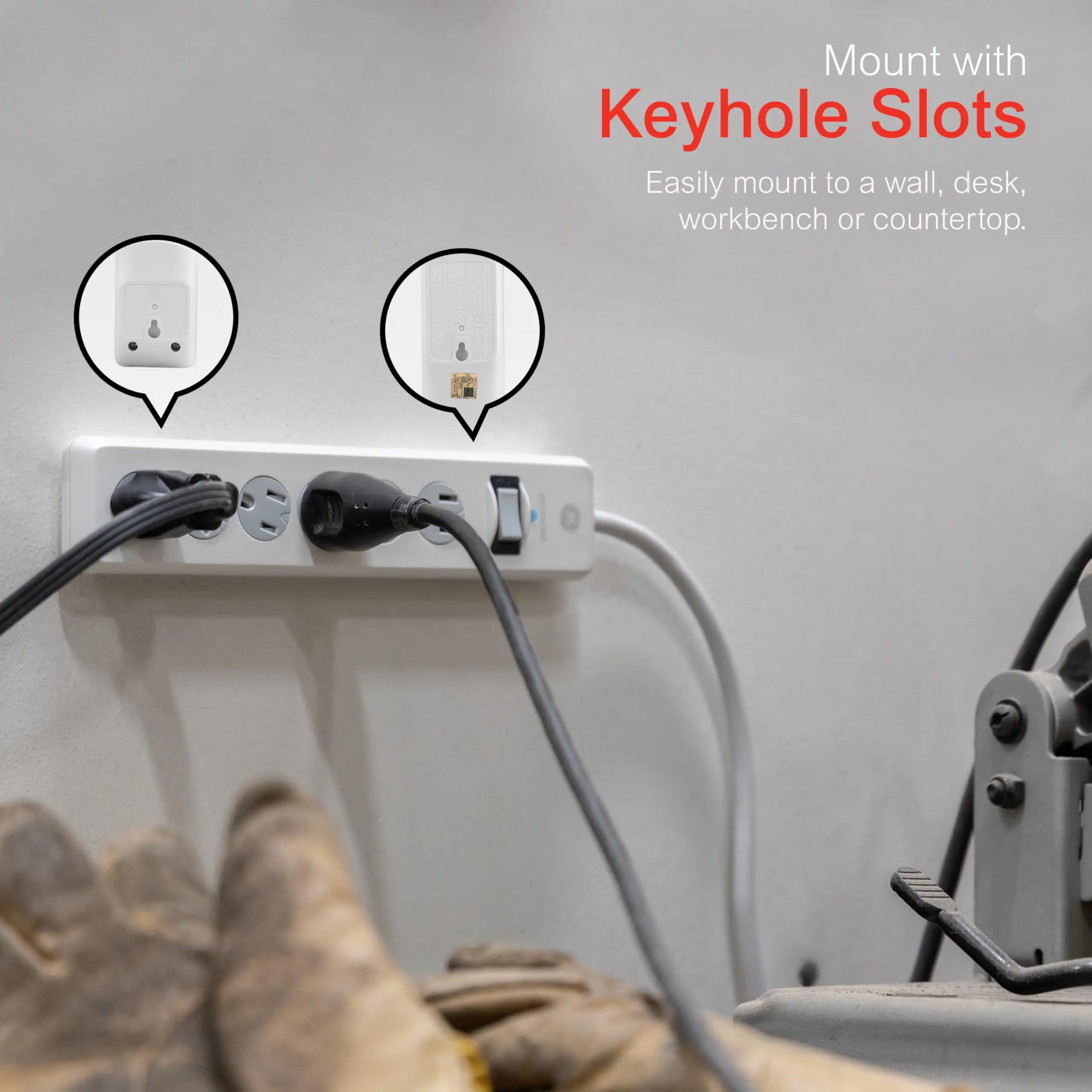
Common complaints exist, but they’re more about shape and feature set than outright failure. A recurring annoyance is port direction and physical footprint: while many call it “flat,” one person still labeled it “bulky and doesn’t look great but works very well” (Best Buy). That’s a style-and-space critique from someone who still recommends it—important for users who care about aesthetics in visible outlets, like open living areas.
Another practical complaint is how it interacts with a standard two-socket wall receptacle. One Best Buy reviewer liked that it “uses the ground stud to stabilize the unit,” but pointed out it “covers the second” outlet (Best Buy). For users who need to keep both receptacles usable—say, one for a vacuum or seasonal lights—that physical blocking can be a dealbreaker even if the surge protector itself performs fine.
Missing USB charging is the other consistent gripe. A Best Buy reviewer summed it up: “gets the job done… only missing feature is a usb plug” (Best Buy). For phone-heavy households, dorm rooms, or bedside setups where USB bricks stick out awkwardly, that absence means you may still end up using bulky adapters—undercutting the “clean behind furniture” goal for some.
Divisive features show up mostly in design preferences and expectations around “surge seriousness.” Some people love the look: “i like the matted white” and described a “clean, steam lined design” for an outlet in an open area (Best Buy). Others are less impressed by appearance, calling it “bulky” even as they acknowledge it “works very well” (Best Buy). And on the surge side, the confidence is high (“i refuse to plug anything… without having a surge protector”), but the joule-number discourse is inconsistent, with at least one reviewer giving advice that doesn’t line up with the 620J listing for the corded model (Best Buy vs Amazon specs). That contradiction can confuse shoppers trying to “buy by the numbers.”
Trust & Reliability
On Best Buy, the visible sample is overwhelmingly positive—4.9/5 with “no negative mentions yet” in the excerpted section (Best Buy). The most “reliability-adjacent” stories focus on steady everyday function: “works as promised,” “does the job,” and “so far so good” (Best Buy). For cautious buyers in stormy areas, one reviewer explicitly bought it for “frequent storms and power surges,” using it to charge a laptop and iPad (Best Buy).
Long-term durability specifics (like “6 months later…”) aren’t present in the provided Reddit dataset, and the “Trustpilot” field repeats Best Buy content rather than distinct verified-platform commentary. That means the reliability narrative here is dominated by short- to mid-term satisfaction statements and repeat purchases—like the user who has “bought several of them already” (Best Buy)—rather than detailed aging reports.
Alternatives
The only concrete competitor mentioned in the provided data is a “power strip surge protector tower” shown via Fakespot comparison content (Fakespot). That source includes harsh complaints about the tower-style product—“only 3 out of 12 outlets used,” “only 3 of the usb plugs work,” and even “switch button makes hissing noise” (Fakespot). In contrast, the Best Buy feedback around the GE Pro 6-Outlet Surge Protector with Extension Cord, Flat Plug, Wall Mount, White is focused on fit, outlet direction, and missing USB—not widespread malfunction in the excerpted reviews (Best Buy).
At the same time, the Fakespot text also includes anxiety about surge protectors in general, mentioning “reviews about fires and frying appliances” and “worried this pos will actually burn my house down” (Fakespot). That’s not tied to a clearly verified purchase identity in the dataset and reads more like aggregated snippets, but it shows the emotional baseline some shoppers bring to this category: they want reassurance, not just extra outlets. For those users, the GE’s mainstream retail presence and consistent positive retail reviews may feel safer—even if the GE model here doesn’t offer USB or unusually high joule numbers (Amazon specs; Best Buy).
Price & Value
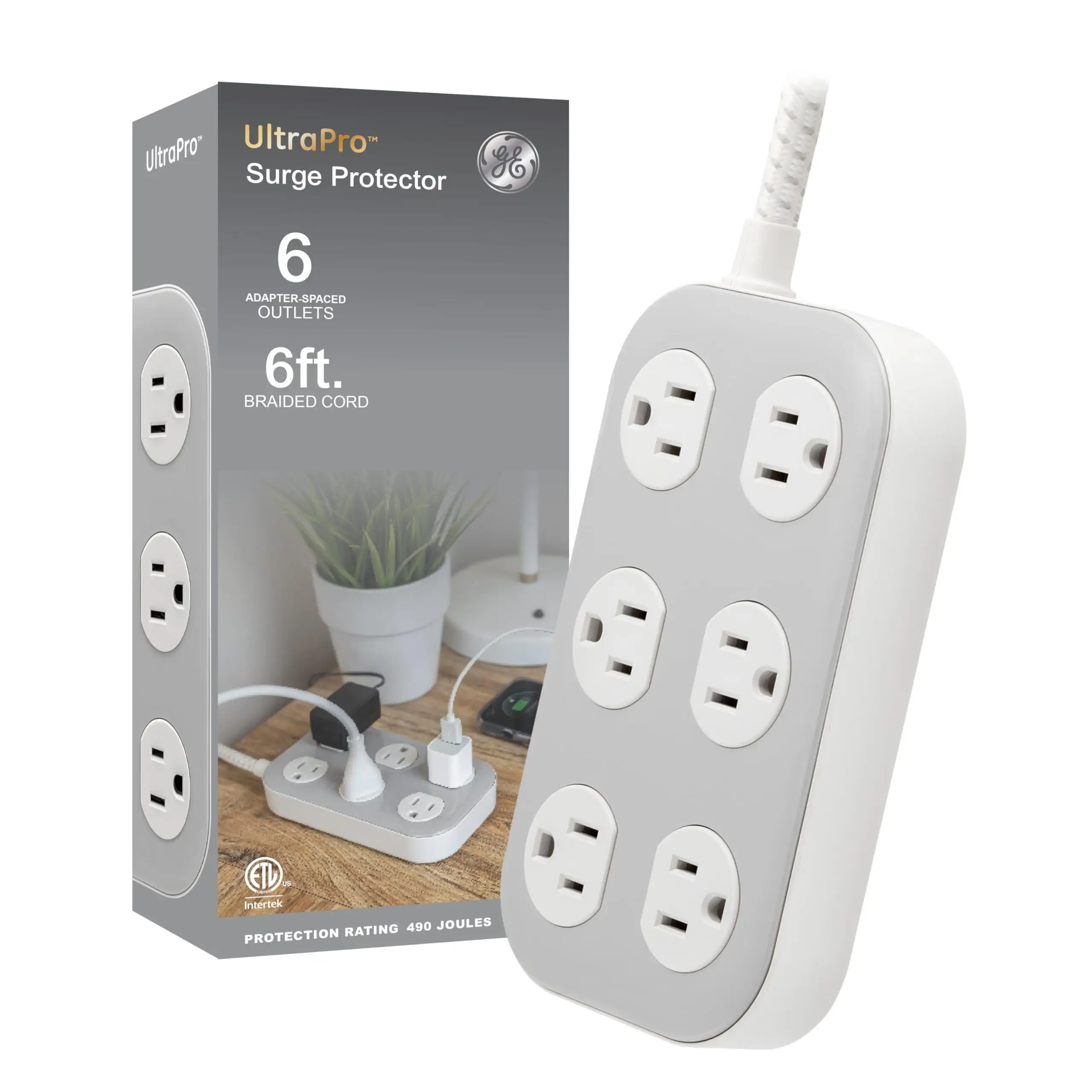
On Amazon, the GE Pro 6-Outlet Surge Protector with Extension Cord, Flat Plug, Wall Mount, White appears as a low-cost staple: the 1-pack is listed at $8.99 (down from $12.99) with a very high review volume and a 4.7/5 rating (Amazon specs). The 2-pack is presented at $15.17 (about $7.59 each) (Amazon specs). Those price points match the “inexpensive option” framing from Best Buy reviewers and help explain the repeat-buyer behavior (Best Buy).
Resale and marketplace pricing in the provided eBay data looks higher than Amazon’s discounted pricing in some cases: one eBay listing shows $14.99 each plus shipping for the 2 ft 620J strip (eBay). For buyers who can get the Amazon price, that gap reinforces why people call it a good deal when discounted (Amazon specs; Best Buy). For people shopping outside Amazon (or internationally), marketplace markups may reduce the value advantage.
Community buying tips are mostly implicit: shoppers keep emphasizing geometry and placement. The most repeated “tip” is to choose this style if you’re fighting tight clearances—behind a bed, couch, or TV stand—where a standard plug would force furniture forward (Best Buy). Another implied tip is to think about outlet blocking: if you must keep both wall sockets available, factor in that at least one reviewer said it “covers the second” receptacle (Best Buy).
FAQ
Q: Does it work well behind furniture like a couch or TV stand?
A: Yes. Best Buy reviewers repeatedly describe it as “great for behind furniture” and say the “low profile” design lets them “push our tv stand back close to the wall” without the plug sticking out (Best Buy).
Q: Will it block the second outlet on a standard wall receptacle?
A: It can. One Best Buy reviewer wrote it “only plugs in one outlet and covers the second,” even though they liked that it uses the ground stud to stabilize the unit (Best Buy). If you need both receptacles, plan around that.
Q: Does it include USB ports for phone charging?
A: No, and some buyers wish it did. A Best Buy reviewer said it “gets the job done” but the “only missing feature is a usb plug” (Best Buy). Expect to use USB power bricks if you need USB charging.
Q: What surge rating is it supposed to have?
A: Amazon lists the 2 ft GE Pro 6-outlet model at “620 joules” (Amazon specs). However, a Best Buy reviewer discussed joule ratings and claimed “this is above” 1000, which conflicts with the Amazon spec for this model (Best Buy vs Amazon specs).
Q: Is it considered a good value buy?
A: Yes, based on pricing and retail feedback. Amazon shows a low sale price (e.g., $8.99 for the 1-pack) with a 4.7/5 rating across many reviews, and Best Buy reviewers describe it as an “inexpensive option” and a “great deal on the price” (Amazon specs; Best Buy).
Final Verdict
Buy if you’re a small-space renter, dorm resident, or home-office user who needs a surge protector that sits close to the wall—especially behind beds, couches, and TV stands. Best Buy reviewers repeatedly praise that it “works great in tight spaces” and lets furniture sit closer without bending cords (Best Buy).
Avoid if you need built-in USB charging or must keep both wall receptacles accessible; at least one reviewer said it “covers the second” outlet, and another called out that the “only missing feature is a usb plug” (Best Buy).
Pro tip from the community: treat outlet direction and clearance as the deciding factor—one reviewer specifically loved having outlets “on the sides so that they do not protrude out into the room,” making it easier to push furniture flush (Best Buy).