GE Personal Security Door/Window Alarm Review: 7.4/10
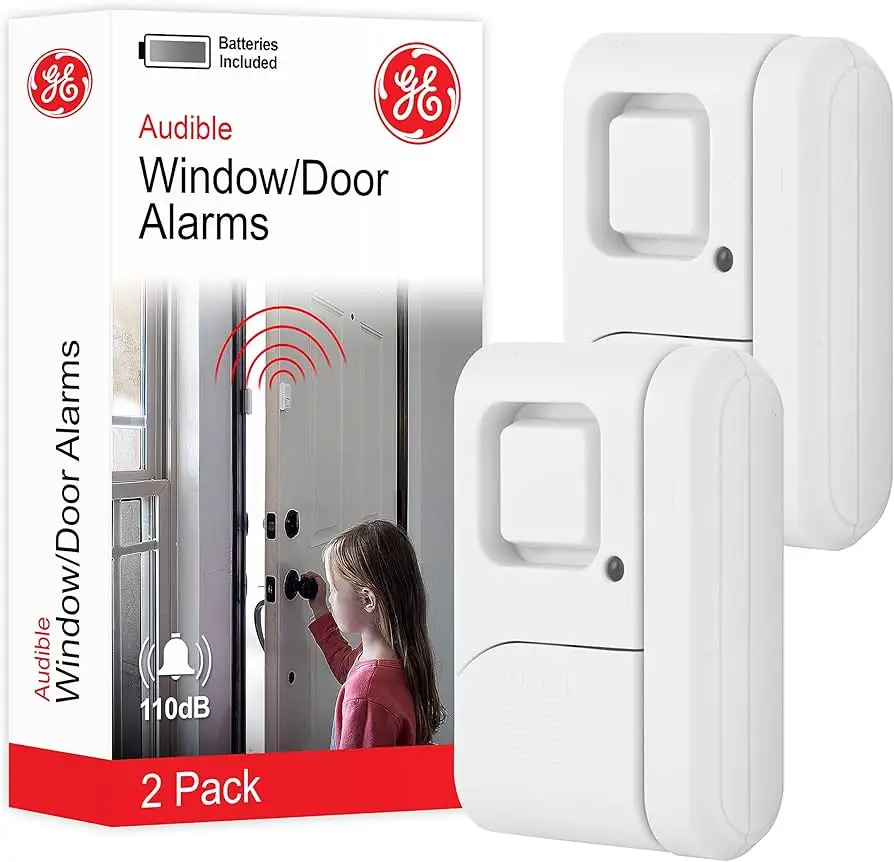
“Stick one of these on your door so that he at least scares the shit out of himself when he comes in unannounced.” That single Reddit line captures the core appeal of the GE Personal Security Window and Door Alarm, 2 Pack, White: a cheap, peel-and-stick noise-maker meant to startle, alert, and deter.
Based on the feedback and listings provided, the verdict is conditional: 7.4/10—strong as a simple, no-frills alert for doors/windows, but user reports raise questions about “120 dB” loudness in real homes and about how long the alarm continues once the door/window is re-closed.
Quick Verdict
Conditional — Yes if you want a basic door/window screech or chime without wiring; avoid if you need an alarm that keeps blaring after the door is shut or that reliably carries to neighbors.
| What it’s like in real use | Pros (from users) | Cons (from users) |
|---|---|---|
| Peel-and-stick “wake-up” alert | Simple deterrent idea for renters | Some report it’s “not very loud” |
| Entry monitoring (kids/pets) | Chime/alarm switch flexibility | Some report alarm stops when re-closed |
| Low-cost coverage | “Cheap and easy to stick on” | Concerns about neighbor-audibility |
| Small home/apartment security layer | Useful for “maintenance people”/unexpected entry | Mounting expectations can differ (tape vs screws) |
Claims vs Reality
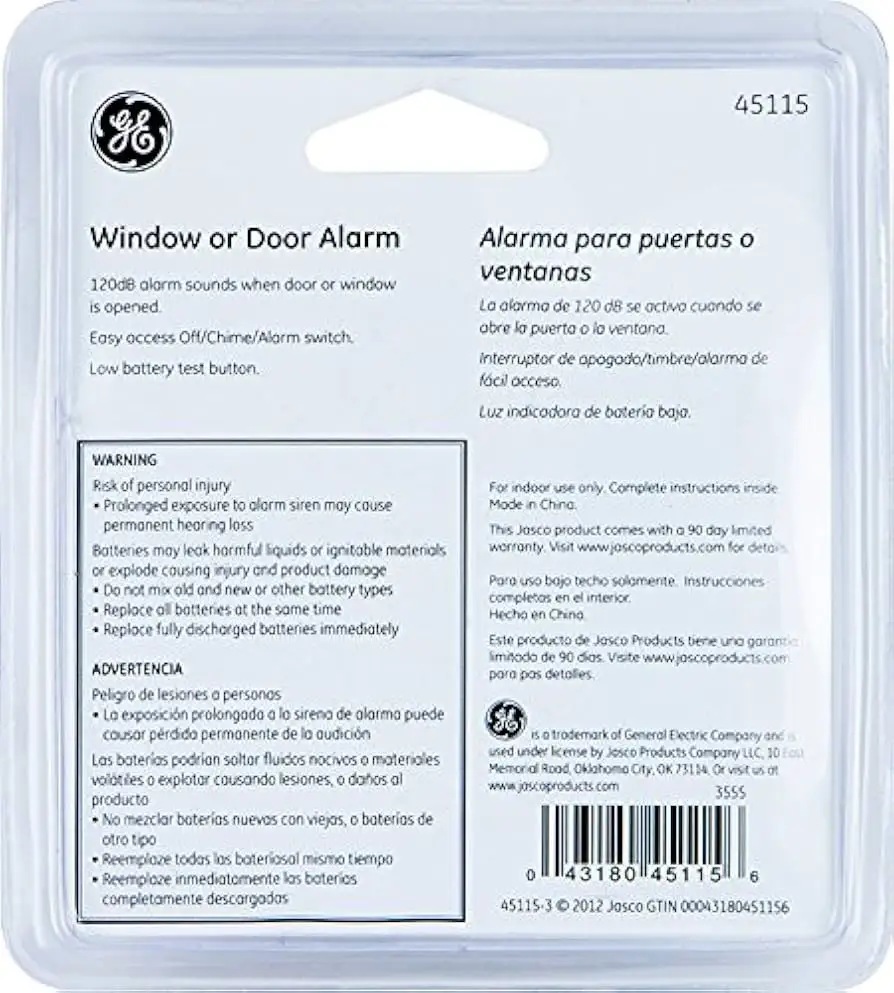
“120-decibel alarm” is the headline spec across the Amazon listing for the GE Personal Security Window and Door Alarm, 2 Pack, White, described as “loud enough to make a would-be intruder think twice.” Digging deeper into user feedback, at least one reviewer challenges what that loudness feels like in practice. A reviewer on Amazon wrote: “The window alarms aren’t very loud… they really aren’t loud enough to be heard by a neighbor, even in attached condos.” While officially rated as 120 dB, this kind of comment suggests the lived experience may depend heavily on placement, room layout, and what you expect “loud” to accomplish (wake you vs. alert neighbors).
The “alarm vs chime” switch is framed as user-friendly, and Reddit users repeatedly describe using that flexibility for practical, non-burglary scenarios. One Reddit comment recommends it for unwanted entries: “Stick one of these on your door…” Another Reddit user suggests nuanced setups: “You could put one on the dog door that just beeps and one on the physical door that screeches. It has a switch to change the setting on how it announces activity.” For parents or pet owners, that mode choice isn’t a gimmick—it’s the difference between an everyday “someone opened the door” notification and a full-on siren.
The “easy install” promise (double-sided tape, no wiring) is also central to marketing. Community discussion largely aligns: a Reddit user calls them “cheap and easy to stick on.” But there’s a subtle gap around mounting expectations when people cross-shop similar alarm kits: an Amazon reviewer of a related GE kit complained, “the screws to mount the sensors, which are mentioned in the instructions, aren’t included. (double-sided tape is included.)” Even when tape is the intended path, the reality is some buyers expect screws, especially for doors with tricky frames or sliding glass alignment.
Cross-Platform Consensus
A recurring pattern emerged across the community-style feedback: people don’t necessarily buy the GE Personal Security Window and Door Alarm, 2 Pack, White expecting a full security system—they buy it as a frictionless “noise tripwire.” On Reddit, it shows up as a practical answer to real-life problems like landlords or maintenance entering unexpectedly, or for basic “did someone open that door?” awareness. One Reddit user described a scenario with apartment maintenance entering early, then said, “I finally ended up getting a doorbell alarm, and this worked wonders. It attaches by sticker… and you can set it to chime or alarm when someone opens the door. It’s very loud, so it should wake you up.” That story maps directly onto the product’s role for renters: a no-drill, removable alert that restores a sense of control.
For families focused on child safety rather than burglary, the same “loud or chime” flexibility becomes a behavior deterrent. A reviewer on ChickAdvisor shared a specific use case: “I bought these alarms… because I have two autistic kids that need to be kept safe.” They described how the volume changes household behavior: “They are so loud… perfect for alerting my husband and i when a door is opened,” and added, “being autistic, my kids don’t like loud noise… amazing at deterring our kids from touching the doors.” For that user persona, the alarm isn’t about scaring criminals—it’s about preventing wandering and creating immediate awareness.
Another consensus theme is “good enough for the price” expectations. Even when users complain, they often temper it with cost realism. A reviewer on Amazon summed that tradeoff bluntly: “Can’t really complain for the price, but still, i was hoping it would have been a little better.” That kind of framing suggests many buyers treat this as a disposable, low-cost layer—useful even if it’s imperfect—rather than a long-term, primary defense.
Universally Praised
Digging deeper into the positive stories, the most consistent praise is about simple installation and immediacy. Renters and apartment dwellers appear to benefit the most because the product is positioned as “no wiring” and tape-mounted. Reddit user anecdotes repeatedly emphasize quick deployment: “cheap and easy to stick on,” and “It attaches by sticker, so there’s no alteration to the structure.” For a tenant dealing with unannounced entry, the value is speed: you can stick it on today and get an instant signal the next time a door opens.
The second widely appreciated element is the mode switch—chime for everyday monitoring, alarm for deterrence. The Reddit suggestion to mix modes—“one… that just beeps and one… that screeches”—illustrates how households adapt it: chime for a dog door or a frequently used entry, and alarm for the primary exterior door. For parents, that becomes a simple “door opened” cue; for roommates, it can function like a basic privacy boundary.
Finally, the emotional payoff—peace of mind—shows up most clearly in parenting narratives. The ChickAdvisor reviewer didn’t talk about specs; they talked about outcomes: “we definitely hear it the second our start to open a door,” and the deterrent effect on both kids and even pets: “even my dog whimpers when the alarms sound.” That’s a vivid description of exactly what some buyers want: unmistakable feedback that a boundary was crossed.
Summary (praised most often):
- Peel-and-stick installation for renters (“attaches by sticker”)
- Chime vs alarm flexibility (“beeps” vs “screeches”)
- Immediate awareness for child safety (“perfect for alerting”)
Common Complaints
The loudness claim is the biggest practical debate point. While the product is marketed as a “120-decibel alarm,” one Amazon reviewer’s experience was that the “window alarms aren’t very loud,” adding that they “really aren’t loud enough to be heard by a neighbor.” For condo owners or anyone relying on neighbor attention as part of their safety plan, that matters: an alarm that wakes you might still fail the “public deterrent” expectation.
A second complaint is about alarm behavior once the entry is re-closed. The same Amazon reviewer warned: “they turn off as soon as the window is closed,” and described a scenario on a sliding-glass door where “a burglar could open the door, come inside, and close the door, and the… alarm would only go off for a few seconds.” For users who want persistent noise until manually disarmed, this is a major functional mismatch—even if the product still works as an “instant alert.”
There are also complaints around usability details when users step up to GE’s keypad-based kits (a related product in the provided data). That Amazon reviewer wanted more control without opening the unit: “it would have been nice if there was a way to set the chime / alarm mode from the keypad… instead of having to open it (with a screwdriver).” While that critique targets a kit, it signals a broader theme: some buyers quickly want more “system-like” convenience than these basic alarms provide.
Summary (common pain points):
- Loudness may not match “neighbor can hear it” expectations
- Alarm may stop quickly after re-closing
- Some buyers want more control features than the design offers
Divisive Features
The “simplicity” itself splits people. For some, the lack of app integration or smart features is a benefit—nothing to configure, just stick it on and go. On Reddit, this shows up as quick, practical advice: “use those little door monitors… they’re cheap and easy to stick on.” For a renter or someone needing a fast deterrent, that’s exactly the point.
For others, simplicity becomes limitation when they expect smarter behavior—like warning beeps, delays, or persistent alarms. The Amazon reviewer who wanted “a 10-second warning beep before the alarm goes off” and better control over modes illustrates that divide. People wanting a “real alarm system feel” may find the core design too rudimentary, even if it works as a basic entry noise-maker.
Trust & Reliability
Trustpilot data in the provided sources appears to be a blog-style compilation (“GE Door Alarm Review - A Compilation Of Product Reviews By Actual Users”) rather than direct, platform-native consumer complaints or verified buyer threads. Because it reads like a narrative product review and not user-sourced complaint patterns, it doesn’t meaningfully signal scam risk on its own.
Long-term durability stories (“6 months later…”) aren’t explicitly present in the Reddit excerpts provided. The Reddit conversation is more situational and advice-driven—focused on immediate deterrence (“scares the crap out of your neighbor”) and quick solutions for renters and safety planning (“get some of these… door/window alarms and put them on any door or window he can get in”). The reliability takeaway from that style of feedback is less about longevity and more about whether the device creates an immediate, obvious alert when opened.
Alternatives
Only a few alternatives are explicitly mentioned in the provided data. Reddit users bring up “Ring camera” as a more comprehensive option. One Reddit user, in a broader personal safety context, advised: “also really consider getting a ring camera, or other type of security camera system. get some of these, or similar, door/window alarms…” That framing treats the GE Personal Security Window and Door Alarm, 2 Pack, White as a layer—cheap and immediate—while a camera system handles identification and recording.
Another alternative present in the dataset is a different product line entirely: the Geeni Wi‑Fi door/window sensor (Home Depot reviews). Those reviews emphasize phone notifications, app setup, and delays. One Home Depot reviewer noted timing limitations: “it takes at least six seconds of being open before it will notice it.” That’s a very different tradeoff versus GE’s simple audible alarm: Geeni offers smart logs and notifications, but users describe sensitivity delays and app constraints; GE offers instant local noise but no smart history.
Price & Value
On Amazon, the GE Personal Security Window and Door Alarm, 2 Pack, White is shown at $11.36 (list price $12.99) in the provided listing. That low entry price shapes expectations: users appear willing to accept limitations if the device still provides a basic deterrent and wake-up alert. The Amazon reviewer criticism ends with a value hedge: “Can’t really complain for the price…”
Resale/market pricing snapshots from eBay show new packs listed around $11.95 + shipping and another listing at $17.99 + shipping. The wide shipping costs in those examples make a practical point for bargain hunters: community “buying tips” here would be to watch shipping totals, because the base item is inexpensive and shipping can erase savings.
Walmart’s listing shows a higher price point in the provided data ($22.98) with a strong review count and rating, but without individual user quotes included in your dataset for Walmart. Taken together, the pattern is that Amazon pricing tends to match the “cheap and easy” positioning that shows up in Reddit advice, while marketplace resale can become less attractive once shipping is added.
FAQ
Q: Is the GE window and door alarm actually loud enough to deter someone?
A: It’s marketed at “120 dB,” but user feedback suggests loudness can feel inconsistent in real homes. An Amazon reviewer said: “The window alarms aren’t very loud” and “they really aren’t loud enough to be heard by a neighbor,” while other users describe it as “very loud” for waking them up.
Q: Does the alarm keep sounding if someone opens and then closes the door quickly?
A: Some user feedback suggests it may stop once the door/window is closed. An Amazon reviewer noted: “they turn off as soon as the window is closed,” warning that on a sliding door “the… alarm would only go off for a few seconds” if the door is opened and then shut again.
Q: Is this a good choice for renters who can’t drill or wire anything?
A: Many user stories point to “sticker” installation as the key benefit for renters. A Reddit user described a similar sticker-mounted alarm as working “wonders,” and another Reddit comment recommended them as “cheap and easy to stick on,” especially for apartments and landlord/maintenance concerns.
Q: Is it useful for child safety (kids opening doors)?
A: Yes, several user stories focus on this use case. A ChickAdvisor reviewer wrote: “I bought these alarms… because I have two autistic kids,” adding they’re “so loud” and “perfect for alerting” parents when a door opens, and that the noise helped deter their kids from touching doors.
Final Verdict
Buy the GE Personal Security Window and Door Alarm, 2 Pack, White if you’re a renter, parent, or apartment dweller who wants a peel-and-stick “door opened” alert and a simple chime/alarm switch without wiring.
Avoid it if you need an alarm that reliably carries to neighbors or one that keeps blaring after the door/window is re-closed; as one Amazon reviewer warned, “the window alarms aren’t very loud,” and “they turn off as soon as the window is closed.”
Pro tip from the community: set different entry points to different modes—Reddit user advice suggests using “one… that just beeps” for frequent-use doors and “one… that screeches” for the main exterior door.