GE 6-Outlet Surge Protector Review: Solid Value (7.9/10)
“This thing worked great for 5 months and today it started making a terrible buzzing noise and it sparked when i tried putting a plug in.” That single line captures the tension around the GE 6-Outlet Surge Protector Power Strip with Flat Plug: most buyers call it a simple, well-priced solution—while a smaller but louder group raises alarming reliability and safety concerns. Verdict: a strong budget pick if you treat it like a basic surge strip and watch for defects — 7.9/10.
Quick Verdict
Conditional Yes — great value and convenience for everyday setups, but pay attention to switch behavior, fit, and any unusual noise/heat.
| What people agree on | Evidence (source + quote) | Who it’s best for | Watch-outs |
|---|---|---|---|
| Long cord solves awkward outlets | “the cord length is perfect for my needs” (Reddit community analysis via TheReviewIndex) | Apartments, living rooms, behind-sofa runs | Some want even longer cords (Best Buy) |
| Flat plug fits behind furniture | “the flat power plug saves space on the back of the sofa” (TheReviewIndex) | TV stands, beds, couches | Plug style mismatch reported (TheReviewIndex) |
| Outlet covers reduce dust & kid access | “the twist outlet covers are great for keeping dust and debris… out” (TheReviewIndex) | Workshops, remodeling, kids’ rooms | A few find covers not sturdy for childproofing (TheReviewIndex) |
| Good price for a 2-pack option | “got 2 for a great price!” (TheReviewIndex) | Home offices, dorms | Occasional defective units mentioned (TheReviewIndex/Fakespot) |
| “Does the job” basics | “does the job” (TheReviewIndex) | Simple power strip needs | Reliability complaints exist (TheReviewIndex/Fakespot) |
Claims vs Reality
The marketing message is straightforward: six outlets, surge protection (often listed at 800 joules), a flat plug for tight spaces, and twist-to-close safety covers. Digging deeper into user reports, the day-to-day reality mostly matches—until you hit the edge cases: bulky adapters, switch quirks, or units that arrive defective.
Claim 1: “Expand your power” with six usable outlets. In many setups, users treat it like a centralized hub for chargers, lamps, and desk gear. One reviewer summed up the utilitarian appeal with: “allows everything at the desk to be plugged in - lamp , monitor , printer and computer” (Best Buy). But the same data set shows a recurring caveat: bigger bricks can crowd neighbors. A reviewer in the community analysis put it plainly: “there is no usb and no dedicated room for larger plugs, but great for normal use!” (TheReviewIndex). For people running a MacBook charger plus multiple wall warts, that spacing limitation becomes the hidden constraint.
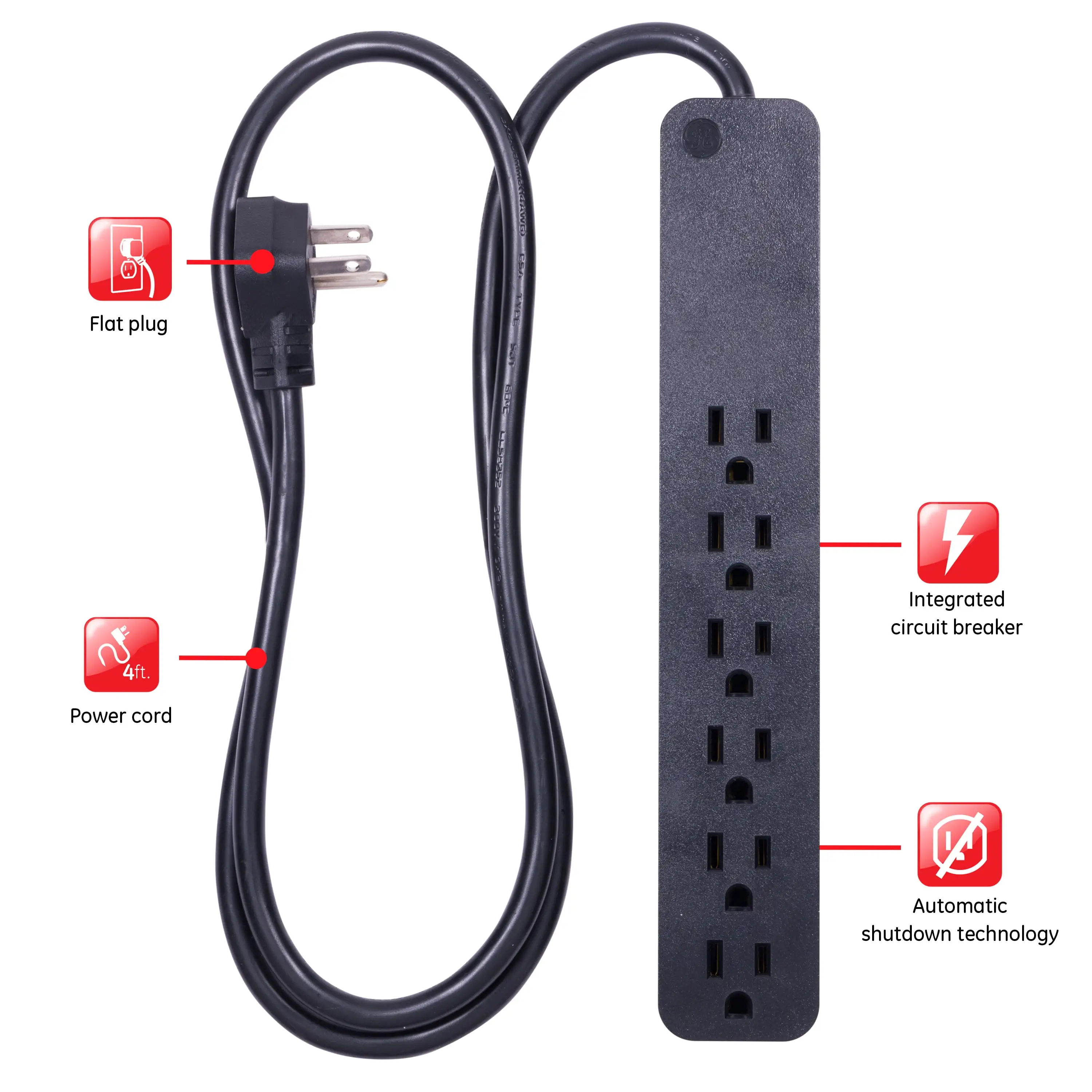
Claim 2: Flat plug = furniture finally sits flush. This is one of the clearest points of alignment between product positioning and lived experience. Users repeatedly describe solving behind-the-sofa and behind-the-bed problems. In the community review analysis, one person wrote: “the flat head makes these easy to plug in behind furniture” (TheReviewIndex), while another highlighted the same benefit: “the flat power plug saves space on the back of the sofa” (TheReviewIndex). Still, there’s friction: “the plug style is different than what is shown on the pictures for the product” appears among marketplace complaints (TheReviewIndex), suggesting some buyers feel the listing photos don’t always match what arrives.
Claim 3: Safety and protection you can “see,” with covers and indicator light. Many users like the physical outlet covers as dust blockers—especially in messy environments. One reviewer said: “perfect to keep dust and dirt away” (Best Buy), and another described remodeling use: “the twist outlet covers are great for keeping dust and debris… out” (TheReviewIndex). The gap shows up when reliability is questioned. While officially sold around an 800-joule protection class on multiple listings (Amazon), some users report failures and worrying symptoms like buzzing or sparking: “it started making a terrible buzzing noise and it sparked” (TheReviewIndex). That’s not a measured surge performance test—just user experience—but it’s a meaningful contradiction to the expectation of “set it and forget it” safety.
Cross-Platform Consensus
A recurring pattern emerged across platforms: people buy this GE strip for one specific problem—awkward outlet placement—and feel relieved when it simply reaches and fits. The stories are rarely glamorous; they’re about reclaiming a living room layout, powering a work-from-home desk, or getting a bedside charging cluster without bending cords into sharp angles.
The cord length praise is relentless in the community analysis. Users describe it in practical terms—“good extension cord” and “nice length cord” (TheReviewIndex)—which matters for renters and apartment dwellers who can’t add outlets. For someone trying to run power from the “wrong” side of a room to a TV, that extra reach means no trip hazard across the walkway. One user spelled out the scenario: needing power “from an outlet on the opposite end of my living room across to my tv” (TheReviewIndex). The implication is clear: for living rooms with inconvenient receptacle placement, the long cord becomes the difference between a clean setup and a cord stretched through traffic.
The flat plug is the second pillar of praise because it changes what you can do with furniture placement. Users repeatedly emphasize how it sits close to the wall. In the community analysis: “the flat-to-wall plugs are great and fit easily behind furniture” (TheReviewIndex). On Best Buy’s wall-tap variant, the same theme shows up as a desire to push furniture back: “great for behind furniture so you can push back close to the wall without the plug sticking out” (Best Buy). Different GE form factors, same user need: low-profile power that doesn’t force a couch to float inches off the wall.
Then there’s the twist-to-close outlet covers, which stand out because users talk about them like a cleanliness tool as much as a child-safety feature. A remodeling context appears directly: “the twist outlet covers are great for keeping dust and debris… out” (TheReviewIndex). For garage and workshop users—where sawdust and grit are part of the environment—those covers are perceived as a small but meaningful safeguard. Best Buy reviewers echo that logic with: “it has covers that can be turned so nothing gets inside” (Best Buy). For parents and pet owners, the covers are also framed as “added safety,” though not everyone believes they’re true childproofing.
Universally Praised
Digging deeper into user reports, the most consistently celebrated features aren’t “techy”—they’re physical design choices that reduce daily annoyance. The long cord + flat plug combination repeatedly enables tight-space routing and behind-furniture installs.
Home office users also show up frequently. One community reviewer described multi-device setups—“laptop , dual monitors , portable fan and cell charger connected” (TheReviewIndex)—and the value is that it consolidates power without juggling wall outlets. For students and dorm-like environments, portability and flexibility matter; the community analysis includes: “great for students , some older homes , travel” (TheReviewIndex), which reads like a common buyer persona: someone managing limited outlets and limited space.
Even the “it’s just a power strip” crowd tends to be happy when it works as expected. The repeated refrain—“does the job” (TheReviewIndex)—shows that many buyers aren’t looking for premium surge management; they want a basic, protected outlet extender that behaves predictably.
After those narratives, the recurring praised points can be summarized:
- Long cord reach: “the cord length is perfect” (TheReviewIndex)
- Low-profile flat plug: “also loving the flat plug” (TheReviewIndex)
- Outlet covers: “great… for safety” and dust control (Best Buy; TheReviewIndex)
- Value: “can’t beat the price” (TheReviewIndex)
Common Complaints
The investigative thread that stands out most is reliability anxiety: reports of switch issues, odd noises, and sparking. Not everyone experiences it, but the language is strong when it happens. One complaint describes unstable power control: “i tried to turn it off , but it kept turning itself back on” (TheReviewIndex). Another focuses on the switch construction: “the power button is very poorly made so turning on and off the power too often might break the power button” (TheReviewIndex). For users who frequently toggle power—say, workshop setups or energy-conscious users who switch off devices nightly—those reports create doubt.
More serious are the safety-adjacent stories. The community data includes: “terrible buzzing noise and it sparked” (TheReviewIndex). Fakespot’s extracted commentary goes further into fear-based reactions: “reviews about fires and frying appliances are cause for me now to purchase something better” (Fakespot). That isn’t a confirmed incident report—just a reaction to reading reviews—but it shows how a few alarming anecdotes can shape buyer trust.
Fit and outlet spacing also come up as practical complaints. People with bulky adapters can lose usable outlets, mirrored in: “no dedicated room for larger plugs” (TheReviewIndex). If your setup relies on power bricks, you may end up effectively using fewer than six outlets without creative placement.
Summary of frequent negatives, after the narratives:
- Switch quirks: “kept turning itself back on” (TheReviewIndex)
- Build/feel concerns: “cheap , lightweight construction” (TheReviewIndex)
- Safety scares (minority but severe): “buzzing… sparked” (TheReviewIndex)
- Bulky plug crowding: “no dedicated room for larger plugs” (TheReviewIndex)
Divisive Features
Even the signature twist-to-close covers split opinion. Many call them a safety and cleanliness win; others worry they’re not sturdy enough for true childproofing. One user cautioned: “they could be a bit more sturdy turning them so it 's not good for " child protectant "” (TheReviewIndex). For parents, that distinction matters: dust covers aren’t the same as a certified child-safety mechanism, and users notice the difference.
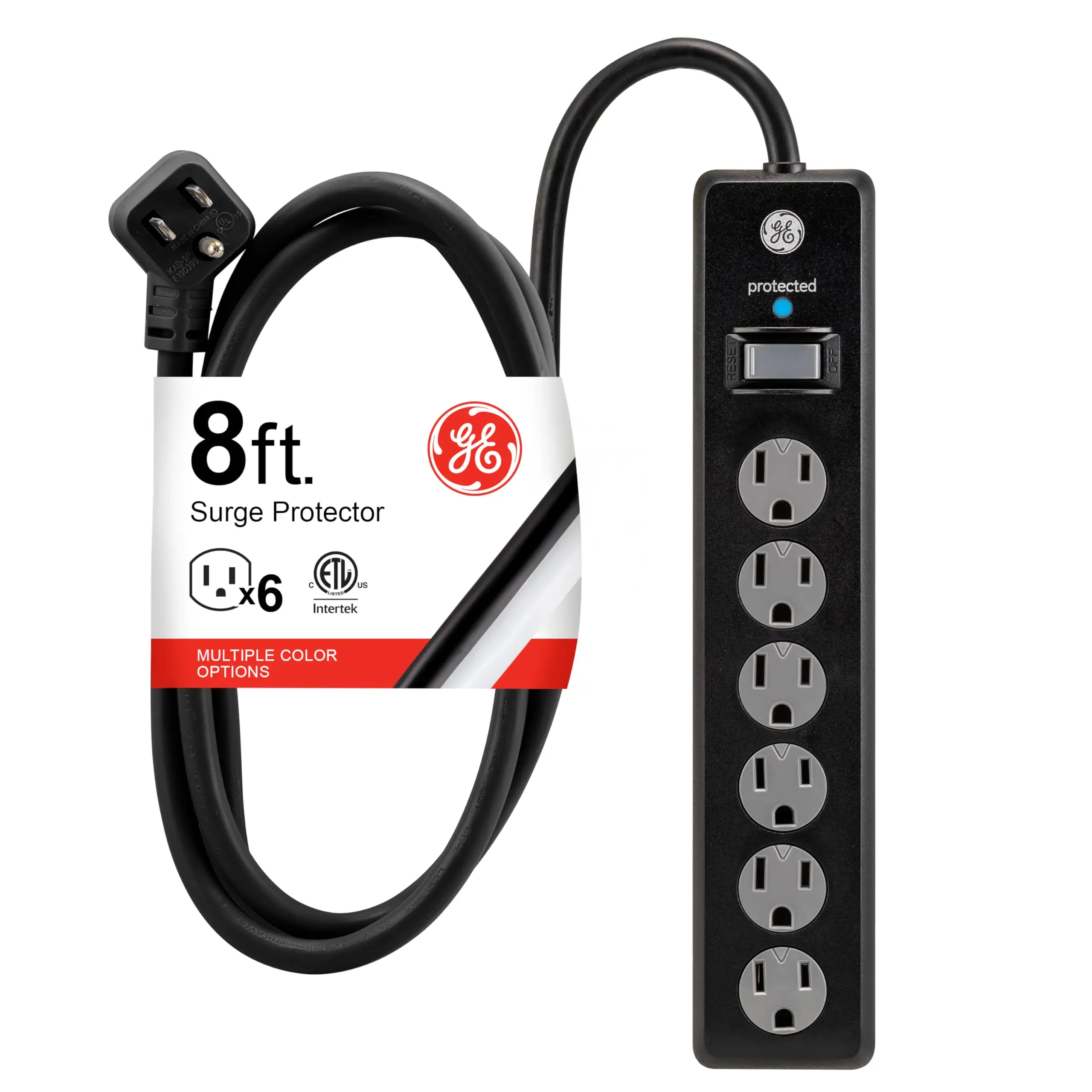
The indicator light is another love-it-or-hate-it detail. Some appreciate visibility—“i like the blue light” (TheReviewIndex)—while others imply it can be too bright at night: “very good except for that light as mentioned by others” (TheReviewIndex). For bedroom use, that tiny LED can become a nightly annoyance.
Trust & Reliability
Trust signals are complicated here because the dataset includes third-party “review analysis” and Fakespot excerpts rather than a clean set of long-form, individually attributable posts. Still, a recurring pattern emerged: when users worry, they worry intensely—often around defects and safety. Fakespot’s extracted text captures both durability optimism and doubt in the same breath: “it is very sturdy” paired with “very thin and cheap plastic which worries me about longevity” (Fakespot). That kind of split suggests inconsistent unit quality or differing expectations for a budget surge strip.
Long-term stories in the community analysis cluster around “so far” timelines: “working great so far” and “i have had this for about 4 months and i have no issues with it” (TheReviewIndex). But the same reliability bucket includes a warning flavor—“was good the first four months” (TheReviewIndex)—implying some failures appear after initial use rather than out of the box. If you’re protecting expensive electronics, those mid-term concerns are exactly what drive buyers toward higher-joule, higher-end options—even if most units never fail.
Alternatives
Only a few alternatives are explicitly mentioned in the provided data, and they’re mostly shown as comparison pages rather than full user-reviewed competitors. Fakespot’s “versus” pages reference a power strip surge protector tower with USB ports (Fakespot), and another “power strip… with 9 outlets… USB-C” style product (Fakespot). Those alternatives are framed around added ports and charging convenience, not necessarily better surge performance.
The tradeoff, based on the excerpts, is that multi-USB towers can introduce their own reliability headaches. One Fakespot excerpt complains: “only 3 of the usb plugs work” (Fakespot). So the “upgrade” path isn’t automatically safer—just different. If you want the GE because it’s a simple six-outlet strip with a long cord and flat plug, the main alternative implied in the dataset is “more outlets + USB,” but user text suggests those can come with their own defect risks.
Price & Value
On Amazon, the GE 6-outlet flat-plug models appear positioned as value staples—often with very high review counts (Amazon). Community sentiment supports the value angle: “got 2 for a great price!” and “can’t beat the price” (TheReviewIndex). Best Buy reviewers echo a budget framing with: “good value… the price can't be beat” (Best Buy). For buyers outfitting multiple rooms—home office, bedroom, garage—that low cost per unit matters more than premium features.
Resale pricing on eBay varies widely depending on listing and shipping, including higher-priced listings for the same general product category (eBay). That spread doesn’t read like strong resale demand; it looks more like opportunistic pricing and availability quirks. The more meaningful “buying tip” from user behavior is simple: many people buy multiples once they find the cord length and flat plug solve their layout problem—“i have ordered at least three of these so far for various purposes” (TheReviewIndex).
Practical buying guidance grounded in the feedback:
- If you need reach, prioritize the longer-cord variants users keep praising: “love how long the cord is” (TheReviewIndex).
- If you use bulky adapters, expect fewer usable outlets: “no dedicated room for larger plugs” (TheReviewIndex).
- If anything feels off early, don’t wait—users mention regret about the return window: “too late to return” (TheReviewIndex).
FAQ
Q: Is the GE 6-outlet flat-plug surge protector good for behind a couch or bed?
A: Yes, that’s one of the most praised use cases. Users repeatedly highlight the low-profile fit, like: “the flat power plug saves space on the back of the sofa” (TheReviewIndex) and “easy to plug in behind furniture” (TheReviewIndex), so furniture can sit closer to the wall.
Q: Does it really have surge protection, and how much?
A: It’s commonly listed around 800 joules on major product pages (Amazon). Many buyers treat it as basic protection—“does the job” (TheReviewIndex)—but a minority report scary failures like “buzzing noise and it sparked” (TheReviewIndex), which fuels doubts for high-stakes electronics.
Q: Do the twist-to-close safety covers actually help?
A: For dust and debris, many users say yes—“great for keeping dust and debris… out” (TheReviewIndex). For childproofing, opinions split; one user warned the covers “could be a bit more sturdy… not good for " child protectant "” (TheReviewIndex), so some parents may want additional safety measures.
Q: Will all six outlets be usable with big power bricks?
A: Not always. Multiple users mention limited accommodation for bulky plugs: “no dedicated room for larger plugs” (TheReviewIndex). For laptop chargers and oversized adapters, you may need to place bricks on the ends or accept that you’ll effectively use fewer than six outlets.
Q: Are there reliability issues I should watch for early?
A: Some users report switch problems and defects. Examples include: “kept turning itself back on” (TheReviewIndex) and concerns that “turning on and off… might break the power button” (TheReviewIndex). If you notice odd behavior, heat, or noise, users strongly imply returning promptly.
Final Verdict
Buy if you’re a renter, student, or home-office user who mainly needs a long extension cord, a flat plug for tight spaces, and a simple six-outlet surge strip—because many buyers say the “cord length is perfect” and the flat plug “saves space” (TheReviewIndex). Avoid if you’re powering expensive, mission-critical gear and can’t tolerate even a small chance of defects, especially given reports like “buzzing… sparked” (TheReviewIndex) and switch complaints.
Pro tip from the community mindset: if it arrives and anything feels wrong, don’t “wait and see”—multiple users echo the regret of delayed testing with “too late to return” (TheReviewIndex).