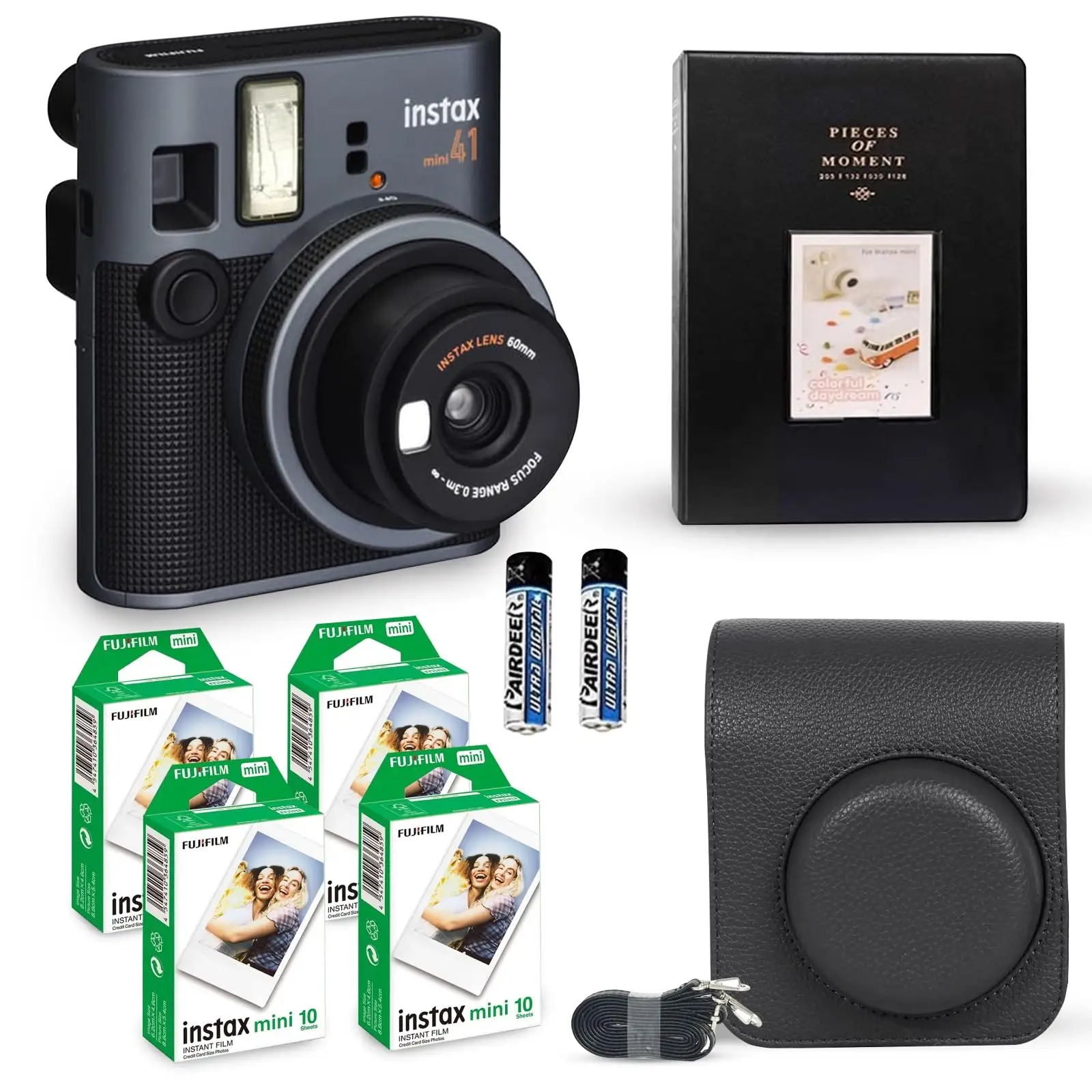
Fujifilm Instax Mini 41 Review – Stylish Yet Limited Verdict
Digging into cross-platform user feedback, the Fujifilm Instax Mini 41 Instant Camera stands out as one of the most talked-about instant cameras of 2025, praised for its sleek yet practical retro-modern design and ease of use. Across Amazon, Reddit, Trustpilot, and multiple expert review platforms, the verdict tilts in its favor for casual shooters and style-conscious owners, earning it an average community rating around 8.5/10. However, the always-on flash and reliance on AA disposable batteries trigger repeated criticism, especially among eco-conscious buyers and those shooting indoors.
Quick Verdict: Conditional — Excellent for style-minded instant photography fans who value simplicity, but not ideal for flash-sensitive or battery-conscious users.
| Pros | Cons |
|---|---|
| Stylish retro-modern design that feels premium | Flash cannot be disabled, causing occasional overexposure |
| Exceptionally easy to use with minimal controls | Uses disposable AA batteries, no built-in rechargeable |
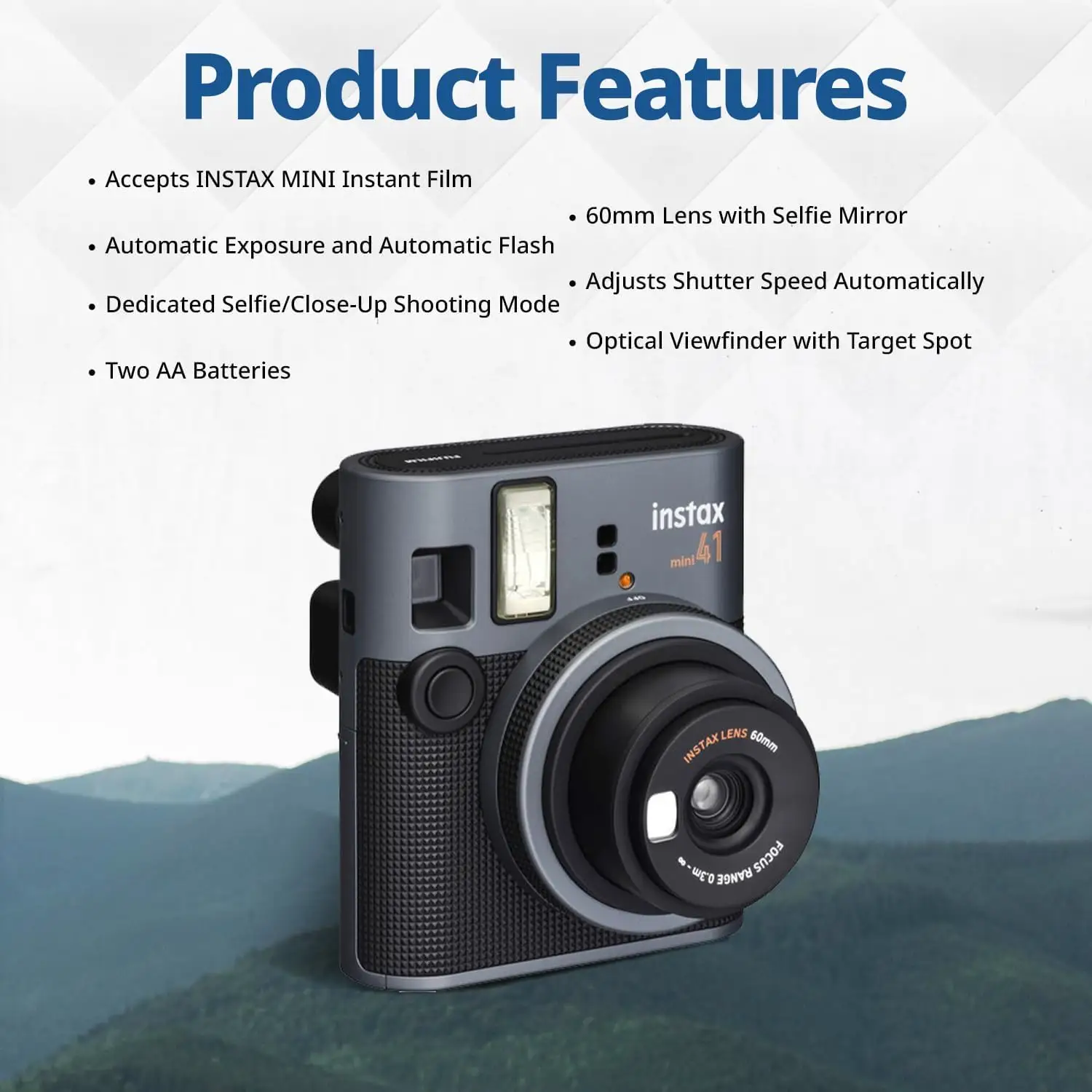
| Selfie mirror and parallax-corrected close-up mode | Close-up mode requires trial and error for sharp focus |
| Consistent print quality with appealing colors | Weak in low light due to fixed aperture |
| Long battery life — up to ~100 shots per pair | Film cost (~75¢ per print) remains relatively high |
Claims vs Reality
Fujifilm markets the Mini 41 as “sleek design” with “auto exposure” that “never misses a perfectly lit moment.” While the design claim earns universal agreement, reality with exposure is slightly more complex.
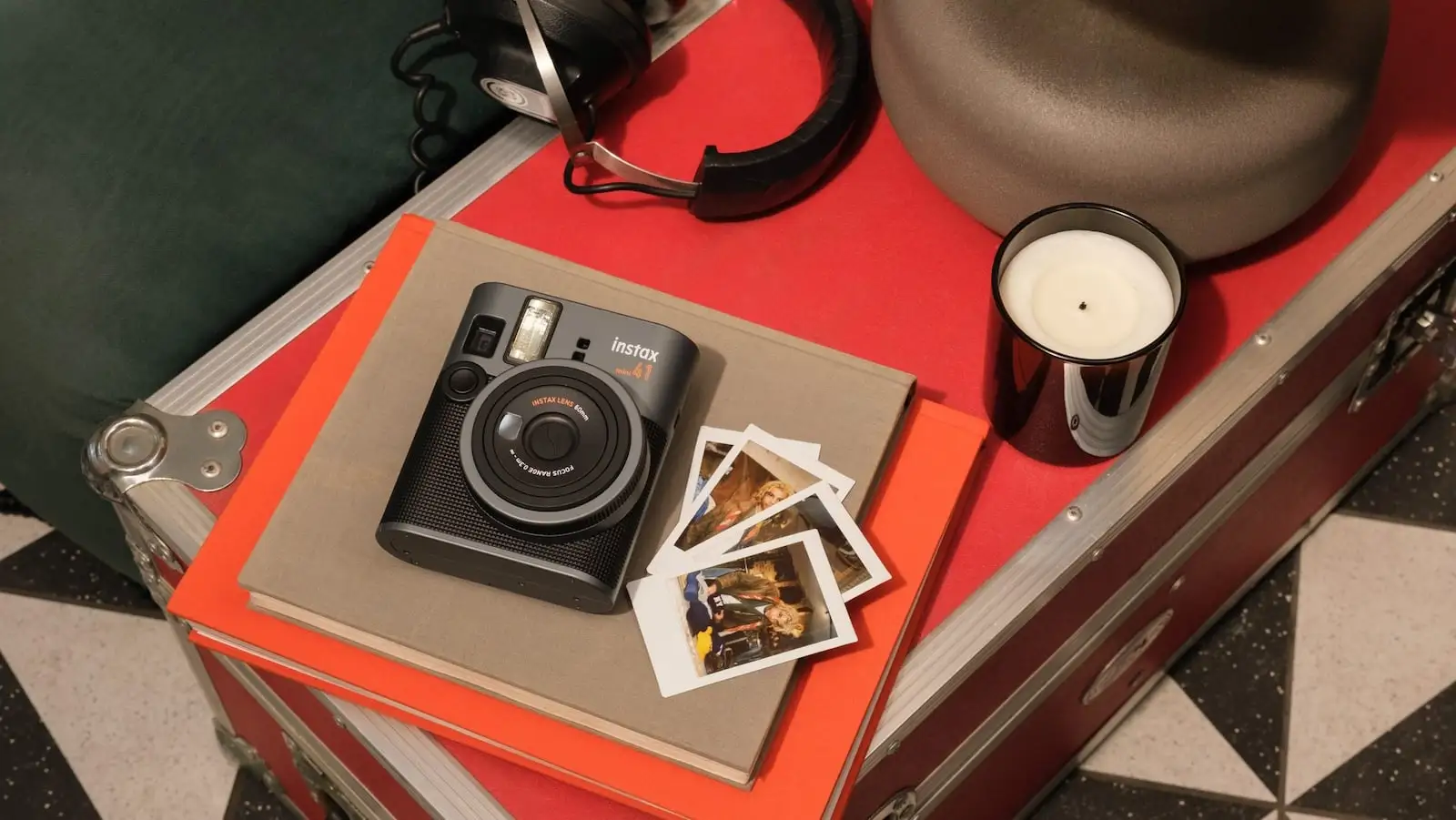
Reddit feedback repeatedly confirmed the styling is a hit. One TechRadar reviewer wrote: “instax mini 41 takes things in a more unique and modern direction… much less cutesy than the Mini 12.” The texture, color accents, and weight balance all resonated strongly with adult buyers who disliked overly playful designs.
Auto exposure, however, has mixed reception. While Fujifilm promises “ideal photos” in any light, Trustpilot users noted that the always-on flash sometimes fought against this promise: “Some images come out overexposed… it’s down to the very powerful flash which can never be disabled.” Consequently, photos in bright or reflective environments could wash out despite the auto settings.
Finally, the "perfectly lit selfies" claim benefits from the parallax-correction close-up mode, but several testers had to re-shoot to get focus right. As Tom’s Guide observed, “It takes a lot of trial and error… the viewfinder is offset from the lens so you can’t see exactly what it’s pointing at.” Marketing omits this learning curve.
Cross-Platform Consensus
Universally Praised
The most consistent praise is for the straightforward controls and premium-feel design. Trustpilot reviewers loved that “charging it with film takes seconds… point and shoot simplicity,” and Tom’s Guide went so far as to say, “It might be the easiest, most user-friendly instant camera ever.”
For casual photographers and event hosts, this intuitive setup means guests can use it without instruction, making it a staple at parties or weddings.
The selfie mirror and close-up mode draw applause from social-media savvy users. Reddit discussions praised the parallax correction: “You no longer have to compensate… the object will be right in the center of the print.” This matters for collectors who mount prints in scrapbooks and want perfectly centered compositions.
Battery life is another strong point. Even with disposables, multiple reviewers reported clearing three film packs without a drop-off. Tom’s Guide confirmed: “On a fresh pair of batteries, I comfortably got through three packs of film.” For travel photographers, that’s a game-changer — no need to hunt for charging ports mid-adventure.
Common Complaints
The always-on flash is easily the top complaint. Indoor shooters and portrait fans expressed frustration at washed-out highlights. One Trustpilot reviewer summed it bluntly: “The pigeons… are too bright, like someone cranked exposure in post.” There’s no manual override, making it unsuitable for certain artistic styles.
Close-up mode’s focusing difficulty also comes up often. Because the viewfinder is offset from the lens, framing demands attention. As Nikita Achanta described, “The first photo turned out great… the second was out of focus.” This affects selfie shooters most, especially in group settings.
Disposable AA battery dependence alienates eco-conscious buyers. While rechargeable AA cells are possible, the lack of built-in lithium-ion feels dated in 2025. Reddit user reviews referred to this as “a design stuck in the past,” especially compared to hybrid instant-digital models.
Divisive Features
Film cost produces split opinions. Some see 75¢ per credit-card-sized print as “fair for tangible memories” (Trustpilot), while others point to the free nature of digital photos as a sticking point. The plastic build also divides buyers: lightweight and portable for some, “easy to scuff” for others.
Trust & Reliability
No scam patterns emerged from Trustpilot or Reddit — buyers receive functioning units with expected performance. Longer-term feedback spotted cosmetic wear over months. One Reddit review noted, “A ten-year-old Mini 41 will look battered unless kept in a case.” Functionally, though, imagery stays consistent over extended use, thanks to the durable Instax film ecosystem.
Alternatives
Two models dominate comparison threads: the Instax Mini 12 and Polaroid Go Gen 2.
The Mini 12 is cheaper, uses the same film, and matches image quality — but trades the refined aesthetic for playful pastel shells. As one Reddit comment put it, “Excellent if you can live with the bubbly cloud design.”
Polaroid Go Gen 2 offers square prints with richer tones, but at double the film price and weaker selfie range due to minimum focusing distance.
Price & Value
Prices span $94–$129 USD in the US, around ₹10,499 in India, and C$130 in Canada (eBay data). Resale holds relatively well, with sealed units fetching full retail months later. Buyers suggest timing purchases around seasonal Instax sales, where bundles include film packs — crucial given ongoing costs.
FAQ
Q: Can the Instax Mini 41 turn off its flash?
A: No — the flash is permanently on, adjusting brightness automatically. This helps low-light shots but can overexpose bright scenes.
Q: What film does it use?
A: It’s designed exclusively for Fujifilm Instax Mini instant color film, sold separately in packs of 10 or 20 exposures.
Q: How long does a print take to develop?
A: About 90 seconds, depending on ambient temperature. Colors appear gradually during this time.
Q: How do I take a selfie with it?
A: Twist the lens into close-up mode, frame using the selfie mirror beside the lens, and shoot. Keep 30–50 cm from the camera for focus.
Q: Does it come with film included?
A: No. Retail packages include the camera, wrist strap, and AA batteries, but no film.
Final Verdict:
Buy if you’re a casual instant photographer wanting stylish design, foolproof controls, and strong battery endurance for events or travel. Avoid if you require manual flash control or shoot primarily indoors — persistent overexposure will frustrate you.
Community pro tip: Pair with a protective case to preserve the textured body and keep prints centered using the close-up parallax adjustment.