DEWALT 20V MAX Cordless Drill/Impact Driver — 8.6/10 Verdict
Opening
Cordless kits rarely satisfy both weekend builders and trade pros, yet users report the DEWALT two‑tool combo punches above its class. The DEWALT 20V MAX Cordless Drill and Impact Driver earns strong marks for power, control, and durability—especially given frequent discounts. Verdict: 8.6/10 for most wood/metal tasks; upgrade if you need daily masonry drilling.
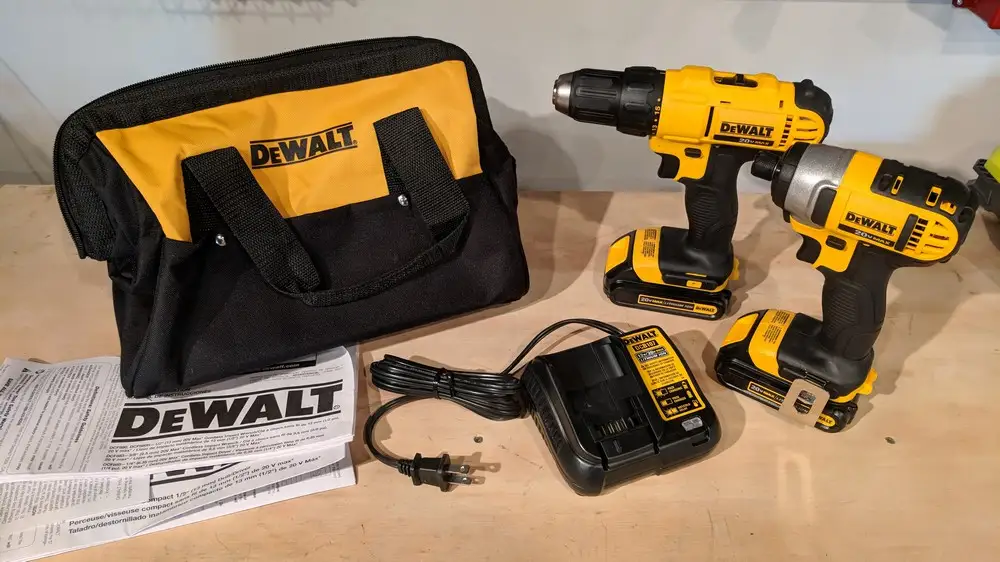
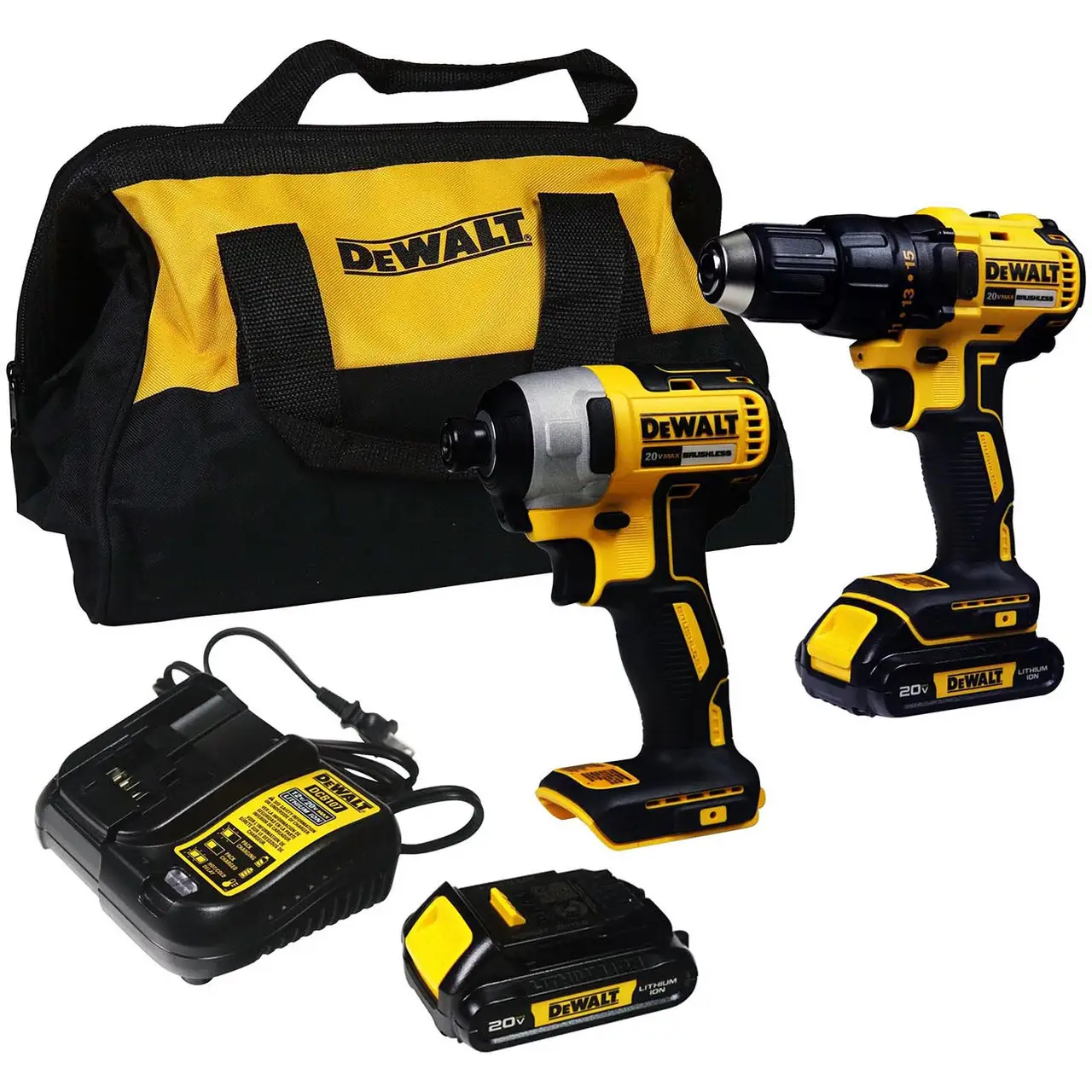
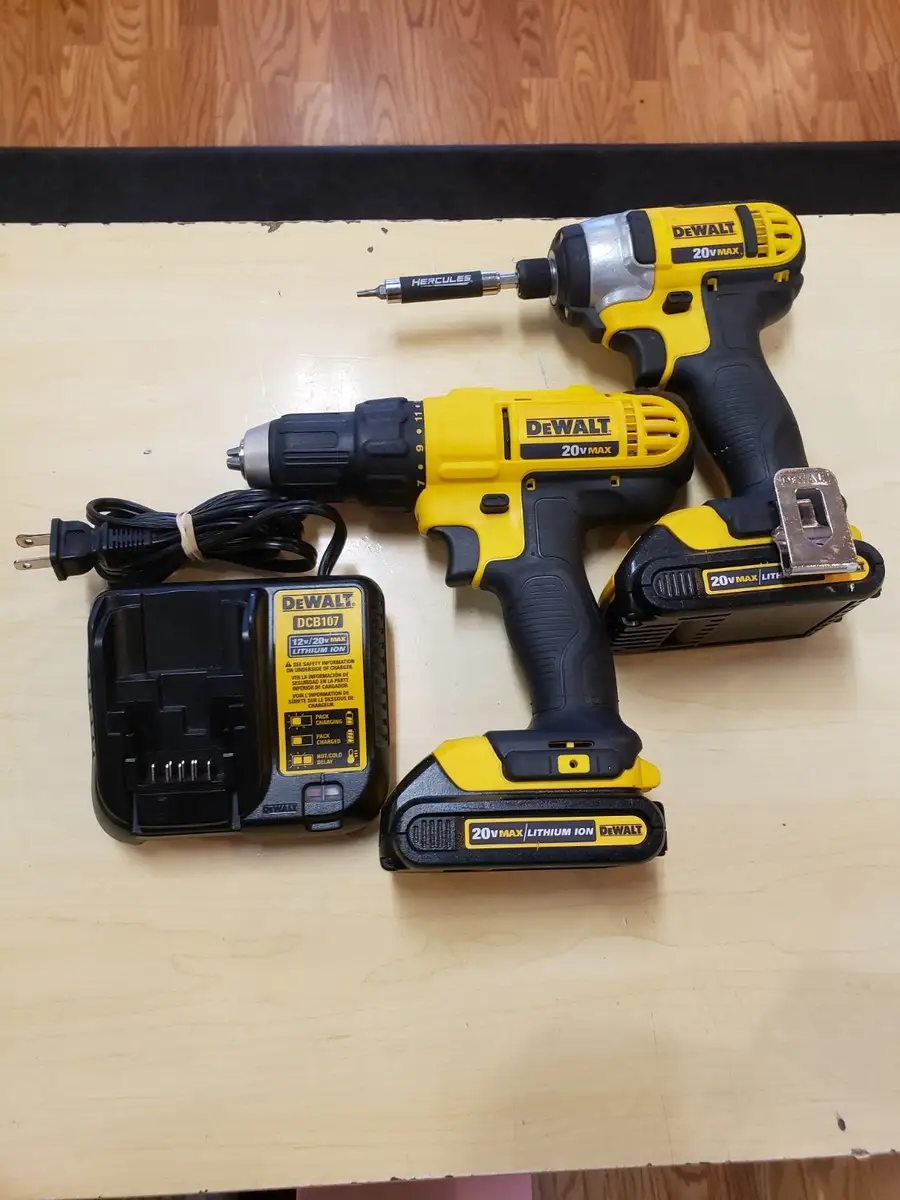
Definition: DEWALT’s 20V MAX drill/impact kits pair a 1/2-inch drill/driver with a 1/4-inch hex impact driver, two lithium-ion batteries, a charger, and a soft bag. Variants include brushed value sets (e.g., DCK240C2) and brushless options (e.g., DCK277C2/DCK275C2) that improve runtime, torque, and compactness while staying compatible across the 20V MAX ecosystem.
Quick Verdict
Users report that for homeowners, DIYers, and many trades doing woodwork, light metal, and fastener-heavy jobs, this kit is an easy yes. Having a drill set for pilot holes and an impact driver staged with a bit keeps projects moving—Amazon reviewers repeatedly praise not swapping bits mid-task and call the impact “amazing” for structural screws.
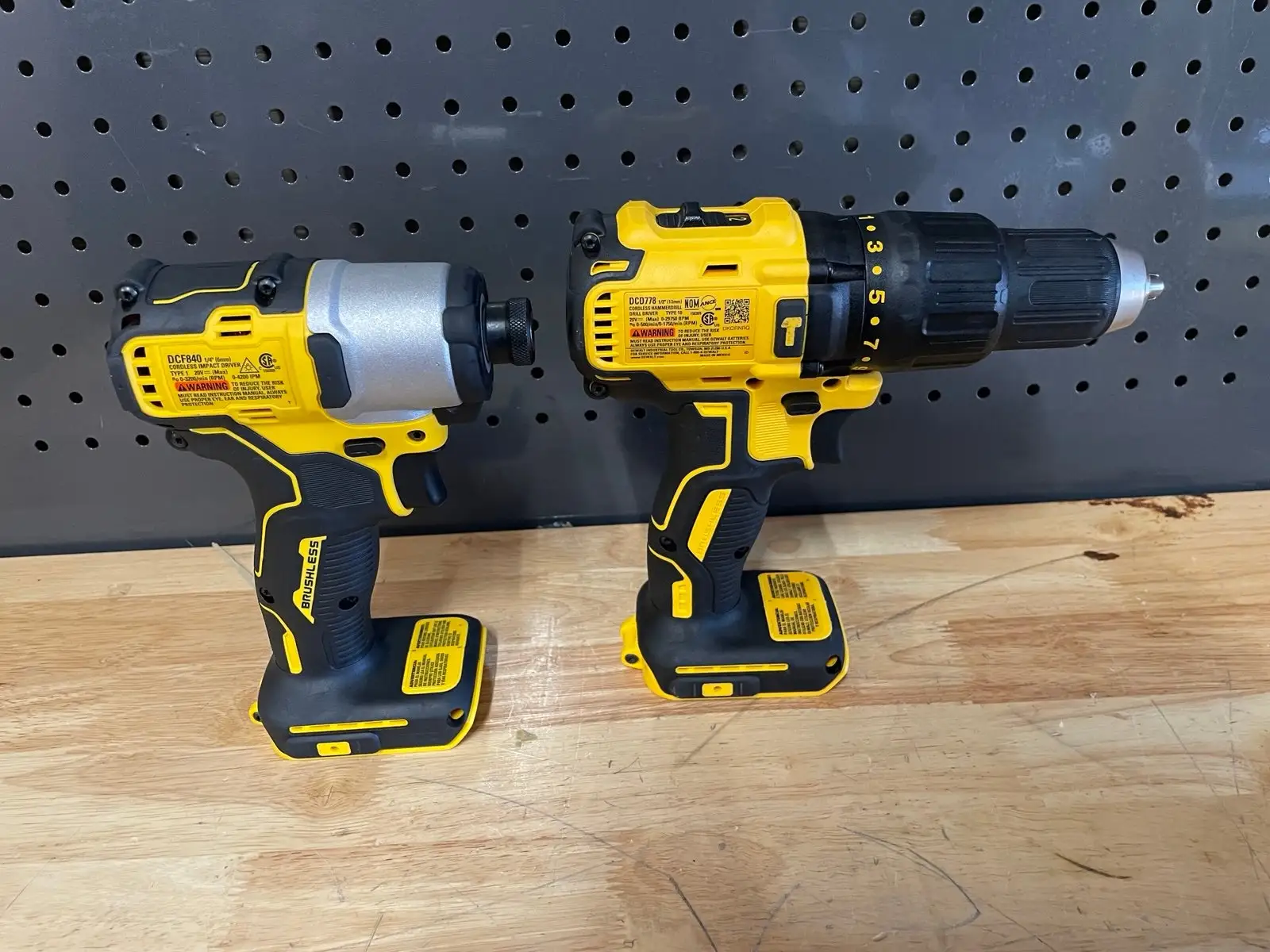
Digging deeper into user reports, brushless variants stand out on runtime and torque. According to DEWALT, the DCF840 impact driver delivers up to 1,700 in-lbs of torque, while compact drills like the DCD777 (brushless) list 340 UWO versus 300 UWO on the DCD771 (brushed). The compact size consistently helps in cabinets, attic spaces, and overhead work.
Battery life is “very good” for household use, users say, but heavy fastening and larger hole-making benefit from higher-capacity packs. Many owners keep one battery on the charger, one in use; those tackling big builds often add 4–5Ah packs to extend runtime without frequent swaps.
Verdict stance: Conditional Yes — ideal for general carpentry/assembly, furniture builds, deck screws, metal brackets, and day-to-day fastening. Users tackling frequent masonry or oversized boring should consider DEWALT’s XR hammer drill kits.
| Pros | Cons |
|---|---|
| Strong torque for lag screws and structural fasteners (Amazon reviews) | Not ideal for concrete without a hammer drill (Home Depot buyers) |
| Compact, comfortable, low strain over long sessions (Amazon listing + user reports) | Included 1.3–2.0Ah packs can feel short for heavy use (multiple sources) |
| Two tools = zero bit swapping downtime (Amazon reviews) | Soft bag quality is just “functional,” not rugged (ToolsMaestro) |
| LED lighting reduces shadows around fasteners (Amazon specs/users) | Occasional charger/battery complaints (AutoZone review, Fakespot highlights) |
| Brushless options offer longer life and runtime (DEWALT) | Price vs competitors can feel steep unless on sale (ToolsMaestro, eBay context) |
Claims vs Reality
Marketing claim: “Compact and lightweight design fits tight spaces.” According to Amazon’s DCF885 spec callouts and DEWALT’s compact drill pages, both tools are intentionally short front-to-back and light in hand. Users echo this. One ToolsMaestro reviewer noted the impact driver “easily slipped into tight spots,” adding that the weight reduced arm strain during extended overhead tasks.
Marketing claim: “High-output performance for demanding fastening.” DEWALT lists up to 1,700 in-lbs of torque for the DCF840, and Amazon reviewers back the real-world punch. One United States Amazon reviewer wrote the impact “is powerful enough to twist a 3/8ths lag bolt in two” if overdriven—more than enough for 4-inch lags into framing and railroad ties when pilot holes are sized correctly.
Marketing claim: “Brushless motors deliver efficient output and long life.” Cross-platform consensus confirms brushless variants (DCK277C2/DCK275C2) run cooler and longer. Users report “very good” battery life for whole-day DIY workloads, while heavy-duty drivers swap or step up to 4–5Ah packs. ToolsMaestro’s review tempers expectations: runtime is solid, but marathon fastening still drains compact packs quickly.
Cross-Platform Consensus
Users consistently praise the balance of power, comfort, and convenience. According to Amazon reviews, having both a drill and impact driver accelerates projects: “I couldn’t imagine not having these in my tool collection… the impact driver is amazing,” wrote a basement finisher who drove long construction screws all day and still lauded battery life. The three-LED ring on the impact is repeatedly called out for shadow-free visibility around screw heads.
Ergonomics and reliability get recurring compliments. Homeowners and trades alike appreciate the manageable weight and grip. One Amazon reviewer said they “dropped them several times from the top of an 8’ stepladder” with no damage and no loss of performance, describing them as “work horses.” Another user emphasized comfort over long sessions and praised the ratcheting chuck’s tight grip.
The compact form factor genuinely changes where you can work. Community reviews describe reaching under sinks, into cabinets, and tight attic runs with minimal fatigue. According to the Amazon DCF885 spec line, the 5.55-inch depth and light weight directly translate to less wrist strain—and owners corroborate that benefit when driving hundreds of screws.
Finally, user reports confirm the kit’s value proposition when discounted. Amazon shoppers highlight “excellent value,” especially when brushless sets are priced near brushed. eBay pricing reinforces the bargain angle: new/sealed DCK240C2 kits often list around $129–$149, suggesting strong supply and deal opportunities for budget-conscious buyers.
Common complaints center on task mismatch and accessories. According to Home Depot buyers on related DEWALT kits, non-hammer drills should be “limited to small jobs if drilling into concrete.” Users who push into masonry consistently recommend stepping up to a hammer drill for best results. Several reviewers also say the bag is just adequate—not designed for rough handling or heavy add-ons.
A recurring pattern emerged regarding battery capacity. The included 1.3–2.0Ah batteries keep momentum for household work, but professionals or anyone driving large fasteners for hours often add higher-capacity packs. One Amazon reviewer noted 4Ah batteries “go for what feels like an eternity,” reducing downtime on intensive projects.
Scattered reliability issues do appear. AutoZone reviews include a charger failure after a few months (“battery charger quit working”), and Fakespot’s adjusted analysis surfaces a minority of “defective” claims among otherwise positive sentiments. These are outliers in the broader data but reinforce the value of registering for the 3‑year limited warranty.
Some features divide opinions. Battery life is “very good” for many; others feel compact packs underwhelm for back-to-back lag screws. ToolsMaestro’s comparison claims Bosch often edges runtime but at a weight penalty—users must choose between endurance and nimbleness. Price perceptions also vary: DEWALT’s street pricing swings widely; those who catch sales feel they got premium tools for mid-tier money.
Divisiveness also surrounds “how much drill power is enough.” While brushed DCD771 owners are satisfied for general tasks, brushless buyers point to higher UWO ratings (e.g., 340 UWO DCD777 and up to 404 UWO on the newer DCD793, per DEWALT pages) as meaningful when drilling tougher stock. Owners upgrading from older voltages also note a sharper “snap” on start/stop and stronger sustained RPMs.
Trust & Reliability
According to Fakespot’s adjusted view of Amazon reviews, the kit enjoys strong praise but includes a non-trivial slice of defect complaints (e.g., “they are defective”). While Fakespot doesn’t invalidate the high ratings, it encourages buyers to scrutinize seller reputation and packaging to avoid returns and mislistings.
Long-term owners on Amazon report strong durability, including multiple ladder drops without cracks or motor issues, and “work horses” performance through large home projects. This aligns with DEWALT’s 3‑year limited warranty listed across product pages and Amazon listings, which provides confidence if a charger or pack fails early.
Still, users recommend registering tools and keeping receipts. The AutoZone reviewer who experienced a charger failure had difficulty reaching support promptly. Community advice echoes standard practice: test both packs and the charger on arrival, and pursue warranty claims immediately if something isn’t right.
Alternatives
According to ToolsMaestro’s comparative commentary, Makita and Bosch compete closely here. Bosch kits can edge out DEWALT on battery endurance but may feel heavier and less nimble in tight spaces; Makita’s comparable drills sometimes feel bulkier. Users who prioritize runtime over compactness might lean Bosch; those who prize balance and control often pick DEWALT.
Inside DEWALT’s lineup, frequent masonry or high-demand drilling pushes users toward XR hammer drill/impact sets. The DEWALT DCK299M2 (XR brushless hammer drill + DCF887 impact) is cited by DEWALT literature and Home Depot customers as a step-up kit with higher torque, better BPM for concrete, and brighter 3‑mode LEDs. Owners say it’s “still one of the best cordless power tools on the market.”
For a compact-first approach, users look at the Atomic series—eBay listings show constant availability at aggressive prices. These emphasize smaller footprints while retaining brushless efficiency, appealing to electricians, cabinet installers, and HVAC techs working in cramped runs.
Price & Value
On Amazon, the brushed DCK240C2 has been listed around $146.28, and reviewers frequently call it “an excellent value.” eBay shows robust resale and deal activity, with new DCK240C2 kits around $128.99, and brushless 2‑tool kits commonly appearing under $180. This resale liquidity suggests steady demand and a strong secondary market.
Users report that the “value” curve bends sharply in your favor during seasonal promos and if you already own 20V MAX batteries. According to Amazon and DEWALT pages, all 20V MAX tools share battery compatibility; FlexVolt 20/60V packs also work, adding runtime but weight. The upshot: buy bare tools later without duplicating chargers and packs.
According to Home Depot and Amazon reviewers, the biggest cost upgrade that changes daily experience is higher‑capacity batteries. Multiple users suggest adding a 4–5Ah pack for fewer swaps on heavy runs, while keeping the compact 1.3–2Ah batteries for ladder work where weight matters most.
- Track model variations: brushed (value) vs brushless (runtime/torque).
- Time purchases around sales—prices swing widely week to week.
- Check included battery amp-hour; consider a 4–5Ah add-on.
- Register the 3‑year warranty; test both batteries/charger immediately.
FAQ
Community threads concentrate on runtime, compatibility, drilling into concrete, brushless benefits, and real torque. According to DEWALT’s site and Amazon, the answers hinge on which kit you pick and what batteries are included. Users say understanding your workload—decks and cabinets versus daily concrete—dictates whether to stay basic or step up to XR.
Owners across Amazon and AutoZone report that runtime with compact batteries is “very good” for typical household jobs, especially with two packs to rotate. Heavy fastening drains small packs quickly, so many add a 4–5Ah battery to extend sessions. LED lighting and the compact footprint are everyday advantages regardless of pack size.
DEWALT’s compatibility story is a clear strength. According to DEWALT, tools in the 20V MAX and FlexVolt ecosystems are cross-compatible (20V MAX tools accept FlexVolt 20/60V packs). Community advice: be mindful that FlexVolt adds weight; use it when runtime beats portability.
Q: How long do the included batteries last in real use?
A: Users report several hours of mixed drilling/fastening on compact packs, especially when rotating two batteries. According to Amazon reviews, lighter-duty projects can run “all day” on 4Ah packs, while big lag‑screw sessions still require charging breaks. Heavy users recommend adding a 4–5Ah battery for fewer swaps.
Q: Are these kits compatible with other DEWALT 20V MAX batteries?
A: Yes. According to DEWALT, all 20V MAX tools share battery compatibility, and FlexVolt 20/60V packs also power 20V MAX tools. Users note FlexVolt improves runtime but increases weight—great on the ground, less fun on ladders. Keep compact packs for overhead work.
Q: Can this drill handle concrete?
A: Users say non-hammer drills should be limited to small jobs in concrete. According to Home Depot buyer feedback, frequent masonry work calls for a hammer drill (e.g., DEWALT XR hammer drill kits). For occasional anchors, use sharp masonry bits and patience; for daily concrete, upgrade.
Q: Brushless vs brushed—what’s the difference for owners?
A: Brushless kits run cooler, often feel more powerful, and extend runtime. According to DEWALT specs (e.g., DCD777 340 UWO; newer DCD793 up to 404 UWO), users notice faster drilling in tougher stock. Brushed sets are cheaper and still capable for general household tasks.
Q: What torque should I expect from the impact driver?
A: DEWALT lists up to 1,700 in-lbs on the DCF840 brushless impact. According to Amazon reviewers, real-world results include driving long construction screws and even over-torquing lags if you’re not careful—one user said it could “twist a 3/8ths lag bolt in two” when overdriven.
Final Verdict
Buy if you’re a homeowner or DIYer tackling furniture builds, deck screws, framing connectors, or a basement finish. Users report fast workflows, strong torque, and comfortable control, especially with brushless variants. Add a 4–5Ah battery if you’re driving hundreds of screws or drilling larger holes back-to-back.
Avoid if your daily work involves concrete or oversized boring—users recommend DEWALT XR hammer drill combos or FlexVolt Advantage kits for aggressive masonry and thick steel. Those options add BPM, control features, and higher sustained power.
Pro tip from the community: keep the drill set with a bit and the impact staged with a driver—“no bit swapping” saves the most time. Register the 3‑year warranty, test both packs day one, and watch eBay/Amazon for sales to stretch your budget.