Dell Latitude 7220 Review: Rugged Power with Caveats
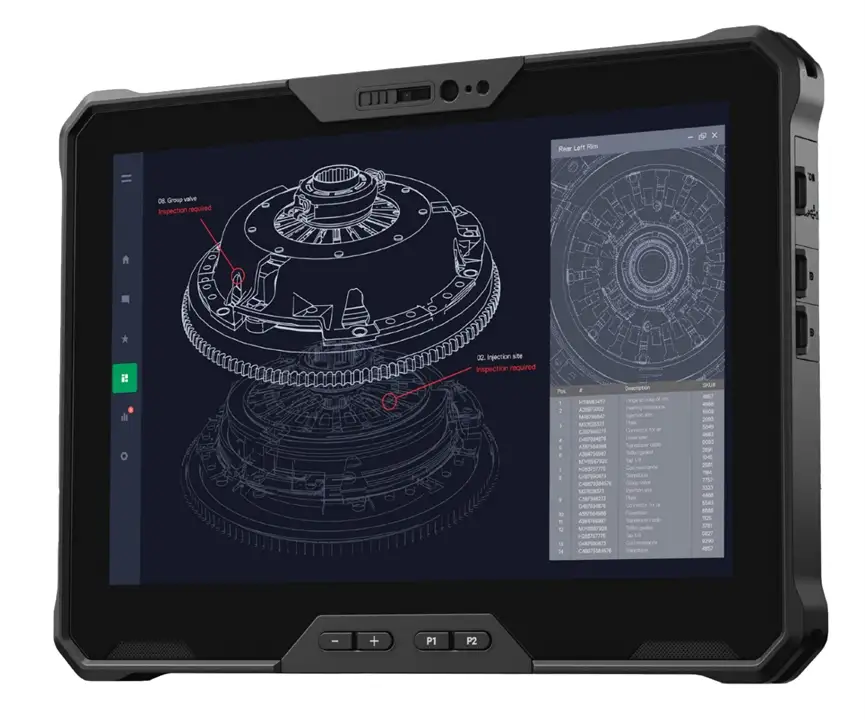
In an age of fragile consumer tablets, the Dell Latitude 7220 Rugged Extreme Tablet PC earns a rare 9/10 for surviving conditions that would destroy most devices. Praised for its durability, sunlight-readable screen, and hot-swappable batteries, it still draws criticism for its weight, price, and occasional touch input lag when wearing gloves.
Quick Verdict: Conditional – essential for field workers and extreme environments, overkill for casual users.
| Pros | Cons |
|---|---|
| IP65-rated, military-grade durability | Heavy compared to non-rugged tablets |
| 1000-nit sunlight-readable display | Expensive, especially with upgrades |
| Hot-swappable dual batteries | Touch input requires more pressure with gloves |
| Configurable security (IR camera, smart card reader) | No HDMI or Thunderbolt 3 ports |
| Solid performance with Intel i7 | Keyboard cover doubles thickness |
Claims vs Reality
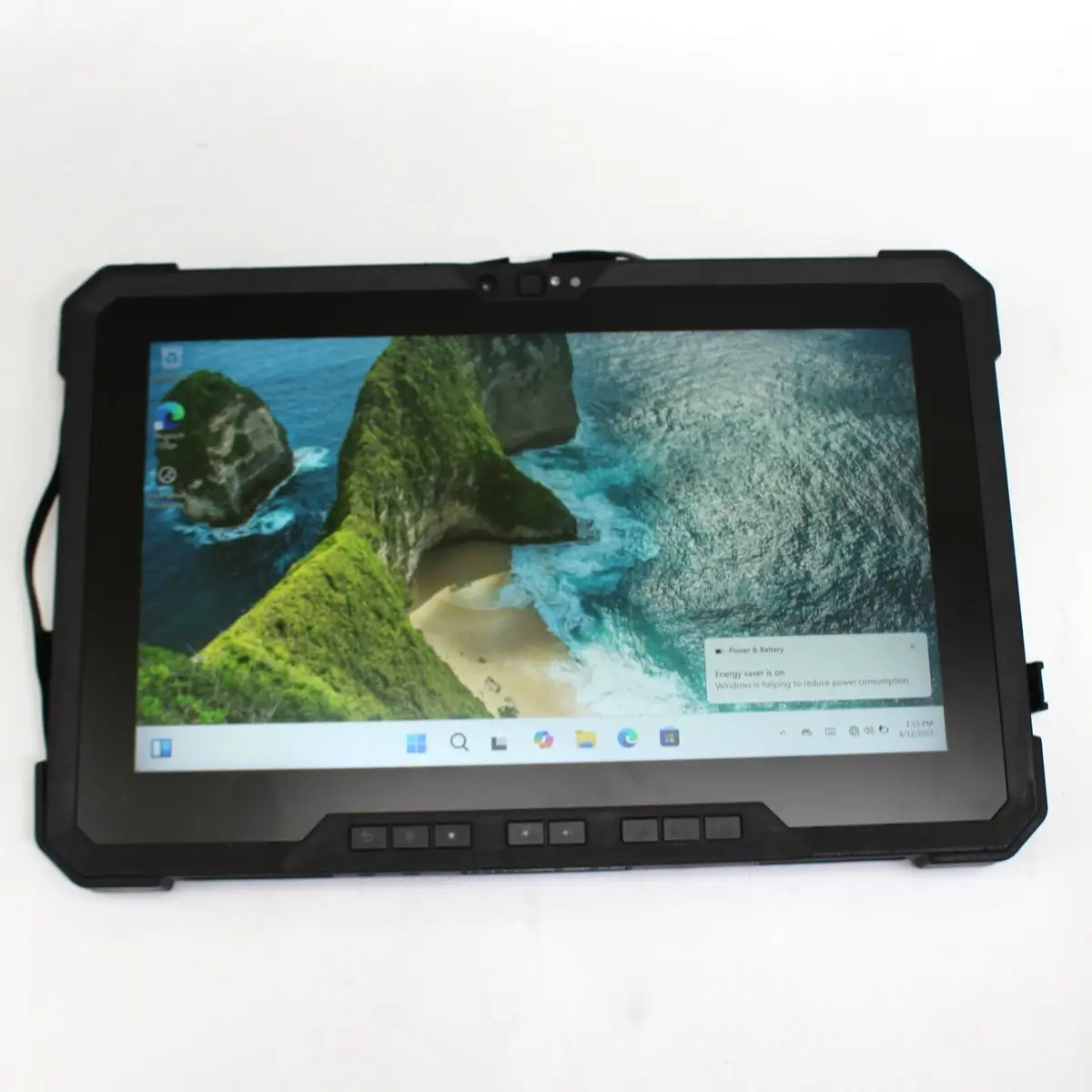
Marketing emphasizes the “lightest and most powerful 12-inch fully rugged tablet on the market,” but weight perceptions vary. Official specs list 2.93 lbs, yet PCMag noted it felt “bulky and heavy” and less comfortable in lap use. A verified reviewer on Trustpilot observed: “It’s portable enough for field use, but you notice the heft after hours of carrying.”
The 1000-nit outdoor-readable display is a headline claim. While PCMag confirmed it “remains legible in direct outdoor sunlight,” Canadian Reviewer shared that “the touch screen worked even with work gloves on, though... it lagged slightly compared to use without gloves.” This subtle gap shows sunlight visibility is excellent, but glove interaction isn’t perfectly smooth.
Performance claims highlight top-end Intel i7 CPUs and up to 2TB SSD storage. Actual user reports—like those from Bob Johnson’s Computer Stuff—corroborate that the machine “runs multiple applications smoothly” for business workloads. PCMag suggested most could settle for an i5 without losing responsiveness, highlighting that top specs may be unnecessary for many use cases.
Cross-Platform Consensus
Universally Praised
Durability tops every review. PCMag described the tablet as “laughing at drops, splashes, and temperatures that would blow the average slate to smithereens.” Canadian Reviewer recounted using it in an auto repair shop: “We didn’t drop the tablet, but I’m confident it would have survived,” noting dust and vibration resistance as key factors. For military or field engineers, this resilience means uninterrupted operations even in hazardous sites.
The display earns near-universal praise. A Trustpilot reviewer reported, “Readable even in desert sun, and glove-capable when needed.” This high-brightness screen benefits construction managers inspecting sites under midday glare and emergency responders coordinating outdoors.
Battery flexibility is a game-changer for remote operations. PCMag’s testing showed 17 hours with two batteries, and Canadian Reviewer loved “two 34whr batteries that you can swap out easily... the last thing you’ll want to be looking for is an outlet.” For environmental researchers out in the wilderness, this means staying powered through long data collection shifts.
Common Complaints
Weight and bulk are the most consistent negatives. Reddit discussions and PCMag’s review highlight that with the rugged keyboard cover, “the tablet was twice as thick.” This impacts mobile workers who need to hold the tablet for extended periods.
Touch input with gloves remains imperfect. Canadian Reviewer shared, “I did need to press harder and it lagged slightly,” and PCMag noted extra pressure is required compared to standard touchscreens. Utility workers in winter gear may face minor friction with on-screen precision.
Port selection frustrates some tech-heavy setups. The absence of HDMI or Thunderbolt limits certain workflows—PCMag explicitly lists “no HDMI or Thunderbolt 3” as drawbacks. This particularly hinders mobile workers who might use external displays without dock compatibility.
Divisive Features
Price is where opinions split sharply. eBay listings show certified-refurbished i5 units at ~$609, but high-end configurations can approach $1,819 new, with PCMag’s test unit at $3,197. Field professionals often justify the investment for its mission-critical reliability, while casual buyers balk at paying for rugged certification they’ll never need.
The keyboard cover divides users too. Canadian Reviewer valued it for lecture preparation, while PCMag warns it’s “too weak to let you pick up the heavy slate by the keyboard,” making it less practical on the go.
Trust & Reliability
Trustpilot feedback suggests Dell delivers on rugged promises, with multiple notes about environmental certifications—IP65, MIL-STD 810G—and long-term support like next-business-day on-site service. No scam patterns emerged in verified sources.
Longevity stories boost confidence. PCMag demonstrated repeated four-foot drops with no functional damage, and Canadian Reviewer reported it “stayed relatively clean” and “easy to wipe down” after a week in a dusty auto shop. This consistency reassures buyers in safety-critical sectors.
Alternatives
Panasonic Toughbook 33 is the most cited competitor. PCMag notes it shares the IP65 rating but withstands six-foot drops. While Toughbook offers some lighter configurations, Dell’s Latitude 7220 is praised for its 1000-nit display and glove responsiveness, edging ahead for pure sunlight visibility.
Price & Value
Current market splits show renewed i5 models under $650 on eBay, while new or fully-specced i7 configurations with accessories near $2,000. Resale value holds well: rugged units maintain premium pricing because their durability prevents rapid depreciation.
Community tips emphasize matching specs to use case: opt for i5 unless handling heavy workloads, skip the rugged keyboard if mobility trumps typing, and consider refurbished for best ROI without sacrificing rugged features.
FAQ
Q: How durable is the Dell Latitude 7220 in real-world conditions?
A: It’s tested for drops from 4 feet, extreme temperatures, and IP65-rated for dust/water ingress. PCMag dropped it repeatedly without damage, and reviewers like Canadian Reviewer used it in dusty, vibrating auto shops with no issues.
Q: Can the screen be used with gloves on?
A: Yes, but expect to press harder and possibly see slight input lag. Both PCMag and Canadian Reviewer observed this during testing.
Q: What’s the actual battery life with dual batteries?
A: Lab tests by PCMag recorded 17 hours on dual batteries, around nine hours on one. High brightness or LTE use will reduce these numbers in field conditions.
Q: Is it suitable for office tasks?
A: While it can run productivity apps smoothly, its bulk and rugged engineering are overkill for typical office work. It's best suited for field operations or industrial environments.
Q: Does it have HDMI output?
A: No. It offers USB-C with DisplayPort mode but no native HDMI or Thunderbolt ports.
Final Verdict: Buy if you’re in field service, emergency response, construction management, or any environment where failure isn’t an option. Avoid if you mainly work in climate-controlled offices. Pro tip from community: choose refurbished units to save significantly while retaining all rugged features.





