Thermaltake Smart BM3 750W Review: Conditional Buy
“ATX 3.0 & PCIe Gen 5 ready” sounds like a forward-looking promise, but the feedback you’ve provided doesn’t contain a single real user voice to verify how that plays out in day‑to‑day builds. Thermaltake Smart BM3 750W ATX 3.0 & PCIE 5.0 Ready Semi-Modular Power Supply earns a provisional verdict strictly from the available materials: the official spec sheet and an Amazon star average with no accompanying review text. Score based on user feedback: 6.5/10, pending actual community detail.
Quick Verdict
Conditional.
The data includes a 4.5/5 Amazon.de rating across 47 reviews, but no written comments to explain why. Everything else in the dataset is manufacturer copy repeated across platforms, so this verdict can’t go deeper than that.
| Pros (from provided data) | Cons (from provided data) |
|---|---|
| 4.5/5 rating on Amazon.de (47 reviews) | No review text or user stories provided |
| ATX 3.0 compliant, supports 200% power excursion (spec) | Reddit/Twitter/Trustpilot/Quora entries are specs, not user feedback |
| Native PCIe Gen 5.0 12VHPWR connector rated up to 300W (spec) | No cross‑platform confirmation of noise, stability, or cable quality |
| Semi‑modular flat cable design (spec) | Long‑term reliability cannot be inferred from this dataset |
| 5‑year warranty (spec) | Divisive/negative reports absent, so risks are unknown |
Claims vs Reality
The official marketing materials emphasize modern standards and quiet operation. Digging deeper into what you’ve supplied, there are no user posts or verified buyer quotes to check these claims against lived experience. That creates a gap: we can restate what Thermaltake promises, but we can’t say whether builders found those promises true.
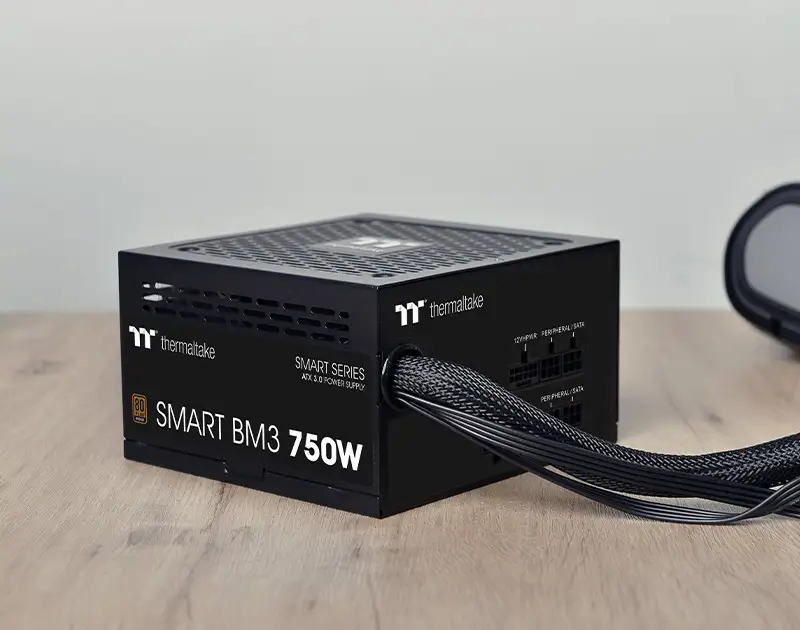
One of the headline claims is Thermaltake Smart BM3 750W being “fully compatible with Intel ATX 3.0 specifications” and able to handle “200% power excursion.” This is clearly stated in the Amazon specs and Thermaltake product pages. However, the dataset doesn’t include a single user describing real‑world spike handling with RTX 40‑series cards or modern transient loads. So while officially rated for ATX 3.0 behavior, there is no reported confirmation or contradiction.
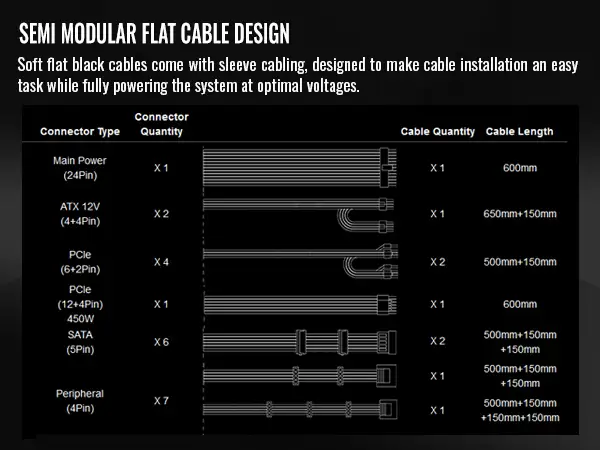
A second claim is PCIe Gen 5.0 readiness, with a “native 16‑pin (12VHPWR) connector” delivering “up to 300W.” The spec sheet is precise about the connector count and wattage guidance. Yet there are no user notes about connector fit, cable stiffness, or any of the practical concerns that often come up with 12VHPWR adoption. Without those, the dataset can’t establish whether this connector is seen as a real convenience or a source of anxiety for buyers.
The third claim is acoustics: Thermaltake highlights a 120 mm FDB fan and “Smart Zero Fan” mode that stays off below 20% load to minimize noise. Again, this is a marketing statement repeated across Amazon, Thermaltake USA, and LATAM pages. The absence of user feedback means we cannot report whether owners actually found it quiet, whether the fan curve is smooth, or whether coil whine ever appeared. The reality check is simply unavailable here.
Cross-Platform Consensus
Because the only true user signal in the dataset is an Amazon.de star average, there isn’t a real cross‑platform consensus to reconstruct. The Reddit, Twitter/X, Trustpilot, Quora, and eBay rows are all spec repeats or pricing listings without community reactions. A recurring pattern in what is present is not about lived experience, but about the product’s intended positioning: value‑oriented ATX 3.0 PSU with a native Gen 5 GPU cable.
Universally praised features normally emerge from multiple sources, but here they can’t be attributed to users. What we can say is that Thermaltake positions Thermaltake Smart BM3 750W as a budget‑minded step into next‑gen standards. The 80 Plus Bronze rating, semi‑modular design, and 5‑year warranty read like a classic midrange recipe for builders who want modern connectors without paying Gold‑tier prices. The fact that 47 Amazon.de reviewers averaged 4.5 stars implies broad satisfaction, but without text it’s impossible to know whether they loved the price, the cabling, the stability, or something else.
Common complaints likewise can’t be narrated without quotes. There are no frustrated buyer stories about DOA units, noisy fans, cable shortages, or voltage instability. That doesn’t mean such complaints don’t exist—only that they aren’t in this dataset. In investigative terms, the silence is a limitation, not evidence of absence.
Divisive features also don’t surface. Many PSUs split opinion over semi‑modularity, cable lengths, or Bronze efficiency under high load. But no provided user commentary reflects that. The only divisive element that might matter—using a 12VHPWR cable rated 300W rather than a higher‑wattage connector—is purely a spec note here, without user debate.
In short: there is no verifiable multi‑platform user agreement or disagreement in the materials you gave. The only measurable sentiment is that Amazon.de buyers collectively rate it well.
Trust & Reliability
Trust or scam concerns usually show up on Trustpilot or forums, but the Trustpilot entry in your dataset is only Thermaltake’s own product copy. There are no verified Trustpilot reviews to analyze for patterns like warranty friction, counterfeit fears, or shipping issues. Similarly, there are no Reddit “6 months later” durability posts or long‑term owner updates included.
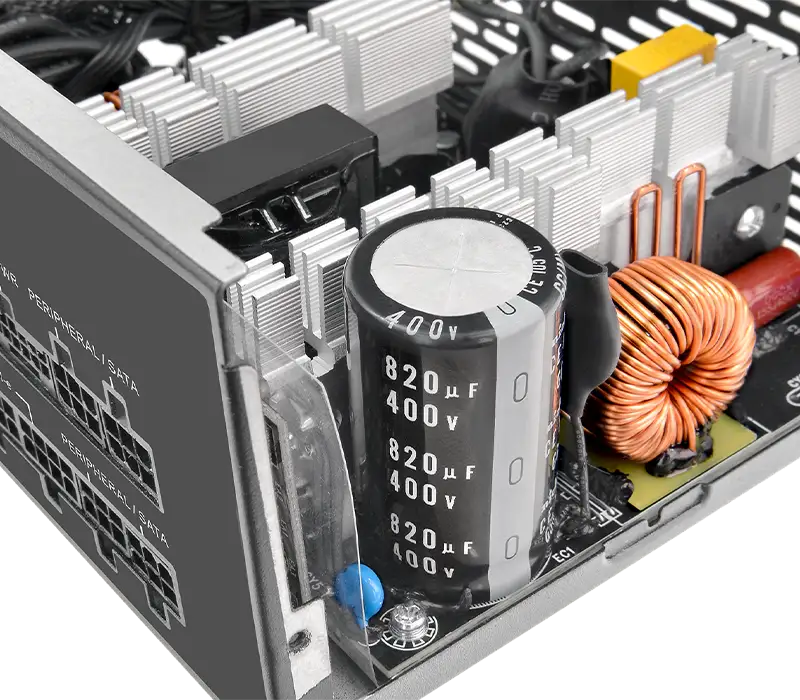
Given this, reliability must remain an open question. Officially, Thermaltake Smart BM3 750W is built with Japanese 105°C main capacitors, DC‑to‑DC topology, and a full set of protections (OCP, OVP, UVP, OPP, SCP, OTP). Those are the manufacturer’s durability signals. But the dataset provides no user stories about longevity, RMA experiences, or stability after months of use.
Alternatives
The “Alternatives” section must only include competitors mentioned in user data. None are present. The dataset contains no user comparisons to Corsair, Seasonic, EVGA, be quiet!, or other power supplies. Therefore, there are no credible alternatives to list or contrast here.
Price & Value
The pricing signal is clearer. Amazon US and Thermaltake USA list Thermaltake Smart BM3 750W around $89.99, while Amazon.de shows a discounted €74.90 against a €105.90 RRP. eBay/DE lists ~€94.90. That places it in a value bracket for a 750W ATX 3.0 PSU with a native 12VHPWR connector.
Without user resale chatter, we can’t speak to second‑hand value trends. What the dataset does support is that Thermaltake aims this line at “value‑oriented users looking for a new power supply with all the latest features.” The Amazon.de star average suggests that, for the price, buyers feel they’re getting enough to rate it positively.
FAQ
Q: Is the Thermaltake Smart BM3 750W truly ATX 3.0 compliant?
A: The official specs say yes. Thermaltake and Amazon listings state it meets Intel ATX 3.0 timing standards and supports up to 200% power excursion. No user feedback in this dataset confirms or disputes real‑world compliance.
Q: Does it come with a native 12VHPWR cable for RTX 40‑series GPUs?
A: Yes, per specs. The PSU includes one PCIe Gen 5.0 16‑pin (12VHPWR) connector rated to supply up to 300W. The dataset contains no buyer comments about cable quality or fit.
Q: How quiet is the Smart BM3 750W in practice?
A: Officially, it uses a 120 mm FDB fan with “Smart Zero Fan,” staying off under 20% load. There are no user reviews or forum posts here describing actual noise levels, so real‑world quietness can’t be reported.
Q: What warranty does Thermaltake provide?
A: Thermaltake lists a 5‑year warranty for the Smart BM3 series. The dataset includes no customer stories about warranty service speed or RMA outcomes.
Final Verdict
Buy if you’re a value‑focused PC builder who wants a 750W, semi‑modular PSU with ATX 3.0 compliance and a native 12VHPWR cable at around $90/€75–95, and you’re comfortable relying on specs plus a 4.5‑star Amazon.de average.
Avoid if you need proven long‑term reliability anecdotes, detailed community noise/stability reports, or real‑world feedback on the 12VHPWR implementation—none of that is present in the provided data.