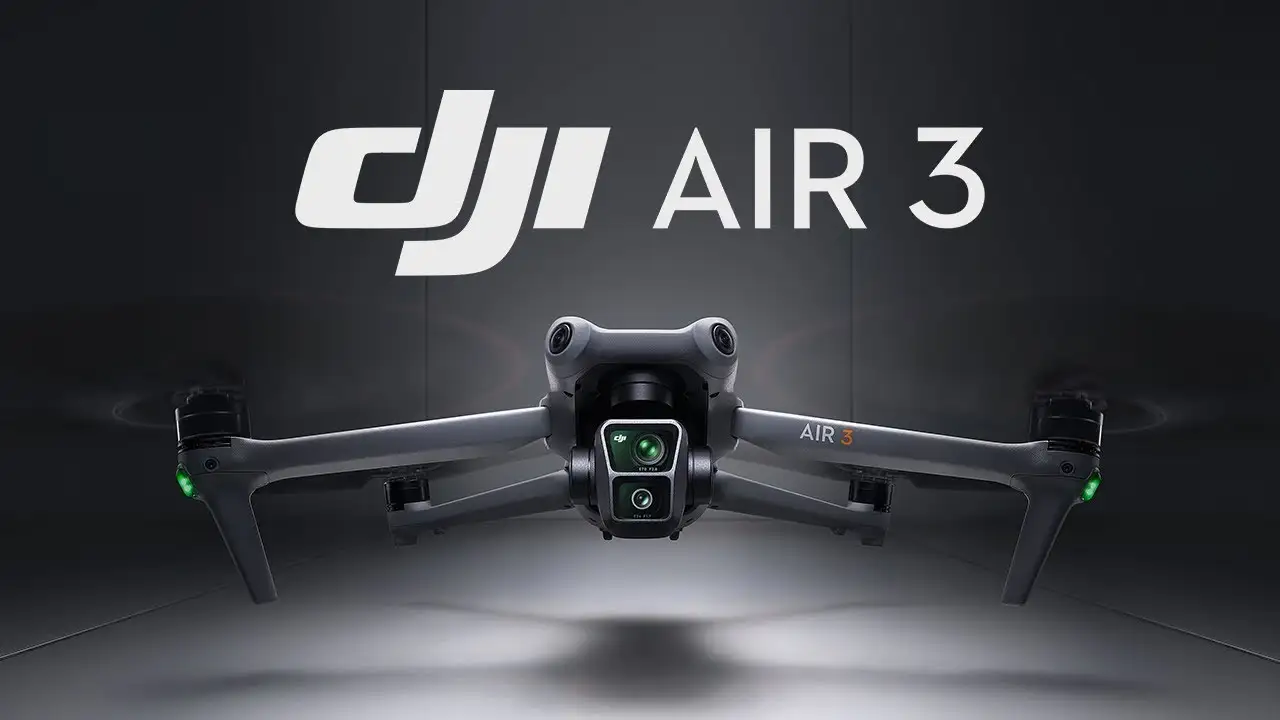
DJI Air 3 Fly More Combo Review: Worth the 9.2/10?
The first surprise isn’t its dual-camera setup — it’s how much DJI Air 3 Fly More Combo with DJI RC 2 owners praise its usability right out of the case. Across platforms, even skeptical buyers report being “blown away” by the stability, intelligent features, and sheer polish of DJI’s execution. Based on aggregated feedback, it stands at a confident 9.2/10.
Quick Verdict: Yes — especially for serious aerial photographers or prosumers who want long flight time, robust obstacle sensing, and a premium controller experience.
| Pros | Cons |
|---|---|
| Exceptional camera quality with dual lenses | No charger brick included in combo |
| Long battery life (~43–46 min) | Controller not backward-compatible with older DJI drones |
| RC 2’s built-in, bright screen | Lack of ND filters in bundle |
| Smooth, responsive flight controls | Obstacle avoidance can miss wires |
| Strong obstacle detection and intelligent modes | Remote charging issues reported by some users |
| Powerful zoom and telephoto options | True vertical shooting not supported (simulated crop) |
| Great wind resistance and range | Controller thumb stick durability concerns |
Claims vs Reality
DJI’s marketing emphasizes 46-minute max flight time, omnidirectional object avoidance, and “consistent image quality” from its wide-angle and medium tele cameras.
On flight time, user experiences largely validate the claim. Best Buy buyer bori photography said, “flight time is around 46 minutes per battery… significantly longer than most drones in its category.” Others saw about 43 minutes depending on conditions. This endurance resonates with aerial filmmakers who need extended setups without battery anxiety.
Obstacle avoidance also earns high marks, but some nuances emerge. Reddit user u/** noted, “object avoidance works only in the light… alarms didn’t go off at all” when edging near an object in dim conditions. Wires remain a blind spot — a recurring caution mentioned by multiple pilots.
Image quality is indeed consistent between lenses, as DJI touts, but the lack of true vertical shooting (compared to Mini 3 Pro’s rotating gimbal) disappoints some creators. Buyers who rely on portrait format for social media must accept a cropped 9:16 output instead of full-sensor verticals.
Cross-Platform Consensus
Universally Praised
Camera performance tops almost every review. Pros appreciate the dual 48MP sensors capturing crisp landscapes and portrait shots. Best Buy user uss online praised it for “capturing stunning visuals… intricate details and vivid colors… in nature, cars, people, and construction projects.” Travel photographers exploit the telephoto lens to stay at a distance while still framing tightly; one user credited it for filming wildlife without disturbance.
Ease of use is another consensus win. Newcomers highlight its intuitive controls and stability. Buyer wayland overcame initial nerves: “after spending some time with it… fear disappeared.” The RC 2’s bright built-in display is a user favorite — keith said it’s “amazing not to have to plug in my phone to fly.”
Battery and range combine to make it a dependable field tool. bluebeard described “calm confidence to explore possible shots” thanks to longevity and reliable 360° obstacle sensing. Videographers mention waypoint mode and automated cinematic features like QuickShots boosting production value without editing headaches.
Common Complaints
The absence of an included high-wattage charger frustrates many. Reddit pilot u/** discovered “deluxe package doesn’t have any way to charge itself,” recommending a 100W brick instead of relying on slow phone chargers. Similarly, Trustpilot feedback warns new buyers to budget for an extra $50–$80.
Accessories omissions — no ND filters, propeller holders, or spare thumb sticks in the bundle — draw criticism from veterans used to fuller Fly More kits. The propeller holder gap makes transport awkward; one Reddit user pleaded with PGYTECH to “update your lineup and take my money.”
Technical complaints include occasional RC 2 charging failures, sometimes post-firmware update, with forum users citing overheating USB ports and dead controllers. While not universal, the issue appears serious enough that some had to return units immediately.
Divisive Features
Vertical shooting sparks debate; social content creators lament losing the Mini 3 Pro’s true vertical gimbal, while traditional filmmakers are satisfied with wide-format footage. Obstacle avoidance earns praise for larger targets but split views on reliability with fine lines like wires.
Range impresses most — dilyse 36 called it “super easy to figure out” with stable connection — but others note compliance limits with local laws can curb its full 20km potential.
Trust & Reliability
On long-term durability, owners from six months to a year report steady performance. justin 454 used it for a year in aerial photography, calling it “an absolute beast” with accessories enhancing experience. Structural build feels solid, though controller thumb stick bolts and mode switches sometimes feel flimsy, as Reddit user u/** pointed out.
Trust issues arise around the reported RC 2 charging failures; forums host multiple threads over recent weeks with similar failure modes, leading to suspicions of a manufacturing defect. DJI support generally advises repairs, but out-of-warranty cases incur costs. While not widespread enough to label systemic, cautious buyers keep an eye on firmware updates.
Alternatives
Within DJI’s ecosystem, the Air 2S offers a 1-inch sensor and is cheaper, but lacks the Air 3’s telephoto lens, extended flight time, and O4 transmission. Some upgraders skip the Mavic 3 Pro due to higher price for a third lens seldom used — keith “couldn’t justify double the cost for a 3rd lens.”
For those needing true vertical shooting, the Mini 3 Pro remains a better fit, trading battery stamina and range for portrait capabilities and lighter sub-250g convenience.
Price & Value
Current market prices range from $1,239 on sale to $1,549 at retail for new units, with used kits around $1,109–$1,299 depending on condition. Resale seems steady thanks to demand for RC 2 packages; intact units retain high percentage of original value.
Community buying tips stress factoring in charger cost, ND filters, and storage cards. Early accessory investment optimizes output, especially in bright conditions where filters slow shutter speeds for more cinematic footage.
FAQ
Q: Can you switch between the two cameras mid-recording?
A: No — you must stop recording to switch lenses, though smooth digital zoom from 1x to 3x on the wide lens is possible.
Q: Does obstacle avoidance work at night?
A: Not effectively. It relies on vision sensors, so low light disables detection. Wires are also difficult for the system to sense.
Q: Is vertical video supported?
A: Both cameras can output 2.7K/60fps vertical-format video, but it’s achieved by cropping, not by physically rotating the gimbal.
Q: How long does the battery take to charge?
A: About 80 minutes with DJI’s 65W charger, 60 minutes with a 100W adapter and hub — slower with standard phone chargers.
Q: Does the RC 2 work with older DJI drones?
A: No — it’s not backward-compatible. It’s specific to models supporting the O4 video transmission system.
Final Verdict: Buy if you’re a serious aerial photographer, travel vlogger, or production crew needing long flights, versatile optics, and polished control experience. Avoid if you need true vertical gimbal shots or dislike buying extra accessories. Pro tip from the community: invest early in a 100W PD charger and ND filters to unlock its full creative potential.