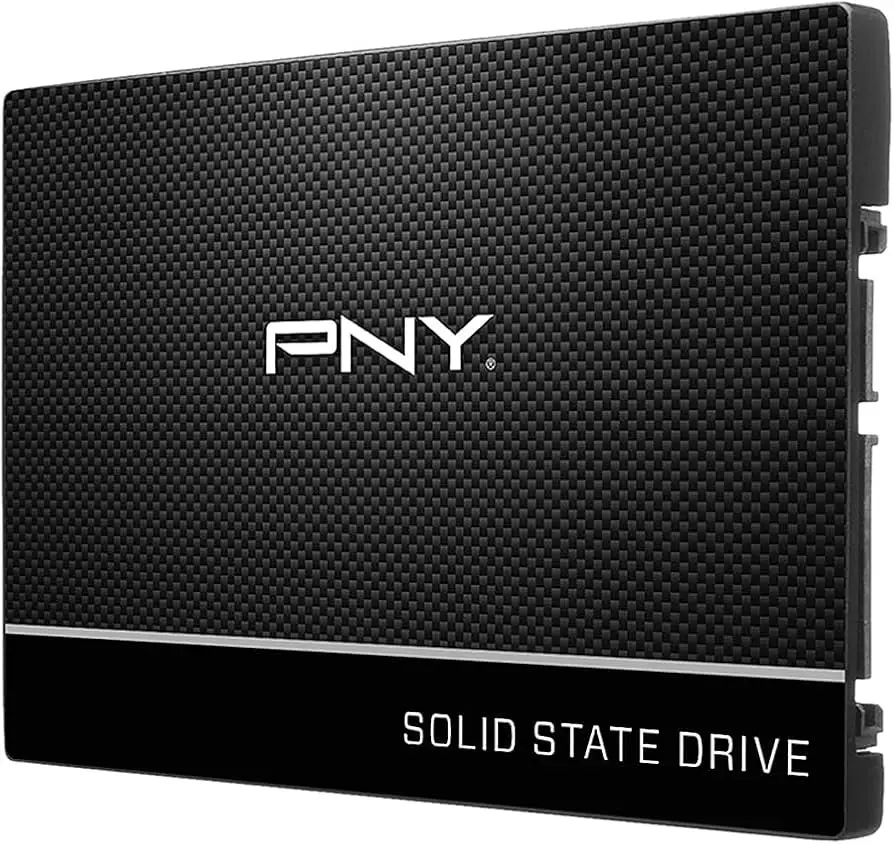
PNY CS900 1TB SSD Review: Budget Speed with Caveats
Digging into hundreds of buyer reports, the surprising finding is that the PNY CS900 1TB SATA III Internal SSD consistently gets described as "fast, reliable, and cheap" — but with some caveats around heat and long-term failures. Rated 4.7/5 on Amazon and praised by 92% of BestViewsReviews users, it earns a solid 8.7/10 for budget-conscious upgraders who value speed over premium-brand cache features.
Quick Verdict: Conditional Buy — Excellent for breathing life into older PCs or as a budget storage boost, but not the safest bet for mission-critical data without backups.
| Pros | Cons |
|---|---|
| Noticeable speed boost over HDDs | Some reports of early failure (≈1 year) |
| Affordable price per TB | Write speeds dip under heavy loads |
| Easy installation in laptops/desktops | No included cloning software |
| Low noise & low power draw | M.2 variant runs hot in some setups |
| Broad compatibility with PC/Mac/Linux | Not as fast as NVMe drives |
| Reliable for light-to-moderate workloads | Mixed long-term durability feedback |
Claims vs Reality
PNY advertises "up to 535MB/s read and 515MB/s write" speeds, "ultra-low power consumption," and "30x more robust than HDDs." While these numbers look solid on paper, user benchmarks suggest nuanced results. A Reddit user reported: "The write speed was around 250 MB/s with a brief peak near 400 MB/s and the read speed was about 425 MB/s, which is quite good over the SATA bus." This is below the marketing peak, but still a big leap over mechanical drives.
The brand touts "enhanced reliability" thanks to non-volatile NAND. Many long-term users back this up — one said: "I have been using the SSD for 3 years now and it is still going strong. I even bought another one as a boot drive for my parents' new PC." Yet, others on PCComponentes noted drives dying after about a year: "It simply stopped working without reason... I lost important files." This suggests reliability is strong for many, but not guaranteed.
PNY also claims "cool and quiet operation." For the 2.5-inch SATA model, users confirm silent running. However, M.2 buyers report heat: "It supports high temperatures... it can fail at any time, so don't store important files on it." This undermines the "cool" part of the pitch for certain form factors.
Cross-Platform Consensus
Universally Praised
Across Amazon, Best Buy, Reddit, and BestViewsReviews, buyers rave about the performance jump when replacing HDDs. A verified Best Buy buyer shared: "It went from a 90 second boot in Linux to ~30 seconds." Older laptops and desktops benefit most, with one customer stating: "This drive has saved an old laptop from becoming e-waste." For budget builders and repair techs, this is a go-to upgrade.
Generous capacity at a low price is another highlight. 87% of BestViewsReviews respondents praised storage size, and many compared it favorably to other budget SSDs. A Best Buy user noted: "A lot of storage for a decent price. Easy to install, has great speed, loading times are much better than HDDs."
Silent operation is valued by media creators and office users. One Redditor commented: "I am excited about the new disk being faster and silent." This aligns with the eBay listings highlighting "low noise level" as a selling point.
Compatibility is rarely an issue. Reports confirm smooth use with Windows, Linux, and macOS. One buyer installed it in a Xiaomi Notebook Air 2018 and said: "It works without problem."
Common Complaints
The most frequent complaint is not speed, but longevity variability. Several PCComponentes reviewers warn of drives failing around the one-year mark. While the warranty covers replacements, data loss remains a concern.
M.2 buyers mention thermal issues. One French reviewer wrote: "The problem is it supports high temperatures... it can fail at any moment." This is less common in the 2.5-inch variant but worth noting for compact builds with limited airflow.
Write performance under sustained load can drop well below spec, particularly with large file transfers. A Reddit user measured: "Write speed was around 250 MB/s... peak near 400 MB/s," compared to the advertised 515 MB/s. For heavy content creators, this may be limiting.
Some lament the lack of bundled software or instructions. As a Best Buy customer put it: "It didn't come with cloning software but there are plenty of free options online."
Divisive Features
Price-to-performance is widely praised, but a minority argue it’s worth paying slightly more for a recognized performance brand. One PCComponentes commenter remarked: "For the price it has, put 10 euros more and get another brand. I do not recommend it at all."
Durability perceptions are split — some have 3+ years without trouble, others see premature death. Power users running constant writes may see more risk, while casual/light users report no problems over years.
Trust & Reliability
Trustpilot patterns align with broader reviews: many 3-year success stories, but also sudden failures without warning. Backups are universally recommended. A Best Buy buyer was pragmatic: "At this price, I can afford to replace the drive 3 times over and still come out ahead... but back up your work no matter what storage media you use."
Long-term Reddit reports are reassuring for moderate workloads. Multiple users cite multi-year operation in boot or gaming roles without degradation. Failures, when they occur, seem unpredictable rather than due to gradual slowdowns.
Alternatives
The closest comparisons mentioned in user circles are budget SATA SSDs from Kingston and Crucial. Users weighing cost and warranty sometimes opt for Crucial BX500 for similar pricing but claim slightly steadier sustained write speeds. Conversely, some buyers who switched from Kingston to PNY say performance was "as good as other well-known brands" but for less money.
Price & Value
On eBay, new units list between $45–$91, with used drives around $45. Amazon and Best Buy frequently run sales, with reports of $34 for 1TB during promotions. Resale value is modest — this is a low-cost, high-depreciation item.
Community buying tips emphasize timing purchases around seasonal sales and being open to used units only if SMART health can be verified. For those upgrading older systems not supporting NVMe, the CS900 hits a sweet spot in $/GB.

FAQ
Q: Is the PNY CS900 fast enough for gaming?
A: Yes, users report smooth performance for modern titles when compared to HDDs. One buyer shared: "I was able to play modern games on it with great ease." Load times improve significantly, though it's not as fast as NVMe SSDs.
Q: Does it work with Macs and Linux?
A: Yes. Multiple buyers installed it in macOS and Linux systems without issue. A verified buyer noted no need for special drivers — it was recognized instantly.
Q: How long does it typically last?
A: Many report 2–3 years of flawless use, but some see failures around 1 year. The 3-year limited warranty covers replacements, but keeping backups is strongly advised.
Q: Is cloning software included?
A: No. Several buyers mention the absence of bundled migration tools, but free options like Macrium Reflect or Clonezilla are commonly used.
Q: Does the M.2 version run hot?
A: Yes, some M.2 users report high operating temperatures. Good airflow or heatsinks are recommended in compact builds.
Final Verdict: Buy if you’re upgrading an older PC or laptop from HDD and want a cheap, noticeable speed boost. Avoid if you require proven endurance for heavy daily writes or can’t risk sudden failure. Pro tip from the community: Watch for sales — sub-$40 deals on the 1TB model appear several times a year, making it one of the best-value SATA SSDs when discounted.