Corsair RM1000x PSU Review: Quiet Power, Mixed Cables
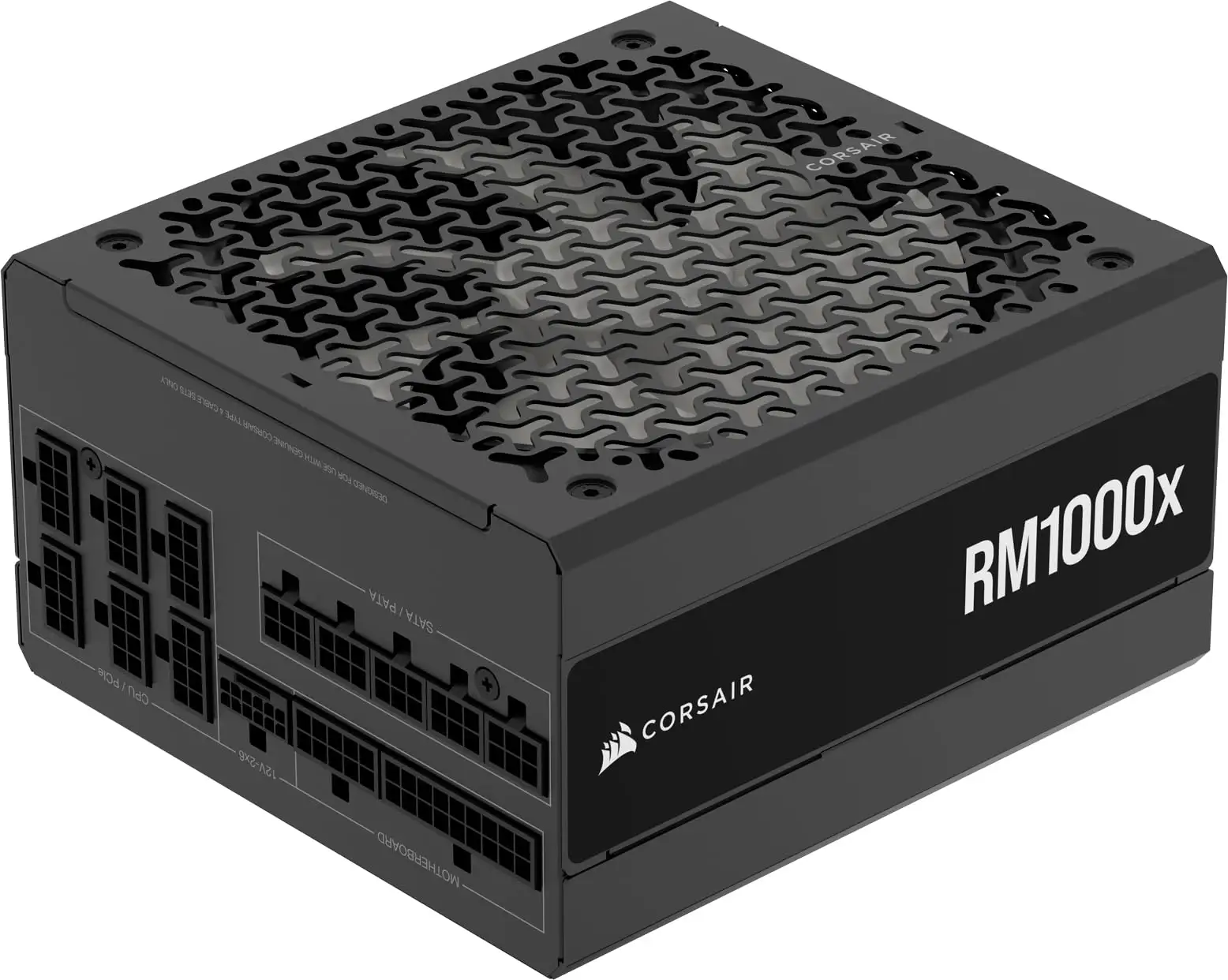
A surprising number of seasoned builders describe the CORSAIR RM1000x Fully Modular ATX Power Supply as “quiet, dependable, efficient” yet also “frustrating” when it comes to cable design and heat behavior. Weighing all feedback, the unit scores a solid 8.2/10—praised for reliability and efficiency, but dinged for stiff, bulky wiring and occasional coil whine in certain GPU setups.
Quick Verdict: Conditional buy
| Pros | Cons |
|---|---|
| Near-silent zero RPM fan mode under low loads | Stiff, chonky cables make routing difficult |
| High efficiency (80+ Gold, Cybenetics A noise rating) | Coil whine reported with some high-power GPUs |
| Fully modular with generous number of connectors | Daisy-chain PCIe cables can cause GPU instability |
| 10-year warranty and proven long-term reliability | Heat buildup in zero RPM mode can raise GPU temps |
| Magnetic levitation bearing fan for longevity | No manual fan control, no bag for extra cables |
| Handles transient spikes well for modern CPUs/GPUs | Cable layout changes have confused buyers |
| Futureproof for RTX 4000/PCIe 5.0 | Overkill for lower-end systems |
Claims vs Reality
Corsair markets the RM1000x as “near-silent” thanks to zero RPM fan mode. While many users confirm this—PCPartPicker reviewers say they’ve “literally never heard this thing turn on”—others found the feature problematic. A Reddit user noted: “The idea behind ‘zero rpm fan’ is a joke… it puts out so much heat it causes my GPU to run hotter.” This suggests that while silence is achieved, thermals in cramped builds can be an unintended casualty.
Another claim is “fully modular with broad compatibility.” Buyers appreciate the flexibility—one PCPartPicker user called it “easy to install, and works well… all the wattage I’ll ever need.” However, several Newegg and Trustpilot reviews complain about Corsair’s switch from individual PCIe cables to daisy-chain configurations. One critical reviewer warned: “Utilizing daisy-chain cables is well documented… to be a cause of instability” with GPUs like RTX 3080 or RX 6900 XT.
Corsair also touts “high efficiency” with 80 Plus Gold certification. Efficiency is borne out in field reports—Newegg’s top favorable review measured system draw “15 watts less under full load” compared to the previous PSU. But coil whine incidents undermine perceived quality control, especially when tied to overheating GPUs.
Cross-Platform Consensus
Universally Praised
Across Amazon, PCPartPicker, and Newegg, the RM1000x earns consistent praise for quiet operation and stable power. A verified Amazon buyer highlighted its “magnetic levitation fan… high performance, low noise, and superior reliability,” while a PCPartPicker user powering an i9-13900K + RTX 4090 reported “plenty of watts and very quiet.” For high-end gamers, the ability to run GPUs without audible PSU fan noise is a selling point.
Enthusiasts also value its headroom. One Redditor described it as “way overkill for my system, but I wanted futureproofing,” noting it should last through multiple GPU upgrades. The 10-year warranty reinforces this sense of longevity—multiple Newegg reviewers mention owning Corsair PSUs “for years” without failure.
Efficiency gains are another unanimously reported benefit. Newegg’s efficiency-focused reviewer stressed that “a good PSU like this… might even save you money in the long run over a cheap inefficient unit.” This matters for productivity users running high loads daily.
Common Complaints
Cable stiffness dominates negative feedback. PCPartPicker users repeatedly mention “hard to bend” and “ugly and cluttered” Y-splitters, making clean builds harder. Newegg’s critical review calls them “horrendously stiff… less than 1 inch of flexible wire” from connectors, problematic in small form factor cases.
Coil whine reports are frequent in the context of AMD RX 6900 XT cards. Trustpilot’s critical review describes “faint coil whine… changing pitch by input from my mouse/keyboard,” and overheating that pegged GPU hotspot temps to 107°C in under 2 minutes. This behavior did not occur with the reviewer’s previous PSU, suggesting a potential interaction between the RM1000x’s power delivery and certain GPUs.
Heat buildup during zero RPM mode is another sore point. The Corsair Community forum saw a veteran builder complain: “Zero rpm fan is completely ineffective if it’s causing the rest of system to run hotter… temp sensors drop over 10 degrees when replaced with EVGA 1000W PSU.”
Divisive Features
Zero RPM fan mode splits opinion. Silent-PC enthusiasts treasure it; one Newegg reviewer said it’s “100% silent… essentially inaudible operation even with a 500+ watt load.” Yet builders prioritizing thermal management find it frustrating without manual override.
Cable configuration changes are also divisive. While some accept Corsair’s rationale that “hefty cables… safely handle more throughput,” others distrust daisy-chains for high-draw GPUs. The shift from three separate PCIe cables to two daisy-chains has confused buyers expecting previous layouts.
Trust & Reliability
Long-term durability emerges as a strength. Multiple PCPartPicker reviewers report “no issues” after months of use, and Newegg’s favorable reviewer notes all their Corsair PSUs “last forever.” This aligns with the 100,000-hour MTBF claim.
However, Trustpilot and forum posts raise concerns about quality consistency. Coil whine and overheating in specific builds hint at unit variance or sensitivity to certain GPUs. The lack of manual fan control is a repeated frustration, seen as a design oversight by experienced builders.
Alternatives
Some buyers compared the RM1000x to Seasonic’s Focus GX-1000 ATX 3.0, with one PCPartPicker user choosing Corsair for “slightly better transient handling” despite preferring Seasonic’s cable ergonomics. EVGA’s 1000W PSU is cited in Corsair’s own forums as running cooler under similar loads, suggesting it may better suit heat-conscious builds.
Price & Value
Market prices vary widely: Amazon lists it around $174.94, while Corsair’s own store pegs it at $269.99. Refurbished units have dropped below $176, and eBay sellers offer used ones as low as $90.98. Community advice leans toward buying new or factory-refurbished to ensure warranty coverage, especially given the 10-year term.
Resale value appears stable, with used prices often exceeding $100, reflecting trust in Corsair’s longevity.

FAQ
Q: Does zero RPM fan mode ever turn on automatically?
A: Yes, under higher loads or elevated internal PSU temps, the fan engages. Several users note it remains off during moderate use, but this can cause heat buildup in tight cases.
Q: Can I use this PSU with RTX 4090 or PCIe 5.0 GPUs?
A: Yes, it supports modern GPUs and comes with a native 12V-2x6 cable. Some users buy Corsair’s official 600W PCIe 5.0 cable for cleaner connections.
Q: Is coil whine common with this PSU?
A: Coil whine is not universal but has been reported, particularly with AMD RX 6900 XT cards. It may depend on GPU power draw patterns.
Q: Are the cables flexible enough for small form factor builds?
A: Many users find them too stiff for SFF cases. Cable mods or aftermarket replacements are common solutions.
Q: Does it come with a bag for extra cables?
A: No, unlike some Corsair models, this unit does not include a storage bag, which disappointed several buyers.
Final Verdict: Buy if you’re a high-end gamer or workstation user needing quiet, efficient, long-term power with modern GPU support. Avoid if you run heat-sensitive builds in cramped cases or dislike stiff, bulky cables. Pro tip from community: invest in official Corsair or third-party flexible cables for cleaner builds and potential GPU stability gains.