AMD Ryzen 7 7800X3D Review: Gaming Beast Verdict
The AMD Ryzen 7 7800X3D has emerged as one of the most talked-about gaming CPUs of the last year, earning a consensus score of 9/10 among enthusiasts for its combination of top-tier gaming performance, extreme efficiency, and forward-looking AM5 platform compatibility. Across Reddit, PCPartPicker, and retail reviews, users consistently describe it as “an absolute monster for gaming” when paired with high-end GPUs like the RTX 4090, but also note quirks like high idle temps and locked CPU overclocking that may frustrate tweakers.
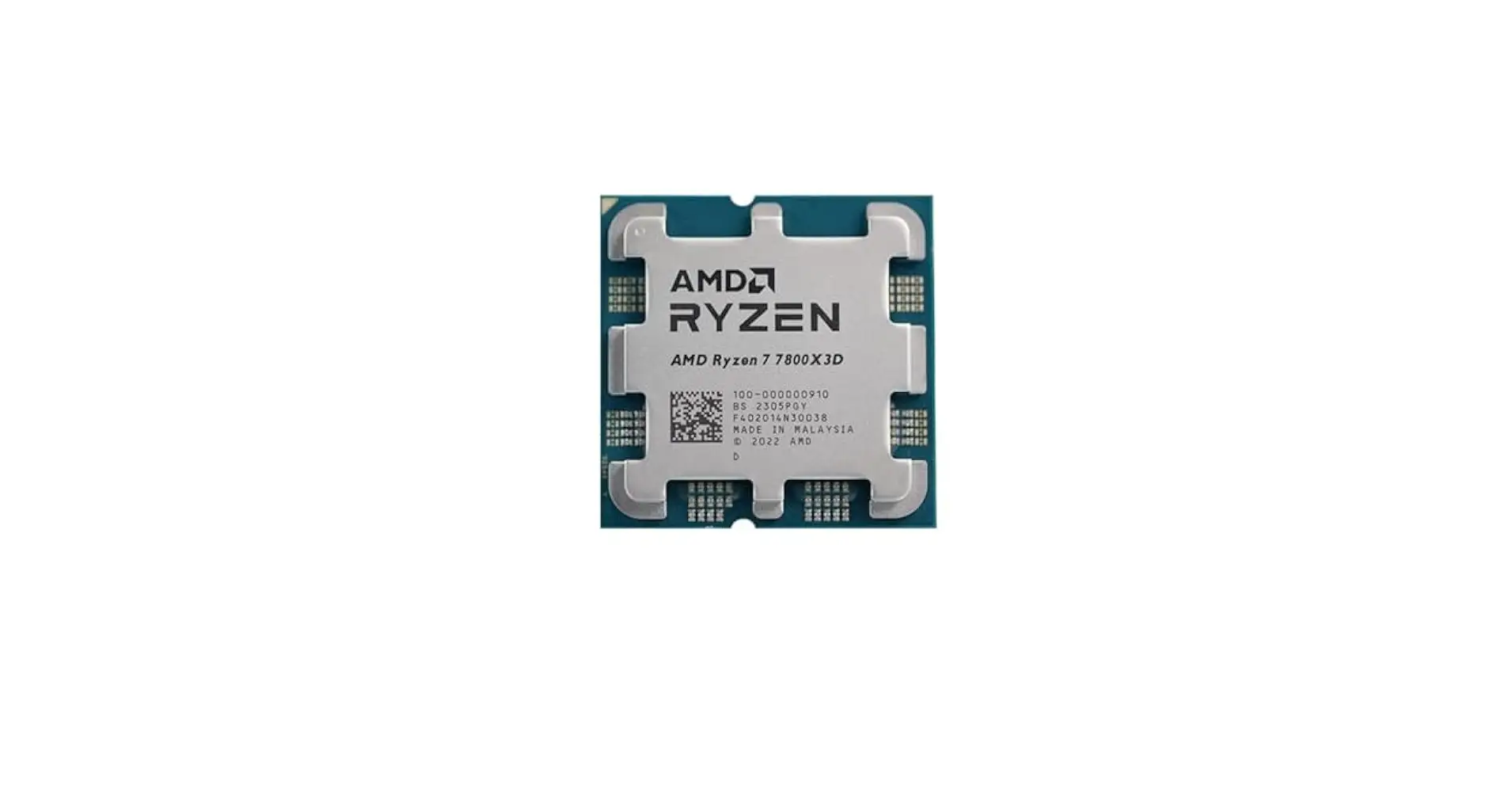
Quick Verdict: Yes — if your primary focus is gaming and you value efficiency over raw multi-core productivity power.
| Pros | Cons |
|---|---|
| Class-leading gaming FPS with 3D V-Cache | No CPU cooler included |
| Extremely power-efficient (often under 70W in gaming) | Locked CPU overclocking |
| Pairs exceptionally well with GPUs up to RTX 4090 | Higher idle temps (45–50°C reported) |
| AM5 platform with future upgrade path | Weaker performance in productivity workloads |
| Integrated graphics for troubleshooting | Premium platform cost (DDR5 + AM5 board) |
Claims vs Reality
AMD markets the Ryzen 7 7800X3D as “the fastest gaming processor available” with “next-gen AMD 3D V-Cache technology” delivering unmatched low-latency performance. In gaming benchmarks, community reports back this claim almost to the letter. A Reddit user upgrading from an i3-13100F noted: “My GPU is running full time at full usage, no stutters, no problems whatsoever and the 1% lows are insane, always in the triple digit”.
However, the promise of “up to 5.0 GHz boost clock” is more complicated. Multiple PCPartPicker users reported the chip rarely ever pulling more than 4.7–4.8 GHz, even at temperatures well below its 89°C TJmax, suggesting aggressive frequency limits to protect the stacked cache. One owner remarked: “It does sometimes reach it, but it really averages around 4.7–4.8 GHz”.
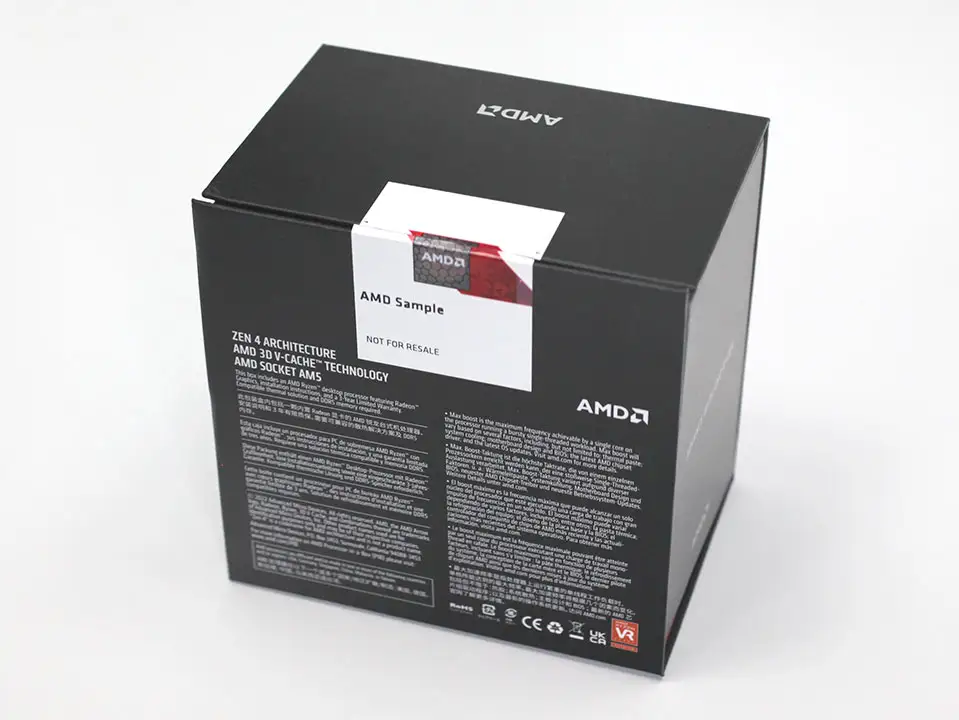
AMD also claims “liquid cooler recommended for optimal performance”. While some users have achieved excellent temps with high-end air coolers, idle temps of 45–50°C are common even with AIO loops, surprising buyers used to cooler-running CPUs. A verified buyer on Amazon.fr still rated it highly but cautioned: “Yes, AMD chips are hot by design but it is easy to control temperatures with a good BIOS setup and heatsink”.
Cross-Platform Consensus
Universally Praised
The overwhelming consensus is that the Ryzen 7 7800X3D is the choice for high-end gaming rigs. On PCPartPicker, one builder pairing it with an RTX 4090 said: “This is an absolute monster for gaming especially considering its power draw and thermal performance which was essential in my cramped mATX build”.
Efficiency is a recurring theme. TechSpot reviewers point out it “never throttles even with a basic cooler” and consumes “significantly less power” than Intel's i9-13900K while outperforming it in many gaming scenarios. Ars Technica observed it “used less power than the 7700X even when the 7700X was in its 65W eco mode”. For VR users, a PCComponentes customer noted: “The 3D cache in VR works very well, it gives extra stability”.
The AM5 platform support is another draw. Redditors highlight that existing AM4 coolers are compatible, and that AMD’s long-term support for AM5 means “the CPU should be upgradable in the future”.
Common Complaints
The most common friction points are thermal behavior and locked CPU tuning. Idle temperatures in the high 40s Celsius are frequent, with occasional spikes reported even at low utilization. One PCPartPicker user noted: “Power and performance are amazing, but the high idle temps and temp spikes are off-putting”.
Overclocking limitations frustrate enthusiasts. The 7800X3D allows RAM tuning and PBO adjustments, but no direct CPU multiplier or TDP changes. As one owner put it: “I really appreciate the set it and forget it nature… but I do understand why some people are upset by how locked down it is”.
A smaller subset reported memory speed frustrations, often tied to BIOS settings. One AMD Community poster ranted: “This piece of junk processor can’t even do 5200 speed RAM… very regretful purchase”, though others countered that enabling EXPO in BIOS allowed them to run 6000–6400 MHz without issue.
Divisive Features
Price-to-performance is generally seen as excellent in gaming, but debatable for mixed workloads. TechSpot warns: “With ho-hum CPU performance for the money… its strengths will benefit only a small sliver of gamers”. A few upgraders from the Ryzen 7 7700 even felt the cheaper chip was “snappier” in desktop use despite lower gaming FPS.
Some gamers were disappointed in specific titles. One PCPartPicker reviewer mentioned being “a bit disappointed on the latest benches showing the 13th gen Intel beating this out in Starfield”. Still, most agreed it remained the better all-round gaming buy.
Trust & Reliability
A notable risk emerged from the AMD Community: counterfeit 7800X3D CPUs entering second-hand markets. Overclocking expert “der8auer” exposed scams involving fake heat spreaders and empty PCBs sold on platforms like OLX. Warning signs included “lack of sealant on the capacitors” and “different color substrate”. Buyers are urged to purchase only from reputable sellers with return protections.
Long-term reliability reports are still early, but several Reddit and PCPartPicker users report months of stable operation without performance degradation, even in 24/7 gaming rigs. The locked-down nature of the chip may ironically aid longevity by preventing unsafe overvolting.
Alternatives
The Ryzen 7 7700 and 7700X are cheaper AM5 options with higher boost clocks and better productivity performance, but they lack 3D V-Cache and thus fall behind in gaming FPS. TechSpot notes the 7700X “stays behind the 7800X3D in most CPU-limited gaming” but can be 10–15% faster in content creation.
The Intel Core i9-13900K remains a productivity and high-refresh esports contender, particularly with DDR5-7200 setups, but at higher power draw and cost. For budget-conscious gamers, the Ryzen 5 7600 offers solid 1080p/1440p performance at nearly half the platform cost.
Price & Value
Current eBay listings show new 7800X3Ds between $378–$420, down from the $449 launch price. Flash sales have hit as low as $360–$384, which PCPartPicker users describe as “great value for money” when bundled with games like Starfield.
Resale value appears strong due to AM5’s projected longevity. As one seller-oriented Redditor put it: “At least the CPU should be upgradable with the AM5 platform in the future”, suggesting buyers can recoup more later compared to short-lived Intel sockets.
FAQ
Q: Does the Ryzen 7 7800X3D run hot?
A: Yes, by design it operates at higher idle temps (often 45–50°C) but under gaming loads it stays efficient, rarely exceeding 70°C with a good cooler.
Q: Can I overclock the 7800X3D?
A: CPU core overclocking is locked, but you can adjust memory speeds, use Precision Boost Overdrive, and Curve Optimizer for fine tuning.
Q: Is it worth upgrading from a 5800X3D?
A: In CPU-limited games, yes — some users report significant FPS gains, but in GPU-bound scenarios the difference may be negligible.
Q: Does it include a cooler?
A: No, AMD recommends a quality liquid cooler or high-end air cooler for optimal performance.
Q: Is the AM5 platform future-proof?
A: AMD has committed to supporting AM5 for multiple future CPU generations, making it a safer long-term investment.
Final Verdict: Buy if you’re a high-end gamer or VR enthusiast wanting the best FPS-per-watt ratio and a future-proof platform. Avoid if your workload is productivity-heavy or you demand extensive manual overclocking. Pro tip from the community: enable EXPO in BIOS for optimal RAM speeds and buy from trusted retailers to avoid counterfeit units.