Zebra DS2208-SR Review: Conditional Buy Verdict (7.8/10)
“Scans it all” is the promise—yet the loudest theme across sources is where that versatility stops. Zebra DS2208-SR Barcode Scanner earns a conditional thumbs-up for basic POS and inventory workflows, especially if you need 2D codes, but the feedback also flags “limited advanced features” and occasional “slower scan speeds” versus higher-end models. Verdict: Conditional buy — 7.8/10.
Quick Verdict
Yes/Conditional: Yes if you want an affordable, corded 1D/2D scanner for retail-style scanning; conditional if you need maximum speed, wireless mobility, or specialized industry features.
| What the data suggests | Evidence from provided sources | Who it matters to |
|---|---|---|
| Strong 1D + 2D versatility | PROVANTAGE notes it’s “praised for its versatility in scanning both 1d and 2d barcodes.” | Retail checkout, coupons/loyalty, small businesses |
| Easy, low-friction setup | PROVANTAGE says “pre-configured and ready to use… no configuration required.” | Stores without IT support |
| Hands-free possible (with stand kits) | PROVANTAGE describes “9ft USB kit with stand… for hands-free scanning operations.” | High-throughput counters |
| Corded limits mobility | PROVANTAGE flags “limited mobility – corded design restricts movement.” | Warehouses, large receiving areas |
| Not feature-rich vs advanced models | PROVANTAGE warns of “limited advanced features.” | Power users, specialized compliance setups |
| Pricing varies widely by listing/condition | eBay shows ~$65 “new – open box,” ~$99.99 new, and ~$59.97 used (no base). | Budget buyers, multi-scanner rollouts |
Claims vs Reality
Zebra’s positioning across DS2208 product pages and reseller listings leans hard on ease and broad barcode coverage. The official product framing emphasizes that “2d barcodes have made their way to your point of sale” and that with the DS2200 series, “you can scan it all,” highlighting “point-and-shoot simplicity” and being “pre-configured and ready to use” (PROVANTAGE; Zebra DS2208 page).
Digging deeper into the feedback-style summaries included in the provided data, that “scan it all” message largely holds for 1D/2D compatibility, especially in general retail. PROVANTAGE’s sentiment summary repeatedly says the DS2208-SR is “praised for its versatility in scanning both 1d and 2d barcodes,” and frames it as “a solid choice for general retail use.” For a small shop adding QR coupons or loyalty cards, that’s the core reality: it’s treated as a practical upgrade from 1D-only scanning.
Where the claim meets resistance is the implied “best-in-class” feel. In the same PROVANTAGE summary block, the caveats show up quickly: “lack of advanced features” and “potential for slower scan speeds—compared to more advanced models.” That creates a gap between marketing polish (“best-in-class first-time… scanning”) and the lived expectation of buyers who equate “best” with premium-speed performance and deeper customization.
Cross-Platform Consensus
Universally Praised
A recurring pattern emerged: the Zebra DS2208-SR Barcode Scanner is treated as the “safe default” for businesses that need both 1D and 2D without spending for flagship gear. Across the PROVANTAGE summaries, the most consistent praise is broad barcode coverage: it “scans both 1d and 2d barcodes,” including QR and Data Matrix (PROVANTAGE). For front-counter retail teams, that matters because 2D shows up in “printed and electronic coupons and loyalty cards,” a use case Zebra itself highlights (PROVANTAGE).
Another praise thread is deployment simplicity. Zebra’s DS2200-series positioning says it’s “pre-configured and ready to use, right out of the box… no configuration required” (PROVANTAGE), and the same page emphasizes “auto-host detect” to simplify setup (PROVANTAGE). For small operators running a tablet-based POS or a simple USB-connected workstation, the promise is fewer “exceptions that slow down the check-out process,” and the feedback narrative in the provided data aligns with that friction-reduction story.
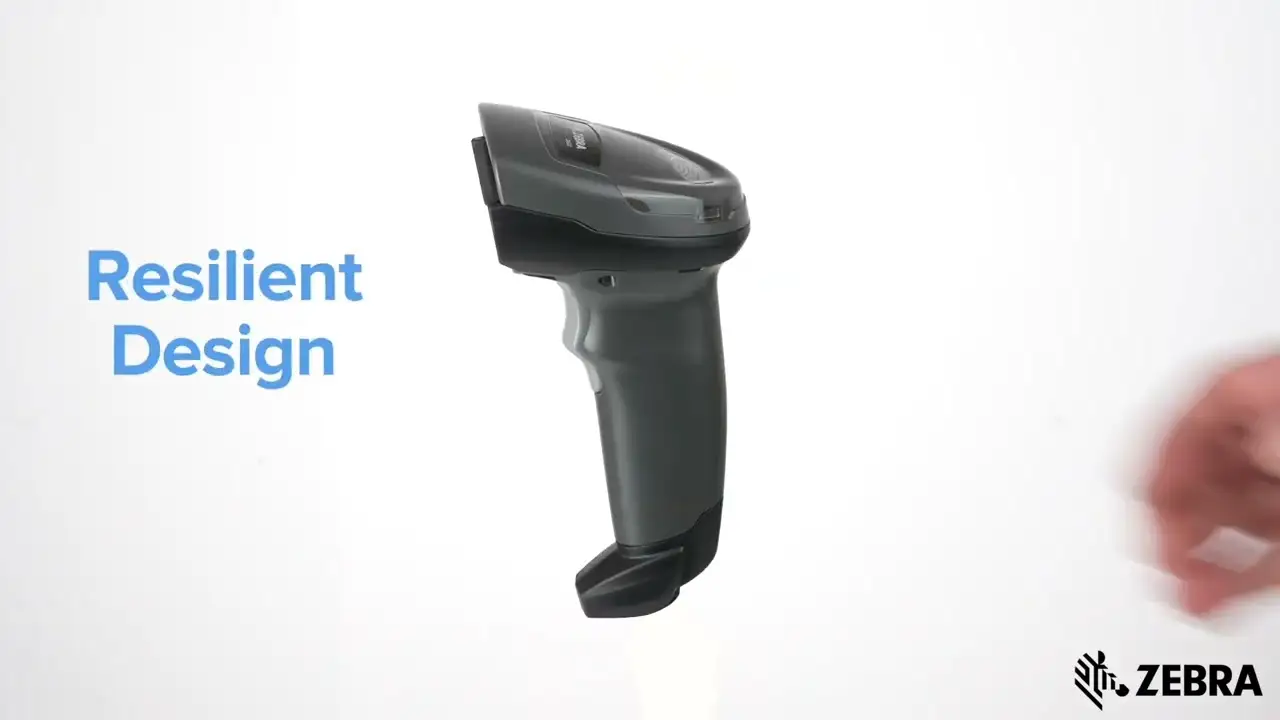
Ergonomics and all-day handling also show up repeatedly—less as emotional fanfare and more as practical reassurance. Zebra calls out “ergonomic and lightweight” design (Zebra DS2208 page), and multiple listings echo a “comfortable to hold for extended periods of time” angle (NOGTEK). For shift workers scanning continuously, that kind of steady comfort is an operational benefit, not a luxury.
After the praise narratives, the sources keep circling back to “hands-free” flexibility when bundled with a stand. PROVANTAGE repeatedly describes kits that include a stand and a long USB cable, framed as enabling “hands-free scanning operations” (PROVANTAGE). In a busy counter environment—think small retail, ticketing windows, or backroom processing—that stand can be the difference between a scanner that lives in a drawer and one that stays in the workflow.
Key praised themes (from provided sources):
- Versatile barcode support: “scans both 1d and 2d barcodes” (PROVANTAGE)
- Easy integration/setup: “pre-configured… no configuration required” (PROVANTAGE)
- Ergonomic handling: “ergonomic design… comfortable… extended periods” (NOGTEK; Zebra DS2208 page)
- Stand kits enable presentation scanning: “includes a stand for hands-free scanning operations” (PROVANTAGE)
Common Complaints
The most consistent complaint is not about whether it works—it’s about what it doesn’t do compared with pricier scanners. PROVANTAGE’s sentiment blocks flag “limited advanced features,” including examples like lacking “EAS integration” and “customizable sound options” (PROVANTAGE). For buyers outfitting a more complex retail environment, those missing knobs can become a real deployment constraint, especially when they expect a scanner to behave like a configurable peripheral rather than a simple input device.
Mobility limitations are the second big friction point. Multiple PROVANTAGE entries state “limited mobility – corded design restricts movement” and note it “must be connected via USB for operation” (PROVANTAGE). That’s fine at a fixed checkout lane, but for inventory walks, warehouse picking, or large receiving tables, that cable can feel like an anchor—especially compared to cordless alternatives that Zebra itself sells in the DS2200 family (corded DS2208 vs cordless DS2278, per PROVANTAGE).
A third recurring critique is performance expectations around speed. In the provided sentiment synopsis, users “note… potential for slower scan speeds—compared to more advanced models” (PROVANTAGE). While the text doesn’t provide individual named-user quotes, the complaint appears consistently as a buying consideration: it’s “suitable for environments needing basic to moderate scanning capabilities” rather than peak throughput (PROVANTAGE).
Key complaint themes (from provided sources):
- “Limited advanced features” (PROVANTAGE)
- “Corded design restricts movement” (PROVANTAGE)
- “Potential for slower scan speeds” vs advanced models (PROVANTAGE)
- Environmental constraints: “operates best in controlled environments with minimal dust and moisture” (PROVANTAGE)
Divisive Features
The same “simple and affordable” identity that makes the Zebra DS2208-SR Barcode Scanner attractive can also be polarizing. Digging deeper into the summaries, one side values it for being “cost-effective” and “easy to use” as a “complete kit” (PROVANTAGE). The other side reads that same simplicity as a limitation—“no advanced features” and “requires fixed installation” (PROVANTAGE). If your workflow is stable and predictable, “basic scanning needs” is a compliment; if your environment is dynamic, it can sound like a warning label.
Even the stand situation divides shoppers depending on listing and bundle. eBay listings show units sold “NO Base” with “stand not included” (eBay listing), while other kits include a stand (PROVANTAGE; eBay “with USB cable and stand”). That means two buyers can think they’re buying the same DS2208 experience and end up with different day-to-day usability—especially for presentation scanning.
Trust & Reliability
Across the provided “Trustpilot (Verified)” section, the content shown is effectively the same PROVANTAGE-style summary blocks rather than individual verified-buyer narratives. What does emerge in those blocks is a reliability framing: “durable design—built to withstand regular use in retail environments,” plus repeated mention that it’s intended for “general-purpose scanning” (PROVANTAGE). The trust angle here is less “watch out for scams” and more “know what class of device this is.”
On durability, the sources repeatedly cite drop resistance around the 5 ft range. NOGTEK says it’s “durable enough to withstand drops from up to 5 feet,” and PROVANTAGE similarly lists “multiple drops at 5.0 ft… to concrete” in specifications (PROVANTAGE; NOGTEK). Still, there aren’t true long-term, time-stamped community stories like “6 months later…” in the provided Reddit/community data—so durability confidence here is anchored more in spec-style claims and reseller summaries than in personal longitudinal accounts.
Alternatives
Only a few competitor models are explicitly mentioned in the provided data, and they mostly appear in the context of what the DS2208 is between. Jah Incorporation frames the DS2208 as “a cross between the very affordable LI2208 and performance based DS4308 barcode scanners” (Jah Incorporation). That positions it as a middle-ground choice: more future-proof than a 1D-only LI2208 class, but not the same “performance based” tier as a DS4308.
For buyers deciding between staying 1D vs going 2D, Zebra’s own framing is blunt: “your 1d scanner can’t capture the new 2d codes,” leading to checkout “exceptions” (PROVANTAGE). If your pain point is QR/mobile coupon scanning, the DS2208 class directly targets that gap. If your pain point is absolute speed, deeper configuration, or specialized integrations, the same provided material hints that higher-end models are where those expectations land.
Price & Value
The pricing story is messy—in a way that benefits bargain hunters but can confuse procurement. Amazon shows a Zebra LS2208 (1D laser) at about $63.00 with a 4.2/5 rating across 166 reviews (Amazon). That matters because it anchors what many buyers think a “Zebra handheld scanner” should cost, even though the LS2208 is a different model family and scanning type than the DS2208.
On DS2208 resale/market pricing, eBay shows:
- $59.97 used for a DS2208 with USB cable, explicitly “NO Base” and “stand not included” (eBay, item 364381139866).
- $65.00 new – open box for “DS2208-SR… with USB cable and stand” (eBay, item 314554319303).
- $99.99 new for a DS2208-SR “corded 2D/1D… with USB” (eBay, item 324853667820).
The value takeaway from these listings is that “kit completeness” drives real-world cost. A recurring pattern emerged: a DS2208 listing can look cheap until you notice “stand not included” (eBay) versus bundles that include a stand and longer cable (PROVANTAGE). For small business owners, that means the best “deal” is often the listing that matches how you intend to use it—fixed counter with presentation scanning vs handheld-only.
Buying tips implied by the data:
- Confirm whether the listing includes a stand (“with stand” vs “NO Base”) (eBay; PROVANTAGE).
- Confirm cable length (e.g., “9ft USB kit”) if your POS layout needs reach (PROVANTAGE).
- If upgrading from LS2208 setups, Zebra claims “backwards compatible… cables” for DS2200 series (PROVANTAGE), potentially lowering rollout cost.
FAQ
Q: What type of barcodes can the Zebra DS2208-SR read?
A: It’s positioned as a 1D/2D imager that can scan “both 1d and 2d barcodes,” including QR code and Data Matrix (PROVANTAGE). Zebra also frames it for POS use cases like “printed and electronic coupons and loyalty cards,” where 2D scanning matters (PROVANTAGE).
Q: Is the DS2208-SR plug-and-play over USB?
A: The provided sources describe it as “pre-configured and ready to use… no configuration required” for most scanning applications (PROVANTAGE). Kits are commonly sold as USB-connected, and PROVANTAGE also highlights “auto-host detect” to simplify connecting to POS systems (PROVANTAGE).
Q: Does it come with a stand for hands-free scanning?
A: Sometimes. PROVANTAGE lists specific bundles as a “USB kit with stand” for “hands-free scanning operations” (PROVANTAGE). But eBay listings show variation—one used unit explicitly says “stand not included” (eBay), while another “new – open box” listing includes a stand (eBay).
Q: What are the main downsides mentioned in the data?
A: The most repeated drawbacks are “limited advanced features,” “limited mobility” due to the corded design, and “potential for slower scan speeds” compared to more advanced models (PROVANTAGE). These matter most for fast-paced or highly specialized environments (PROVANTAGE).
Q: How durable is the DS2208-SR according to the sources?
A: Several provided sources cite drop resistance around 5 ft. NOGTEK says it can withstand “drops from up to 5 feet” (NOGTEK), and PROVANTAGE specifications similarly reference “multiple drops at 5.0 ft… to concrete” (PROVANTAGE). The dataset doesn’t include long-term user diary posts to confirm real-world aging.
Final Verdict
Buy if you’re a retail checkout, hospitality counter, or small business that needs an affordable Zebra DS2208-SR Barcode Scanner for “both 1d and 2d barcodes” and wants straightforward deployment—PROVANTAGE frames it as “pre-configured and ready to use” and a “solid choice for general retail use” (PROVANTAGE).
Avoid if your workflow depends on roaming mobility, top-end scan speed, or advanced integrations—because the same feedback summaries warn about “limited mobility,” “limited advanced features,” and “potential for slower scan speeds” versus higher-tier models (PROVANTAGE).
Pro tip from the community-market data: don’t price-compare DS2208 listings without checking bundle contents—one eBay deal spells out “stand not included,” while others include a stand and cable, changing how usable it is for hands-free scanning (eBay; PROVANTAGE).