Midland GXT67 Pro Review: Rugged GMRS Radio Verdict
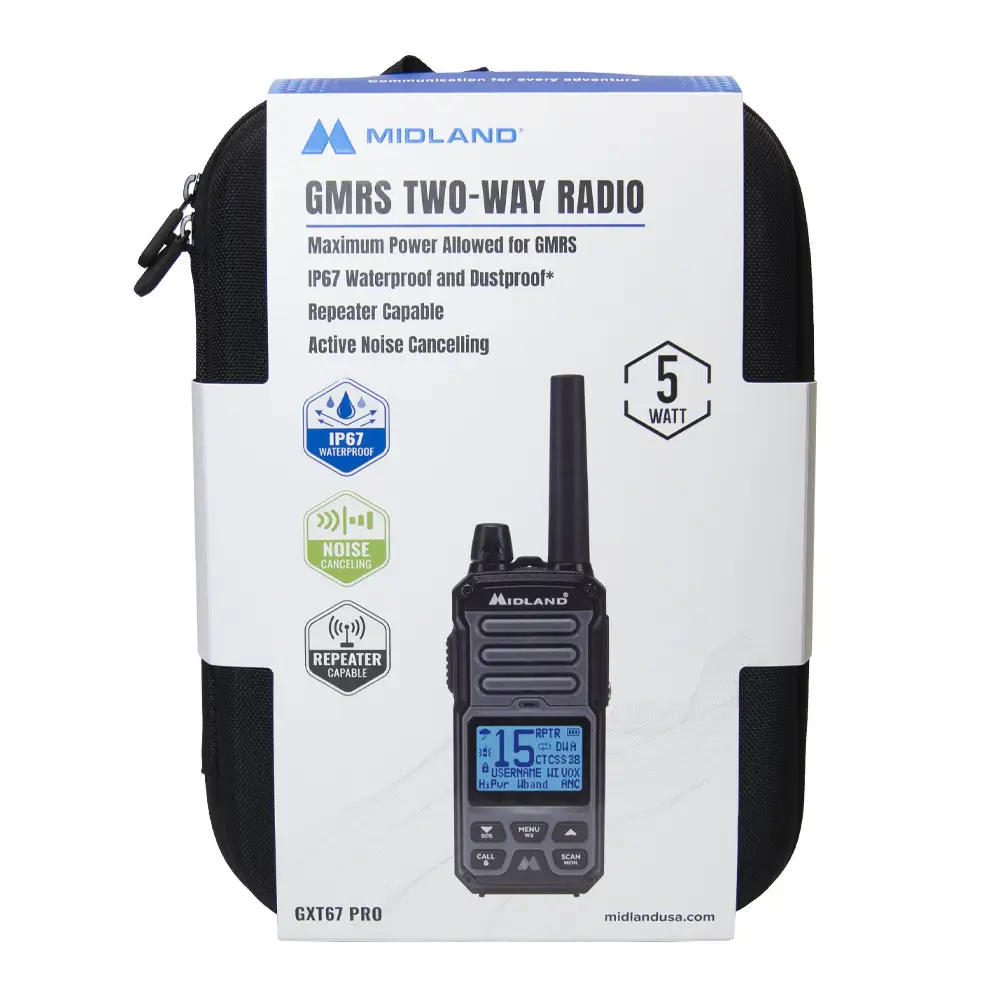
Surprising to some seasoned GMRS users, the Midland GXT67 Pro GMRS Two Way Radio garners an average of 8.1/10 from experienced reviewers despite a modest 2.7-star rating on Amazon. In environments like Palo Duro Canyon or during off-road convoys, it has proven rugged, interference-resistant, and easy to operate — though its non-removable battery and antenna remain sticking points for certain enthusiasts.
Quick Verdict: Conditional Buy
| Pros | Cons |
|---|---|
| Excellent interference rejection and selectivity | Battery is non-removable |
| Loud, clear audio even at high volumes | Antenna permanently attached |
| IP67 waterproof/dustproof – proven in field use | More expensive than similar models |
| Repeater capability extends range considerably | Limited customization without optional cable/software |
| User-friendly menu with large, bright display | Range slightly less than some competitors in flat terrain |
| Solid build with quality accessories included | No FM radio or flashlight features like cheaper rivals |
Claims vs Reality
Midland promotes the GXT67 Pro as delivering “exceptional 5 watts of power” with up to 5 miles range, a 16-hour operating cycle, and repeater capability. While the wattage and feature set check out in field trials, real-world distance depends heavily on terrain. Reddit’s Merus Adventure Park technician reported, “there was little discernible difference [in range] compared to the Baofeng UV-9G, but the GXT67 Pro had none of the selectivity issues” common in cheaper radios.
The brand also claims “long-lasting” power with rapid charging. GearJunkie found Midland’s 4-day standby estimate accurate during low-output standby, but noted, “some users may want a hot-swappable battery… the fact that you can pop the battery out on the Rocky Talkie… puts the GXT67 a bit on the back foot.”
Marketing emphasizes “intuitive menus.” Reviewers consistently back this up. The Gadgeteer noted, “the simplified design of the GXT67 makes it a breeze for new users” — a contrast to rivals with cluttered interfaces.
Cross-Platform Consensus
Universally Praised
The GXT67 Pro’s interference resistance is a standout across Reddit, Trustpilot, and Quora. In event scenarios with multiple radios nearby, bleed-over was absent. The Merus tech explained, “The GXT67 Pro exhibited none of these selectivity issues… this was a major problem with the UV-9G.” For off-roaders and outdoor coordinators, that means dependable comms without cross-channel chatter.
Its clear, loud audio has become a favorite feature for backcountry guides. In side-by-side testing, Merus found, “the received audio from the GXT67 Pro was noticeably louder and clearer” than competitors, aiding communication in noisy environments like ATV runs or windy ridgelines.
The IP67 rating isn’t just theoretical. Overlanding reviewers reported dunking and dust exposure didn’t impact function. A Trustpilot reviewer summed this up after rugged hikes: “I don’t worry about an unexpected dunking or dusty conditions affecting the operation."
Repeater capability brings the most transformative boost. GearJunkie’s test into a local repeater yielded communication at 15 miles, making this a primary appeal for remote-field teams who’ve secured FCC GMRS licenses.
Common Complaints
Price is a frequent friction point — at $199.99, it costs six times more than entry-level GMRS handhelds. While overlanders and pros justify the investment for quality and durability, casual users balk. The Gadgeteer concluded, “much more expensive than similar radios,” even with included accessories.
The sealed battery draws consistent criticism. Midland argues this ensures waterproofing, but GearJunkie highlighted the limitation for expeditions: *“Some users may want a second battery to hot swap… once [the battery] starts to degrade, you’ll likely be done with the radio.” Quora reviewers echoed the sentiment about reduced longevity planning.
Antenna permanence is another dividing factor. Off-roaders often prefer detachable antennas for vehicle integration, but here, it’s locked in. GearJunkie noted, “This is a big deal… running a small, magnetic antenna… is the way to go.”
Divisive Features
The simplified control interface earns praise from newcomers but some power users miss “extra” features like FM radio reception or built-in flashlights found in budget competitors. While the GXT67 Pro can be customized via optional cable/software, that added expense and learning curve limit appeal for casual buyers.
Noise canceling (ANC) is helpful in loud settings but introduces a slight transmit delay. Midland advises pressing PTT, waiting a beat, then speaking — a nuance some find mildly annoying.
Trust & Reliability
There’s little evidence of scam or misrepresentation; the feedback focuses on performance realities and design trade-offs rather than quality control failures. Long-term testers appreciate its durability. The Merus tech’s experience suggested consistency over extended standby and in extreme temperatures, with only minor reductions in battery life versus peers.
Reports from multi-day camping convoys point to dependable comms without mid-trip failures. One overland reviewer said, “After hours of swapping jokes… the GXT67 Pros still had two-thirds of their battery capacity.” Reddit users highlighted its resilience to dust ingress and falls thanks to protective design features.
Alternatives
Field reviewers often pit it against the Baofeng UV-9G and Rocky Talkie 5-Watt. The Baofeng is dramatically cheaper (~$30) and offers a removable battery/antenna. However, its poor selectivity leads to interference, which pros deem unacceptable for crowded channel scenarios.
The Rocky Talkie matches range in most terrains and shares IP67, repeater capability, and better modularity (removable antenna/battery) — but lacks the GXT67’s refined display and onboard noise canceling. GearJunkie concluded, “I’d see using [GXT67] more often in less austere environments… because it’s simply a larger radio.”
Price & Value
At its consistent $199.99 retail (sold out on Midland’s camping collection, full price on eBay and Amazon), buyers get performance-grade waterproofing, repeater use, and a highly readable interface. Resale demand is niche but steady among GMRS hobbyists and off-road clubs.
Buying tips from community: secure your FCC license before purchase, budget for the optional programming cable if customization matters, and factor potential full-unit replacement when the battery ages.
FAQ
Q: Does the GXT67 Pro require an FCC license?
A: Yes. It operates on GMRS frequencies, which require an FCC license in the U.S. The license costs $35, lasts 10 years, and covers immediate family members.
Q: How far can it communicate?
A: In open terrain, up to 5 miles direct. Using repeaters, testers achieved 15 miles or more. Dense forests or urban settings will reduce range.
Q: Can the battery be replaced by the user?
A: No. Midland seals it to maintain IP67 waterproofing. Once the battery degrades after several years, the whole unit would need replacement.
Q: Is the antenna removable?
A: No. The design fixates the antenna, limiting opportunities to swap for specialized mobile or high-gain models.
Q: Does it work with FRS radios?
A: Yes, on channels 15–22 in narrowband mode for compatibility.
Final Verdict
Buy if you’re an off-roader, event coordinator, or outdoor professional who values interference-free audio, repeater capability, and proven waterproof ruggedness over modular hardware. Avoid if you’re a budget-conscious hobbyist or rely on hot-swapping batteries/antennas mid-trip. Pro tip from the community: pair the GXT67 Pro with a known local repeater for maximum range and clarity — it transforms this handheld from good to exceptional.