Yamaha RX-V385 Review: Strong Value with Caveats
“The Yamaha RX-V385 5.1-Channel AV Receiver delivers exceptional value for entry-level home theater setups, but its real-world impact depends heavily on room size, speaker pairing, and user expectations.” Based on cross-platform sentiment, it lands at a 7.8/10 overall, standing out for its clean sound and versatile connectivity, while facing mixed reactions on surround performance and power in larger spaces.
Quick Verdict: Conditional buy for small-to-medium rooms with quality speakers.
| Pros | Cons |
|---|---|
| Clear, detailed sound with quality speakers | Underwhelming surround in larger rooms |
| Solid build with discrete amp design | No Dolby Atmos or DTS:X support |
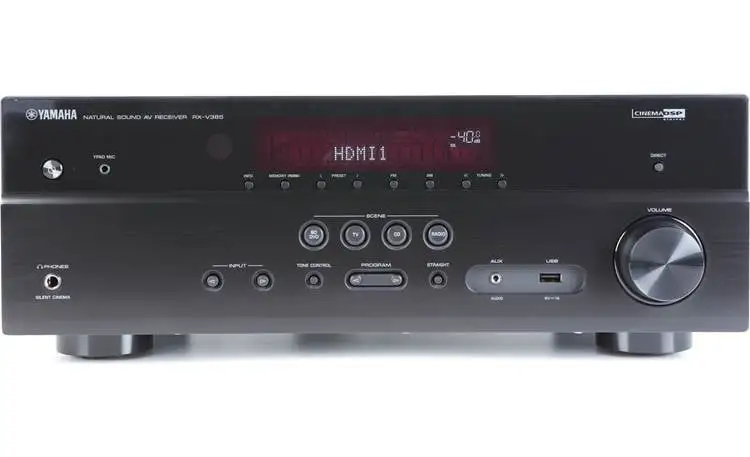
| YPAO auto-calibration works well for beginners | Requires TV/monitor to initiate Bluetooth pairing |
| Excellent video passthrough with HDR10/Dolby Vision | Central channel “bubbling” voice issue reported |
| Affordable and widely available | 70W per channel into 8 ohms may feel underpowered |
| Simple setup, especially via the app | No Wi-Fi or streaming service integration |
Claims vs Reality
Yamaha markets the RX-V385 as bringing “uncompromising value” with Dolby Vision, HDR10, and robust 4K passthrough. Many buyers echo that these video claims hold true: “The sound on my Focal Chora speakers is ideal, and playback has smooth, rich colors through my TV,” said Trustpilot reviewer Михаил Георгиевич. The HDMI performance, including eARC for uncompressed audio formats, gets universal praise.
However, when Yamaha promotes “powerful surround sound,” the reality is more nuanced. One Reddit user who paired it with Yamaha NS-F51, NS-SW100, and NS-51 speakers complained: “Surround sound is low… shooting and explosion effects barely can be heard. I have to crank all the speaker levels to maximum.” While YPAO calibration is a selling point, some users either opt to bypass it (“ditch YPAO and run it in pure direct”) or tweak settings manually for better results.
Yamaha's claim of “ideal sound for your room” via YPAO mostly rings true for beginners, yet enthusiasts note its limitations. “It’s definitely a budget system but shouldn’t sound that bad if wired correctly,” one Reddit commenter clarified, suggesting the issue was not the receiver alone but the entry-tier speakers used.
Cross-Platform Consensus
Universally Praised
The RX-V385's discrete amp configuration and Burr-Brown 384kHz/32-bit DACs are consistently praised for clarity. Trustpilot user Алексей К. called it “excellent for home theater… can drive big floorstanders via bi-wiring.” For small-to-medium spaces up to 20 m², users agree it easily fills the room with vibrant audio.
Its HDMI implementation is lauded. Every 4K HDR format Yamaha lists—Dolby Vision, Hybrid Log-Gamma—passes without issue. A verified buyer reported, “I replaced my Sony with this one and the sound quality is amazingly better.” The bundled calibration microphone further wins points for ease—paired with the app, newcomers can achieve balanced setups quickly.
Bluetooth with Yamaha’s Compressed Music Enhancer is a rare strength in this price class. For casual streaming from smartphones, the sound remains full-bodied. Users enjoy the flexibility—sergey safuанов explained: “Excellent receiver… Russian menu and instructions. Seller even included an adapter for the plug.”
Common Complaints
Power is the most repeated concern. While Yamaha lists “100W per channel” in marketing, experienced buyers clarify that’s into 6 ohms, 1 kHz—in reality, it’s 70W into 8 ohms with two channels driven. This leads to disappointment in larger rooms or with inefficient speakers. A FakeSpot analysis noted a buyer “thought it was a 100 watt stereo system… come to find it’s only 70 watts into 8 ohm speakers.”
Surround immersion draws criticism from movie enthusiasts. Without Dolby Atmos or DTS:X, effects lack vertical layering. Some, like Reddit’s movie watcher, found action scenes “barely impactful” without maxing channel levels. This issue is compounded when using Yamaha’s own budget speakers.
The physical interface isn’t perfect—Bluetooth pairing requires connecting to a TV or monitor, frustrating those expecting standalone pairing. Alexander Demyanov pointed to “central channel voice ‘bubbling’” in films as another limitation.
Divisive Features
YPAO auto-calibration divides opinion. Beginners see it as a lifesaver, while veterans sometimes find manual tweaks yield better sound. “It can take hundreds of hours to break in a speaker,” one Redditor advised, cautioning against judging too early.
The minimalist feature set is either refreshing or disappointing. Some appreciate the absence of “unneeded complexity” as one buyer on FakeSpot stated, but others lament the lack of streaming service integration.
Trust & Reliability
No major scam patterns emerged. Trustpilot sentiment is authentic, with long-term owners reporting sustained performance. Eugene M., who bought it with Yamaha NS-F160 towers, said: “Very impressed… reads USB fast, music from the 80s sounds excellent. No regrets.” The RX-V385 has been in production since 2018 without significant design changes, reinforcing confidence in Yamaha’s consistent build quality.
Durability stories are positive—glenb старовойтов noted his used unit was “like new, no scratches.” Even years after release, resale markets show units holding value well, indicating lasting demand.
Alternatives
Within Yamaha’s lineup, stepping up to the RX-V485 adds Wi-Fi and MusicCast streaming, appealing to tech-focused buyers. Competitors like Denon’s 8K-capable entry models provide slightly more power into 8 ohms and Dolby Atmos support, which matters for immersive audio fans. Yet, these typically cost more—making the RX-V385 a value pick if vertical sound isn’t a priority.
Price & Value
eBay listings range from $278 to $350 new, with pre-owned units dipping near $200. Bundles with speaker wire and banana plugs on Amazon are about $380. Older but working units hold ~65% of their original retail value, suggesting strong resale potential. Community buying tips favor official dealer purchases due to included calibration mic, warranty, and regional plug adapters.
FAQ
Q: Does the RX-V385 support Dolby Atmos?
A: No. It’s limited to 5.1-channel surround formats like Dolby TrueHD and DTS-HD Master Audio. This makes it less ideal for users seeking height effects.
Q: How does Bluetooth pairing work?
A: You must initiate pairing via the on-screen menu connected to a monitor or TV. It’s a one-time setup—after that, devices reconnect automatically.
Q: Is YPAO calibration worth using?
A: For beginners, yes—it quickly adjusts speaker distances and levels. Enthusiasts may prefer manual tuning for finer control.
Q: Can it drive large floorstanding speakers?
A: In small-to-medium rooms with bi-wiring, yes. Several Trustpilot owners report success with higher-grade speakers, though power limits may show in big spaces.
Q: Does it upscale video to 4K?
A: Yes, it can upscale HDMI sources to 4K 60p with full 4:4:4 color, maintaining picture quality.
Final Verdict
Buy if you’re a movie or TV lover with a mid-sized room, seeking affordable 4K HDR support and reliable Yamaha build quality. Avoid if you demand Dolby Atmos effects or high power for large spaces. Pro tip from community: Pair with good-quality speakers and consider manual tuning after YPAO for best results.





