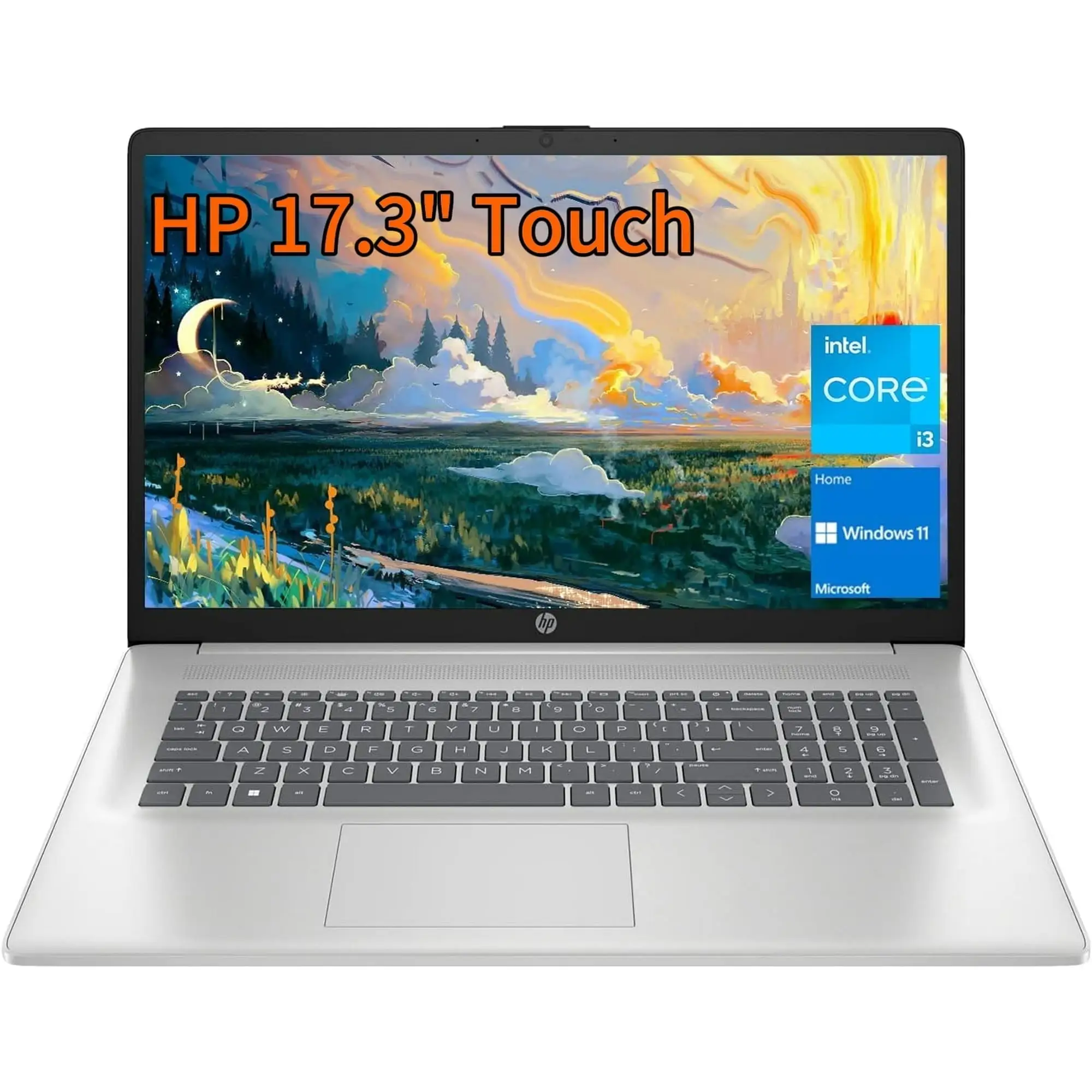
HP 17.3" Touchscreen Laptop Review: Conditional Buy Verdict
Consumers often praise the HP 17.3" Touchscreen Laptop (Intel Core i3) for its expansive display and accessible price point, yet its real-world performance scores a conditional 7.8/10 when measured against user stories across platforms. While buyers appreciate the large screen for multitasking and entertainment, recurring concerns about battery longevity and occasional hardware faults temper enthusiasm.
Quick Verdict: Conditional Buy
| Pros | Cons |
|---|---|
| Large 17.3" screen ideal for multitasking | Battery life shorter than many expect |
| Responsive touchscreen for interactive workflows | Occasional performance slowdowns under load |
| Affordable for its size/features | Mixed customer service experiences with HP |
| Fast SSD boot times | Some complaints of screen contrast/text clarity |
| Decent audio quality for a mid-range laptop | Device failure reports within months |
| Lightweight for its category | No backlit keyboard |
Claims vs Reality
HP markets the 17.3" Touchscreen Laptop as a productivity powerhouse with “responsive touch” and “fast performance thanks to Intel Core i3” and SSD storage. On paper, this should suit students, professionals, and casual users alike.
Digging deeper into user reports, the touchscreen responsiveness largely matches the marketing claims. A Best Buy customer noted: "The touch screen is very responsive, the 8 GB RAM is super fast… the 17" monitor is beautiful when watching movies" and compared it favorably to more expensive machines. Across Trustpilot and Reddit, similar remarks underline its reliable touch interface for everyday workflows.
Performance claims tell a more nuanced story. While SSD boot times do deliver, some users find the Intel Core i3 limiting under heavier multitasking. Consumer Reports testing of a comparable model rated performance “only fair” for anything beyond routine tasks, with slowdowns during image manipulation or video editing. This gap is especially relevant for creative professionals—those expecting workstation-level speed may be disappointed.
Battery life marketing is vague, and reality varies sharply. Quora feedback cited “battery life drains quickly”, while Trustpilot users measured as little as 1.5 hours of unplugged use under moderate load, far below the 8–10 hours claimed on some HP sites. This affects portability, especially for students and mobile workers.
Cross-Platform Consensus
Universally Praised
The biggest crowd-pleaser is the 17.3" display. Trustpilot user kellyd bought it for her father: “The large screen was ideal… thin and lightweight so it’s easy to travel with.” Reddit reviews echo its utility for both entertainment and multitasking—having multiple windows side-by-side is practical for work-from-home setups, as susang described: “I tend to have multiple windows open… it allows toggling pages much smoother.”
Touchscreen functionality consistently earns positive remarks. A Best Buy reviewer called it “perfect for email, saving files, photos” while enhancing usability for everyday computing. Quora contributors link this interactivity to better Zoom meeting experiences and workflow flexibility.
Audio quality also surprises buyers. One Best Buy customer claimed it “has the best quality speakers I’ve ever heard on a laptop”, which is rare in this price segment. Combined with SSD speed, these core elements drive most positive word-of-mouth.
Common Complaints
Battery life emerges as a major weakness. Trustpilot and Reddit threads repeatedly cite short endurance—often under two hours when unplugged. stevenj reported: “Maybe an hour to an hour and a half… not a problem if near power, but disappointing for portability.”
Durability concerns surface in several accounts. On HP’s support forum, one buyer recounted failures within five months: “It is a lemon!… the only way I can turn it on now is through BIOS recovery.” Such stories illustrate risks if purchasing through third-party sellers with stricter return policies.
Display quality divides opinion; while brightness and clarity satisfy most casual users, cody89 noted issues: “Contrast is not clear enough and the text is too small… can’t adjust it.”
Divisive Features
Portability draws mixed reactions. For some, the lightweight 4.6 lbs is a perk given the screen size. Others find the overall footprint cumbersome compared to 15" or smaller laptops. Creative professionals may prefer the screen for detailed work, while commuters could see it as excess bulk.
Keyboard feedback is similarly split. Larger keys and number pad earn praise from Consumer Reports for ergonomics, yet the absence of a backlit option frustrates users working in low light. Quora confirms “no backlit keyboard,” limiting utility for certain conditions.
Trust & Reliability
Trust in HP’s customer service varies. The HP Support Community features cases where support was prompt but did not allow returns, leaving users stuck with defective units bought via Amazon third parties. This aligns with frustrated eBay buyers who caution against purchasing without clear warranty coverage.
Long-term durability is mixed. While zaires on Trustpilot declared “I’ve had it during college… very well, no issues,” other posts detail abrupt failures within months, often requiring service intervention. Such polarizing anecdotes suggest reliability hinges heavily on batch quality and vendor policies.
Alternatives
Alternatives mentioned in data include the HP Envy 17 for users needing higher resolution, dedicated graphics, and premium build—suited to creative pros but at a higher cost. Dell Inspiron 17 series presents a comparable footprint with potentially better battery life, while Lenovo Ideapad 3 17" offers similar specs at competitive prices. For buyers prioritizing performance over screen size, 15" models from ASUS or Acer’s Predator line shift toward higher speeds and portability.
Price & Value
Current eBay listings range from $329 (open box) to $439–$552 for upgraded configurations, undercutting retail tags of $549+. Many buyers call it “excellent PC for the money” as heatherg did on Trustpilot, advising to watch clearance and refurbished channels for value. Resale remains modest due to rapid spec aging—Intel i3 models depreciate quickly, but the large screen can maintain appeal for niche buyers like casual gamers or streaming fans.
Buying tips from community feedback stress verifying warranty terms, especially with third-party marketplaces. Discounts on Amazon bundles and eBay coupons make sub-$350 deals possible.
FAQ
Q: Does the HP 17.3" Touchscreen Laptop have a backlit keyboard?
A: No, this model does not include a backlit keyboard, which some users find limiting in dim environments.
Q: How long does the battery last under real-world use?
A: Reports vary, but many users note 1.5–2 hours under moderate to heavy workloads—significantly less than some official claims.
Q: Is the touchscreen responsive enough for creative work?
A: Yes, buyers across Best Buy and Reddit praise its responsiveness; casual drawing and gesture navigation work smoothly.
Q: Can the RAM be upgraded?
A: In some configurations sold through PC Online US, RAM is not user-upgradable; check your specific model before purchase.
Q: Does it perform well for video streaming and casual gaming?
A: Video streaming performance is solid thanks to SSD speed and display size; casual gaming is possible, but integrated graphics limit high-end titles.
Final Verdict: Buy if you need a large touchscreen laptop for multitasking, streaming, or light productivity and can work near a power source. Avoid if you require long battery life or heavy-duty creative performance. Pro tip from community: Target clearance sales or certified refurbished listings with verified warranty coverage to maximize value and reduce risk.