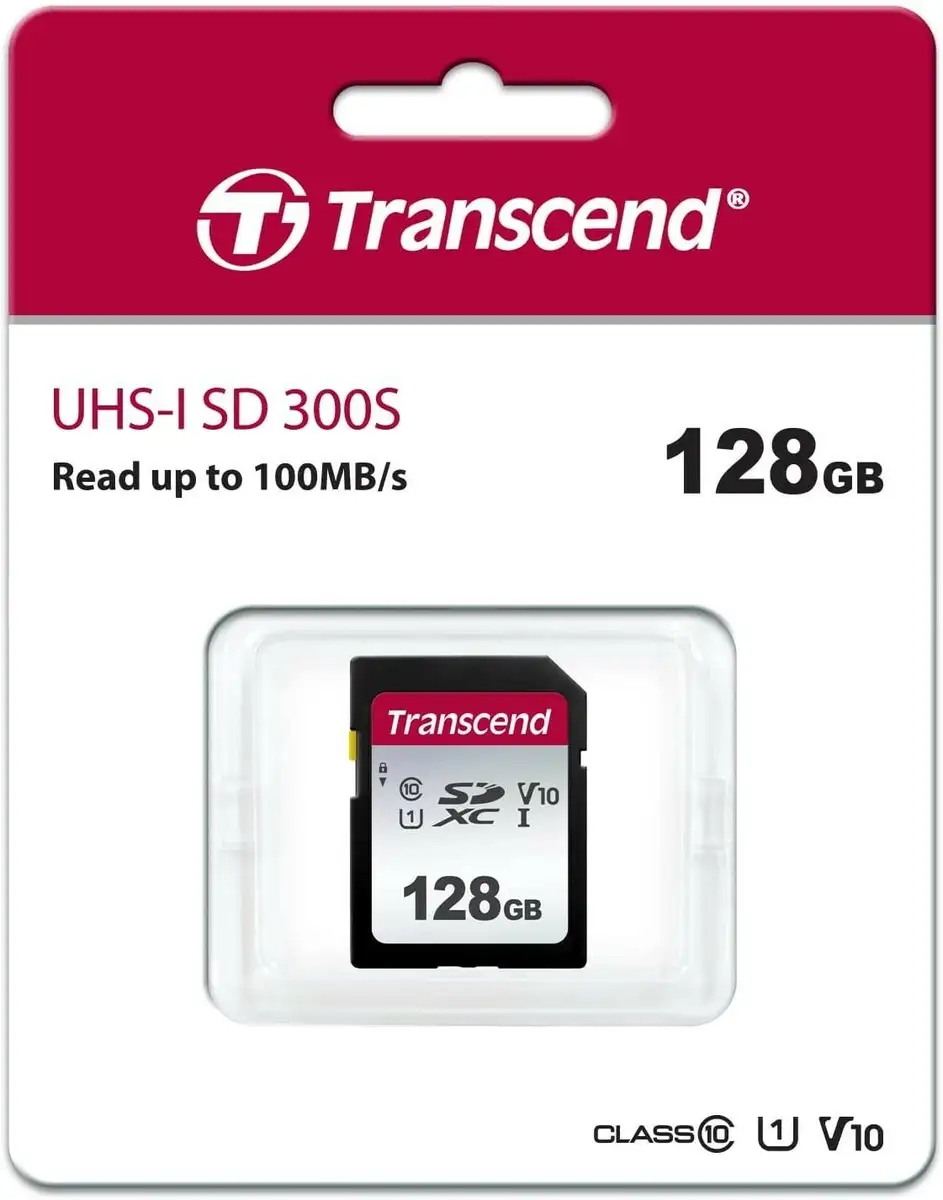
Transcend 128GB SDXC Review: Reliable, Speed Varies
A verified buyer on Amazon didn’t mince words about the Transcend 128GB SDXC Memory Card: “nice reliable sd card.” That reliability theme shows up repeatedly across platforms—but so do speed caveats when buyers compare marketing numbers to what they see in real transfers. Verdict: a strong budget-friendly SDXC for many camera and storage uses, with performance that can be “good enough” rather than consistently headline-fast. Score: 8.4/10
Quick Verdict
For many buyers, Transcend 128GB SDXC Memory Card is a Conditional Yes: it’s widely described as dependable and good value, but some users say advertised speeds can feel optimistic depending on setup and workload.
| Decision | Evidence from user feedback | Who it fits best |
|---|---|---|
| Yes | “works very well without any problem” (Amazon verified buyer) | Casual shooters, everyday storage |
| Yes | “reliable and flawless” (Trustpilot review analysis) | People who prioritize stability |
| Conditional | “meets the v30 spec… averaged 31 mb/s” (Amazon verified buyer) | 4K shooters should match codec/bitrate |
| Conditional | “random read and write tests varied” (CameraMemorySpeed.com) | Power users benchmarking across readers |
| No (edge cases) | “had a scary moment… read error” (Amazon verified buyer) | Anyone who can’t risk interruptions |
Pros (from users)
- “works reliably for 2 years now” (ReviewIndex snippet, Amazon-sourced analysis)
- “fast and lots of storge” (Trustpilot review analysis)
- “great value for money” (Amazon verified buyer)
Cons (from users)
- “nowhere close to… up to 45 mb/s” (Amazon verified buyer)
- “slow… be prepared for slow writes” (Amazon verified buyer, higher-capacity variant in same 300S family)
- Intermittent error anxiety: “read error suddenly… reinserting it” (Amazon verified buyer)
Claims vs Reality
Claim 1: “Up to 95 MB/s read; 45 MB/s write” (Amazon listing/specs for Transcend 128GB microSDXC 300S family).
Digging deeper into user reports, that “up to” language becomes the pivot point. One Amazon verified buyer challenged the listing head-on: “the description says that it can get up to 95 mb / s read and 45 mb / s writing… it averaged 31 mb / s… it meets the v30 spec… but it’s nowhere close to… 45 mb / s.” For buyers expecting near-advertised peak writes during large file transfers, the disappointment is about averages, not minimum compliance.
At the same time, independent bench-style testing from CameraMemorySpeed.com shows how different the story can look depending on product line and test method. In its SD-card review context, the site reported the Transcend Ultimate 600x 128GB SDXC hitting “up to 96.7 mb / s” sequential read and “up to 69.6 mb / s” sequential write in certain readers—numbers that complicate the simple “marketing vs reality” narrative. The gap appears less about Transcend never reaching high speeds and more about which specific Transcend card, which reader, and which workload.
Claim 2: “Great for 4K video” (U3/V30 positioning in specs and product pages).
A recurring pattern emerged: some creators describe smooth video performance, while others stress that meeting a class rating isn’t the same as exceeding it. In ReviewIndex’s Amazon-sourced analysis for a Transcend 128GB UHS-3 card, users leaned positive: “wonderful card, great speeds, perfect for 4k (i use it with the lumix g7)” and “i got 2 of these for use with my a6500 shooting video in 4 k.” For travel shooters or event videographers, those comments read like reassurance that the card can keep up in real cameras.
But speed expectations still fracture when users move from camera use to PC transfer expectations. The Amazon verified buyer who measured “writing at 30 mb / s” framed it as acceptable for V30 compliance yet insufficient for those needing higher sustained writes for certain UHD formats: “buy this item to save money, but don’t think you’re getting a great deal… newer dslrs… require an sd that can capture at 45 mb/s or higher.” While officially positioned around U3/V30 tiers in some listings, at least one buyer’s “real world” transfer results landed closer to the minimum guarantee than the peak claim.
Claim 3: “Built for extremes / long-term reliability” (manufacturer-style durability messaging).
The reliability story is the strongest thread across sources, but it’s not absolute. Trustpilot’s review analysis for a Transcend 128GB SDXC U1 card repeatedly highlights durability language from reviewers: “a year later it is working just fine,” “reliable and flawless,” and “transcend has never let me down.” That kind of feedback matters most to photographers who rotate cards across bodies and shoots, where predictability beats marginal speed.
Still, Amazon reviews show how a single scare can change the emotional tone. One verified buyer wrote: “had a scary moment where the card gave a read error suddenly… after taking the card out and reinserting it, the error hasn’t shown up since.” Even if that issue doesn’t recur, it illustrates why some users treat SD cards as consumables and emphasize backups regardless of brand.
Cross-Platform Consensus
Universally Praised
“Good reliable sd card” is how one Amazon verified buyer summarized their experience, and that phrasing captures the dominant consensus: the card tends to behave like storage should—quietly. For restoration and hobbyist projects, that reliability becomes the feature. The same buyer explained a low-pressure use case—“i’ve buy it for a restoration project of an ipod classic… no fast write / read speed are required… this fulfill their technical claims”—showing how this card often succeeds when expectations are realistic.
For DSLR and everyday camera owners, multiple sources echo “works” and “no problems” as the main win. In Trustpilot’s review analysis, one user story reads: “use in pentex k50 dslr, no problems and fast.” Another frames the benefit as problem-solving rather than speed chasing: “canon t3i stops recording constantly and this memory card solved my problem.” That kind of testimonial is especially compelling for family photographers or hobbyists who just want recording to be stable.
Value also comes through repeatedly, particularly for buyers comparing big-name brands. Trustpilot’s analysis includes: “these sd cards are very good for their price,” and even a bold comparative claim: “these high speed transcend sd cards work better than sandisk, lexar, or any other brand on my panasonic lumix gx-1 camera.” Whether or not every buyer would agree, the presence of that statement suggests a subset of users sees Transcend as a sweet spot—mid-price, dependable, sometimes surprisingly quick in their specific device.
After the stories, the pattern is simple:
- Reliability and “no problems” are the most common praise.
- Value-for-money is a recurring justification for choosing Transcend.
- Real-world “it fixed my camera recording issue” anecdotes show practical impact beyond benchmarks.
Common Complaints
Speed expectations are where the most detailed frustration appears. The clearest complaint is not that the card fails, but that it doesn’t hit the “up to” numbers in sustained transfers for at least some buyers. One Amazon verified buyer wrote a long breakdown: “it meets the v30 spec… averaged 31 mb / s… nowhere close to… up to 45 mb / s… for reading… i only got 72 mb / s.” For creators who regularly dump multiple gigabytes of footage to a PC, that gap can translate into real time lost and a feeling of being misled by listings.
Another common anxiety is the fear of corruption or sudden errors—especially when it happens early. The Amazon verified buyer who experienced a hiccup said: “had a scary moment… read error suddenly… after… reinserting it… hasn’t shown up since… hopefully the card maintains its quality and won’t poop out on me.” For wedding shooters, journalists, or anyone capturing non-repeatable moments, even a one-time scare becomes part of the product’s reputation.
A quieter complaint theme is “older tech” perceptions within the broader 300S family, especially at higher capacities. One Amazon verified buyer described: “slow, but working fine… be prepared for slow writes - typically only 10 - 15 mbs.” Even though that quote refers to a 512GB card in the same review page context, it influences how some shoppers interpret the lineup: capacity tiers and generations may behave differently, and buyers don’t always separate them cleanly when scanning reviews.
After the stories, the recurring issues look like this:
- Some buyers report real-world transfer speeds well below peak claims.
- A minority report scary read errors (even if temporary).
- Confusion across variants/capacities can distort expectations.
Divisive Features
The “4K-ready” narrative splits depending on camera, bitrate, and what the buyer means by “works.” On one side, ReviewIndex’s Amazon-sourced snippets include creators saying it’s “perfect for 4 k” and that they use multiple cards for “shooting 4 k video with a panasonic gh 4.” For those users, the card is a practical tool that keeps recording without hiccups.
On the other side, the Amazon verified buyer who measured ~31 MB/s writes framed it as barely beyond the floor: “it meets the v30 spec… but it’s no better than that.” The divisive point isn’t whether it can record 4K at all; it’s whether it can sustain higher write demands consistently across devices and whether buyers should pay for higher classes when shooting heavier codecs.
Trust & Reliability
A reliability-forward reputation shows up strongly in aggregated review patterns. Trustpilot’s review analysis repeatedly surfaces long-term satisfaction language like “a year later it is working just fine,” “works with no problem,” and “they are fast and very reliable.” Those are the kinds of quotes that matter to people rotating multiple cards in multiple cameras, where consistency across sessions is the real test.
Yet the data also shows why cautious users still treat SD cards as fragile. The Amazon verified buyer who reported a sudden “read error” after only “a couple of days” captures the emotional side of storage reliability: even one glitch can turn a buyer into a vigilant backer-upper. The consistent community implication across such comments is that reliability is good, but not a substitute for backup habits—especially when the card is used for important photos or video.
Alternatives
Only a few competitor brands are explicitly mentioned in the provided data, but they matter because they appear inside user comparisons. In Trustpilot’s review analysis, one user claimed: “these high speed transcend sd cards work better than sandisk, lexar, or any other brand on my panasonic lumix gx-1 camera.” That positions SanDisk and Lexar as the mental benchmark for many camera buyers—even when the final choice is Transcend for price/performance.
CameraMemorySpeed.com also contextualizes Transcend’s own lineup as an internal alternative decision. In its Ultimate 600x review, the site noted the 600x performance was “very close [to] the more expensive transcend 95/60 mb/s u3… although that card carries the u3 rating.” For shoppers, the practical alternative question becomes: pay more for a higher-rated Transcend model (or a different brand tier), or accept that a budget-oriented card may hover closer to minimum class performance in some scenarios.
Price & Value
On Amazon specs pages, pricing and ratings paint a value picture: the Transcend 128GB microSDXC 300S listing shows 4.7/5 stars and a price around $19.92, while a different Transcend 128GB “340S” microSD listing shows 4.4/5 stars and a lower posted price ($12.99). Even without turning this into a spec sheet battle, it highlights why many buyers gravitate toward Transcend: the brand frequently competes on cost.
Resale and market pricing from eBay listings also reinforces that these cards trade like commodity storage. Listings include items like “128 gb sdxc / sdhc 300s memory card ts128gsdc300s” around the low-$20 range and multi-packs priced for bulk buyers. That matters for studios, schools, or small production teams: when you need several cards at once, even small per-card savings adds up.
Buying tips implied by user feedback are less about discounts and more about expectation setting. The Amazon verified buyer who tested throughput emphasized that the card “meets the v30 spec” but didn’t deliver their hoped-for averages. The practical community lesson: match the card tier to your workflow (burst shooting, UHD bitrates, transfer speed needs), and treat “up to” as situational.
FAQ
Q: Does the Transcend 128GB SDXC Memory Card really hit the advertised speeds?
A: Not always, based on user testing. One Amazon verified buyer wrote they saw writes averaging “31 mb / s” and reads around “72 mb / s,” even though the listing said “up to 95 mb / s read and 45 mb / s writing.” Results vary by reader, device, and workload.
Q: Is it good for 4K video recording?
A: For many users, yes—within the limits of your camera’s bitrate and codec. ReviewIndex’s Amazon-sourced snippets include: “perfect for 4 k (i use it with the lumix g 7)” and “i use three of these for shooting 4 k video with a panasonic gh 4.” Others report it only “meets the v30 spec” without extra headroom.
Q: Is it reliable long-term?
A: Many reviewers describe strong durability. Trustpilot’s review analysis includes “a year later it is working just fine” and “reliable and flawless.” However, one Amazon verified buyer reported a “read error” that disappeared after reinserting the card, which reinforces the need for backups.
Q: What’s it best used for—camera or storage expansion?
A: Buyers use it for both. An Amazon verified buyer used it in a project setup and said it “works like it should,” while another described leaving it in a laptop “for extra storage.” The most satisfied stories tend to come from users whose speed needs match the card’s class ratings.
Final Verdict
Buy the Transcend 128GB SDXC Memory Card if you’re a hobbyist photographer, student, or everyday shooter who values “no problems” operation and solid value. Avoid it if your workflow demands consistently high sustained write speeds close to peak marketing numbers, or if you’re capturing once-in-a-lifetime footage and can’t tolerate even a rare “scary moment” read error.
Pro tip from the community mindset: treat “meets the v30 spec” as the baseline, and size your expectations—and your backup routine—accordingly.