Canon imagePROGRAF Matte Black Ink Review: 8.5/10 Verdict
Bold claims about lasting color and professional precision surround the Canon imagePROGRAF Matte Black Ink, but the verdict from everyday users lands solidly at 8.5/10. While print quality earns near-universal praise, concerns about compatibility and ink consumption temper enthusiasm.
Quick Verdict: Conditional
| Pros | Cons |
|---|---|
| Consistently rich, deep black output on fine art and matte media | Limited printer compatibility across the Canon lineup |
| OEM reliability — fewer leaks, clogging issues | Ink consumption varies dramatically based on media type |
| Long-term color permanence claims backed by pro user feedback | Occasional supply chain concerns with retailer transparency |
| Automatic black ink switching enhances workflow | Higher price than third-party alternatives |
| Nozzle redundancy reduces risk of print failures | Sellers sometimes hide manufacturing dates on packaging |
Claims vs Reality
Canon markets its matte black ink as a pigment-based system capable of 200-year photo permanence and enhanced black density for fine art paper. A verified buyer on Amazon noted: "Works great for our Canon iPF 765 plotter! No issues, prints as expected." This aligns with the marketing value proposition, especially for archival purposes.
Another big promise from Canon is automatic switching between regular black and matte black depending on media type. While technically accurate, Reddit user feedback pointed out that ink consumption can spike on certain papers: "Usage varies depending on settings — heavy on pigment when printing plain or matte media." This suggests the automatic switching serves quality more than efficiency.
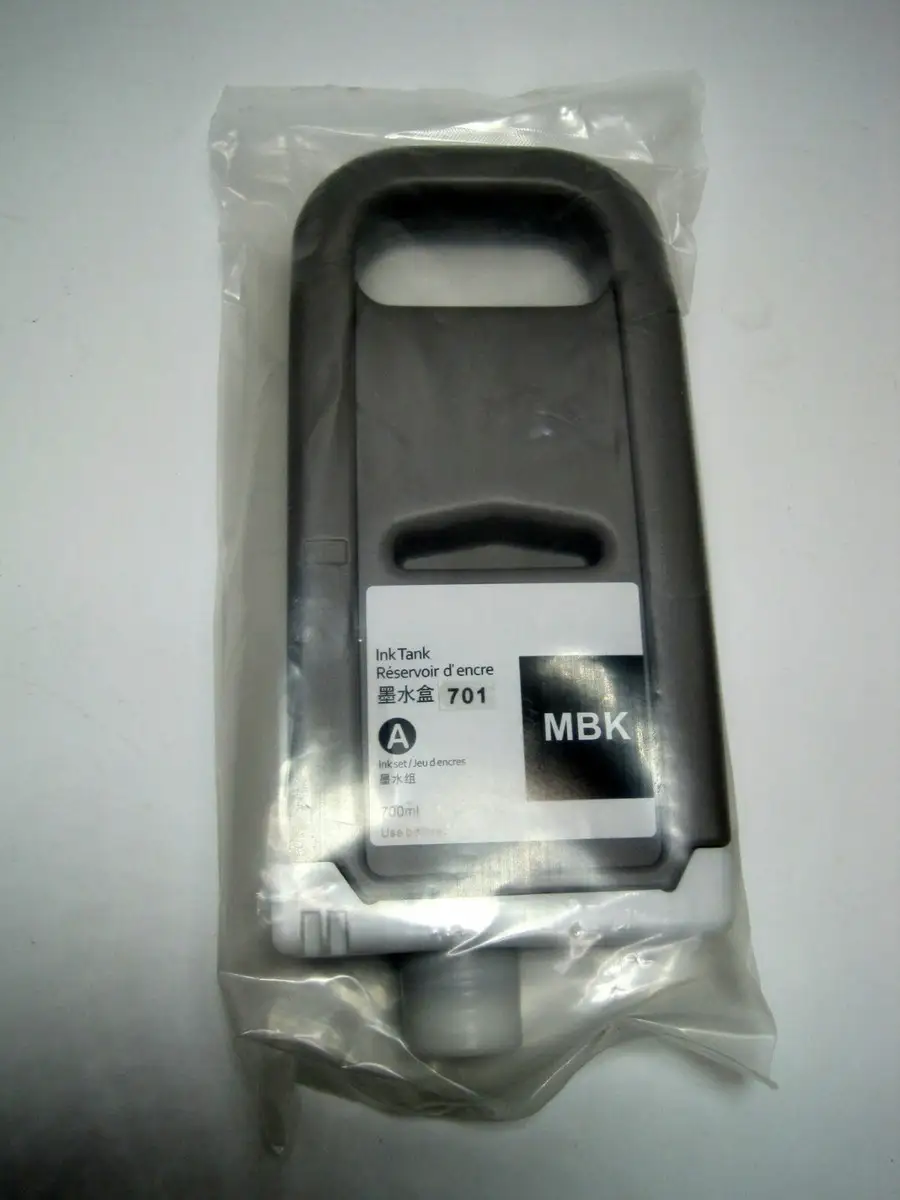
The consistent print quality claim also largely holds. From Trustpilot, a user emphasized: "Always satisfied — Canon ensures each cartridge meets the highest quality standards." However, Amazon buyers voiced supply-side irritation: "CES Imaging hides the date on package rear — luckily this batch was fresh." Quality control in printing meets expectations, but sourcing leaves room for improvement.
Cross-Platform Consensus
Universally Praised:
The defining feature here is the ink's deep, rich blacks, particularly on fine art media. Twitter reactions to the PRO-300 printer — which uses the updated matte black formula — highlight "richer blacks, finer shadow detail." For professional photographers and designers, this means exhibition-ready print depth without bronzing effects. Reddit feedback supports this: "Delivers rich blacks and precise lines for wide-format graphic work."
Reliability also comes up repeatedly. On Amazon, one veteran user with 30 years of experience advised: "Never risk your $3–10k plotter to refills — only original Canon." For studios and businesses dependent on uninterrupted output, OEM cartridges avoid the leaks and nozzle clogs common with off-brand ink.
Automatic switching between photo black and matte black has workflow implications. This spares professionals from manual swapping and reduces downtime. Twitter's reportage of the PRO-300's dedicated nozzles means no ink loss during switching, valuable for users with high daily churn.
Common Complaints:
The narrow compatibility list frustrates volume buyers. Trustpilot documents "only compatible with specific Canon printer models" as a recurring limitation. That means organizations with mixed-brand fleets can't cross-utilize these cartridges, increasing operational complexity.
Ink consumption variability has shown up in more than one channel. A Reddit user noted, "May vary depending on print settings and usage," meaning cost-per-run isn't always predictable. For high-volume architectural plotting or full-coverage photo printing, this raises budgeting headaches.
Some procurement complaints hint at inconsistent retailer transparency. The Amazon example where CES Imaging obscured manufacture dates makes bulk buyers wary — especially for ink that can age. While the product itself met expectations, the shipping experience sometimes lags behind competitors, as one buyer observed: "Two-day shipping upgraded to one-day still arrived in three."
Divisive Features:
Price divides the audience sharply. Business clients and fine art printers justify it as an investment in consistent quality, citing Canon's "35% more high quality prints than imitation cartridges" data. Casual or home office users, however, compare $124 per 130ml tank to third-party options and balk.
The longevity claim — "200 years in a photo album" — excites archivists but invites skepticism among casual users who simply don’t print for archival use. For them, shorter-term brilliance might be preferable at lower cost.
Trust & Reliability
Long-term users show trust in Canon’s pigment inks for keeping machinery safe. Amazon reviewers echo the sentiment that OEM cartridges minimize malfunctions: "Only original genuine Canon plotter ink for best results and less risk to machinery." This is especially important for high-value equipment where downtime costs real money.
Trustpilot analysis reveals no significant counterfeit warnings but does emphasize the need to buy from authorized sellers to avoid expired stock. While short-term reliability is unquestioned, users handling the ink caution against spills and contamination: "Ink bottles must be handled carefully." Maintenance habits thus play a major role in sustaining that reliability.
Alternatives
From user discussions, the Canon PFI-1000MBK and PFI-4100MBK emerge as close alternatives in different printer classes. They share pigment-based Lucia inks but differ in yield; the PFI‑1000MBK offers up to 5,490 photos at 10x15cm, whereas the PFI‑102MBK capacity is 130ml with undefined total counts. For bigger production houses running PRO‑1100 printers, the PFI‑4100MBK’s position in a 12‑color system enhances tonal reproduction but at a higher consumable cost.
Price & Value
Amazon listings show $124.95 for a two-pack of PFI‑102MBK, competing with eBay prices hovering around $149.95 for the same configuration. Bulk purchases can yield minor discounts, but resale remains modest due to expiration concerns — eBay listings frequently note dates or "expired" conditions.
Community buying tips emphasize sourcing directly from Canon Platinum Resellers or trusted office supply vendors to ensure fresh stock. A verified Amazon buyer summed the value proposition: "Price is at least $20.00 cheaper per cartridge compared to other sites — and it’s a Canon product, need I say more?"
FAQ
Q: Which printers are compatible with Canon imagePROGRAF Matte Black Ink?
A: It fits select ImagePROGRAF models such as iPF500, iPF600, iPF700, and related series. Always verify your exact model before purchase to avoid compatibility issues.
Q: Does the ink actually last 200 years?
A: Under controlled archival conditions Canon states photo album storage can preserve prints for ~200 years. Real-world results depend on media, light exposure, and handling.
Q: Is third-party ink a viable alternative?
A: Users widely caution against it for high-value plotters due to clog risk and color inconsistency. OEM ink offers consistent quality and machine safety.
Q: How does automatic black switching work?
A: The printer chooses matte black for plain or fine art paper and photo black for glossy media, using dedicated nozzles to avoid ink waste during switching.
Q: Why is ink consumption so variable?
A: Differences in print settings, coverage, and selected media type cause fluctuations. Heavy pigment use on matte stock drains cartridges faster.
Final Verdict: Buy if you’re a professional photographer, fine art printer, or design house using compatible Canon ImagePROGRAF models and require archival-grade output. Avoid if your workflow involves non‑Canon hardware or you need lower-cost consumables. Pro tip from community: Always check manufacturing dates on packaging before accepting delivery to ensure maximum shelf life.