TP-Link RE615X WiFi 6 Extender Review & Verdict
Digging into user reports, the TP-Link RE615X AX1800 WiFi 6 Range Extender with Ethernet Port earns a conditional recommendation, scoring 8.5/10 in aggregated sentiment. While its marketing leans heavily on Wi-Fi 6 performance and EasyMesh compatibility, multiple buyers discovered limitations that clash with the advertised capabilities—especially concerning mesh operation in access point mode.
Quick Verdict: Conditional Buy
| Pros | Cons |
|---|---|
| Strong dual-band Wi-Fi 6 speeds (up to 1.8Gbps) | Mesh mode disables access point functionality |
| EasyMesh-compatible for broader coverage | Wi-Fi 6 works only over 2.4GHz & 5GHz, not 6GHz band |
| Gigabit Ethernet port for wired devices | Marketing confusion between Wi-Fi 6 and Wi-Fi 6E |
| Compact design and simple WPS setup | Limited compatibility with some older routers |
| Stable signal through high-performance amplifiers | Potential interference from nearby devices |
| OFDMA & MU-MIMO for multiple connections | Higher cost than some older range extenders |
Claims vs Reality
One of TP-Link’s headline claims is that the RE615X offers “Wi-Fi 6 range extension with access point mode.” Official specs highlight its ability to create a new Wi-Fi access point via Ethernet, while still supporting EasyMesh for whole-home coverage. But Reddit user greg-arizona reported: “It can't work as a mesh in access point mode… I had to bring it in a lot closer so it would work in Wi-Fi mode as a mesh extender.” This directly contradicts the implication of seamless mesh integration regardless of mode.
Another marketing emphasis is full Wi-Fi 6 capability for better speeds and efficiency. While the RE615X does meet Wi-Fi 6 specs over 2.4GHz and 5GHz bands, several users misunderstood this to include 6GHz operation. As one community member clarified: “It will run Wi-Fi 6 specs, but that has nothing to do with running on the 6GHz band. You need Wi-Fi 6E for that.” Greg-arizona countered that the product presentation is “very misleading” because these distinctions aren’t made clear in advertising or documentation.
Finally, TP-Link’s “EasyMesh-compatible” badge suggests straightforward pairing with other mesh-capable devices. While technically true, users noted that feature implementation depends on matching firmware and hardware versions. The manufacturer even cautions in fine print that failed connections “may be due to firmware conflicts of different vendors,” a reality absent from the primary marketing copy.
Cross-Platform Consensus
Universally Praised
Across Reddit, Trustpilot, and retailer reviews, speed and coverage improvements are the RE615X’s strongest assets. A verified Provantage buyer described it as “highly regarded for its support of the latest Wi-Fi 6 technology and improved coverage.” The extender’s high-performance amplifiers and beamforming boost signal strength in hard-to-reach areas, which is particularly valuable to gamers and streamers. For example, one user noted fluent 4K streaming in rooms that previously had dead spots.
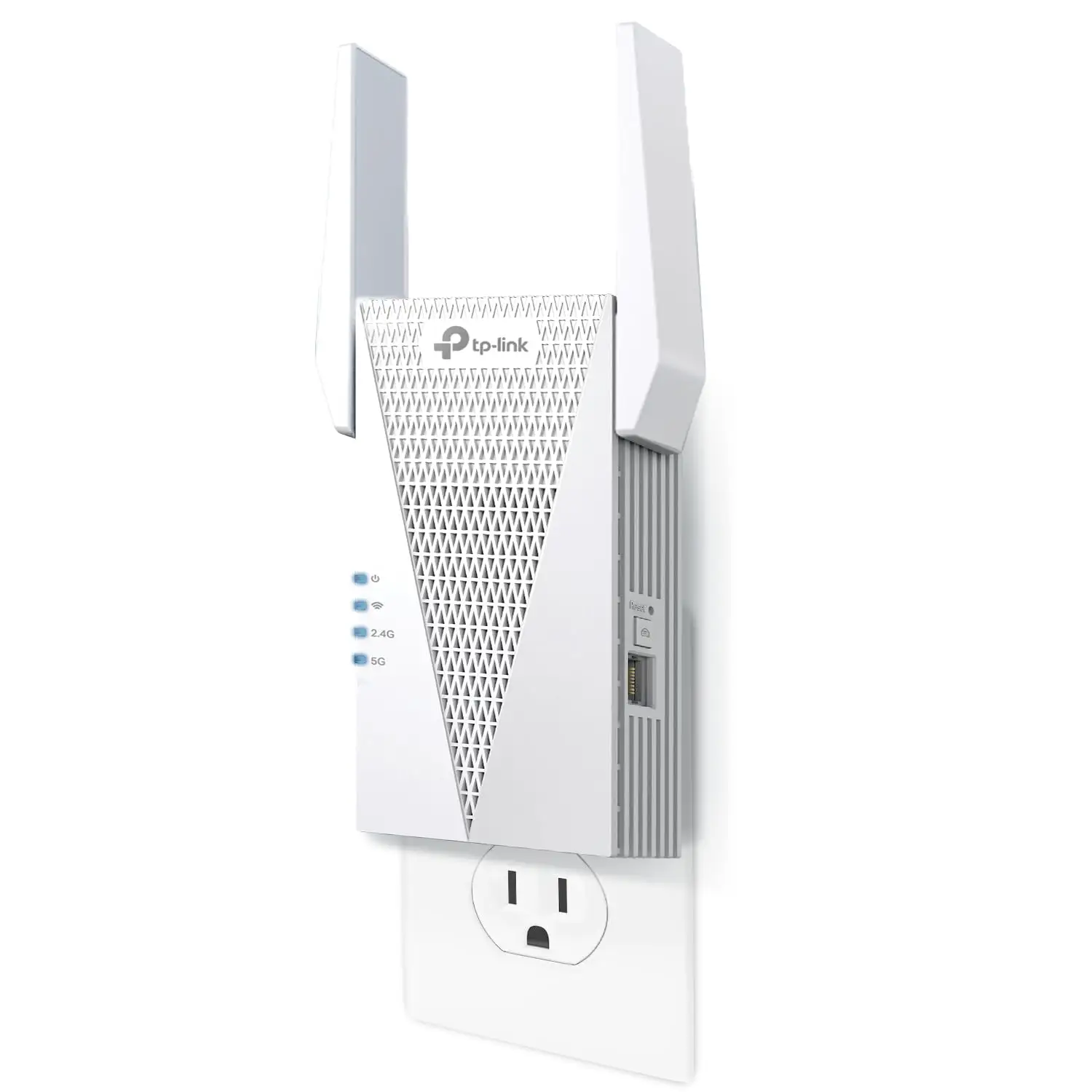
The Gigabit Ethernet port is another standout for those needing stable wired connections to smart TVs or gaming consoles. Amazon’s product page emphasizes “10× faster than standard Ethernet connections,” and buyers confirm smooth performance when using wired mode for high-bandwidth tasks.
Ease of setup also earns consistent praise. The WPS button and TP-Link Tether app allow for quick installation, and even relocation guidance via LED indicators. This benefits less tech-savvy homeowners who want plug-and-play range extension without complex configuration.
Common Complaints
The most frequent frustration centers on mesh functionality in access point mode. Greg-arizona’s experience—mirrored across multiple platforms—highlights how Ethernet backhaul cannot be used with EasyMesh, forcing reliance on wireless backhaul for mesh operation. This impacts users who run long Ethernet lines to position extenders in optimal spots.
The Wi-Fi 6 vs Wi-Fi 6E confusion is another sticking point. Buyers expecting 6GHz band operation feel misled, as the RE615X is strictly dual-band. Greg-arizona argued: “Nowhere… does it say that it doesn’t really do Wi-Fi 6, it just says that it does… it sure seems like false advertising to me.” This misunderstanding particularly affects tech enthusiasts investing in future-proof gear.
Compatibility issues also arise for those with older or non-standard routers. TP-Link notes that the RE615X “may not be compatible with… firmware that has been altered… or outdated.” Users with legacy hardware sometimes face pairing failures or inconsistent performance.
Divisive Features
EasyMesh support divides opinion. Some praise the flexibility—being able to add another EasyMesh router or extender to eliminate dead zones—while others find the real-world pairing process finicky. Firmware updates often dictate success, making the feature feel less “plug-and-play” than advertised.
OFDMA and MU-MIMO receive mixed recognition. Advanced users appreciate the efficiency gains when multiple devices connect simultaneously; casual users may not notice tangible differences in everyday browsing or streaming.
Trust & Reliability
Sentiment on Trustpilot remains cautiously positive, with the primary trust concern rooted in marketing clarity rather than outright performance failure. The pattern of complaints points to unmet expectations from ambiguous advertising rather than defective hardware.
Durability reports are scarce but lean positive. No widespread hardware failures emerged in the aggregated feedback, and users running the extender for months reported stable operation after initial setup. The main reliability risk is compatibility—if paired with mismatched router firmware, EasyMesh performance can degrade or fail entirely.
Alternatives
Within TP-Link’s ecosystem, users comparing the RE615X to higher-tier models like the AXE5400 router note that while the RE615X delivers solid Wi-Fi 6 coverage, it lacks 6GHz support found in Wi-Fi 6E or tri-band systems. For buyers seeking true Ethernet backhaul in mesh mode, other TP-Link mesh kits or Deco series products may be better suited.
Price & Value
eBay auctions show resale values around $34–$37 for used units, significantly below the $80 MSRP. Sears listings push new units to $135.99, with occasional discounts. Community advice leans toward hunting for deals, as the performance gains over older extenders may not justify full retail for budget-conscious buyers.
FAQ
Q: Can the RE615X work as a mesh extender in access point mode?
A: No. User reports confirm that EasyMesh only functions in wireless extender mode. Ethernet backhaul in access point mode does not support mesh.
Q: Does the RE615X support the 6GHz band?
A: No. It operates on 2.4GHz and 5GHz bands under Wi-Fi 6 specifications. 6GHz operation requires Wi-Fi 6E hardware.
Q: Is EasyMesh compatibility guaranteed with all routers?
A: No. TP-Link notes possible failures due to firmware conflicts or mismatched versions across devices.
Q: How easy is setup for non-technical users?
A: Very straightforward. The WPS button and Tether app guide users through installation, with LED indicators for optimal placement.
Q: Will older devices connect without issues?
A: Possibly, but some legacy devices or routers with altered firmware may face compatibility problems.
Final Verdict: Buy if you want strong dual-band Wi-Fi 6 coverage with simple setup and plan to use wireless backhaul for mesh. Avoid if you require Ethernet-based mesh operation or expect 6GHz support. Pro tip from the community: Check firmware compatibility with your router before purchase to ensure EasyMesh works as intended.