Thermalright TL-C12C Fan Review: Budget Value vs Lifespan
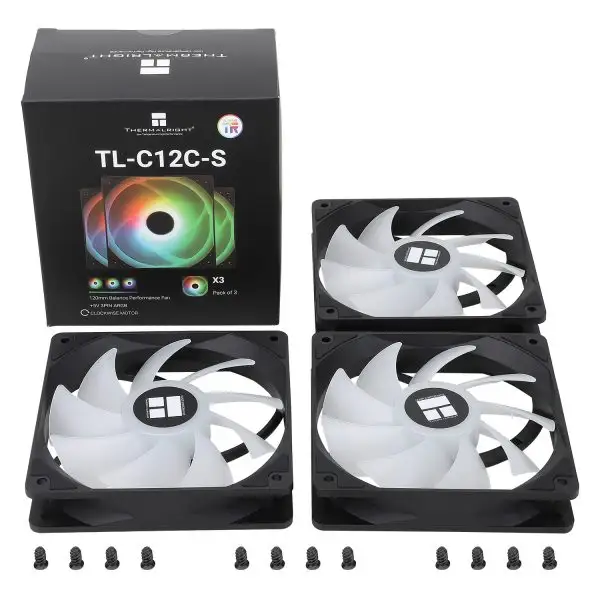
Digging into buyer reports, the Thermalright TL-C12C 120mm PWM Case Fan (3-Pack) earns an impressive cross-platform score of 8.5/10. Its combination of low price, ARGB lighting, and workable cooling performance has made it a go-to for budget PC builders. Yet, user experiences reveal clear lines between short-term satisfaction and long-term reliability.
Quick Verdict: Conditional — ideal for budget builds where aesthetics and price outrank lifespan concerns.
| Pros | Cons |
|---|---|
| Extremely low cost for a 3-pack | Multiple reports of rattling/humming developing over months |
| Good airflow and cooling for price | Louder at high RPM compared to premium models |
| ARGB lighting looks good and is daisy-chainable | Inconsistent quality control across batches |
| Daisy chain reduces motherboard header usage | Cable management can be messy |
| Quiet at low RPM settings | Packaging sometimes arrives damaged |
| Versatile—works for case, radiator, or CPU use | RGB diffusion not as refined as high-end fans |
Claims vs Reality
Thermalright markets this fan series as “silent” with noise levels ≤25.6dBA and extended lifespan thanks to S-FDB bearings. Amazon’s description states it features vibration-reducing silicone pads “keeping fan noise to a minimum while providing maximum cooling performance.”
In reality, while many users agree the fans are quiet at idle or mid-range speeds, louder humming and “take-off” style noise occur at ≥75% RPM. Reddit user feedback was blunt: “When it ramps up above 75% RPM tho, damn it sounds like my PC going to take off 😂.” The discrepancy suggests “silent” applies only under moderate speeds.
Another claim: a long 55cm cable “ideal for cases and CPU coolers.” On PCPartPicker, builders appreciated the flexibility but also noted messy cable management when daisy chaining. One noted, “Cable management can get messy if you’re daisy chaining, but at $30 for 6 fans, it’s easily dismissed.”
As for longevity, marketing emphasizes durability via fluid dynamic bearings. Yet Reddit reports show rattling noises as early as 3-4 months in 24/7 systems, with multiple warranty replacements needed. “Fan after fan is making extremely humming and rattling noises and just stop after some time,” one buyer summarized, challenging the lifespan claims.
Cross-Platform Consensus
Universally Praised
Price is the standout. Across Amazon, PCPartPicker, Trustpilot, and Reddit, the value proposition is called “incredible” and “amazing” for ARGB fans. A verified PCPartPicker reviewer wrote: “Three PWM fans for under £15, and they have ARGB, and they’re white... Thermalright are killing it at the moment.” Builders upgrading budget cases, replacing stock fans, or adding intakes consistently found them powerful enough to drop temps noticeably.
The lighting effects earn praise even from non-RGB enthusiasts. “Mesmerizing, colorful, and quiet,” noted another PCPartPicker reviewer, highlighting their ability to sync with existing setups. Daisy-chain compatibility is a frequent point of appreciation, especially in builds with limited header count.
Cooling performance is broadly deemed “fantastic for the price,” with airflow rated at 66.17CFM. In warm rooms without AC, one Reddit user managed “temps... about 45-50°C idle with under 50% RPM” using three intakes and one exhaust fan.
Common Complaints
Longevity issues are repeatedly raised by heavy-use owners. Systems running 24/7 often see bearings fail or develop constant humming. A Reddit user warned MC server builders to skip them: “Thank you for saving me the earache.” Several admitted buying multiple packs, thinking initial failures were rare, only to encounter repeated issues.
Noise at high RPM is another recurring theme. While “quiet” at low speeds, pushing them near their 1550 RPM limit can produce noticeable wind and motor noise. One Trustpilot user conceded, “A little loud, but you get what you pay for.”
Quality control variances show up in cosmetic and mechanical form—examples include off-center stickers causing visibly unbalanced rotation and chipped fan corners on arrival. While cosmetic flaws were manageable for some, they reinforce mixed reliability perceptions.
Divisive Features
The ARGB lighting diffusion has fans and critics. While some call it “beautiful,” others note uneven diffusion compared to premium brands. A PCPartPicker review suggested “the light diffusion on the fan bearing hub could be a little better.”
Cable length is simultaneously praised for reach and cursed for excess slack. Builders who prioritize tidy aesthetics may find managing these long leads a hassle. Yet, daisy chain implementation wins over those willing to sacrifice neatness for simplified header usage.
Trust & Reliability
Trustpilot and Reddit threads reveal repeat-purchase patterns—buyers return for price despite known risks, often keeping spare packs. Reports of fans lasting a year without issues are present, but heavy-duty always-on environments strain bearings sooner.
Durability seems linked not just to usage but also to batch variation. Reddit exchanges speculate on “bad batches” due to inconsistent quality control. In milder workloads, several owners describe year-long stable performance, reinforcing that reliability depends heavily on user scenario.
Alternatives
Two mainstream competitors repeatedly appear in discussions: Arctic P12 and Noctua NF-P12 Redux. Arctic earns marks for quieter operation and better quality control; however, Arctic’s ARGB variant is pricier than Thermalright, making it less appealing to budget-focused builders. Noctua offers longer lifespan and consistent low noise, but lacks ARGB entirely—appealing to stealth-focused rigs.
Corsair ML120s were noted for premium build and magnetic levitation bearings, delivering silent operation at a much higher price. For users valuing aesthetics and value over peak quality, Thermalright remains favored; noise-sensitive buyers lean toward Arctic or Noctua.
Price & Value
Market prices hover between $12–$15 USD for a three-pack on sales, reaching ~$20 outside sales. eBay listings place them at $19.79 with free shipping, while UK buyers enjoy £10–£15 rates. LDLC and Scorptec list them between €20.95 and AUD$32.
Community buying tips include grabbing multiple packs during promotions and treating them as semi-disposable over time—“I like how easily I can replace them if I need to and I’ll probably get another pack just in case,” said a PCPartPicker reviewer. Resale is negligible, given low retail cost and wear concerns.
FAQ
Q: Are these fans truly silent?
A: At low to mid RPM, most users find them quiet, but above ~75% speed, noise increases noticeably. Heavy workloads or high ambient temps may require higher RPMs, resulting in “PC take-off” sounds.
Q: How long do they last?
A: Lifespan varies. Light or moderate use often sees over a year of solid performance, while 24/7 setups may report bearing noise in months. Quality control variability can influence outcomes.
Q: Is the RGB easily controllable?
A: Yes, they support motherboard ARGB sync and offer up to 17 lighting modes. Daisy chaining allows multiple fans on one header, but cable management can become cluttered.
Q: Can they be used for radiators or CPU cooling?
A: Users have successfully used them for radiators and CPU coolers, thanks to solid airflow and air pressure specs. Expect noise elevation at maximum speeds under heavy cooling loads.
Q: How do they compare to Arctic P12s?
A: Arctic models are quieter and more consistent in quality, especially without ARGB. Thermalright wins dramatically on ARGB value and upfront cost.
Final Verdict: Buy if you’re a budget-conscious PC builder who values ARGB aesthetics and can accept potential short lifespan. Avoid for mission-critical or 24/7 systems where downtime matters. Pro tip: Set a gentle fan curve to minimize high-RPM noise and prolong bearing life.