TC Electronic POLYTUNE CLIP Review: Precise But Quirky
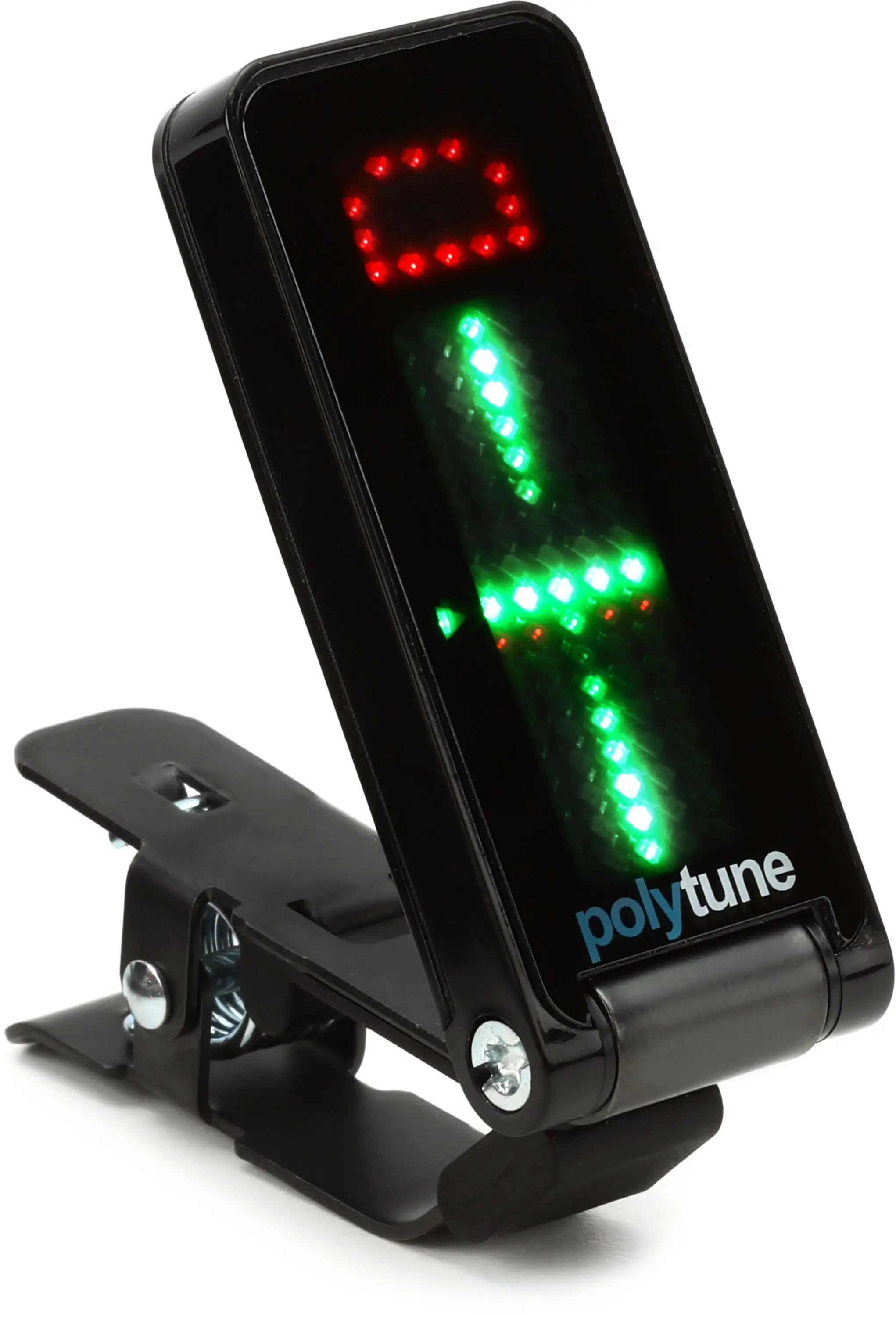
When musicians talk about accuracy, few tuners get the kind of praise that the TC Electronic POLYTUNE CLIP commands. Across thousands of reviews, it consistently lands above 4.6/5 stars, with players calling it “the best tuner I’ve ever used” and “rock solid” for both guitar and bass. But digging deeper into user stories reveals a more nuanced verdict: if you value precision and speed, it’s a standout 9/10—provided you can live with its quirks.
Quick Verdict: Conditional buy for players who want ultra-precise, fast tuning and can tolerate some limitations in polyphonic mode.
| Pros | Cons |
|---|---|
| ±0.02 cent strobe accuracy praised by pros | Auto shut-off after ~3 minutes frustrates setup work |
| Polyphonic mode speeds stage tune-ups | Struggles with low E/B tracking in some cases |
| Bright adaptive display visible outdoors | Clip rubber can wear out or detach |
| Solid metal clip feels more durable than plastic rivals | Battery drains between uses; no low-battery warning |
| Works well on diverse instruments including 12-strings and banjos | Polyphonic mode limited to guitar (not bass) |
| Compact and pocket-portable | Case can crack with long-term use |
Claims vs Reality
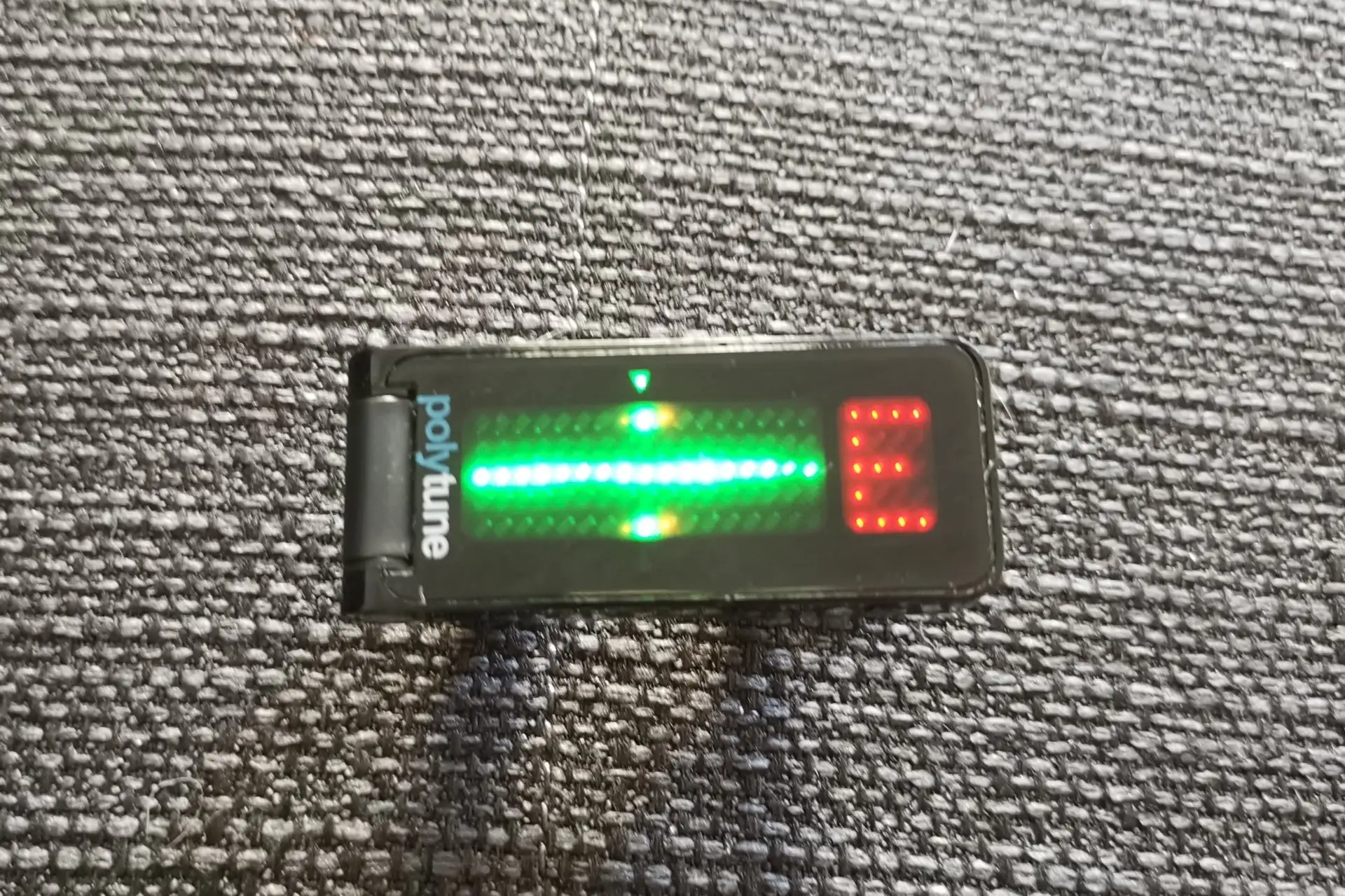
Marketing heavily emphasizes “tune all 6 strings at once” as a game-changer. In theory, the POLYTUNE CLIP’s polyphonic mode lets a guitarist strum and quickly identify problem strings. In practice, some users report inconsistencies. A verified Sweetwater customer noted: “Tune all the strings individually and then check by strumming… at least three will show slightly out of tune,” suggesting the mode may be less reliable depending on the instrument.
The brand also touts ±0.02 cent strobe precision—normally reserved for high-end pedal tuners. That claim holds up in many scenarios. Sweetwater reviewer Jason S. found “for recording…the TC Poly Tuner gives you that edge of confidence…better than all the other clip-on tuners for studio work.” Bassists like Mike C. shared that it “finally” tuned the B-string on his 5-string bass accurately, outperforming other tuners.
TC Electronic promotes an “adaptive ultra-bright display” suitable for any environment. Reddit user Kevin Darelius backed this: “It’s the only tuner I’ve owned that you can actually see when on an outdoor stage with the sun beating down.” Yet for others, especially those playing bowed double bass, the automatic screen flipping becomes a nuisance, with orientation shifting mid-practice.
Cross-Platform Consensus
Universally Praised
Across Amazon, Sweetwater, and Reddit, musicians laud the POLYTUNE CLIP’s speed and clarity. Guitarist Stephen S. valued its metal clip and robust build, especially after cheaper plastic models failed. Multi-instrumentalist from Minnesota found it “rock solid on all my banjos, mandolins and guitar,” eliminating erratic jumps common in rival tuners. Stage players benefit from the polyphonic mode’s quick visual check—Reddit user Ainsley Wills called it “much quicker…looking at all six strings at once is awesome.”
For studio work, strobe mode’s micro-accuracy is a recurring selling point. Jonathan C. described it as “the best small tuner I have used” with unmatched clarity. Users with challenging instruments—like 12-strings—report it “works great” with complex overtones where others fail.
Common Complaints
One biggest frustration: the auto shut-off at three minutes, which occurs even if you’re actively using it. As Sean R. from Los Angeles explained, “No low battery warning…my tuner died on stage.” This short timer interrupts setups, forcing repeated power cycling. Battery drain between uses compounds this issue, with several users advocating removing the battery when not in use.
Durability isn’t flawless. The rubber pad protecting the headstock can detach, and cases have cracked after years of careful use. Trustpilot blogger noted the metal clip “squeaks and grinds” when manipulated, feeling mismatched with the polished electronics. Low E detection is another recurring issue—both guitarists and bassists mention needing to tune the string slightly sharp for the polyphonic readout to register everything “in tune.”
Divisive Features
Polyphonic mode itself splits opinion. While live performers love its speed under noisy conditions, meticulous tuners often revert to single-string strobe mode for precision. A MusicRadar review highlighted a common oddity: “When you’ve tuned up via strobe… the polyphonic display says you’re still not 100% in tune.” Bass players are particularly excluded here—polyphonic works for guitar only.
Trust & Reliability
Long-term stories vary. Some report years of dependable service, with players calling it “roadworthy” and keeping it in their pocket for every gig. Others, like Trustpilot reviewer GT Roblq, felt execution didn’t match hype: “The strumming function…is unreliable and will vary from one guitar to another.” Build quality is generally solid-metal-clip strong, but small design flaws—like weak springs or battery drain—chip away at confidence.
Sweetwater’s service consistently earns customer goodwill, replacing demo units without hassle. Reddit musicians echo satisfaction when TC products work—Mike C. even bought multiples so “each bass will have its own tuner.” But there’s enough chatter about polyphonic inaccuracy to urge cautious expectations if that’s your main draw.
Alternatives
Two competing names surface in comparisons: Peterson Stroboclip and TC’s own Unitune. Peterson owners often remark it tracks low notes with more consistency, though at higher cost. Scott M. noted his Stroboclip lasted 6 years without issue while his POLYTUNE CLIP case cracked in 4. The Unitune, stripped of polyphonic features, wins fans for simplicity—one Sweetwater customer called it “spot on, reliable, and easy to use” without “too much screwing around.”
Price & Value
Current listings hover from $49.95 on eBay up to $95 for certain finishes, making it mid-tier for clip-ons. Resale demand remains strong—used units sell quickly, especially in “mint” condition. Thomann buyers called it “expensive for a headstock tuner,” but justified by advanced modes. Community buying tip: if you’re budget-tight, start with a quality app and upgrade later for the build and accuracy.
FAQ
Q: Does the polyphonic mode work for bass?
A: No—multiple users confirm it’s limited to guitar mode. Bass mode is single-string only, though it’s highly accurate.
Q: Can it handle open tunings and 12-string guitars?
A: Yes. Several reviewers praise its performance with open tunings and complex overtones, outperforming many rivals.
Q: How long does the battery last?
A: Official battery life is decent, but users report drain between uses. No low-battery warning is provided, so keep spares.
Q: Does sunlight affect readability?
A: No—gigging musicians say the adaptive LED remains visible even in direct sun.
Q: Is it worth the price over a Unitune?
A: If you’ll use polyphonic mode and strobe accuracy, yes. If not, many suggest saving money and opting for the simpler Unitune.
Final Verdict: Buy if you’re a guitarist seeking fast, stage-ready tuning with strobe-level precision. Avoid if polyphonic accuracy is critical across all instruments or if you do long setup sessions. Pro tip from the community: keep a spare battery and be ready to switch to single-string mode for ultimate accuracy.