TC Electronic POLYTUNE CLIP Review: Accurate but Flawed
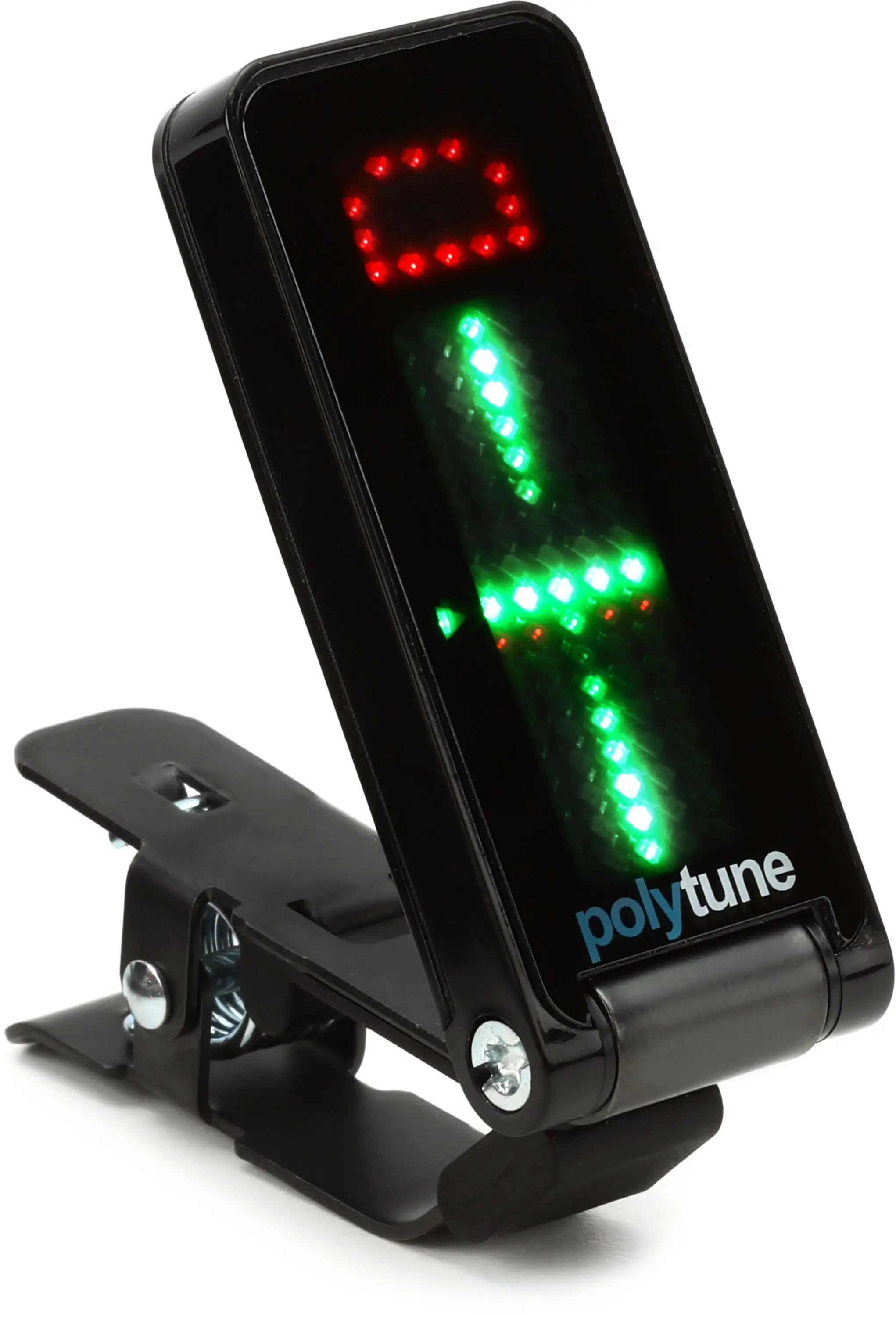
A bassist from Minnesota swears it’s “rock solid on all my banjos, mandolins and guitar,” while a studio guitarist in New York calls it “better than all the other clip-on tuners for studio work.” The TC Electronic POLYTUNE CLIP Clip-On Tuner earns an impressive 9/10 in aggregated user ratings, backed by its ±0.02 cent strobe accuracy, adaptive display, and durable metal clip construction. But beneath the glowing praise, recurring complaints about auto shut-off, low battery warning absence, and polyphonic mode quirks reveal a less-than-perfect picture.
Quick Verdict: Conditional — buy if accuracy, speed, and durability matter most; skip if you often tune low strings in bass mode or need extended on-time without interruptions.
| Pros | Cons |
|---|---|
| ±0.02 cent strobe precision | Auto shut-off after 3 minutes, even mid-use |
| Polyphonic tuning for all 6 guitar strings | Struggles with low E/B in some tunings and bowed bass |
| Adaptive LED display, works in bright sun | No low battery indicator |
| Durable stainless steel clip | Limited viewing angle adjustment without reattaching |
| Works well for bass, 12-string, and open tunings | Display flicker/power issues after long-term use |
| Fast response in monophonic mode | Brightness overkill in dim settings |
| Compact, pocket-friendly design | Slightly high price compared to basic tuners |
Claims vs Reality
Marketing positions the POLYTUNE CLIP as “the best tuner by any measure,” with lightning-fast polyphonic tuning for all six guitar strings, unbeatable strobe accuracy, and flawless performance in varied lighting.
Digging deeper into user reports, the polyphonic mode works exactly as described — but only in guitar mode, not bass. Reddit user Mike C. noted: “It’s sleek, well built… but consistently failing to tune the B-string on my 5-string bass until I switched to standard mode.” On bowed double bass, a Thomann reviewer found “the tuner has difficulty picking up the signal from the E string… works fine when plucked.”
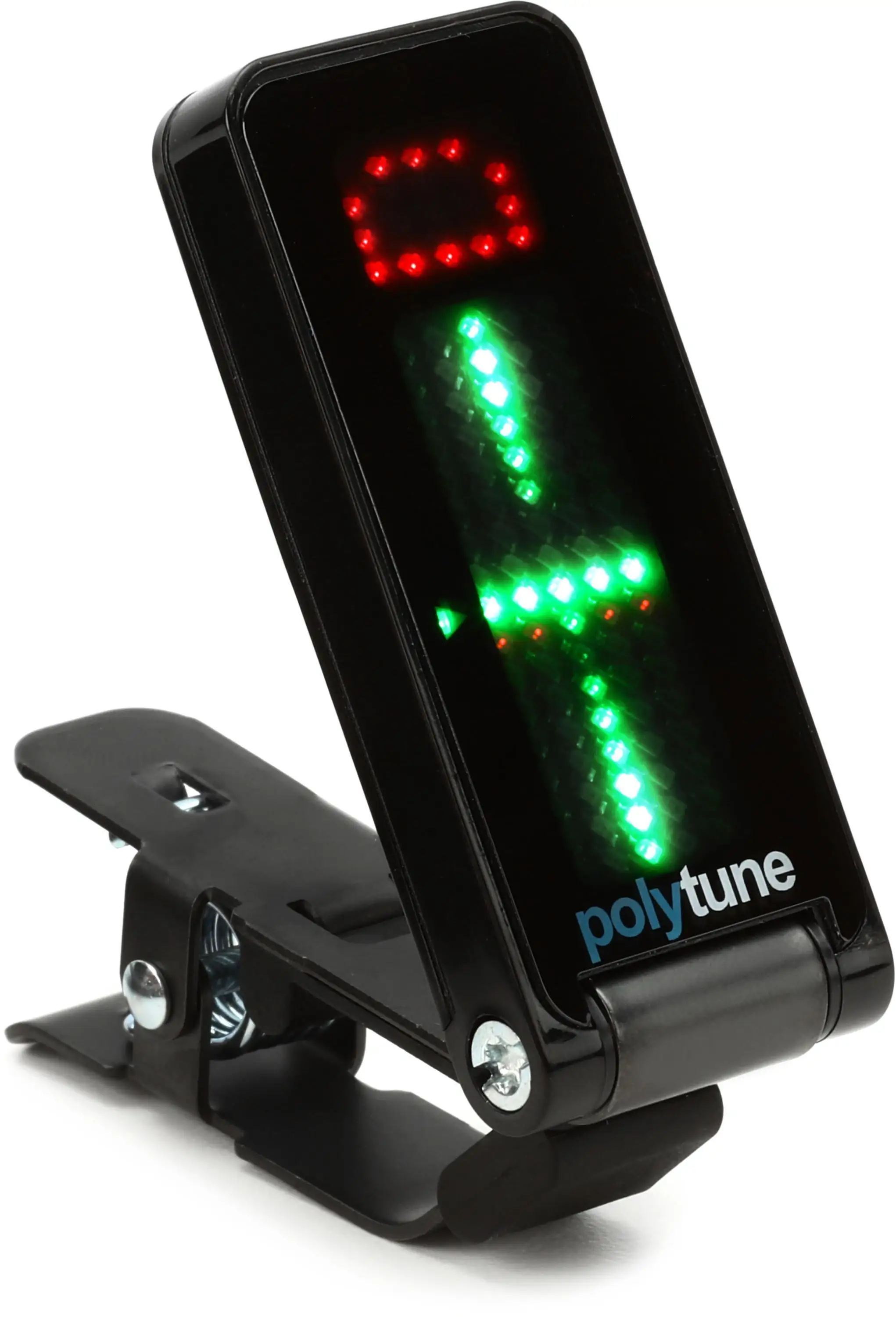
The promise of sunlight-readable displays is widely confirmed. Kevin Darelius on Facebook raved it’s “the only tuner I’ve owned that you can actually see when on an outdoor stage with the sun beating down on it.” Yet some Sweetwater buyers add that “brightness might be overkill for nighttime bedroom practice.”
While officially claiming ±0.02 cent strobe accuracy, multiple users back this up. Ed C. on Reddit said it “easily picks up the low E string, pretty accurate,” comparing favorably to his Peterson Stroboclip HD. Still, there’s frustration when the adaptive display unexpectedly rotates if mounted horizontally, as one double bassist described: “Being almost horizontal the tuner cannot decide its position… would have been nice if the gyro could be disabled.”
Cross-Platform Consensus
Universally Praised
Precision is the product’s crown jewel. Studio players emphasize how the strobe mode “gives you that edge of confidence” during recording, per Jason S. in New York. Professionals strum once for a polyphonic check before gigs — “One strum, a quick adjustment, and go,” wrote one Sweetwater customer. Bassists, 12-string players, and open-tuning stylists note unmatched versatility: a November 2021 review confirmed “it works great on 12-string… other tuners get confused by overtones, not this one.”
Durability earns equally strong praise. Stephen S. from Minnesota contrasted the metal housing with “plastic housing on the other clip-ons… gotta believe this would be reliable roadworthy tuner.” A Quora long-term tester stressed the metal clip is “virtually indestructible… but contains sensitive electronics” — an important distinction for gigging musicians.
Common Complaints
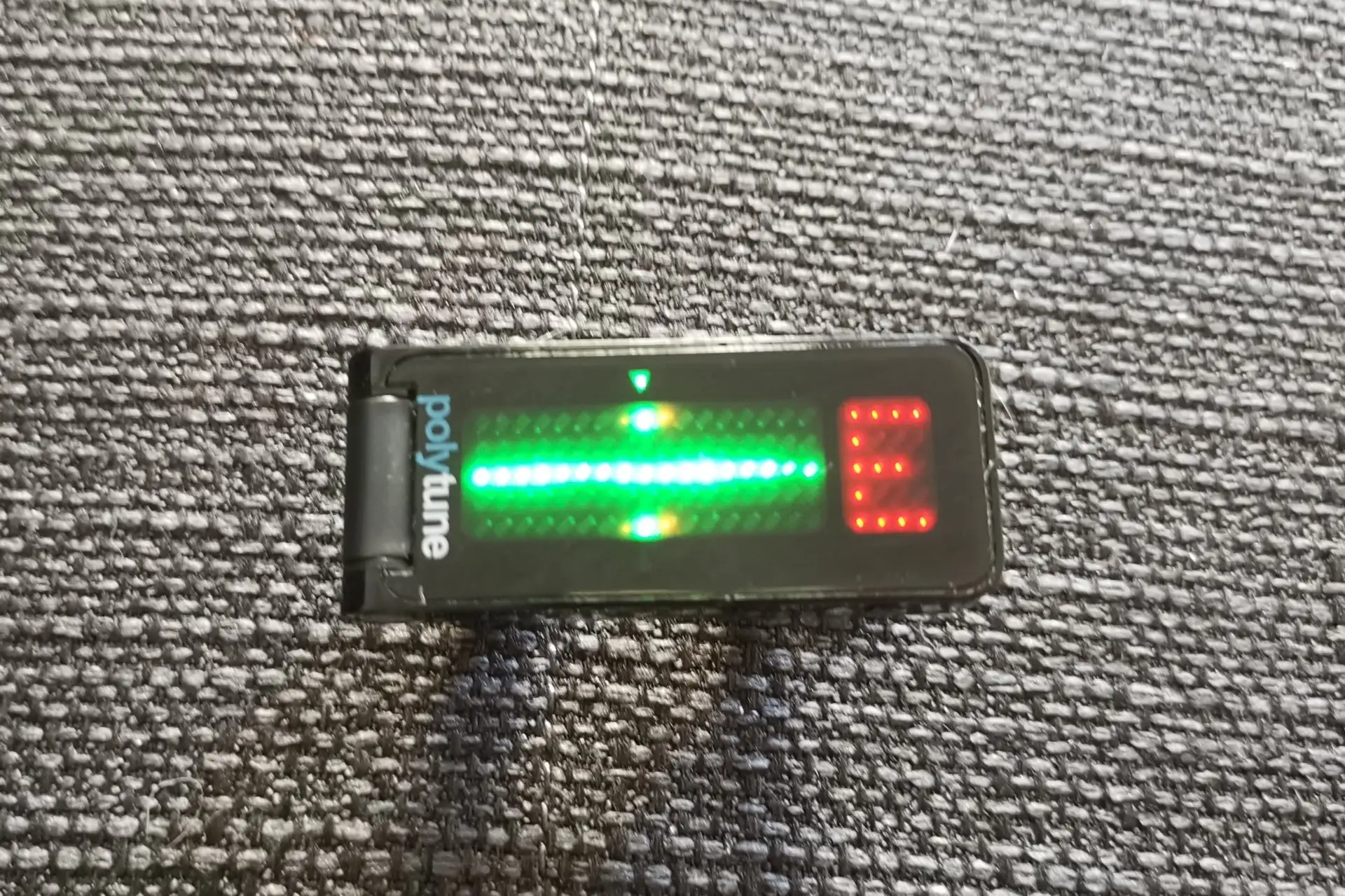
The lack of a low battery indicator leads to unpleasant surprises. Sean R. from Los Angeles had his tuner “die on stage” with no warning, deducting a full star. The auto shut-off after three minutes — even during active tuning — frustrates many during setups. One Trustpilot reviewer called it “a complete pain in the derriere having to continually turn it back on.”
Low string tracking can falter in certain contexts. Users playing in drop B or drop A tunings report struggles, with one saying it “can’t fault it otherwise.” Polyphonic detection sometimes registers low E as slightly sharp to show all strings in tune, as tested across “multiple different guitars” by a Reddit contributor.
Hardware quirks include flickering displays and units failing to power on after a couple of years, as noted by a Sweetwater buyer who switched to a D’Addario tuner for reliability. View angle limitations are also cited: a Thomann customer wishes “the clip could be slightly larger and have more degrees of freedom” to avoid removal for repositioning.
Divisive Features
The polyphonic mode itself splits opinion. While a time-saver for guitarists, some find it unnecessary or even distracting. One Trustpilot reviewer with a PhD quipped about “all these darn lights… takes a PhD to use,” preferring the simpler Unitune model.
Brightness is another contentious point — widely celebrated for stage visibility but gently criticized for home use. Outdoors, it’s “stunning” (Loyd Flaherty on Facebook), but indoors some wish a dimmer was available.
Trust & Reliability
Long-term stories reveal mixed hardware endurance. Scott M. from California’s tuner “lasted 4 years” before the case cracked near the on switch, despite careful handling. Others cite rubber padding on the clip wearing out quickly — a December 2021 user said “the rubber… wears out over a period of time.”
On the positive side, customer support gets high marks. A Quora tester had faulty electronics replaced “without fuss… very quickly” by both TC Electronic and the dealer. Sweetwater’s proactive service is also mentioned, replacing a demo unit while letting the customer keep the original.
Alternatives
Users often compare against the Snark ST-8 and Peterson Stroboclip HD. The Snark offers “solid basic tuning at a lower price” but suffers in durability and lacks polyphonic capability. The Peterson Stroboclip HD is praised for angle adjustability and build but — according to Ed C. — had “issues picking up low E” solved by switching to the POLYTUNE CLIP.
Korg’s Pitchclip 2 emerges as a compact option, but reviewers note it “doesn’t match the precision of the strobe mode or the adaptive display” here, making it less useful for demanding sessions.
Price & Value
Market prices vary: Amazon listings hover around $68 USD, while eBay offers new units from $45–$85 depending on condition and bundle size. Specialty sellers remind buyers to factor in potential battery costs due to the device’s tendency to drain between uses.
Community tips include choosing the Unitune model if you don’t plan to use polyphonic mode, and buying from authorized dealers to ensure warranty support, as counterfeit concerns are minimal but repairs are valued highly.
FAQ
Q: Does the polyphonic mode work on bass?
A: No — it’s restricted to guitar mode. Bass tuning is available in monophonic and strobe modes for high accuracy.
Q: How bright is the display under sunlight?
A: Exceptionally bright and clear, with multiple users confirming visibility during outdoor gigs, even under direct sun.
Q: Can it be used for open tunings or 12-string guitars?
A: Yes — users report stable performance without confusion from overtones that hinder other tuners.
Q: Is there a low battery warning?
A: No, and several users have experienced unexpected shutdowns mid-performance due to this absence.
Q: How long does the battery last?
A: Lifespan varies, but some users note noticeable drain between uses; removing the battery when stored can help.
Final Verdict: Buy if you’re a stage or studio musician needing fast, hyper-accurate tuning with durable build; avoid if you primarily play bass in polyphonic mode or require longer active time during setups. Pro tip from community: keep spare batteries in your case — the tuner won’t warn before it quits.