TASCAM DR-40X Review: Feature-Rich, But Noisy Caveats
“Cheap build quality, lots of plastic, not durable, and noisy… oh so noisy!” is the kind of reaction that sits right next to a very different one like “this just works and then some!”—and that tension defines the TASCAM DR-40X Portable Handheld Field Recorder. Based on cross‑platform feedback, the verdict is conditional: a capable, feature‑dense recorder for the price, but with real caveats about self‑noise, built‑in mic interference, and feel in the hand. Score: 7.6/10.
Quick Verdict
Conditional yes. People who want a flexible handheld for music, interviews, or as a basic USB interface tend to be happy; those chasing ultra‑quiet field ambience or expecting premium build in this bracket are more divided.
| Pros (from users) | Cons (from users) |
|---|---|
| Strong feature set for sub‑$200 price point | Built‑in mic self‑noise surprises some users |
| Very sensitive onboard mics for nature/ambience | Urban/electrical interference reported on onboard mics |
| XLR/TRS inputs + phantom power enable pro mics | Plastic housing feels cheap to some |
| Works as simple USB audio interface | Interface/learning curve noted by new users |
| Battery life praised by several buyers | Others still question real‑world battery longevity |
A verified buyer on Amazon noted: “The sound quality is really good.” Another Amazon reviewer, Masked Gamer, countered: “Cheap build quality, lots of plastic, not durable, and noisy… oh so noisy!”
Claims vs Reality
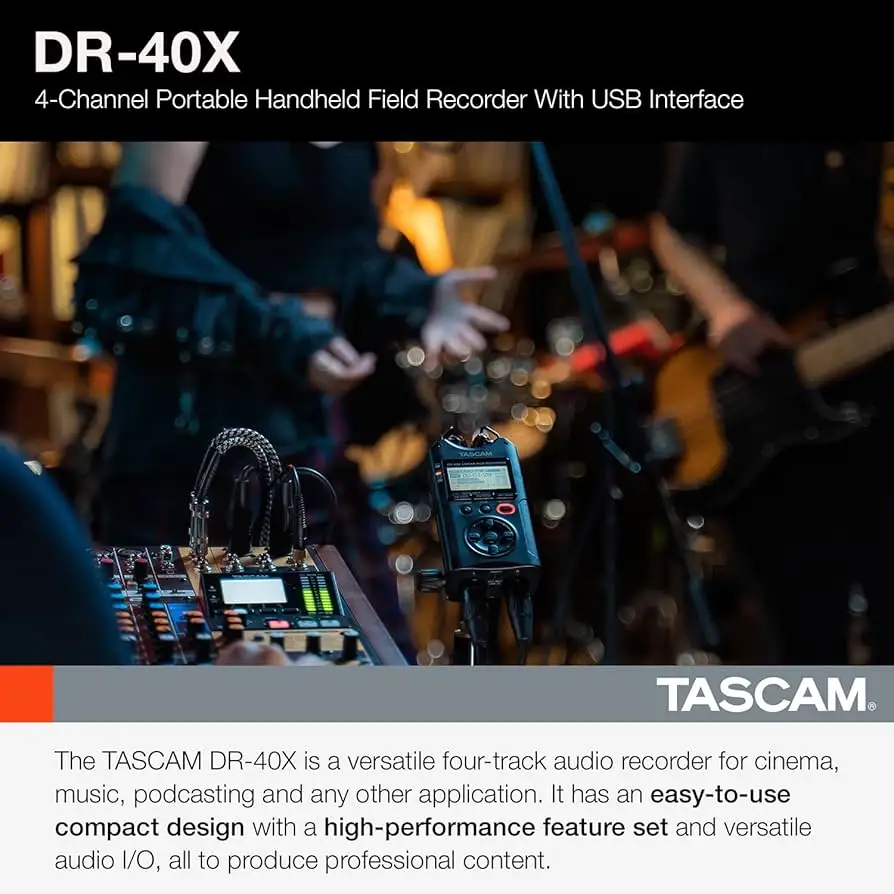
Marketing claim #1: four‑track versatility for cinema, music, podcasting, and field use. Digging deeper into user reports, that versatility largely holds up in day‑to‑day scenarios. Amazon reviewer Double J described tapping into audio systems for radio and video work: “I can tap into an audio system directly thanks to the XLR/TRS ports available, and it works fantastic.” On Reddit, a community member echoed the multi‑purpose appeal, saying they “think it’s fine for general use” and that it “also doubles as an audio interface; imo could replace the Behringer for that use.”
Where the gap appears is not in the feature list, but in how clean those four tracks sound when you push into delicate field recording. Amazon reviewer Jacob F. warned newcomers: “The self noise on this is far greater than I would have expected… do a little more research into self noise.” That suggests the spec promise of “professional content” is conditional on use case.
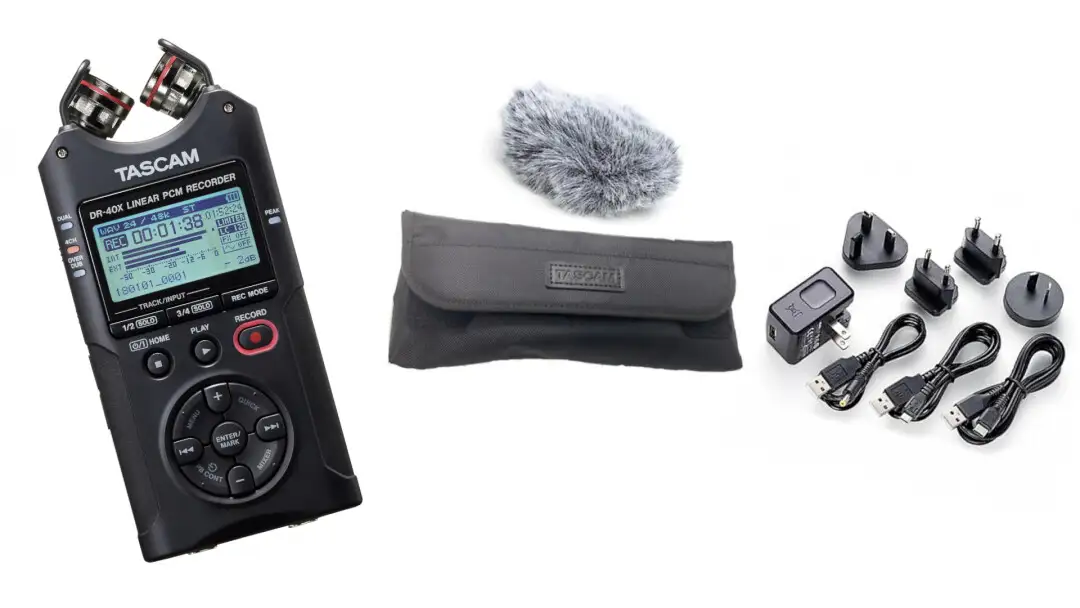
Marketing claim #2: high‑quality built‑in mics covering whispers to loud sounds. Many users do praise sensitivity. Amazon reviewer Ronnie Bradley said: “Very sensitive microphones… I tested out the field recorder one night to record… croaking frogs and crickets… it shows the sensitivity.” A Brazilian Amazon reviewer Rodolfo highlighted low noise in calmer settings: “The noise of the built‑in microphone is very low… you can remove it in Audacity depending on the environment.”
Yet multiple users say the built‑ins aren’t reliable in noisier electromagnetic environments. A verified buyer on Sweetwater wrote: “The preamps are a little bit noisy,” and Canadian Amazon reviewer Martin T. was more specific: “Terrible electrical interference from internal microphones… don’t even bother using the built in microphones in any kind of urban setting.” While marketing frames the onboard pair as broadly pro‑grade, user stories indicate they shine most in quieter, rural, or controlled setups.
Marketing claim #3: up to ~18 hours on batteries. Some owners validate this. Sweetwater reviewer David P. called out longevity: “The battery life on this is superb.” But the Amazon meta‑summary shows “opinions are mixed on… battery life,” and at least one Sweetwater review is titled “battery life…?” without details. So while officially rated around 17.5–18 hours, real‑world confidence varies with modes and expectations.
Cross‑Platform Consensus
Universally Praised
A recurring pattern emerged around value for money and “does what it says” functionality. Amazon reviewer Liz celebrated reliability and breadth: “Where do I begin? This just works and then some!” She described using it for voice‑over and discovering “all its bells and whistles,” implying that for narrators and traveling creators, the feature density feels like a bargain. Sweetwater reviewer Nic D. reinforced that out‑of‑box usability: “I could record and play back immediately out of box… the clarity and quality is superb for the size and price.”
For live audio capture and performance documentation, owners repeatedly highlight the XLR/TRS inputs and ability to take board feeds. Double J’s Amazon story about radio interviews and direct system taps aligns with Amazon reviewer Bob, who called it a “professional sound recorder” and even uses it as a “media player for the ordered list WAV files.” In practice, that flexibility benefits videographers and gigging musicians who want one box for both ambient room sound and line‑level feeds.
There’s also praise for ruggedness in unexpected ways. A verified buyer on Sweetwater recounted an accident: “I (accidentally) ran it over with my truck… and still works just great.” Even though that same review mentions noise concerns, the durability anecdote is striking for field users worried about mishaps.
Common Complaints
Noise is the most consistent friction point, but it’s described in two distinct ways. First, self‑noise or preamp hiss in quiet capture. Amazon reviewer Jacob F. said it was “far greater than I would have expected,” a meaningful warning for sound designers or wildlife recordists who need ultra‑low‑noise floors. Sweetwater’s “indestructible” reviewer similarly flagged that “the preamps are a little bit noisy,” nearly returning it for that reason. These accounts suggest that the DR‑40X is serviceable for loud sources or close‑miked work, but can disappoint in sparse ambience.
Second, interference on the built‑in mics. Martin T. on Amazon in Canada said there’s “no shielding from interference whatsoever” in urban settings, calling recordings “unusable.” For city podcasters or street interviewers relying on internal capsules, that’s a serious practical limitation. The official specs emphasize mic quality and SPL handling, but multiple users report environmental interference undermining that promise.
Build feel is another repeat. Masked Gamer’s Amazon review labeled it “cheap build quality, lots of plastic, not durable,” and a Mexican Amazon reviewer Das echoed surprise: “I didn’t think the whole case would be plastic… but with care… it will last.” The implication for travel vloggers or bag‑tossing field workers is that you may want a case and more cautious handling.
Divisive Features
Ease of use splits by prior recorder experience. Some newcomers praise the interface. Nic D. wrote he isn’t “super tech skill guy” yet could use it quickly. Others frame it as a learning curve. Liz said it “does require some learning and testing as you go,” and Sweetwater’s durability reviewer pointed out you must “get used to pressing the record button twice.” So the DR‑40X reads as intuitive for users comfortable with handheld recorders, but slightly fussy for first‑timers.
The onboard mic quality is similarly polarizing depending on expectations. Rodolfo praised that embedded noise is “very low,” while Jacob F. and Martin T. found the built‑ins noisier or interference‑prone than expected. Field recordists chasing subtle ambience tend to be the harshest critics; interviewers, musicians, and live‑event users are more forgiving.
Trust & Reliability
Across Sweetwater and Amazon, there’s little pattern of scam complaints; the few negative reports are about condition or QC rather than fraud. A Mexican Amazon buyer Dani Boone said their unit arrived “open box… the batteries… were in the recorder and the file count indicated it had already been used,” but still called it “excellent.” That points to fulfillment/warehouse issues rather than product deception.
Long‑term reliability stories are mixed but often positive. The Sweetwater “indestructible” post suggests survivability under rough handling. Reddit owners discussing daily use say they “grab the DR‑40 over” other cheap handhelds, implying continued trust over time. Still, the plastic feel critiques hint that durability confidence is not universal.
Alternatives
Only competitors explicitly mentioned in the data are Zoom handhelds and the Tascam Portacapture line. Several users compare it against Zoom H1n/H2n/H4‑series. A Reddit user in r/fieldrecording said they’d “grab the DR‑40 over my H1n or H2n” because of the option for external mics. Sweetwater reviewer Leslie W. noted they replaced a “well used Zoom H4” and were “preferring it,” though they agreed the quick start guide is “inadequate.” The narrative suggests the DR‑40X wins on inputs and track flexibility versus smaller Zooms, while not clearly beating them on ultra‑quiet preamps.
Tascam Portacapture X6/X8 are mentioned in Amazon’s related items and Sweetwater’s user history. David P. described his Portacapture X6 as “heavy… more choices for sound and digital display” but “battery hungry,” while still liking the DR‑40X as a “backup… fantastic.” That positions Portacapture as a higher‑end, more modern alternative for users who can pay more and want features like 32‑bit float, while the DR‑40X remains a value workhorse.
Price & Value
Amazon and eBay listings put the DR‑40X new around $179–$219, with open‑box and used units often $130–$170. Users repeatedly frame it as strong value “for under $200.” Ronnie Bradley called it “packed with features for under $200,” and Nic D. praised “superb” clarity “for the size and price.” Resale seems stable in the mid‑hundreds, implying demand from budget filmmakers and musicians.
Community buying tips implied by complaints: if you’re planning to use it outdoors, Reddit owners recommend a wind fur (one user said it “definitely needs the Rycote wind fur”). If you need low‑noise ambience, multiple Amazon buyers hint you should research preamp noise before committing.
FAQ
Q: Are the built‑in microphones good enough for field recording?
A: For many, yes in quiet or rural settings. Amazon reviewer Ronnie Bradley praised “very sensitive microphones” for frogs and crickets, and Rodolfo said the built‑in mic noise is “very low.” But others, like Jacob F., found “self noise… far greater than expected,” and Martin T. warned about urban interference.
Q: Can it handle external XLR mics and live board feeds?
A: Yes, and users rely on that. Amazon reviewer Double J said he can “tap into an audio system directly thanks to the XLR/TRS ports,” calling it “fantastic” for radio and video jobs. Several Reddit comments also point to grabbing the DR‑40X for the option of external mics.
Q: Is it easy to use for beginners?
A: Mixed. Sweetwater buyer Nic D. said he could record “immediately out of box,” while Amazon reviewer Liz noted it “requires some learning.” Another Sweetwater reviewer said you must “get used to pressing the record button twice,” so the workflow may take a short adjustment period.
Q: How is the battery life in real use?
A: Reported experiences vary. Sweetwater reviewer David P. called battery life “superb,” aligning with the official ~18‑hour rating. But platform summaries note mixed opinions, and at least one Sweetwater post raised “battery life…?” as a concern without detail.
Q: Does it feel durable?
A: Perception splits. Amazon reviewer Masked Gamer criticized “lots of plastic, not durable,” and Das in Mexico also noted the plastic casing. Yet a Sweetwater customer ran it over with a truck and said it “still works just great,” suggesting real toughness despite the light build feel.
Final Verdict
Buy if you’re a musician, podcaster, wedding/church recorder, or DSLR filmmaker who wants a flexible handheld with XLR inputs and a decent onboard mic pair for the price. Amazon reviewer Paul Durwin uses it for services and events, calling it the tool for “professional results,” and Liz describes it as a joy once learned.
Avoid if you’re primarily capturing ultra‑quiet ambience or urban street sound on the built‑ins; multiple users report higher self‑noise and “terrible electrical interference.” Pro tip from the community: plan on a proper windscreen for outdoor work, and lean on external mics when you need the cleanest tracks.