Tamron 18-300mm Sony E APS-C: Conditional Buy (8.4)
“‘It’s the best all-in-one lens I’ve used to date.’” That line from a published review captures why the Tamron 18-300mm Lens for Sony E APS-C (Black) keeps getting framed as a one-lens travel solution—despite the usual superzoom skepticism. Verdict: Conditional buy for APS-C Sony shooters who prioritize reach and convenience over low-light speed. Score: 8.4/10.
Quick Verdict
Digging deeper into the feedback, the loudest theme is practicality: people want “wide-angle to ultra-telephoto” coverage without swapping lenses, and multiple sources describe this lens as delivering unexpectedly strong results for that category. In the Photofocus review, Bryan Esler calls it “a joy to use,” highlighting “fast, accurate autofocus” and “surprisingly good sharpness” (Photofocus).
At the same time, a recurring pattern emerged around handling tradeoffs. The same Photofocus reviewer flags that “zoom ring is a bit stiff,” and also mentions “warmer color tones might cause some colors that look slightly off” (Photofocus). Those aren’t deal-breakers for everyone, but they are the kinds of small frictions that show up in day-to-day shooting—especially for action shooters who ride the zoom constantly.
On Amazon, the product listing shows a 4.5/5 rating based on 14 reviews for a bundled kit, suggesting generally satisfied buyers on that platform as well (Amazon). Still, the most specific “story” feedback in the provided data comes from the published reviews rather than short buyer blurbs.
| Call | Evidence-Backed Pros | Evidence-Backed Cons |
|---|---|---|
| Conditional Yes | “fast, accurate autofocus” (Photofocus) | “zoom ring is a bit stiff” (Photofocus) |
| Yes for travel convenience | “great focal length to capture all sorts of scenes” (Photofocus) | “maximum aperture of f/6.3 limits low-light performance” (Lensfinder) |
| Yes for sharpness-for-a-superzoom | “surprisingly good sharpness” (Photofocus) | “some softness… at the extreme ends” (Lensfinder) |
| Yes for APS-C all-in-one | “worldwide first… 16.6x magnification… for… APS-C” (Tamron) | APS-C-only design; full-frame use implies crop mode tradeoffs (Photofocus) |
Claims vs Reality
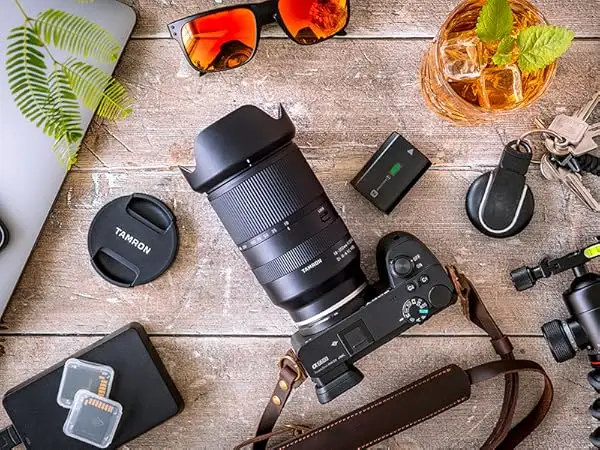
One marketing claim is extreme versatility: Tamron positions it as “from wide-angle to ultra-telephoto - just one lens” (Tamron Europe). In practice, the Photofocus reviewer reinforces the same idea from a working perspective, calling it “the best all-in-one lens I’ve used to date” and praising a “great focal length to capture all sorts of scenes” (Photofocus). For travel shooters and parents at “kids’ events” (Tamron), the implication is straightforward: fewer lens swaps and fewer missed moments.
Another claim centers on autofocus performance—“best-in-class af with vxd technology” and “focuses… quickly and precisely… almost silently” (Tamron Europe). The Photofocus field report mirrors that, saying the lens “blew me away” because it was “quick to focus, and focusing was spot-on,” and even describing tracking small, erratic subjects: “I was able to track bees as they landed on various flowers” (Photofocus). For wildlife hobbyists on APS-C bodies, that kind of focus reliability is the difference between coming home with keepers versus frustration.
Where marketing tends to smooth edges is low-light reality. Official specs acknowledge the variable aperture (f/3.5–6.3) (Tamron), but user-facing reviews make the consequences clearer. Lensfinder bluntly states: “in low-light conditions, the maximum aperture of f/6.3 can limit performance,” leading to “softer images and higher noise levels” at high ISO (Lensfinder). The gap here isn’t that the spec is wrong—it’s that the lived experience is that 300mm at f/6.3 pushes many users into stabilization/ISO compromises.
Cross-Platform Consensus
Universally Praised
A recurring pattern emerged around autofocus being better than expected for an all-in-one zoom. In the Photofocus review, Bryan Esler admits he “wasn’t anticipating great autofocus,” but says the lens “blew me away,” describing it as “quick to focus” and “spot-on” (Photofocus). For action-and-nature shooters—anyone trying to capture movement without carrying multiple lenses—that kind of responsiveness is the core promise of an APS-C superzoom.
Sharpness is the second “surprise” theme. The Photofocus reviewer calls out “surprisingly good sharpness,” adding that even at f/6.3 it was “very, very crisp across the view” with “very little signs of any softness in the corners” (Photofocus). Lensfinder generally agrees with the direction of that claim, saying it “produces sharp images across most of its zoom range,” though it adds a caution about extremes (Lensfinder). For travelers who mostly share digitally and crop occasionally, that “sharp enough most of the time” reality is often the point.
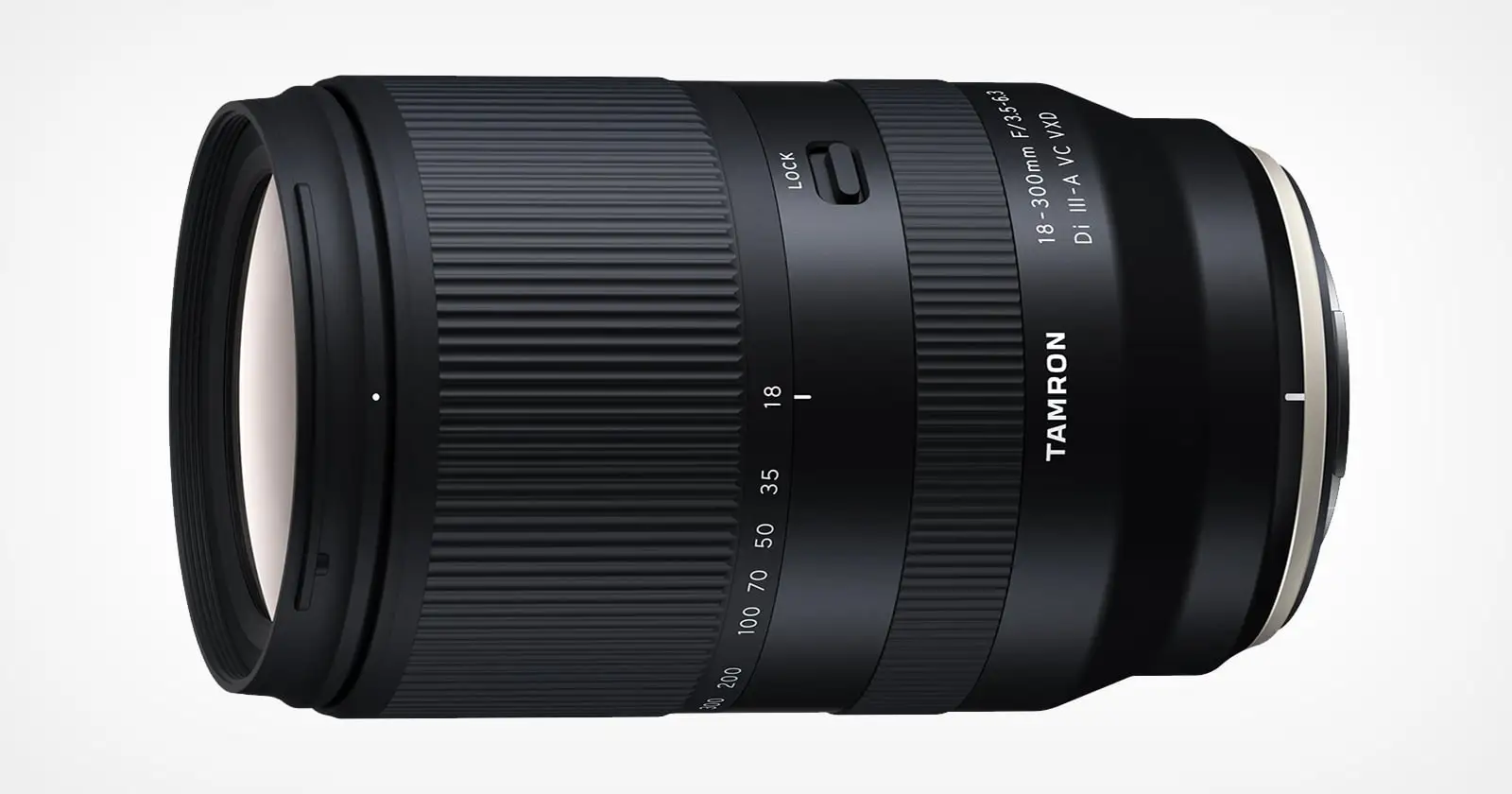
Versatility and handling for travel shows up repeatedly in both brand framing and reviews. Tamron markets it as ideal for “travel and family activities” (Tamron USA), and Photofocus echoes the field practicality: the lens felt “sturdy,” “easy to use,” and “well-balanced” during walks and nature shooting (Photofocus). For Sony a6xxx users who want a single-lens kit, that balance matters as much as optical charts.
- Autofocus: “quick to focus… spot-on” and strong subject tracking (Photofocus)
- Sharpness: “surprisingly good sharpness,” “very, very crisp” even at f/6.3 (Photofocus)
- Versatility: “great focal length to capture all sorts of scenes” (Photofocus)
- Travel practicality: “small and well-balanced” (Photofocus)
Common Complaints
The most consistent hands-on complaint in the provided sources is zoom-ring stiffness. Photofocus lists it directly: “zoom ring is a bit stiff,” explaining it takes “more pressure than expected” compared with other Tamron zooms (Photofocus). For sports shooters or anyone who zooms while tracking, that extra resistance can be more than a minor quirk—it can slow framing changes.
Low-light limitation is the other repeated drawback, framed less as “bad quality” and more as physics. Lensfinder says f/6.3 “can limit performance” in low light, pushing users toward “higher noise levels” (Lensfinder). For indoor events, evening street scenes, or shaded trails, the user-type impact is that stabilization helps, but it can’t freeze subject motion the way a faster lens can.
Some users also encounter edge-case autofocus behavior. Photofocus describes one situation where it “initially had problems focusing” on a sharp edge when “similarly shaded colors” were present, though “a quick physical movement” solved it (Photofocus). That’s not framed as chronic failure—but it’s a real-world scenario where contrast/subject separation can matter.
- Handling: “zoom ring is a bit stiff” (Photofocus)
- Low light: f/6.3 at the long end “can limit performance” (Lensfinder)
- Occasional AF edge cases: difficulty with “similarly shaded colors” (Photofocus)
Divisive Features
Color rendition is a notable split. Photofocus reports “warmer color tones might cause some colors that look slightly off” (Photofocus), while the same review also suggests the warmth can be “more pleasing” and help counter Sony’s “green hues” in some situations (Photofocus). For portrait shooters, that warmth might be welcome; for product or documentary shooters needing strict neutrality, it could feel like extra correction work.
Balance at full extension also cuts both ways. Photofocus calls it “small and well-balanced” (Photofocus), but Lensfinder notes it “may feel slightly front-heavy when extended to its maximum focal length” (Lensfinder). For smaller APS-C bodies, that front-heaviness at 300mm can affect comfort over long sessions even if the lens is relatively compact for its range.
Trust & Reliability
On “scam concerns,” the provided Trustpilot field does not contain verified buyer narratives; it repeats the Photofocus article content rather than independent consumer reports. So, within this dataset, there isn’t a platform-specific pattern of fraud complaints or verified negative trust signals to synthesize beyond that duplication.
For long-term durability stories, the Reddit data supplied here does not include “6 months later…” style posts or individual Reddit usernames; it consists of published review material. What can be stated from official positioning is that Tamron emphasizes “moisture resistant construction” and sealing for “outdoor use in bad weather” (Tamron Europe), while third-party review summaries describe “weather sealing” and travel readiness (Lensfinder). Without user-timestamped longevity anecdotes in the data, durability beyond initial impressions remains an open question.
Alternatives
Only a few alternatives are mentioned explicitly in the dataset, and they’re mostly used as points of comparison rather than head-to-head competitors.
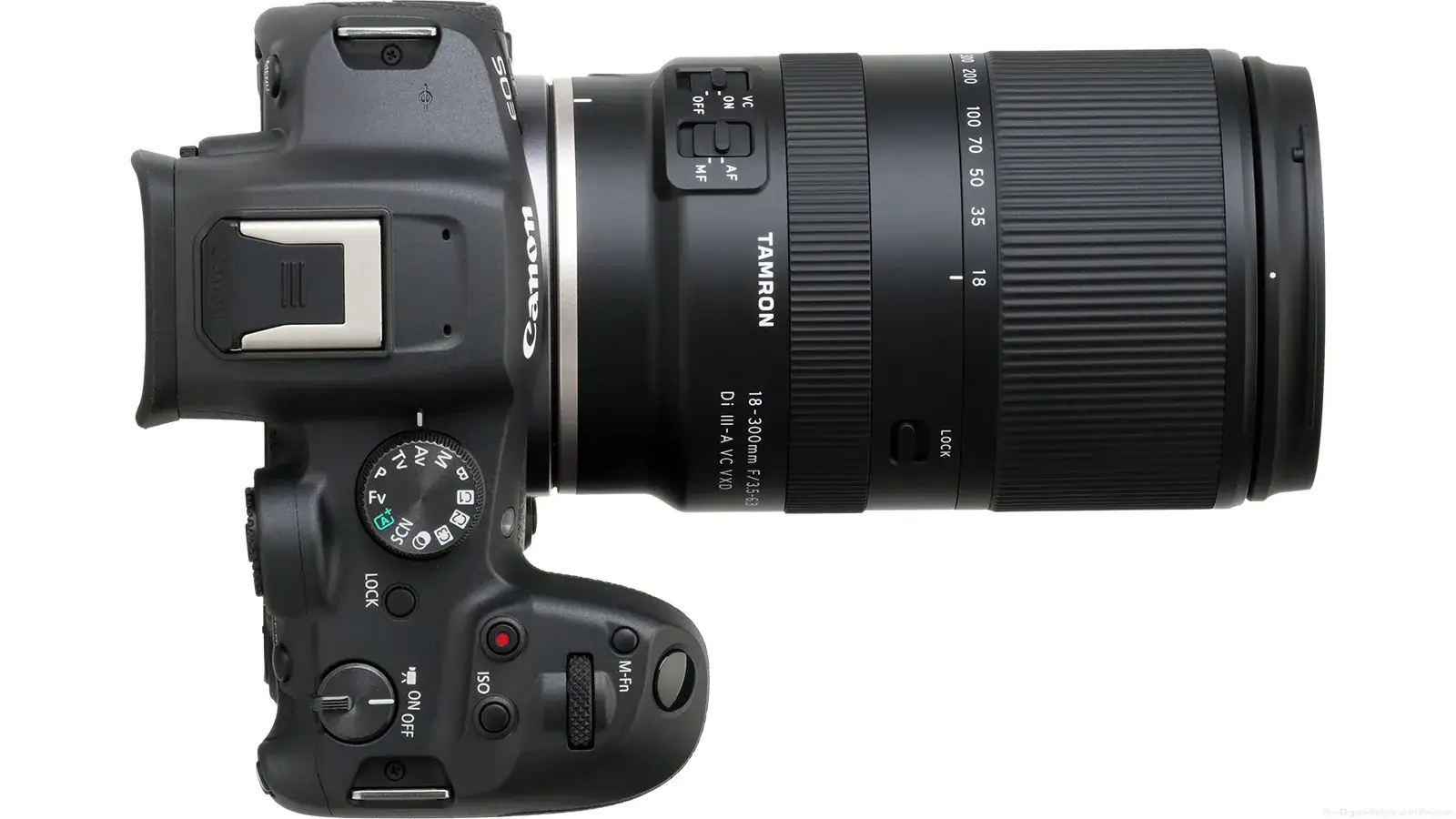
Photofocus compares zoom-ring feel against Tamron’s “70-180mm f/2.8” and “28-200mm f/2.8-5.6” for E-mount, saying the 18-300mm is “a bit more difficult to move” (Photofocus). For action shooters, that implies the faster-aperture options may feel more responsive mechanically (and optically for low light), but they don’t offer the same “one lens” reach.
A separate article source (MrSpyer) also mentions a Tamron “70-300mm f/4.5-6.3” (MrSpyer). That lens is framed as lightweight telephoto, but it doesn’t replace the wide end that makes the 18-300mm a true travel superzoom. So the tradeoff, based on the data, is convenience and wide-to-tele coverage versus a more specialized telephoto setup.
Price & Value
The provided market-price snapshot shows the lens listed new on eBay at $599.00 (with a list price reference of $699.00) from a high-feedback seller (eBay). Another eBay listing shows $509.00 with free shipping (eBay). That spread suggests buyers may find meaningful discounts depending on seller and bundle.
On Amazon, the Sony E bundle listing shows “currently unavailable” but reports an overall 4.5/5 rating across 14 reviews (Amazon). For value-focused buyers, the existence of multiple bundles (bags, filters, cleaning kits) in listings can inflate perceived value, but the feedback provided doesn’t include detailed buyer commentary on whether the accessories are worthwhile.
Community buying tip implied by the listings: watch for reputable sellers and meaningful price drops rather than paying full MSRP. Resale-value trends can’t be confirmed here beyond the presence of active listings.
- New price snapshots: $599.00 and $509.00 (eBay)
- Reference list price shown: $699.00 (eBay)
- Amazon sentiment indicator: 4.5/5 from 14 reviews (Amazon)
FAQ
Q: Is the Tamron 18-300mm actually sharp, or is it “superzoom soft”?
A: Generally sharp for its class, with caveats. Bryan Esler (Photofocus) praised “surprisingly good sharpness,” saying it was “very, very crisp” even at f/6.3, while Lensfinder notes it’s sharp “across most of its zoom range” but can show “some softness… at the extreme ends.”
Q: How good is autofocus for moving subjects on Sony APS-C?
A: Reports are strongly positive in the provided reviews. Photofocus says it “blew me away” with “quick” and “spot-on” focus, even tracking “bees” landing on flowers (Photofocus). Lensfinder also calls AF “quick and accurate,” though it mentions “occasional hunting” in low light (Lensfinder).
Q: Is it good for low-light indoor events?
A: It can be limiting at the long end. Lensfinder warns the “maximum aperture of f/6.3 can limit performance” in low light, leading to higher ISO and potentially softer images (Lensfinder). Tamron promotes VC stabilization (Tamron), but stabilization can’t stop motion blur from moving subjects.
Q: Is the zoom ring stiffness a real issue?
A: It’s a documented complaint in the Photofocus review. Bryan Esler writes the “zoom ring is a bit stiff,” requiring “more pressure than expected,” though he adds it’s “by no means a deal-breaker” (Photofocus). It matters most for action shooters who zoom rapidly.
Q: Does it have weather resistance for travel?
A: It’s marketed as sealed and described that way in reviews. Tamron lists “moisture resistant construction” and outdoor suitability (Tamron Europe). Lensfinder also notes “weather-sealing” as a benefit for varied environments (Lensfinder). The dataset does not include long-term owner reliability stories.
Final Verdict
Buy if you’re a Sony a6xxx APS-C traveler, parent, or hobbyist who wants one lens from wide to 300mm and values “fast, accurate autofocus” plus “surprisingly good sharpness” (Photofocus).
Avoid if your main work is low-light indoor action or you demand fast apertures at the tele end—because multiple sources underline that f/6.3 “can limit performance” in low light (Lensfinder).
Pro tip from the community-style review: expect handling quirks—Bryan Esler’s practical warning is simple: the “zoom ring is a bit stiff” (Photofocus).