Sony DSXM55BT Review: Marine Stereo Conditional Buy 8.4/10
“Been wet multiple times now and still works great” sits right next to “it says many times on the box and in the book not to get the radio wet.” That tension defines the Sony DSXM55BT Bluetooth Marine Digital Media Stereo Receiver: praised as a loud, easy boat (and powersports) upgrade, but with a few real-world gotchas. Verdict: Conditional buy — 8.4/10.
Quick Verdict
Sony DSXM55BT Bluetooth Marine Digital Media Stereo Receiver: Conditional
| What buyers highlight | Evidence from user feedback | Who it matters to |
|---|---|---|
| Easy install | Best Buy reviewer JeffJ said: “works great easy to install” | DIY boat owners, golf cart/Jeep/Harley swaps |
| Loud, strong sound for the money | Best Buy reviewer hawkeye said: “plenty of volume & extra bass for a good price” | Small boats, stock-speaker setups |
| Good sunlight readability | Best Buy reviewer irishk said: “good visibility in the sun” | Open-cockpit boats, pontoon users |
| Remote helps when unit isn’t within reach | Best Buy reviewer rgambino said: “the remote comes in handy as i keep that near the cockpit area” | Sailboats/cabin boats, helm control |
| Bluetooth is usually solid, but not universal | BestAdvisor “connectivity” feedback included: “the bluetooth connects well with no issue…” vs “it wouldn't connect with my phone ( galaxy s 3 )” | Older-phone owners, reliability-focused buyers |
| Confusing controls in motion | BestAdvisor “features” feedback warned: “menu selections can become confusing… due to wave action” | Rough-water boaters |
Claims vs Reality
Sony markets the unit as “marine grade” and “added water resistance features,” with “high humidity resistant vinyl resin” and UV protection (Amazon specs; Sony UK specs). Digging deeper into user reports, many owners interpret “marine” as “it can take weather,” and several stories support that—yet at least one user feedback excerpt questions that assumption explicitly.
On durability in wet environments, BestAdvisor’s collected customer feedback contains a direct contradiction: one buyer said, “great marine stereo . been wet multiple times now and still works great,” while another argued, “it says many times on the box and in the book not to get the radio wet . so , i don't think that makes it a marine product personally.” The practical implication: for open-top boats or powersports, some users feel it “holds up to the weather,” but others caution against treating it like a fully waterproof unit.
Sony also emphasizes Bluetooth convenience (Amazon specs; Sony UK specs: Bluetooth 3.0, two-device connectivity). In real use, Bluetooth is a headline win for many, but there are reports of compatibility and failure over time. BestAdvisor “connectivity” feedback includes “the bluetooth connects well with no issue” and “bluetooth works great , it just takes my phone a little to connect,” but it also includes: “it wouldn't connect with my phone ( galaxy s 3 ) be aware it only works with some bluetooth systems,” and “after two months the bluetooth stopped working.” For people buying specifically for wireless streaming at sea, that variance matters.
A third claim centers on expandability: Sony lists “2-volt rear and sub rca preamp outputs” (Amazon specs). That’s accurate, but some buyers expect more. On Revain, reviewer Matt L. warned about amplifier plans: “keep this in mind if you want to use this main unit to output 4ch to an external amplifier… there are 2 pre outs - rear and sub… they aren't front and rear like my old sony.” If you’re building a multi-amp system, the label “marine receiver” doesn’t automatically mean “full pre-out flexibility.”
Cross-Platform Consensus
Universally Praised
The clearest pattern across platforms is that Sony DSXM55BT Bluetooth Marine Digital Media Stereo Receiver feels like an easy upgrade that delivers satisfying volume without demanding extra gear. For DIY installers, the “swap it in and go boating” narrative shows up repeatedly. Best Buy reviewer JeffJ described a straightforward install: “works great easy to install… great sound easy panel to work.” Another BestAdvisor snippet echoes the same plug-and-play vibe: “as stated plug and play radio . great upgrade from factory radio.”
For users running stock speakers (or modest marine speakers) off the head unit, loudness and “extra bass” get called out as unexpectedly strong for the price class. Best Buy reviewer hawkeye said: “plenty of volume & extra bass for a good price.” Best Buy reviewer israel similarly emphasized output in a casual-use scenario: “excellent for my golf cart… very loud with decent midrange.” In other words, this isn’t only “for boats”—buyers are repurposing it for golf carts, Jeeps, and Harleys when they want loud, simple, and weather-tolerant.
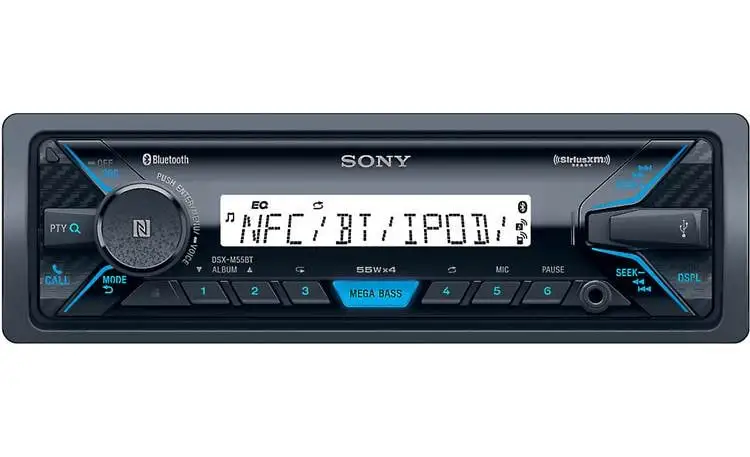
Readability in real outdoor conditions also emerges as a consistent win. Sunlit helms punish weak displays, but several buyers say this one holds up. Best Buy reviewer irishk wrote: “good visibility in the sun.” Best Buy reviewer sailor ash went deeper into why the screen matters for older users: “the readout is against a light grey background so i can actually read it… bonus is it looks very nice installed and the lights are dimable.” For boaters who don’t want to squint at the helm—or who cruise at night—those details are not cosmetic; they change usability.
Remote control and cockpit convenience are another recurring benefit story—especially for cabin boats and sailboats where the unit may be installed away from the helm. Best Buy reviewer rgambino noted: “the remote comes in handy as i keep that near the cockpit area.” That matches the broader “boat use-case reality” described in BestAdvisor’s feature feedback, where someone wished for even more remote control: “i 'd like to be able to control the radio , volume , etc. from the cockpit of the sailboat.”
After that praise, the biggest “universal” theme is simply that many owners feel it’s a dependable everyday receiver in harsh-ish environments—when installed and used appropriately. Best Buy reviewer dougw said: “got this for a jeep cj that rarely has a top on it . it has held up to the weather and is simple to use.” That kind of testimonial doesn’t prove waterproofing, but it shows why buyers gravitate to a “marine” unit for exposed vehicles.
Common Complaints
The most pointed complaints cluster around edge cases: connectivity failures, control ergonomics in motion, and expectations mismatched to what “marine” implies. On Bluetooth, there’s a split between “just works” streaming and failures that undermine the product’s core value. BestAdvisor’s collected feedback includes: “after two months the bluetooth stopped working,” which is especially painful for users who primarily stream rather than use FM/AM.
Compatibility complaints also show up in older-device contexts. BestAdvisor “connectivity” feedback warns: “it wouldn't connect with my phone ( galaxy s 3 ) be aware it only works with some bluetooth systems.” For buyers keeping older phones on a boat (common as “boat phones”), this is a meaningful risk: if Bluetooth is your main input, a mismatch turns the unit into an expensive radio-only solution.
Ergonomics at sea get called out in a very specific way that feels like it could only come from real use on the water. BestAdvisor “features” feedback reports: “menu selections can become confusing especially when trying to lower volume and accidentally pushing the volume knob in due to wave action.” That’s not a dealbreaker for everyone, but it’s a warning for rough-water boaters: interface design that’s fine in a car can get fussy when the boat is bouncing.
Some complaints are about missing or frustrating details tied to SiriusXM. Best Buy reviewer yesmen said: “it came without a radio id which you need to connect the siriusxm station . i 'm trying to get it from sony.” For SiriusXM-focused buyers, setup friction like that can sour the experience even if audio performance is strong.
Finally, there are “marine” expectations concerns—whether the unit is truly meant to get wet. BestAdvisor’s key-specs feedback includes the blunt skepticism: “it says many times on the box and in the book not to get the radio wet . so , i don't think that makes it a marine product personally.” That complaint doesn’t deny that it resists humidity/UV; it challenges the buyer assumption that “marine” equals “waterproof.”
Divisive Features
Water resistance is the divisive headline because user experiences (and interpretations) differ. Some owners describe the unit surviving exposure: BestAdvisor feedback states, “great marine stereo . been wet multiple times now and still works great.” Others highlight a cautionary message about avoiding water, creating a practical contradiction in how “marine grade” gets understood: “it says many times on the box and in the book not to get the radio wet.”
The other divisive point is system expansion via RCA outputs. For casual users, “two pre-outs” is enough to add a sub or external amplification. For builders planning full 4-channel amplification from pre-outs, Revain reviewer Matt L. flags disappointment: “2 pre outs - rear and sub… they aren't front and rear like my old sony.” That divide isn’t about quality—it’s about whether the architecture matches your intended system.
Trust & Reliability
Across retailer reviews, the tone leans heavily positive, but digging deeper into user reports surfaces reliability anxieties around specific subsystems. BestAdvisor’s collected feedback includes a clear long-term failure concern: “after two months the bluetooth stopped working,” and even a remote-range frustration: “the range for the remote was 3 feet.” Those reports matter because they target the convenience features that drive many purchases.
There’s also a theme of customer-service dissatisfaction in third-party review text. On Revain, Sam L. wrote: “dissatisfied with sony service for this product… the product only works partially . does not work on aux… they refused to consider this a manufacturing defect.” For buyers who prioritize warranty support, that kind of story can weigh as heavily as the hardware specs.
From longer-use perspectives, Best Buy includes at least one multi-season durability anecdote. Best Buy reviewer dougw said they owned it “for 1.5 years” and reported: “it has held up to the weather and is simple to use.” That’s not a “6 months later” Reddit post, but it is a longer-term ownership note from a retail platform that suggests some units do endure exposed conditions.
Alternatives
Only one direct competitor appears in the provided data: the Sony MEX-M72BT (BestAdvisor comparison). The story isn’t “one is better for everyone,” but rather that the alternatives map to different priorities.
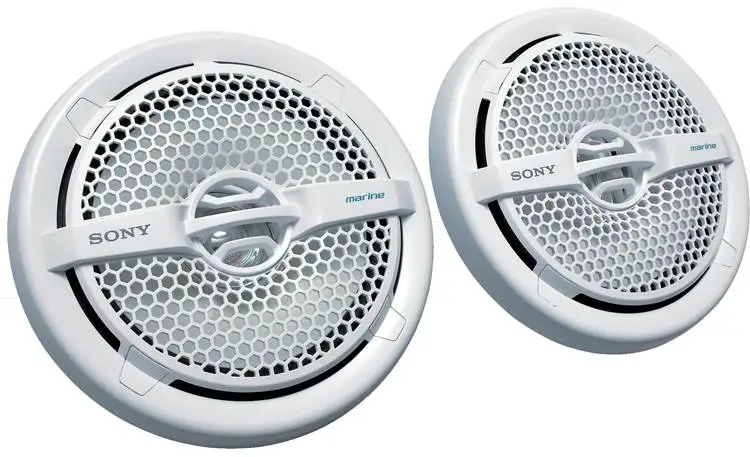
If you want a marine unit with a CD player and broader feature set, BestAdvisor positions the MEX-M72BT as a “marine cd receiver,” while the Sony DSXM55BT Bluetooth Marine Digital Media Stereo Receiver is explicitly “mechless” (no CD). That matters for boaters with a stash of discs or who want the redundancy of physical media. Meanwhile, people intentionally avoiding CDs tend to frame the DSX model as modern and shallow, which can help in tight installs (a theme echoed by Revain’s Byron P. noting the “depth… is significantly smaller” due to lack of CD).
User sentiment in the BestAdvisor comparison also reflects different sound expectations. One quoted complaint says: “i ended up going back to an old sony cassette player… which sounds superior,” while many others praise the DSX’s sound and power. So the alternative choice is less about brand and more about whether you want physical media, different illumination/controls, and how much you care about higher-end audio tuning.
Price & Value
At retail, the unit is commonly seen around the mid-$100s. Amazon lists it at $138 with a 4.4/5 rating across 697 reviews (Amazon specs data). Best Buy shows $139.99 with a 4.9/5 rating (23 reviews) and repeatedly highlights “sound quality, ease of use, bluetooth” as top positives (Best Buy).
On the resale market, eBay listings in the provided data show used pricing around $97.30 shipped (eBay: masumitrading listing) and new listings around $139 plus significant shipping in at least one case (eBay: cen automotive listing). That spread suggests two buyer strategies emerge naturally: bargain hunters can target used units around ~$100, while buyers seeking accessories/condition certainty pay closer to new-retail levels.
Community “value logic” tends to focus on performance per dollar rather than premium polish. Best Buy reviewer israel framed it plainly: “didn’t want to spend a fortune… this one worked perfectly.” Best Buy reviewer hawkeye echoed: “plenty of volume & extra bass for a good price.” If you’re outfitting a pontoon, older runabout, golf cart, or a Jeep with intermittent exposure, those stories make the value case. If you’re building an amplified multi-zone setup, the Revain pre-out warning (“rear and sub”) becomes a “know before you buy” value limiter.
FAQ
Q: Is the Sony DSXM55BT actually waterproof?
A: User feedback is conflicting. BestAdvisor feedback includes “been wet multiple times now and still works great,” but another buyer warned: “it says many times on the box and in the book not to get the radio wet.” Many owners treat it as weather-resistant rather than fully waterproof.
Q: How good is the sound without an external amplifier?
A: Many buyers say it gets loud and sounds strong on stock or modest speakers. Best Buy reviewer hawkeye noted: “plenty of volume & extra bass for a good price,” and Best Buy reviewer israel called it “very loud with decent midrange” in a golf cart setup.
Q: Does Bluetooth pairing work reliably?
A: Often yes, but not universally. BestAdvisor feedback says “the bluetooth connects well with no issue” and “bluetooth works great,” but also includes: “it wouldn't connect with my phone ( galaxy s 3 )” and “after two months the bluetooth stopped working.”
Q: Can I run a full 4-channel amplifier from RCA pre-outs?
A: Some users say this is a trap for system builders. On Revain, Matt L. wrote: “there are 2 pre outs - rear and sub… they aren't front and rear.” If your plan requires dedicated front and rear pre-outs, confirm your wiring strategy before buying.
Q: Is it easy to control on a boat in rough water?
A: Not always. BestAdvisor feature feedback warns that “menu selections can become confusing… accidentally pushing the volume knob in due to wave action.” For calmer cruising, multiple Best Buy reviewers still describe it as easy to use and easy to install.
Final Verdict
Buy if you’re a DIY boater, golf cart owner, Jeep/Harley rider, or pontoon upgrader who wants strong volume, clear readability, and simple Bluetooth streaming. Best Buy reviewer kimberly summed up that “easy install” satisfaction: “highly satisfied… easy install.”
Avoid if your plan depends on guaranteed older-phone Bluetooth compatibility or you’re building a multi-amp setup expecting front/rear RCA pre-outs—Revain reviewer Matt L. cautioned: “2 pre outs - rear and sub.”
Pro tip from the community: if FM reception matters, treat the antenna/ground as part of the “system,” not an afterthought—Best Buy reviewer rgambino advised: “make sure you properly have a good ground and antenna… for clear audio while using the fm radio.”