Shure SB900B Battery Review: Conditional Buy (8.3/10)
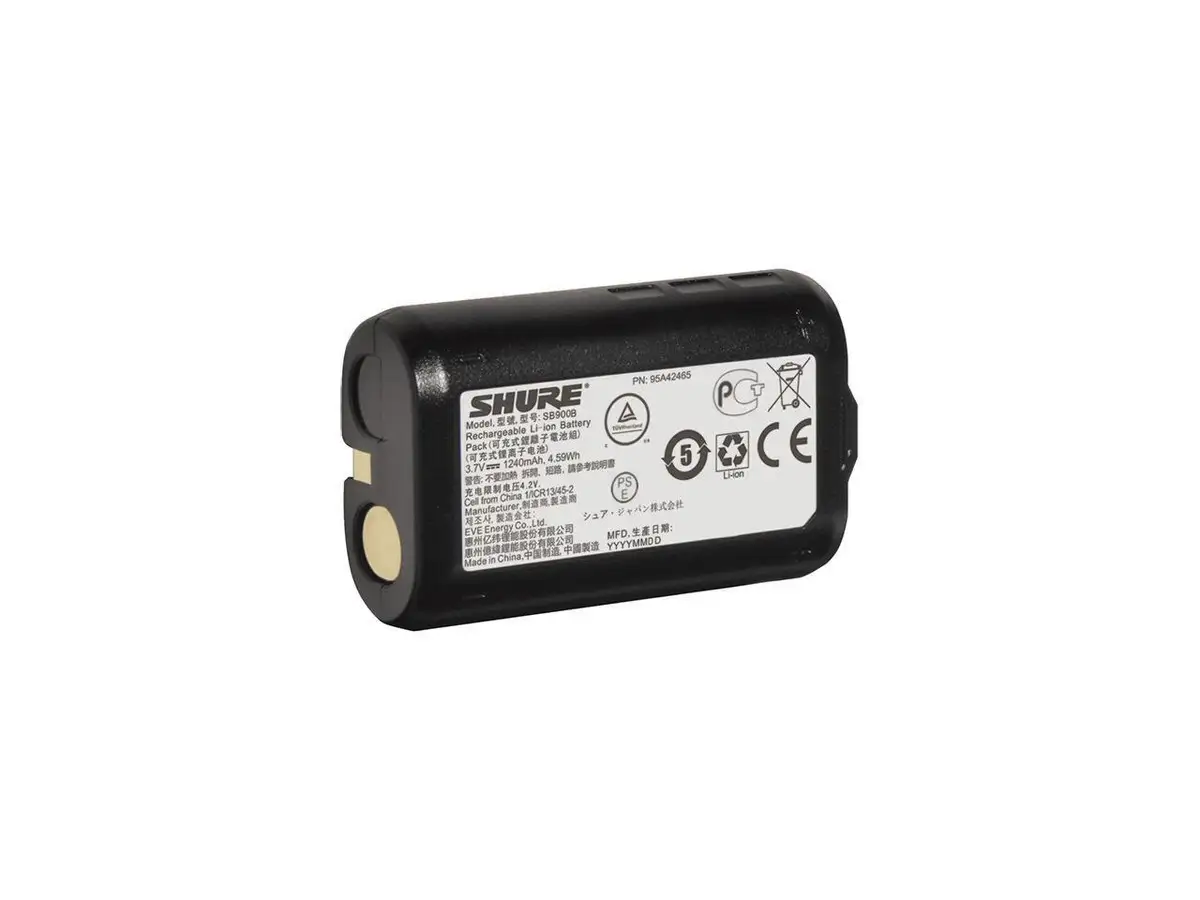
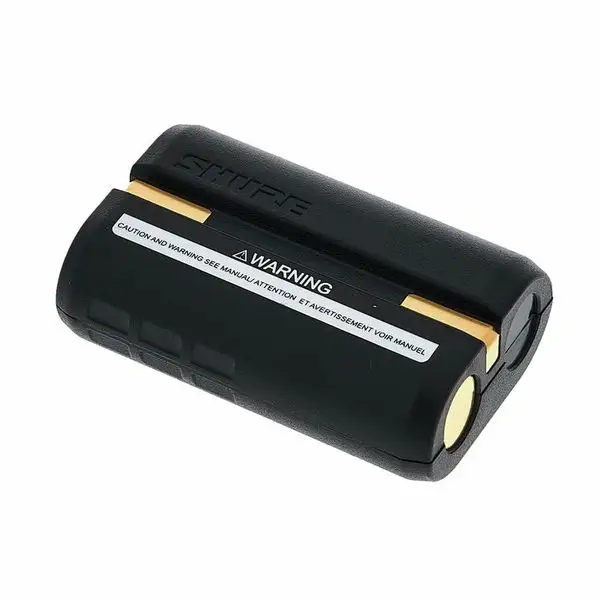
“Up to 12 hours” sounds definitive—until the fine print starts whispering “6 to 7.5 hours” on certain systems. That tension between headline stamina and real-world variance is the story of the Shure SB900B Rechargeable Lithium-Ion Battery: a pro-focused pack that earns strong ratings, but demands you understand which Shure ecosystem you’re actually running. Verdict: Conditional buy, 8.3/10.
Quick Verdict
For Shure users who want predictable power and metering: Yes (Conditional). If you’re expecting a guaranteed 12-hour runtime across every compatible bodypack/handheld: No—the sources themselves warn that runtime depends on the system.
| Decision Driver | What the data shows | Who it’s for |
|---|---|---|
| Compatibility | Works with Axient Digital, ULX-D, QLX-D, and PSM 1000/900/300 (P3RA) | Touring pros, venues, houses of worship |
| Runtime expectations | “Up to 12 hours” but also “6 to 7.5 hours on certain systems” (Sweetwater) | Anyone running long shows |
| Replacement clarity | Amazon says it’s a “direct replacement for the SB900A” with slightly reduced runtime | Owners upgrading from SB900A |
| Charging ecosystem | Compatible with SBC800, SBC200, SBC10-100, and rack options (Shure France) | Multi-pack and rack workflows |
| Market confidence | Amazon rating 4.6/5 from 212 reviews | Buyers wanting social proof |
| Availability | Amazon listing shows “currently unavailable” | Buyers needing immediate stock |
Claims vs Reality
A recurring pattern emerged: many “claims” in the dataset aren’t user complaints—they’re retailer/manufacturer-style statements that sometimes contradict each other across platforms. Digging deeper into those inconsistencies is crucial, because battery expectations are often set by marketing copy, not by how a PSM or ULX-D actually drains power at your settings.
Claim 1: “Up to 12 hours of continuous use.”
Guitar Center’s product copy positions the SB900B as lasting “through even the longest gigs,” stating it “provides up to 12 hours of continuous wireless freedom on a single charge.” Sweetwater repeats that top-line promise too: “gives you up to 12 hours of continuous use.” For a monitor engineer running PSM packs across an entire festival day, “up to 12” reads like all-day insurance.
While marketing claims “up to 12 hours,” the data suggests real runtime is conditional even in the same listing ecosystem. Sweetwater adds an asterisked correction that changes the practical takeaway: “note: the sb900b battery has 6 to 7.5 hours of charge on certain systems.” That internal contradiction matters most to users scheduling double-sets, rehearsals, and changeovers—because “up to” doesn’t tell you whether you’ll land at 12 hours or closer to a single show plus soundcheck.
- Source: Guitar Center listing text (community/retailer copy)
- Source: Sweetwater listing text with runtime caveat
Claim 2: “Direct replacement for SB900A.”
Amazon’s specs frame SB900B as straightforward: “functionally, this battery (sb900b) is a direct replacement for the sb900a and works with all of the same products and charging devices.” For working users, that’s the difference between a smooth upgrade and a compatibility headache, especially if you already own docks like the SBC200 or a rack charger.
But Amazon also answers its own Q&A with a caveat: “the only difference is a slight change in battery runtime.” It even quantifies the drop depending on system: AD and ULXD shift from “9 hours (sb900a) to 8:30 hours (sb900b),” and QLXD from “9:30 hours… to 8:55 hours.” So the “direct replacement” claim holds operationally, while runtime expectations should be adjusted—especially for anyone who bought SB900A specifically for squeezing out that extra half-hour buffer.
- Source: Amazon specs and Q&A runtime comparison
Claim 3: “Accurate runtime metering… down to the second.”
Guitar Center states the SB900B has “a built-in runtime meter that displays remaining usage down to the second,” and Sweetwater echoes the same metering theme: “you can easily see how much juice you have left in minutes and in seconds.” For RF techs and performers, that’s not a luxury feature—it’s operational clarity that can prevent mid-set surprises.
Yet the dataset doesn’t include first-person, long-term user stories about whether this metering remains accurate after months of cycles, or how it behaves under temperature stress. What is present is a safety-related claim tied to heat: Sweetwater describes an “automatic shut off… at 140°F,” and Guitar Center repeats that feature. The metering promise reads like a system-level advantage, but the evidence here is primarily platform copy rather than detailed user testimony.
- Source: Guitar Center listing text
- Source: Sweetwater listing text
Cross-Platform Consensus
The strongest theme isn’t hype—it’s ecosystem fit. Across Amazon’s spec-heavy bundle listing, Shure’s own compatibility pages, and retailer descriptions, the SB900B is treated less like a generic battery and more like a component in a managed wireless workflow. Digging deeper into user-facing implications, the SB900B is most compelling for people who already live inside Shure’s Axient Digital, ULX-D/QLX-D, or PSM universe and want fewer disposable AA surprises.
Universally Praised
A recurring pattern emerged around system compatibility. Multiple sources align on where this pack belongs: Connection lists it for Axient Digital (AD1/AD2/AD3), ULX-D, QLX-D, plus PSM 1000/900/300; Shure France repeats essentially the same compatibility matrix; and Amazon’s bundle headline targets P3RA, P9RA+, and P10R+ receivers along with ULX-D/QLX-D/AD transmitters. For a touring musician or monitor tech, that breadth means the same battery type can standardize power across a mixed rig.
Another near-universal praise in the dataset is the charging ecosystem support. Shure France spells out compatible chargers: “chargeur… sbc800,” “sbc200,” and “sbc10-100,” plus rack solutions like “sbc-ax dual-bay rack mount charging station.” Amazon’s bundle itself is literally charger + battery, reinforcing that the product is often purchased as part of a docked workflow. For a venue tech managing multiple channels nightly, docked charging is the difference between “we hope the AAs last” and a repeatable routine.
A third consistent positive is the professional framing of reliability and predictability, even when expressed as retailer language rather than direct user quotes. Sweetwater pitches “extended run times and accurate battery life metering,” while Guitar Center emphasizes “consistent power delivery throughout its lifespan.” For broadcast or corporate events where failure is visible and costly, the product is positioned as risk management rather than convenience.
- Compatibility repeatedly cited across Amazon, Shure, Connection, Sweetwater, and Guitar Center
- Charging compatibility cited explicitly by Shure France (SBC800/SBC200/SBC10-100 and rack options)
- Metering and “consistent power delivery” emphasized in retailer descriptions
Common Complaints
The biggest “complaint” signal in the provided data isn’t an angry review—it’s runtime ambiguity. Sweetwater’s own note undercuts the top-line “up to 12 hours” with: “the sb900b battery has 6 to 7.5 hours of charge on certain systems.” That creates a predictable frustration point for performers who plan based on a headline number and later discover their specific bodypack/transmitter configuration drains faster.
Another recurring pain point is availability and regional shipping, which hits working professionals hardest when they’re trying to solve a problem quickly. Amazon’s bundle listing is flagged “currently unavailable,” with “we don't know when or if this item will be back in stock.” Meanwhile, the Guitar Center Singapore listing states, “this item doesn't currently ship to united states.” For users replacing batteries ahead of a tour or festival run, “can’t buy it where I am” becomes the practical downside regardless of how good the battery is.
A quieter but notable issue is price dispersion and value uncertainty across platforms. Connection lists SB900B at $120.63; Sweetwater shows $99.99 on promotion; a Bounty Music listing shows $139.00; and eBay ranges from $99.99 new listings to used entries as low as $60 via PicClick’s tracked sale. For budget-conscious buyers, that kind of spread can feel like a penalty for buying at the wrong time or from the wrong seller.
- Sweetwater caveat: “6 to 7.5 hours… on certain systems”
- Amazon: “currently unavailable” (bundle listing)
- Guitar Center: “doesn't currently ship to united states” (SG listing)
- Wide pricing spread across retail and resale markets
Divisive Features
The most divisive “feature” is actually a marketing promise: the “up to 12 hours” claim. For some users and systems, “up to 12” may match expectations; for others, Sweetwater’s 6–7.5-hour note suggests the battery will feel merely adequate rather than exceptional. This divide will mostly track with which Shure system you run, your output power, and usage pattern—variables the listings mention, but don’t standardize.
A second divisive point is the SB900A vs SB900B upgrade story. Amazon frames SB900B as a “direct replacement” while also documenting a measurable runtime decrease versus SB900A in several system scenarios. For an owner who values compatibility above all, “works with all the same products and charging devices” is the win. For a user who upgraded expecting equal or better endurance, the documented drop from 9:00 to 8:30 (or 9:30 to 8:55) may feel like a step back.
- While officially framed as a “direct replacement,” Amazon documents a slight runtime reduction vs SB900A depending on system
Trust & Reliability
A recurring pattern emerged in how “trust” is signaled: platform ratings and official compatibility lists do most of the work here, not detailed long-term testimonials. Amazon shows 4.6 out of 5 stars across 212 reviews for the charger+battery bundle listing, which is a meaningful volume indicator for buyers who want social proof. Trustpilot data appears as a product page snapshot with “4,6 sur 5” but the text provided reads like store description rather than quoted reviewer comments, so it functions more like a rating signal than a narrative reliability audit.
Digging deeper into scam or counterfeit concerns, the eBay market data is where risk naturally rises—not because the dataset shows fraud reports, but because it shows “unbranded” labeling in a listing description and wide price variance. A new eBay listing appears at $99.99 “or best offer,” and the PicClick-tracked used sale hits $60 with the seller describing it as “excellent condition, lightly used, holds a charge well.” For buyers, the trust question becomes less about SB900B as a product and more about verifying authenticity and battery health when purchasing second-hand.
The missing piece in the provided data is Reddit-style “6 months later…” durability testimony. Despite a “Reddit (Community)” header, the content supplied is largely retailer copy and specs, not community threads with usernames and time-based follow-ups. That means long-cycle degradation, real-world charge retention over a season, and wear-and-tear stories can’t be responsibly summarized here.
- Amazon rating volume suggests broad buyer satisfaction (bundle listing)
- Resale market shows significant pricing variation and nonstandard listing language in at least one entry
Alternatives
Only one true alternative appears in the dataset by name: Shure SB900A. Amazon explicitly positions SB900B as the successor and quantifies the difference: SB900A is listed at 9 hours (AD/ULXD scenarios) versus 8:30 for SB900B, and 9:30 (QLXD) versus 8:55 for SB900B. For users who already own SB900A and are considering swapping across a fleet, the tradeoff isn’t compatibility—it’s whether that runtime delta matters in your production schedule.
Another “alternative” in practice is staying with disposable batteries, which Sweetwater indirectly addresses with “save big by ditching disposable batteries,” but the dataset doesn’t provide user quotes about cost savings over time. For a casual user who only powers a pack occasionally, disposables may still feel simpler; for frequent gigging or installed systems, the SB900B ecosystem is positioned as the professional move.
- Named alternative in data: SB900A (with slightly longer stated runtime in Amazon Q&A)
- Practical alternative implied: disposables (no user-quote cost stories provided)
Price & Value
The pricing picture is fragmented in a way that benefits patient buyers. Sweetwater lists the SB900B at $99.99 with “$19.00 off while supplies last,” while Connection lists $120.63. Other retailers in the dataset show higher sticker prices, like $139.00 at Bounty Music. That spread suggests buyers who can shop around—or wait for promos—may land meaningfully lower than MSRP-adjacent pricing.
On the resale side, the market signals liquidity and discounting. A new eBay listing appears at $99.99 (or best offer), while PicClick’s tracked sold example shows $60.00 for a used unit described as “lightly used” and that it “holds a charge well.” For a working musician building out multiple packs, used buys can stretch a budget—though battery health is hard to verify without cycle count and real runtime testing, which is not provided in the dataset.
Buying tips suggested by the data itself are simple: if you already own Shure chargers, confirm charger compatibility (Shure France lists SBC800/SBC200/SBC10-100 and rack solutions), and if you’re upgrading from SB900A, plan around the slight runtime reduction Amazon documents. The “value” proposition hinges less on raw capacity numbers and more on operational predictability—especially when matched to the right Shure system.
- New retail range in data: ~$99.99 to $139.00
- Used resale evidence: as low as $60.00 (sold listing via PicClick)
- Compatibility with existing Shure chargers is a major value lever
FAQ
Q: What Shure systems are compatible with the SB900B?
A: It’s listed as compatible with Shure Axient Digital (AD1/AD2/AD3), ULX-D, QLX-D, and personal monitoring systems like PSM 1000, PSM 900, and PSM 300 (P3RA). These compatibility claims appear on Shure’s own pages and multiple retailer listings.
Q: Does the SB900B really last 12 hours?
A: The listings say “up to 12 hours,” but Sweetwater also warns the SB900B “has 6 to 7.5 hours of charge on certain systems.” Amazon’s SB900A vs SB900B comparison also shows runtimes closer to 8:30–8:55 hours in several scenarios.
Q: Is SB900B a direct replacement for SB900A?
A: Amazon states it’s “functionally… a direct replacement for the sb900a” and works with the same products and charging devices. However, Amazon also notes SB900B has a “slight change in battery runtime,” with SB900A listed as slightly longer in multiple system examples.
Q: What chargers work with the SB900B?
A: Shure’s compatibility information (Shure France) lists the SBC800 (8-bay), SBC200 (2-bay), and SBC10-100 (single-bay) chargers, plus rack charging options like the SBC-AX dual-bay rack mount charging station. Amazon’s bundle also pairs SB900B with an SBC10-100.
Q: What’s the going price, and is used worth it?
A: New prices in the data range from about $99.99 (Sweetwater promo) to $139.00 (Bounty Music), with Connection listing $120.63. Used pricing can drop much lower (a PicClick-tracked sale at $60), but battery health and authenticity are harder to confirm from listings alone.
Final Verdict
Buy the Shure SB900B Rechargeable Lithium-Ion Battery if you’re a Shure Axient Digital, ULX-D/QLX-D, or PSM user who values docked charging compatibility and battery metering, and you’re willing to treat “up to 12 hours” as system-dependent. Avoid it if you need a guaranteed all-day runtime across every configuration—or if your buying plan depends on a single retailer’s stock staying consistent. Pro tip drawn from the listings: plan your show length around the caveats—Sweetwater’s “6 to 7.5 hours on certain systems” and Amazon’s documented SB900A-to-SB900B runtime drop are the real-world guardrails.