Shure Gator SH-BROADCAST1 Boom Arm Review: Conditional 6.6/10
A “deluxe” boom arm that some people call “completely unusable” is a hard contradiction to ignore. That tension is the story of the Shure Gator Deluxe Articulating Desktop Podcasting Mic Boom Arm (SH-BROADCAST1): on paper it promises quiet 360° rotation, long reach, and tidy cable routing—but real buyers are split between “extremely well built and high quality” and “falls immediately when I try to put it in position.” Verdict: Conditional buy — 6.6/10.
Quick Verdict
Conditional. If you use a lighter mic and don’t constantly reposition, many owners are happy with the build and cable channel. If you plan to mount heavier dynamics like an SM7B and repeatedly adjust joints, multiple reports point to slipping, stiff movement, and occasional breakage.
| What the data says | Evidence from users | Who it affects |
|---|---|---|
| Looks/feels premium to some | A verified buyer on Amazon noted: “It is extremely well built and high quality.” | Streamers/home studios that want a “matched” setup |
| Cable management is a standout | A verified buyer on Amazon noted: “having the cable channel on it is an addition… it makes the entire set up look that much smoother.” | Desk setups where clutter matters |
| Adjustment can be frustrating | A verified buyer on Amazon noted: “too stiff, limited, and difficult to use” and “completely unclear how to adjust it.” | Beginners and frequent repositioners |
| Holding position is inconsistent | A Sweetwater reviewer said: “issues holding position” and “it wouldn’t hold any position.” | Anyone needing stable articulation |
| Durability/QA concerns show up repeatedly | A verified buyer on Amazon noted: “base elbow broke within two hours.” | Heavy mic users and those stressing joints |
Claims vs Reality
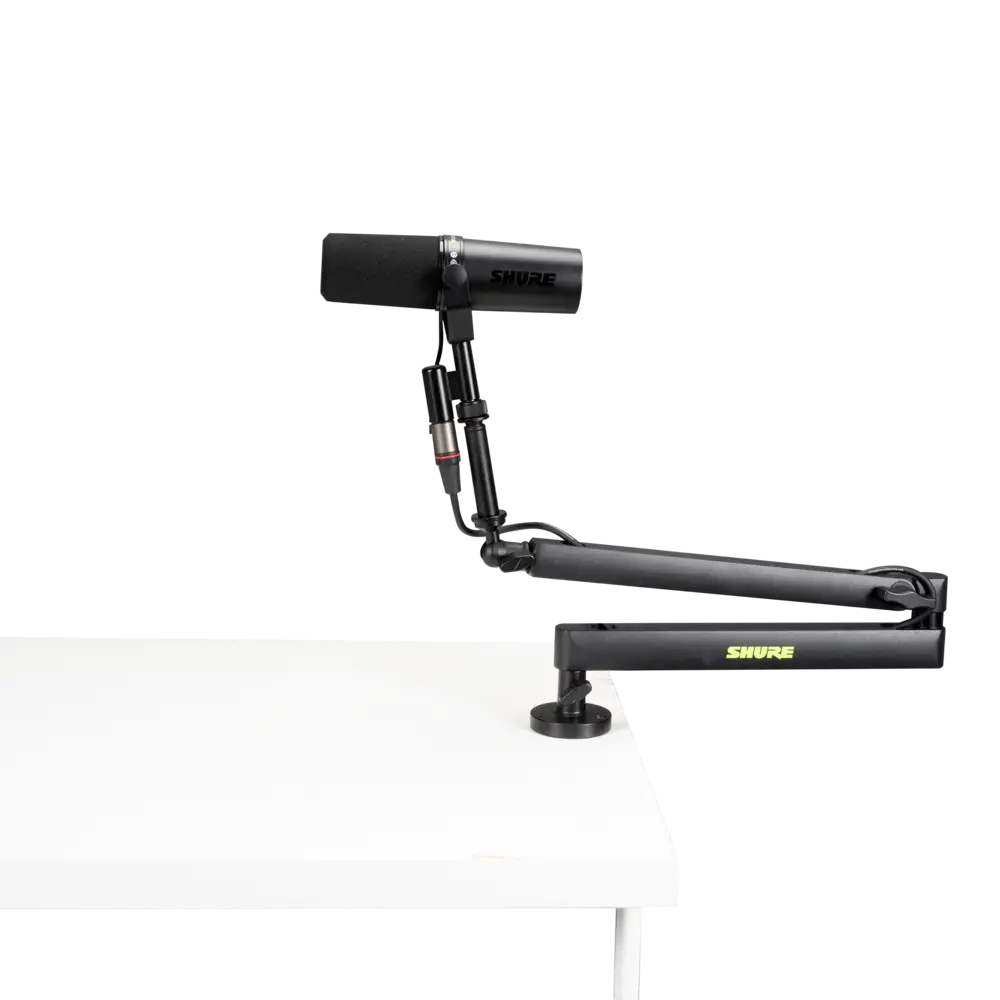
Shure’s official accessory pages and the Amazon listing frame the Shure Gator Deluxe Articulating Desktop Podcasting Mic Boom Arm as a clean, flexible, “quiet” solution: it “quietly rotates full 360-degrees” and is designed to be compatible with popular Shure models like the SM7B and MV7, with a cable channel for organization (Amazon specs; Shure UK/US accessory pages).
Digging deeper into user reports, that compatibility claim collides with multiple real-world stories about struggling to keep heavier mics stable. A verified buyer on Amazon wrote bluntly: “despite marketing making it seem like this arm was designed for the sm7b my arm… was a little too weak to hold up the sm7b,” adding that the mic would “start to sink down and need constant re adjustment.” Another buyer echoed the load anxiety in longer-term terms: “the shure sm7b pushes this boom arm to the limit… you have to tighten… to a questionable amount of tightness for it to (maybe?) hold your $400 microphone” (Amazon Ratings and Reviews feed).
The “easy positioning” promise also has a reality gap for anyone who adjusts frequently. While the marketing emphasizes smooth articulation and rotation, multiple owners describe a stiff mechanism and awkward adjustment process. A Sweetwater reviewer called the stand “stiff” and said “it does not move smoothly,” while another said it was “hard to adjust” and “falls immediately” when positioned (Sweetwater reviews). Even on Amazon, a buyer complained that it arrived with “no instructions” and that knobs “didn’t function the way I would expect,” which is a very different experience than “hassle-free set up” implied by product copy (Amazon customer reviews).
Finally, “durability” is a major fault line. Official descriptions focus on “sturdy construction” (Amazon specs; Shure pages), but failures show up across platforms. A verified buyer on Amazon reported: “base elbow broke within two hours,” describing a loud “popping noise” and a joint that “completely locked up” (Amazon customer reviews). On Sweetwater, a reviewer summarized their batch experience: “I received four of them and all of them have issues holding position,” calling that “very shocking” for a Shure-branded product (Sweetwater reviews). While not everyone sees breakage, the repetition suggests inconsistent QA rather than isolated misuse.
Cross-Platform Consensus
A recurring pattern emerged: when the arm works as expected, people praise its “premium” feel and clean desk aesthetic; when it doesn’t, the failure mode is immediate and infuriating—slipping joints, broken clamps, or a design that demands extreme tightening. This is not a subtle disagreement about preferences; it’s a split between owners who feel they got a pro tool and owners who feel they got a lemon.
For creators who care about presentation—streamers, podcasters on camera, or anyone trying to keep a desk “broadcast-ready”—the cable routing and overall look are repeatedly cited as the payoff. A verified buyer on Amazon said the cable channel “makes the entire set up look that much smoother,” and another appreciated the same concept even while nitpicking: “the cable management channels are great” and the arm “looks really good and hides the cable in a pleasant way” (Amazon customer reviews; Amazon Ratings and Reviews feed). That matters for people whose mic arm is always in frame.
There’s also a subset of buyers who genuinely feel the build is upmarket and stable. A verified buyer on Amazon described it as “extremely robust,” and another went further into the tactile impression: “some boom arms just don’t live up to the hype… this isn’t one of them,” specifically referencing an SM7B’s heft (Amazon customer reviews). Over on Sweetwater, the positive outlier reads like a love letter: “built quality is impressive… no unwanted noise or wobble,” and “supports the microphone’s weight without any issues” with an SM7DB (Sweetwater reviews). For those users, the promise of a “quiet” arm and “secure fit” feels real.
Yet the complaints are loud, specific, and consistent about how it fails. If you’re the kind of user who moves a mic in and out multiple times a day—hybrid workers, gamers switching between keyboard space and mic placement, or podcasters who stow gear—several reports describe the articulation as fighting you. A Sweetwater reviewer said the arm was “essentially stuck in one position no matter how much you tighten or loosen the bolts,” and another called it “incredibly cheaply made, hard to adjust” (Sweetwater reviews). On Amazon, a buyer framed it as a learning barrier: “I’m still learning and it was completely unclear how to adjust it” (Amazon customer reviews). That’s a bad match for beginners expecting a “deluxe” experience.
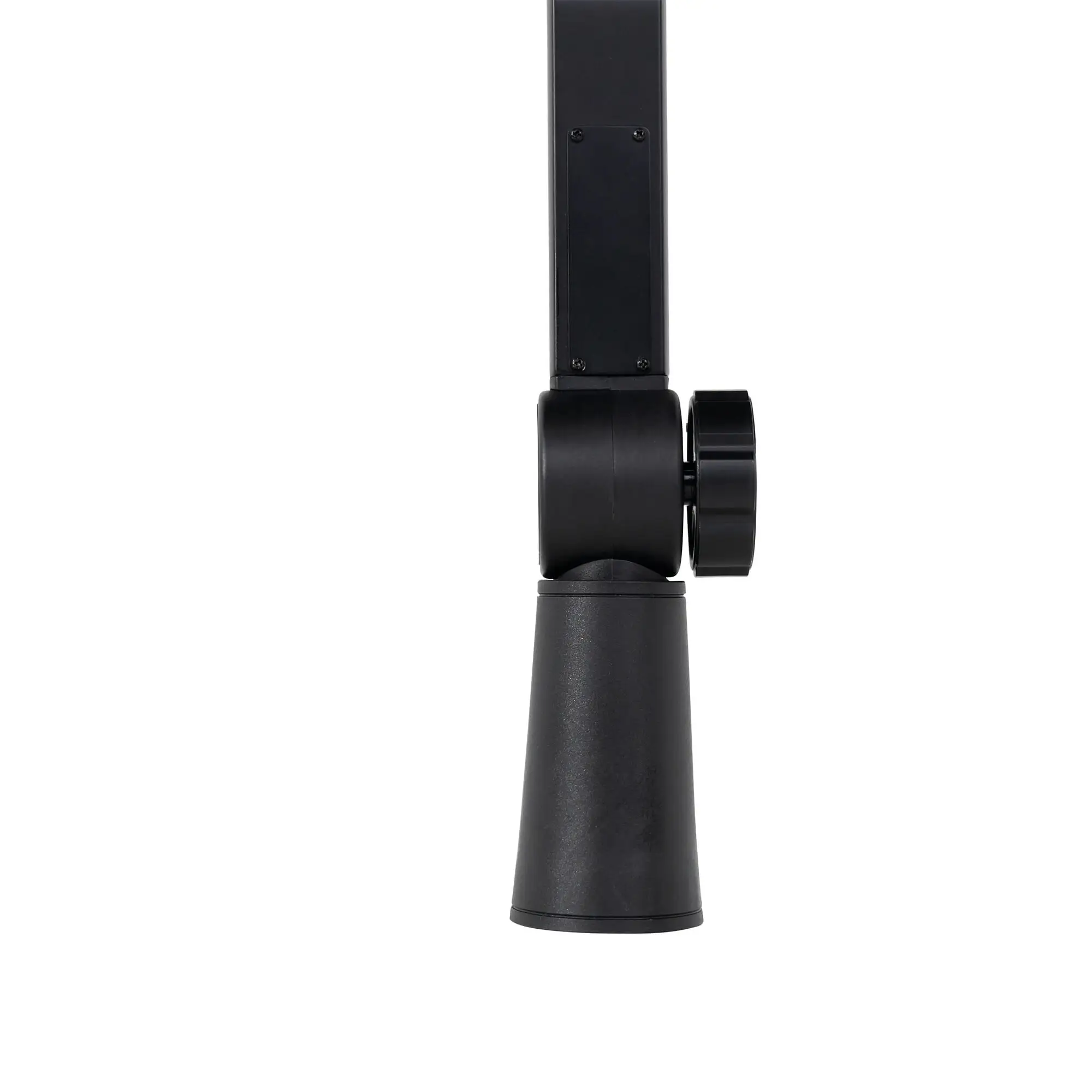
The most worrying common thread is durability and critical parts failing. A verified buyer on Amazon reported a catastrophic early failure: “the first elbow made a loud popping noise and jumped out of the base/clamp,” after less than two hours, followed by a joint that “completely locked up” (Amazon customer reviews). Another set of complaints targets material choices: a buyer in the Amazon Ratings and Reviews feed warned “plastic tightening piece breaks/cracks easily,” arguing “this piece should’ve certainly been metal instead of plastic.” When the “crucial” tightening components are perceived as weak, users start treating the arm as a temporary solution rather than a long-term fixture.
Divisive features show up most clearly around adjustment hardware and “set-and-forget” vs “frequent tweak” use. Some users love the stability once tightened; others resent the effort needed to keep it there. A buyer in the Amazon Ratings and Reviews feed said: “if you can set it up and never have to move it, then this product is for you,” while also wishing it could be tightened “with a knob instead of an allen wrench.” Meanwhile, Amazon reviewers praising it emphasize the end state—“handles weight load with ease” and “works great easy to use and position”—suggesting that for certain desks, mic weights, and tolerance for tightening, it delivers (Amazon customer reviews). That split implies the arm may be sensitive to exact mic weight, leverage (how far extended), and how much repositioning you do.
Trust & Reliability
Across sources, the biggest trust issue isn’t counterfeit fear—it’s inconsistency. When a Sweetwater reviewer says “I received four of them and all of them have issues holding position,” it reads like a quality control problem rather than a one-off defect (Sweetwater reviews). Another Sweetwater customer described receiving one with a “center joint damaged,” and characterized the whole arm as “fragile” and “stuck in the same position” (Sweetwater reviews). These reports cluster around the same failure themes: joints that don’t move smoothly, knobs that don’t clamp reliably, and clamps that fail.
Long-term reliability stories trend grim when the arm is stressed. One Sweetwater reviewer wrote that “in less than a year… the clamp is completely broken” and that it “completely fallen apart” after moving it only “a handful of times” (Sweetwater reviews). On the other hand, there are also users who feel it’s stable enough for heavier mics, especially when properly tightened, with Amazon reviewers calling it “stronger than I anticipated” and “very sturdy” (Amazon customer reviews). The investigative takeaway: buyer satisfaction seems highly dependent on getting a solid unit and matching it to a stable, not-overextended setup.
Alternatives
Only a few competitors are explicitly mentioned in the provided data, but they matter because users bring them up as reference points. In the Amazon Ratings and Reviews feed, one buyer compares it to “a good mic arm (rhode, elgato, etc.),” arguing this Shure/Gator arm is “half the cost” and therefore a “stepping stone.” That frames the product as a mid-tier option: attractive and clean-looking, but not confidence-inspiring for expensive microphones.
A more direct alternative appears indirectly through the product’s lineage. The benonistudio review notes the SH-BROADCAST1 is “very similar to the gator frameworks pro 4000 series mic arm,” describing it as “spring loaded” with “tension knobs,” and praising “operation is quiet, no squeaking” (benonistudio). For buyers who trust Gator’s own branded ecosystem more than a Shure-licensed variant—or who find better pricing—this mention suggests looking at the closely related Gator Frameworks arms.
Price & Value
Pricing in the dataset is messy, which itself mirrors real shopping conditions: the Amazon specs block shows $194.00, while the Amazon “store” snippet shows $99.99, Sweetwater lists $119.99, and eBay listings cluster around $99.99–$131.31 (Amazon listing data; Sweetwater; eBay). For bargain hunters, that means value depends heavily on timing and retailer.
User feedback suggests the value proposition is strongest when you treat it as an aesthetic upgrade with cable management, not a forever arm for a heavy broadcast mic. A verified buyer on Amazon was happy pairing it with an MV7X for a “high-end set up,” praising the internal springs offsetting the weight (Amazon customer reviews). Meanwhile, buyers who paid premium prices and expected flawless articulation sound angrier: Sweetwater’s “worst piece of equipment I’ve ever owned” rant explicitly compares it to a cheaper stand they preferred (Sweetwater reviews). The higher the price paid, the less forgiving users seem to be about stiffness, plastic components, or joint slip.
Resale value signals are limited, but eBay shows ongoing sales volume (“54 sold” from one seller) and bulk discounts, suggesting the arm has liquidity in the secondary market at around the $100 mark (eBay listing). Practically, the buying tip implied by the data: aim for the lower end of observed pricing if you’re taking a chance, especially if your mic is heavy or you plan to adjust often.
FAQ
Q: Can the Shure Gator SH-BROADCAST1 actually hold an SM7B?
A: Sometimes, but it’s inconsistent. While the product is marketed as compatible with the SM7B (Amazon specs; Shure pages), multiple buyers report sagging or needing extreme tightening. A verified buyer on Amazon said it was “a little too weak to hold up the sm7b” and would “start to sink down.”
Q: Is it easy to adjust for beginners?
A: Not for everyone. Some owners call it smooth and sturdy, but others report confusion and stiffness. A verified buyer on Amazon wrote: “this product came with no instructions… it was completely unclear how to adjust it,” while a Sweetwater reviewer said it was “hard to adjust” and “falls immediately” when positioned.
Q: Does the cable management channel help in real setups?
A: Yes, this is one of the most consistent wins. A verified buyer on Amazon praised that the cable channel “makes the entire set up look that much smoother,” and another buyer in the Amazon Ratings and Reviews feed said the arm “looks really good and hides the cable in a pleasant way.”
Q: Are there durability or quality control issues?
A: Enough reports to take seriously. A verified buyer on Amazon said the “base elbow broke within two hours,” and a Sweetwater reviewer claimed they received four units and “all of them have issues holding position.” Another user complained that a “plastic tightening piece” began to crack after weeks (Amazon Ratings and Reviews).
Q: Is it worth the price?
A: Only at the right price and for the right mic. Prices vary widely in the data (Amazon, Sweetwater, eBay). Buyers who treat it as a mid-priced upgrade for lighter mics are happier; one reviewer called it a “stepping stone” versus “rhode, elgato, etc.” Heavy-mic users report more frustration.
Final Verdict
Buy the Shure Gator Deluxe Articulating Desktop Podcasting Mic Boom Arm if you’re a streamer or podcaster with a lighter mic (or an SM7B used close-in, not fully extended) who values clean cable management and a coordinated Shure-branded look—some owners call it “extremely well built” and “extremely robust” (Amazon customer reviews).
Avoid it if you’re mounting a heavy mic at long reach and plan to reposition constantly; multiple users describe arms that “won’t hold any position,” joints that feel “stiff,” and even early failures like “base elbow broke within two hours” (Sweetwater reviews; Amazon customer reviews).
Pro tip from the community: if you’re going to adjust it often, consider whether you’re comfortable with frequent tightening and the risk that “plastic” tightening parts “break/crack easily” (Amazon Ratings and Reviews feed).