Shure BLX288/PG58 Review: Conditional Buy Verdict 8.6/10
A one-star bombshell sits right next to thousands of happy buyers: one Amazon reviewer warned, “this is a counterfeit Shure BLX 288 / PG 58,” alleging “no channel scan at all” and that “only one transmitter can connect to the receiver.” That single report clashes hard with the broader story—but it sets the tone for what matters most with the Shure BLX288/PG58 Wireless Microphone System: when it’s genuine and set up correctly, many people describe it as remarkably dependable; when something’s off (RF environment, expectations, or authenticity), the disappointment is sharp. Verdict: Conditional buy — 8.6/10.
Quick Verdict
For churches, karaoke hosts, and mobile DJs who want a straightforward dual handheld UHF setup, Shure BLX288/PG58 Wireless Microphone System is a Yes—conditional: buy from reputable sellers and match the right frequency band to your location.
| What the data suggests | Pros (from user feedback) | Cons (from user feedback) |
|---|---|---|
| Setup experience | “out of the box they worked perfectly” (Amazon) | Some users needed to learn pairing basics (“once I realized I needed to set the microphones to the receiver”) (Sweetwater) |
| Audio clarity | “nice and clear” spoken word (Amazon) | “adequate for most” singers vs higher expectations (Amazon) |
| Reliability / dropouts | “100% reliable connection” for weekly karaoke (Amazon) | “kept on dropping audio” in an office environment (Sweetwater) |
| Handling & build feel | “light weight and comfortable” (Amazon) | “plastic body…creates sound…when bumped” and “feel…underwhelming…almost feel hollow” (Amazon) |
| RF resilience | Works “through walls across that distance” and avoided prior interference issues (Amazon) | Some argue “nothing will beat…external antennas” (Sweetwater) |
| Buying risk | Strong brand trust motivates purchase (Amazon) | Counterfeit allegation: “very low quality fake Shure” (Amazon) |
Claims vs Reality
The marketing line is simple: “professional-quality sound,” “quick & easy set up,” “up to 14 hours” battery life, and “300 feet (100 m)” range. Digging deeper into user reports, those promises often hold—yet the same claims can unravel depending on environment and sourcing.
Claim 1: “Quick & easy set up.” One Amazon reviewer described a frictionless start: “out of the box they worked perfectly” and “the set up was easy as explained in the instructions.” That story came from a church context, where the practical win wasn’t tech bravado—it was intelligibility. They explained that with cheaper mics, speakers had to hold the mic “very close,” and people still couldn’t hear; with this set, the speaker could keep it “within 12 inches” and still come through “nice and clear.”
But on Sweetwater, a different kind of “easy” emerged: the setup was still quick, yet not mindless. A Sweetwater reviewer admitted, “being a typical guy i didn't need any directions…or so i thought,” then noted that pairing the mics to the receiver was the key step—“so easy…i was up and running (approx. 5 min).” The gap here isn’t that setup is hard; it’s that “easy” still assumes you’ll do the basic syncing correctly.
Claim 2: “Reliable signal” and big range. Official specs cite “up to 300 feet (100 m).” Multiple Amazon users back the broader reliability idea in real venues: one said their system was “100% reliable connection” for “weekly karaoke,” adding that the receiver’s auto search selects “the most interference free channel” and they’d “never experienced any interference.” Another described two receivers in buildings “about 200' apart” with receivers mounted “high (10-15')” and mics working “through walls across that distance.”
Yet Sweetwater includes a blunt counterexample: “with the internal antenna it just didn't make it for our office…dropping audio…very embarrassing.” That reviewer emphasized they’d considered line-of-sight and frequency issues and still couldn’t resolve it, concluding, “nothing will beat an external antennas.” While Shure positions the BLX receiver design as compact and simple, at least one user story suggests that some environments expose the limits of that simplicity.
Claim 3: “Professional sound.” Many comments align with that promise in spoken word and karaoke contexts. An Amazon karaoke user praised “clear and true” sound, and another church buyer called it “pure crisp sound, no feed back, great range.” But “professional” is also where expectations collide with physical feel: one reviewer said, “they sound great,” but the mics felt “so light they almost feel hollow,” and didn’t match what they expected from a pricier system. The reality: sound quality may land better than tactile “premium” cues for some buyers.
Cross-Platform Consensus
A recurring pattern emerged across Amazon and Sweetwater: when buyers talk about the Shure BLX288/PG58 Wireless Microphone System, they don’t just praise “wireless” in the abstract—they describe specific social situations (church announcements, duets, mobile DJ events) where failure would be public and embarrassing. That’s why “reliability” stories feel so central.
Universally Praised
Clear spoken word in real rooms. For houses of worship, clarity isn’t a luxury; it’s the whole point. An Amazon church reviewer contrasted it against prior budget mics that forced people to speak too close and still weren’t heard. Their payoff was simple: “their voice comes out nice and clear,” even when held “within 12 inches.” Another buyer framed it as a dramatic upgrade: “wow what a difference these mics make…pure crisp sound.”
For karaoke hosts, the same clarity becomes confidence. One Amazon reviewer called it “best wireless system i’ve ever used for karaoke,” praising “clear” sound and “good battery life.” The implication for a weekly host is obvious: if your night depends on consistent mic performance, “months now” of steady operation matters more than lab specs.
Fast setup that feels practical under pressure. Sweetwater buyers repeatedly described quick starts. One said, “really easy setup, great sound.” Another, facing a deadline—“within 4 hours of a gig”—still reported that “right out of the box it was simple to set up,” and after a brief realization about syncing, they were running in about “5 min.” For mobile DJs and live-sound folks, that’s the difference between calm and chaos.
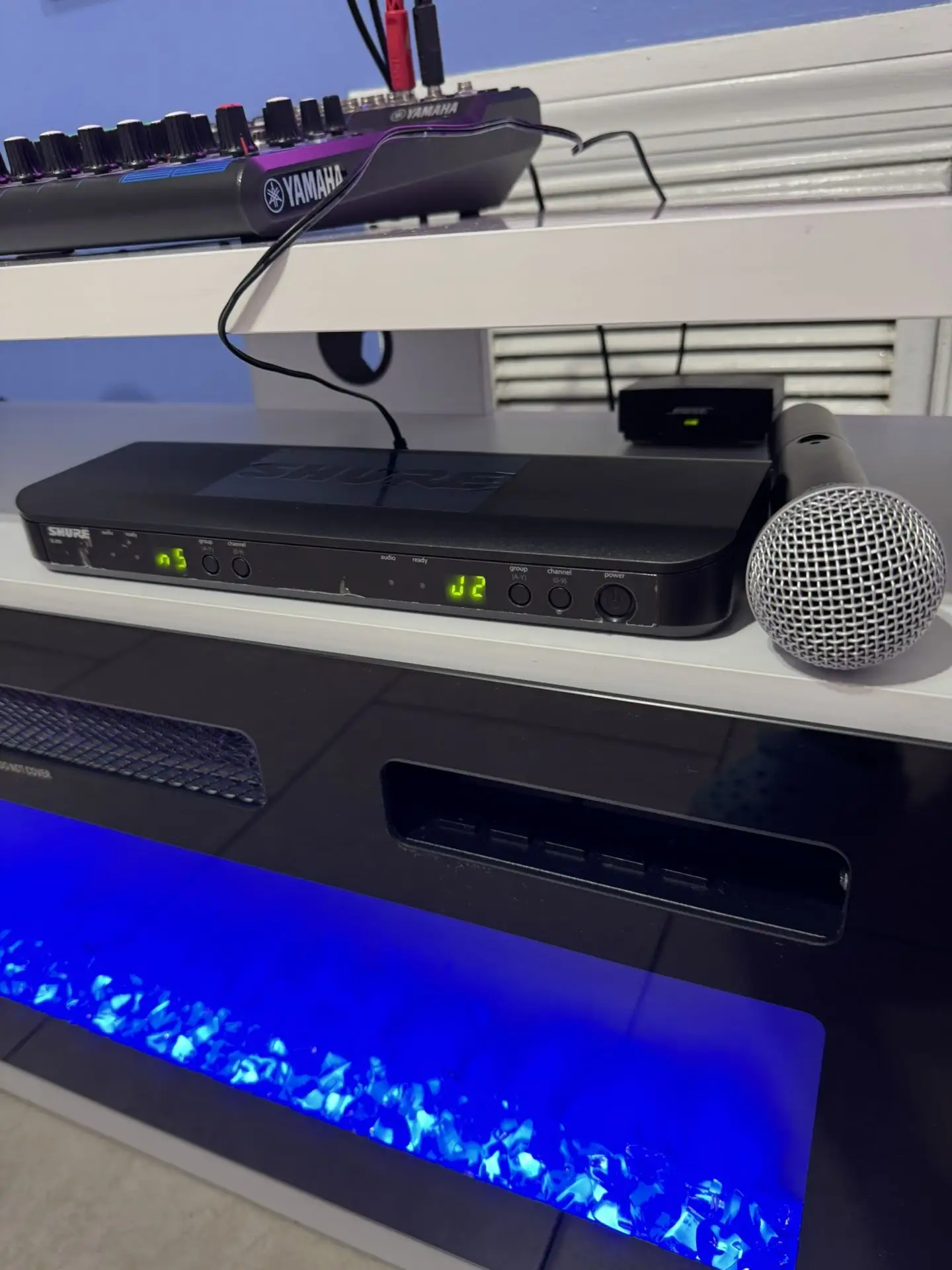
Range and resilience (in some environments). A striking Amazon story came from someone operating across two buildings: with receivers mounted 10–15 feet high, the mics worked “through walls across that distance,” and prior issues from a nearby “cell tower” stopped being a problem: “not any longer.” Sweetwater echoes the surprise from a different angle: one reviewer liked that the receiver “has no antennas,” yet they got “great reception…even between walls” and “without any drop outs.” For users who want a compact rig, these anecdotes are the strongest endorsement of the BLX88 tabletop receiver approach.
After those narratives, the practical praise clusters into a few recurring themes:
- Clear intelligibility for church announcements and spoken word (Amazon)
- Quick pairing/setup once the syncing step is understood (Sweetwater)
- Strong real-world reliability for karaoke and small-to-mid venues (Amazon)
- Range that can work “between walls” for some setups (Amazon, Sweetwater)
Common Complaints
Digging deeper into negative experiences, the most serious complaints aren’t about tone or warmth—they’re about trust and stability.
Dropouts in challenging indoor environments. The harshest Sweetwater account said the system “kept on dropping audio…very embarrassing” in an office setting and concluded “nothing will beat…external antennas.” That complaint matters most for corporate presenters and office installs where Wi‑Fi congestion, building materials, or reflective RF conditions can turn “wireless freedom” into intermittent muting. It’s also a reminder that “I ruled out all of them” (line of sight, frequency checks) is still a user’s best effort—not a controlled diagnosis.
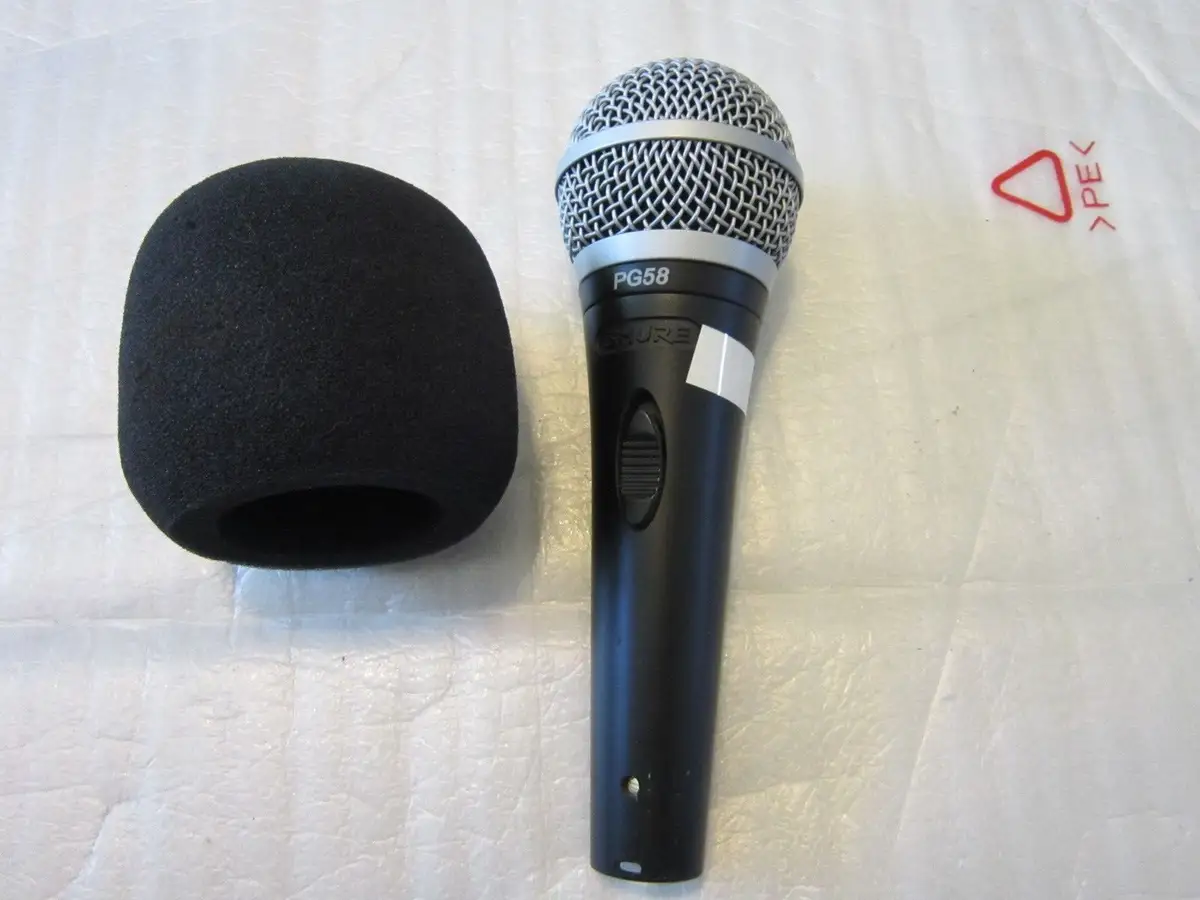
Handling noise and “plastic” feel. Multiple Amazon reviewers flagged the handheld construction. One noted, “the plastic body…does create sound picked up by the mic when bumped,” advising to “handle with care.” Another summed up the emotional side: “they sound great…feel is very underwhelming…so light they almost feel hollow.” For performers who expect a heavy, “tank-like” handheld, the BLX2/PG58 ergonomics can read as less premium even if the sound meets the need.
Missing battery info on the handheld (for some buyers). One Amazon reviewer praised “good quality, good grip and good sound,” but wished it would “show the battery life on the handheld.” For church tech volunteers managing multiple mics, that’s not a nit—it’s a workflow issue that can affect service planning.
Common complaint themes, summarized:
- Audio dropouts reported in at least one office environment (Sweetwater)
- Handling noise when bumped/handled roughly (Amazon)
- Lightweight plastic feel doesn’t match some buyers’ expectations (Amazon)
- Desire for better battery-life visibility on the handheld (Amazon)
Divisive Features
Internal-antenna receiver design: clean rig vs perceived RF limits. One Sweetwater reviewer praised the antenna-less receiver concept, saying they got “great reception…even between walls.” Another Sweetwater reviewer reached the opposite conclusion in their environment: “with the internal antenna it just didn't make it…dropping audio,” insisting “nothing will beat…external antennas.” The same design choice reads as elegant minimalism to one user and a limitation to another—especially for installs in RF-heavy buildings.
Value perception: “worth every penny” vs “good value though.” Some users defend the price fiercely. A Sweetwater buyer concluded, “these are worth every penny!!” after comparing against cheaper systems and valuing consistent performance. On Amazon, another took a more measured stance: “good quality, but not great. great value though.” For budget-conscious buyers, BLX can land as “good enough” rather than “best possible,” depending on what they’re upgrading from.
Trust & Reliability
The most alarming trust signal in the dataset comes from Amazon—not from a gradual decline in quality, but from a counterfeit accusation. One reviewer warned: “be aware - fake Shure BLX 288 / PG 58 from china,” claiming missing controls (“do not have group and channel selection buttons”), a receiver with different buttons, “no channel scan at all,” and that “only one transmitter can connect to the receiver.” In that account, the outcome was disastrous: “horrible sound quality…a very low quality fake.”
Against that, other Amazon buyers describe the exact opposite experience—auto channel search, stable performance, and clean sound—suggesting the “reliability” story may depend not only on RF conditions but also on whether the unit is authentic and correctly band-matched. One karaoke user even reported contacting the manufacturer: “i even contacted Shure and they told me the best channels to use in my area,” which reinforces the idea that legitimate support and proper frequency planning are part of long-term reliability.
For longer-term durability, the strongest sustained-use story comes from Amazon: “using this system for the past year with no issues at all, and another for longer than that.” The same reviewer described real-world complexity—two buildings, walls, and a nearby cell tower—and still said earlier wireless problems stopped: “not any longer.” That kind of “a year later” account is exactly what cautious buyers look for when wireless gear will be used weekly.
Alternatives
Only a few competitors are explicitly mentioned in the data, and they appear in a Sweetwater user’s decision process. One buyer compared this system against “the much cheaper Gemini UHF-6200M” and “the GTD Audio G-622H,” ultimately choosing Shure after watching many reviews and seeing Shure “get great reviews consistently.” Their conclusion was blunt: “these are worth every penny!!”
For buyers weighing those alternatives, the narrative suggests a tradeoff: the cheaper options may be tempting for casual use, but at least one user chose Shure BLX288/PG58 Wireless Microphone System specifically to reduce skepticism about wireless build/sound quality. Still, the office-dropout story implies that even with Shure, environment matters—so “pay more” isn’t a universal immunity card.
Price & Value
Across listings, the system sits in a mid-to-upper consumer range: Shure Singapore lists S$949.00 for the set, while eBay listings show new units around $549–$634 (often with free shipping), and a Sweetwater listing shows $659.00. This spread makes buyer confidence and sourcing especially relevant: the lowest price isn’t always the best “deal” if it increases counterfeit risk.
Value, in user terms, often comes down to avoiding public failure. A church buyer described upgrading from cheaper mics where the congregation couldn’t hear speakers; for them, paying more meant “worked perfectly” and “nice and clear” at normal speaking distance. A karaoke host valued the consistency: “months now” with “100% reliable connection.”
Buying tips also surface indirectly through user behavior. Multiple users emphasize frequency planning: one church reviewer advised, “make sure you go to the Shure website and find the right frequency…for the location,” and another detailed how their venue avoided unwanted transmissions by checking nearby TV channels and using Shure’s tools: “the Shure site helps with this.” For shoppers, the community message is that “band selection” and “channel scan” aren’t optional details—they’re part of the purchase.
FAQ
Q: Is the Shure BLX288/PG58 actually reliable for karaoke nights?
A: For many buyers, yes—when correctly set up. An Amazon reviewer said they’ve used it “for weekly karaoke for months now” with “100% reliable connection,” praising the receiver’s auto search for “the most interference free channel.” Another noted “good battery life” and clear sound for home karaoke.
Q: Does the range really work through walls?
A: Sometimes, based on user stories. One Amazon reviewer reported mics working “through walls across” about “200'” between two buildings with receivers mounted high. But a Sweetwater reviewer in an office said it “kept on dropping audio,” showing that real-world RF conditions can override the “up to 300 feet” marketing claim.
Q: Do the handheld mics feel premium?
A: Not to everyone. An Amazon reviewer said the mics “sound great” but feel “very underwhelming…so light they almost feel hollow.” Another warned the “plastic body…does create sound” when bumped, suggesting careful handling. Others still call them “light weight and comfortable,” so comfort vs “heft” is personal.
Q: How hard is setup for first-time wireless users?
A: Most accounts describe it as quick once you know the pairing step. A Sweetwater buyer said “right out of the box it was simple to set up,” then added that syncing mic and receiver was “so easy…up and running (approx. 5 min).” An Amazon church reviewer also called setup “easy as explained.”
Q: Are counterfeit units a real concern?
A: At least one Amazon reviewer strongly believes so, alleging “this is a counterfeit Shure BLX 288 / PG 58” with missing features like “no channel scan at all.” At the same time, many other buyers report normal BLX behaviors (auto scan, stable dual operation), so buying from reputable sellers and verifying features matters.
Final Verdict
Buy the Shure BLX288/PG58 Wireless Microphone System if you’re a church tech team, karaoke host, or mobile DJ who needs fast setup and dependable dual handheld performance—especially if your success is measured in “nice and clear” speech and nights without dropouts. Avoid it if your environment is RF-hostile and you can’t tolerate any instability, or if you’re tempted by deals that raise authenticity concerns. Pro tip from the community: “go to the Shure website and find the right frequency…for the location” before you buy.