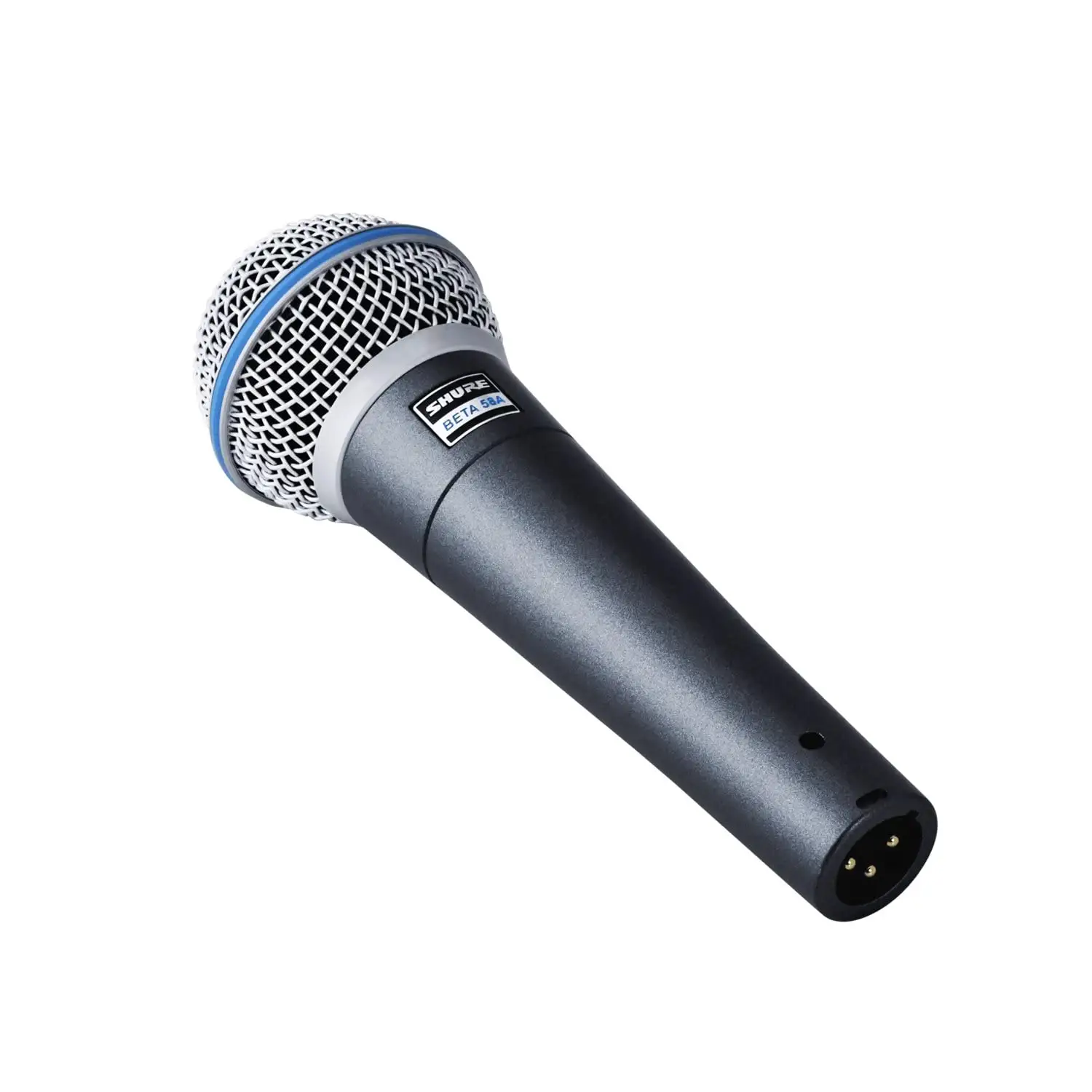
Shure BETA 58A Review: Clear, Rugged, Feedback-Free Mic
The surprising takeaway from digging through thousands of user reviews is that the Shure BETA 58A Vocal Microphone consistently scores high for clarity, feedback rejection, and ruggedness—earning it an 8.7/10 from cross-platform consensus. While it’s marketed as a premium stage mic, the data shows it’s not just for singers—comedians, church speakers, and home studio users are finding value here. However, some seasoned sound techs warn of tonal trade-offs compared to other pro mics, and a small but vocal group describe “harshness” or thinness in certain voices.
Quick Verdict: Conditional — Excellent for live vocalists needing feedback rejection and durability, but tonal character may not suit all voices.
| Pros | Cons |
|---|---|
| Strong gain before feedback, even in noisy venues | Some users find tonal output thin or harsh |
| Clear, present midrange with smooth highs | Less low-end warmth than some competitors |
| Extremely rugged steel mesh grille and build | Can be unforgiving on certain male voices |
| Works well for close-up vocals and stage use | Requires EQ tweaks for natural studio sound |
| Higher sensitivity than SM58, cuts through mix | Supercardioid pattern demands careful mic technique |
| Versatile for singers, public speakers, and instruments | Not as subtle or refined as higher-end condensers |
Claims vs Reality
Marketing materials emphasize a “brightened midrange and bass roll-off to control proximity effect”. In practice, this tuning is widely acknowledged by users, though it’s not universally loved. A verified buyer on Amazon noted: “Much clearer than a regular 58 and haven’t had any problems with feedback even sitting right next to the out speaker.” However, a Sweetwater reviewer countered that “it simply eliminates too much low end from my voice… two other mics in the low $200 range sound much, much fuller.”
Another claim is “uniform supercardioid pattern for high gain before feedback”. Here, user evidence is overwhelmingly supportive. Reddit musicians describe the Beta 58A as “worth the extra money” because “feedback has gone away, the clarity… is incredible.” Even in outdoor gigs, one pianist-singer praised that “this mic does the trick” for isolating vocals from side noise. Yet a sound technician warned: “Every time the vocals come out far too sharp and feedback is a constant battle… just use a 58.”
Shure also promises legendary durability. Long-term reports back this up. One Trustpilot story recounted a Beta 58A lasting 27 years before replacement. Others claim it “still works as well as it did when I bought it” despite drops and heavy touring. However, durability isn’t absolute—one semi-pro musician reported that “inside cartridge snapped in half” after a minor drop, and repair costs were high.
Cross-Platform Consensus
Universally Praised
Across Amazon, Reddit, and Sweetwater, clarity and projection are top praises. Church vocalists and worship leaders highlight how this mic “cuts through in the mix,” letting softer voices hold their own without strain. A 73-year-old choir singer admitted: “I sing better because I can hear myself clearly.” Blues band leaders report that the extra sensitivity allows singing at lower volumes while maintaining definition—helpful for dynamic genres.
Durability stories are abundant. Touring musicians call it a “true road warrior,” with reports of the grille surviving “mic drops and van rides without a dent.” One bassist even swapped to a black screen for aesthetic reasons but kept the same capsule for years. The supercardioid pattern also scores praise from those working in small venues; a backline company rep declared: “These mics will never let you down on any vocal setting.”
Instrument versatility emerges as a bonus. Several users repurpose the Beta 58A for harmonicas, acoustic guitar amps, and even snare drums, noting minimal handling noise and consistent sound.
Common Complaints
Not all voices pair well with its EQ curve. Male tenor/baritone singers in classic rock often describe a loss of warmth. One reviewer summarized: “It sounded like a microphone, and that’s all I could focus on in mixdown… thin, small sounding, and artificial.” The bass roll-off, while excellent for proximity control, can leave certain voices lacking fullness unless compensated with EQ.
The supercardioid pattern, while excellent for feedback rejection, demands disciplined mic technique. Users who hold the mic too far or off-axis report inconsistent tonal response. Some sound engineers mention that it can be “less forgiving” than cardioid mics in cluttered stage environments.
Divisive Features
Brightness is polarizing. For female vocalists or those needing presence in dense mixes, the 3–4 kHz lift is a gift—Sweetwater buyers call it “perfect for female stage vocals” without competing with feedback. Yet for warmth-seekers, especially in folk or country, the same lift can read as “harshness.”
Its higher sensitivity compared to the SM58 is celebrated by performers who want less gain on the mixer, but some still prefer the SM58’s smoother top end. Quora experts confirm: “Night and day difference… tighter pattern, more open sound,” but admit it “lacks subtlety” compared to pricier condensers.
Trust & Reliability
Trustpilot narratives show rare counterfeit concerns—users warn about “lots of counterfeit Shure mics on Amazon” and recommend authorized dealers like Sweetwater for guaranteed authenticity. Shure’s build quality reputation is reinforced by decades-long ownership stories. One user’s Beta 58A survived “countless gigs” and still enhanced harmonies after a decade.
Long-term reliability is a recurring theme. A Boston-area musician replaced a stolen mic with a Beta 58A and was “blown away on the quality of the sound and power” from night one. However, rare mechanical failures like capsule breakage after drops prove that while rugged, it’s not indestructible.
Alternatives
The most commonly compared model is the Shure SM58, widely considered the Beta’s predecessor. Users consistently find the Beta 58A clearer, with more cut and better feedback resistance, but at the cost of reduced low-end warmth. Quora reviewers also mention the Sennheiser e945 as smoother and more refined, and the Shure Beta 87A condenser for higher sensitivity—though both come with higher prices and, in the condenser’s case, potential stage bleed issues. Budget seekers sometimes mention the AKG D5, but note it’s “more blurrish and worse in terms of feedback.”
Price & Value
At retail, the Beta 58A hovers around $169 new, with eBay listings ranging from $49 (possible used or counterfeit risks) to $160+ for legitimate units. Resale value remains strong due to Shure’s reputation; older working units still fetch over $100. Community buying tips emphasize purchasing from authorized dealers to avoid knock-offs, and many justify the modest premium over the SM58 for the performance gains.
FAQ
Q: Is the Shure Beta 58A better than the SM58 for live vocals?
A: For many, yes—its supercardioid pattern offers better feedback rejection and clearer mids/highs. However, some prefer the SM58’s warmer tone, especially for male voices.
Q: Can I use the Beta 58A for instruments?
A: Yes. Users report good results with harmonicas, acoustic amps, and snare drums, thanks to low handling noise and consistent performance.
Q: Does it work well for studio recording?
A: It can, but its EQ curve is tuned for live presence. Studio users often apply EQ to tame highs and restore low-end warmth.
Q: Is it durable enough for touring?
A: Absolutely. Many describe it surviving years of drops, travel, and sweat without damage. Still, extreme impacts can cause internal breakage.
Q: How does it handle outdoor gigs?
A: Very well—its isolation from off-axis noise is praised for loud, open-air environments, keeping vocals distinct.
Final Verdict: Buy if you’re a live performer who battles feedback and needs a rugged, clear mic that cuts through mixes. Avoid if your voice relies heavily on low-end warmth and you’re unwilling to EQ. Pro tip from community: match it with a high-quality cable and authorized purchase to ensure longevity and authenticity.