Shakespeare Marine Antenna Review: Offshore Strength
A verified buyer on Amazon summed up years of boating frustration in one line: “I would never use any VHF antenna less than a Shakespeare Galaxy… your life may depend on your ability to communicate.” The Shakespeare Marine Antenna 8' White earns a strong 9/10 from real-world users for reliability, range, and build quality—though its size and windage do raise caveats for smaller vessels.
Quick Verdict: Conditional—excellent for serious offshore communication, oversized for some small craft.
| Pros | Cons |
|---|---|
| Exceptional range—reports up to 60 miles reception | 8-foot length cumbersome on compact boats |
| Durable fiberglass radome resists salt, sun, impacts | Increased windage in strong winds |
| Stable VHF or AM/FM performance in tough conditions | Minor discrepancy in actual vs advertised height |
| Quality brass/copper or silver-plated elements inside | May require soldering skills or specific connector use |
| Easy installation with standard 1"–14 thread mounts | No customization options beyond mounts/connectors |
| Long warranties—up to 5 years on premium models |
Claims vs Reality
Manufacturers promote the 8-foot Shakespeare antennas as delivering 6dB gain performance with long-distance signal clarity and top durability. They tout high-gloss polyurethane finishes that “won’t yellow” and ferrules designed for easy mount compatibility.
Digging deeper into user reports, the durability claim holds strong. Reddit user feedback on the 5225-XP revealed antennas surviving “more than a couple” collisions with bridge rigging without damage. A verified Trustpilot review noted six months of salt spray, sun, and even a branch strike, yet “the antenna looks as good as new.”
Range claims also align closely with user experiences. While specs cite gain and bandwidth performance tuned to marine VHF frequencies, actual stories tell more: one owner on Fishfinders.info consistently picked up Coast Guard stations at “ranges of up to 60 miles.” Amazon reviewers for the 5225XT reported “great reception and transmission” even 30–40 miles offshore.
Where the marketing diverges is in physical dimensions. One Amazon buyer discovered the “8 ft antenna is 3 & 1/2 inches shorter” than advertised, which could frustrate those trying to match parallel installs visually.
Cross-Platform Consensus
Universally Praised
Durability emerges as the most praised feature. Whether it’s the Galaxy 5225-XP’s stainless steel ferrule or Phase III fiberglass radome with UV protection, users stress the antennas withstand abuse. Trustpilot’s 6235 Phase III review calls the build “exceptional” with fiberglass “bright and unblemished” over seasons of heavy use. Offshore anglers value this resilience; one Reddit user running a 25-foot Contender said it "survived without any noticeable damage" after multiple rigging impacts.
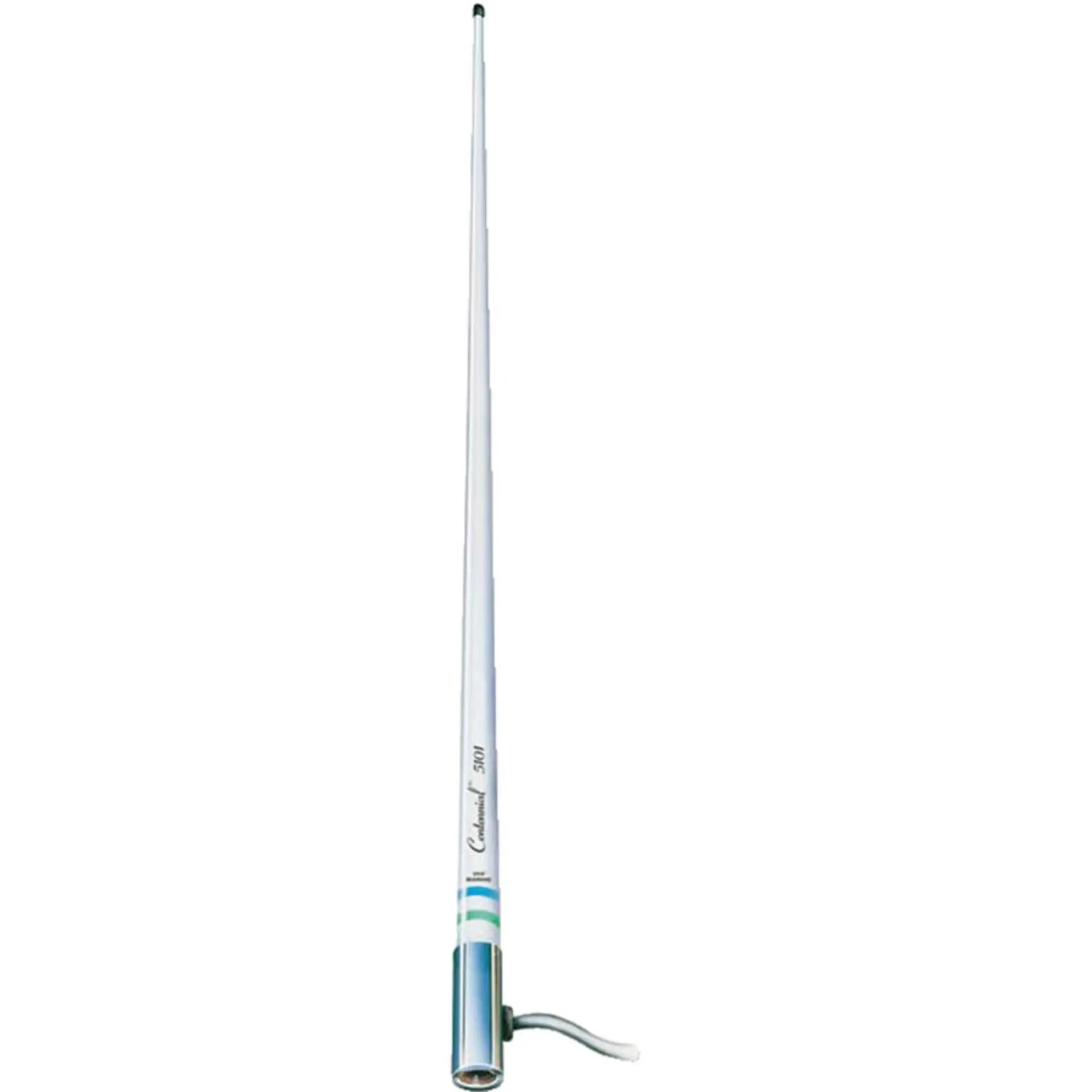
Performance wins similar unanimity. The brass and copper elements in the Classic 5101 or silver-plated conductors in the Galaxy line deliver clear transmission and reception far offshore. Amazon customers lauded the “perfect gain” for boat size, noting quality components justify the higher cost. AM/FM users found the 6235 Phase III pulled in “stations I had never been able to receive before” even in offshore chop.
Installation convenience is another plus. Models ship with RG-58 or RG-8X cables and connectors, often with solderless options. One Amazon reviewer praised the pre-soldered connector small enough to “route through small holes,” eliminating tricky coax terminations.
Common Complaints
Size is the most common grievance. The 8-foot length, while boosting range, can be unwieldy for small boats. Trustpilot and Reddit anecdotes both caution increased windage; one reviewer had to adjust steering in strong winds. Storage under obstructions may require mounts allowing quick lowering, but forgetting to lower can damage tips.
There’s also frustration over connector design and installation skills. While some models include solderless connectors, others demand soldering; DIY installers without proper tools found this inconvenient. Cable length mismatches arose—short runs can leave “20' of cable bunched up,” while replacements lacked the preferred Shakespeare screw-together connector.
The height discrepancy on certain units—measuring under 8 feet—irked those expecting full spec. This affects aesthetic matching and potentially minimal range impact.
Divisive Features
The quick-connect system on the QC-8-T splits opinion. For boaters often stowing equipment under bridges or in storage, the fast screw-on/off ferrule is invaluable. However, traditionalists prefer fixed mounts for security on high-speed runs, wary of extra failure points.
AM/FM capability in the 6235 Phase III earns cheers from recreational cruisers wanting news and music offshore, but is irrelevant to serious marine VHF or AIS users focused solely on safety communication. VHF purists may see it as an unnecessary niche offering.
Trust & Reliability
Trustpilot entries show no signs of scam or misrepresentation, with buyers consistently receiving the correct model. Reliability over time is a repeated theme—six-month reviews confirm unchanged performance, no corrosion inside radomes, and minimal maintenance beyond fresh water rinsing. Reddit’s long-term account of the 5225-XP reflects several years of dependable use, even post accidental impacts.
Warranty terms influence trust, with standard models offering two years and Galaxy or Phase III lines extending to five years. Users value this as assurance of manufacturer confidence in their build.
Alternatives
Within Shakespeare’s own lineup, different models suit varying needs. The Classic 5101 offers economical value with solid brass/copper elements, ideal for coastal and mid-range conditions. The Nylon-ferrule 5206-N targets lightweight, budget-conscious buyers where extreme range isn’t primary. AM/FM seekers could opt for the 6235 Phase III, while AIS communication requires the Galaxy 5225-XT AIS, tuned to 162 MHz.
Alternatives outside VHF include the Galaxy CB Marine Antenna at 27 MHz for citizens’ band, though its focus is different. Boaters comparing note that cheaper 8-foot Shakespeares are “less than half the price” but “a big step down in quality components” per Amazon reviewers.
Price & Value
Current eBay listings show the Shakespeare Galaxy 5225-XT around $195, while Classic 5101 models hover near $97–$119 new. Higher-end Phase III VHF antennas approach MSRP near $294, reflecting enhanced materials and spacing systems. Resale values hold well due to brand reputation; used models still fetch substantial bids if in good condition.
Community tips advise factoring in mount and connector costs, with high-quality 1"–14 thread mounts recommended for stability. Some suggest dielectric grease on connections to prevent corrosion, maximizing lifespan and value.
FAQ
Q: Does the 8-foot length significantly increase range?
A: Yes—height is critical for line-of-sight signals. One Reddit user received Coast Guard broadcasts 60 miles away from the elevated 5225-XP mount.
Q: Is the high-gloss finish truly UV-resistant?
A: Users confirm no yellowing after years, even in harsh sun, praising the polyurethane’s resilience.
Q: Can I use these antennas for AM/FM radio?
A: Only specific models like the 6235 Phase III are designed for AM/FM; VHF-only models will not provide broadcast radio reception.
Q: How tough are they against impacts?
A: Reports show tips surviving bridge rigging hits without damage, thanks to robust fiberglass radome builds.
Q: Are connectors easy for DIY installation?
A: Some models include solderless connectors for ease, while others need soldering skills—check specs before purchase.
Final Verdict: Buy if you’re an offshore boater or serious mariner needing dependable long-range VHF or AM/FM communication; Avoid if your vessel is too small to comfortably handle 8-foot length and windage; Pro tip from community—mount as high as possible and consider a ratchet base to lower quickly under obstructions for both performance and safety.





