Sennheiser MKE 600 Review: Conditional Yes at 8.6/10
A Sweetwater reviewer didn’t mince words: “a drawback… is that it suffers from a ground issue… there is significant hum/buzz”—the kind of real-world caveat that doesn’t show up in glossy listings. SENNHEISER Professional Shotgun Microphone (XLR to 3.5mm) earns a conditional yes based on user feedback, landing at 8.6/10 for buyers who can power and mount it correctly.
Quick Verdict
For filmmakers and run-and-gun shooters, the appeal is simple: directional pickup, flexible power, and a “clean and clear” sound that many feel punches above its price. But several users warn that setup choices (powering/grounding, mounting, and post-processing expectations) can make or break the experience.
Digging deeper into cross-platform comments, the mic’s strongest “why” is clarity at practical working distances—especially outdoors—while the most serious “why not” is noise/hum in certain camera power scenarios and at least one harsh outlier review calling it nonfunctional/overpriced.
| Verdict | Who it fits | Evidence from users |
|---|---|---|
| Conditional Yes | Budget-minded filmmakers | Sweetwater user Joshgsan V. said: “5/5 hands down the best shotgun in a budget.” |
| Conditional Yes | Outdoor interviews/documentary | Sweetwater user Anthony said it stayed “clear at 15 feet outdoors” on a noisy street test. |
| Yes | Shooters needing flexible power | Sweetwater user Victor said: “I love that it can be powered with a AA battery.” |
| No (edge case) | Expecting perfect “raw” tone | A Sweetwater customer said it “does take some post processing” to get where they want. |
| Caution | Certain camera/grounding setups | Sweetwater user Anthony warned of “significant hum/buzz” with polarized but not grounded power. |
| No (outlier) | Those burned by defects/value | A Sweetwater reviewer wrote: “terrible mic… does not work properly and is sold for way more…” |
Claims vs Reality
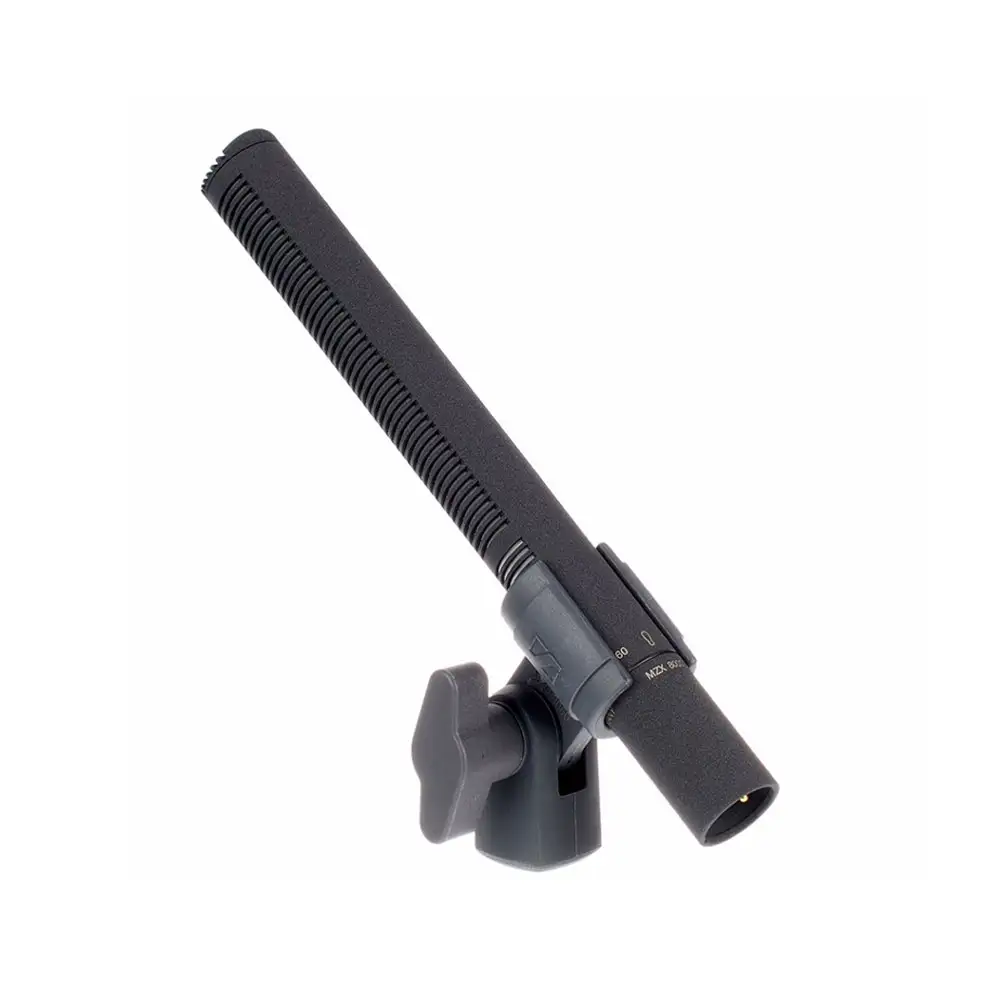
Sennheiser and retailers position this mic as a film-ready tool with high directivity and strong rejection of side noise. The Audiotopia listing describes “pronounced directivity” and “maximal rejection of side noise,” framing it as an “ideal video camera/camcorder microphone” for demanding production.
In practice, users largely agree on the directionality benefit, but the “reality check” is that good results often depend on powering and rig choices. Sweetwater user Anthony described a structured comparison: “I did a shootout… outside on a noisy street… from 3' to 15'… the MKE 600 was still clear at 15 feet outdoors.” For documentary shooters who can’t mic talent, that’s the promised value showing up in real conditions.
A second marketing promise is flexible powering—phantom power or battery. On paper (and in Amazon specs), it’s “AA battery or phantom powered.” Users echo that as a major practical advantage, but they also flag a hidden dependency: what you power (mic vs camera) and how your camera is grounded. Anthony’s warning was specific: “if you are using a camera with a polarized but not grounded power source, there is significant hum/buzz.” While the mic can run on AA/phantom, multiple setups can still introduce noise, and users treat battery operation (or changing the power chain) as the workaround.
Finally, listings emphasize “low-noise circuitry” and easy intelligibility. Here the reality is nuanced: some users call it quiet and clean, while others say the raw sound needs shaping. Sweetwater user Rich P. said: “the mic is very quiet with no discernible onboard noise… [and] records with a clean, natural representation of my voice.” But a Sweetwater customer added the counterpoint: “not a big fan of the sound straight out of it… it does take some post processing.” The “low noise” claim holds for many, yet the “plug-and-play perfect tone” expectation doesn’t.
Cross-Platform Consensus
Universally Praised
“Clear at a distance” kept surfacing as a recurring pattern, especially from people shooting in uncontrolled locations. Sweetwater user Anthony described the mic staying intelligible far beyond typical on-camera mic expectations: “still clear at 15 feet outdoors.” For documentary and corporate interview shooters, that kind of reach means fewer ruined takes when you can’t get a lav on talent. It’s not magic—users still frame it as a directional tool, not a telephoto lens for audio—but that distance report is the most concrete field story in the dataset.
Another consistent win is flexibility across rigs—camera mount, boom, handheld interview, or future upgrades. One Amazon reviewer wrote: “the XLR output… ensures that this mic will be in rotation for many years as my rig changes.” That same reviewer described using it in a “variety of settings from video shoots, to live streaming, to online lessons,” calling the adapter hassle “a small trade off” for the audio improvement. For creators who start with a mirrorless camera and later add an XLR recorder, this “grow with you” narrative shows up repeatedly.
Power options are also praised in practical terms rather than spec-sheet bragging. Sweetwater user Victor said: “I love that it can be powered with a AA battery. That means I don't have to drain my camera or recorder by using phantom power.” For travel shooters or anyone doing long days without reliable power, that story is less about convenience and more about risk management—avoiding dead gear mid-shoot.
After those narratives, the pattern can be summarized simply:
- Directional pickup that users say stays intelligible at practical distances (Sweetwater).
- Flexible integration into mixed camera/recorder setups (Amazon review text).
- Battery option that reduces dependence on phantom power (Sweetwater).
Common Complaints
The most specific, repeated technical complaint is noise/hum tied to grounding and power sources. Sweetwater user Anthony didn’t describe a subtle issue—he called it “significant hum/buzz” when paired with “a camera with a polarized but not grounded power source,” adding that “running off battery power… you'll be fine.” For run-and-gun shooters who plug directly into cameras, this becomes the highest-stakes complaint: you can be rolling great video and still end up with unusable audio if your power/ground chain triggers that buzz.
Another common friction point is expectation management around “raw” sound. A Sweetwater customer said: “I’m a big fan of the results… not a big fan of the sound straight out of it,” emphasizing that it “does take some post processing.” For beginners moving up from a basic on-camera mic, this reads like a surprise: the mic can capture good material, but users still expect to EQ and polish—especially for voice-heavy content.
Finally, there’s a blunt negative outlier that can’t be ignored. One Sweetwater reviewer wrote: “terrible mic… does not work properly and is sold for way more then it should be.” It’s a single hard-take against a mostly positive stream, but it matters for buyers worried about defects or mismatched expectations. On the complaint side, the user stories point to “it can be great,” but only if your setup and expectations align.
After those narratives, the complaints cluster into:
- Power/ground-related hum risk (Sweetwater).
- Post-processing needed for preferred tone (Sweetwater).
- Occasional severe dissatisfaction/possible defect report (Sweetwater).
Divisive Features
The mic’s voicing seems to split people: some want “natural” and get it; others want a finished sound and find it underwhelming without work. Sweetwater user Rich P. framed it as clean and not muddy: “I don’t notice any muddiness; it records with a clean, natural representation of my voice.” Meanwhile, another Sweetwater customer said they like the results but not the raw output, needing “post processing.” For voice actors and narrators, this becomes a taste-and-chain issue (interface preamps, room sound, and EQ preferences) rather than a simple “good/bad.”
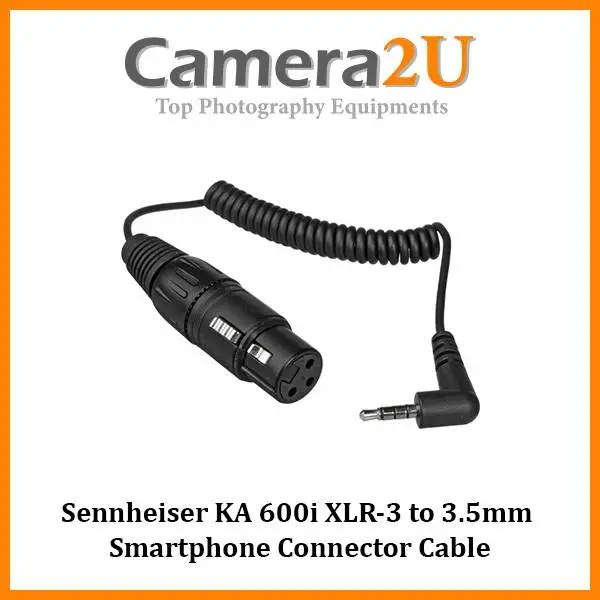
There’s also a practical split on convenience: people love the included XLR-to-3.5mm path, but some describe it as cumbersome on small mirrorless rigs. An Amazon reviewer said using it with a Sony a6400 is “a bit cumbersome… because I need to use a cable adapter,” yet still called it “a small trade off for the quality of audio.” For minimalist vlog setups, the cable and mounting complexity is a real trade; for productions already living in XLR land, it’s normal.
Trust & Reliability
One of the strongest “trust” signals in the dataset isn’t about the mic itself—it’s about support experiences around Sennheiser shotguns on pro retail platforms. A Sweetwater MKH 416 buyer described a failure within weeks but emphasized retailer response: they offered an “advance replacement” and called it “the best customer service I’ve ever experienced.” While that story is for the MKH 416, it reflects how some buyers think about purchasing Sennheiser mics: not just sound, but who stands behind the purchase when something goes wrong.
For the SENNHEISER Professional Shotgun Microphone (XLR to 3.5mm) specifically, the durability narrative is more implied than proven in long-term “6 months later” posts within the provided data. The closest reliability-adjacent warning is the grounding/hum behavior (a repeatable setup problem), plus the lone “does not work properly” complaint. In other words: fewer long-haul stories here, more “it works great if your power chain is right.”
Alternatives
Only a few competitors are explicitly mentioned in user feedback, and those mentions are revealing because they’re tied to direct comparisons rather than vague brand preference.
The most concrete head-to-head is against the Audio-Technica AT897. Sweetwater user Anthony said: “I did a shootout…” and concluded, “this mic beat the latter to me,” especially at distance: the MKE 600 stayed “clear at 15 feet outdoors,” while “not so much on the AT 897.” For buyers choosing between these two budget short shotguns, that story frames the MKE 600 as the stronger “reach outdoors” option—while also carrying the grounding caveat the AT897 “didn’t” have.
The other “alternative” appears as an aspirational benchmark: the Sennheiser MKH 416. Multiple Sweetwater MKE 600 reviewers position it as a step toward that standard. Rich P. called the MKE 600 “an alternative and first step up to the more costly MKH 416,” and Victor said they debated the 416 but chose the MKE 600 and have “zero regrets.” For users who can’t justify the MKH 416 price, the MKE 600 is framed as the practical compromise—good results, less money, but not necessarily the same out-of-the-box voicing.
Price & Value
Pricing in the dataset clusters around a mid-tier “budget pro” slot. Sweetwater lists it at $349, and Amazon positions bundles with accessories and a high review count (Amazon listing shows “4.4 out of 5 stars” with “1,130 reviews” for the bundle). That large review volume suggests strong market penetration, but the more useful value evidence comes from user comparisons: buyers repeatedly frame it as “best shotgun in a budget” rather than “cheap.”
Resale and market pricing signals show variability. eBay listings range widely, including used units around the mid-$100s to $300s+, with some bundles priced higher. For value-focused buyers, that spread implies two strategies echoed by community behavior: buy new from a retailer with strong support if you fear defects, or watch for used deals if you’re comfortable troubleshooting setup quirks (like hum/ground issues).
Buying tips that emerge from user stories:
- If you’re feeding a camera via 3.5mm, plan your adapters/mounting and test for hum early (Sweetwater grounding report).
- If you’re chasing voiceover tone, expect some EQ/post even if the capture is clean (Sweetwater post-processing comment).
- If you can, pair it with “an interface with a solid preamp,” as Rich P. advised for voice work.
FAQ
Q: Does the SENNHEISER Professional Shotgun Microphone (XLR to 3.5mm) work well at a distance?
A: Yes—several users say it stays intelligible farther than expected for a short shotgun. Sweetwater user Anthony reported it was “still clear at 15 feet outdoors” during a noisy street test, which is exactly the kind of scenario documentary shooters worry about.
Q: Can it run on battery, and do users actually use that?
A: Yes. Sweetwater user Victor said, “I love that it can be powered with a AA battery,” mainly to avoid draining a recorder/camera via phantom power. For long shoots or travel rigs, that flexibility is a practical safety net rather than a novelty feature.
Q: Are there known noise or hum issues?
A: Sometimes, depending on your setup. Sweetwater user Anthony warned of a “ground issue” that can cause “significant hum/buzz” when used with “a camera with a polarized but not grounded power source.” They suggested battery-powered operation as a workaround in their scenario.
Q: Is it good for voiceover or narration?
A: Many users say it can be. Sweetwater user Rich P. said it’s been a “solid choice” for audiobook narration and commercial VO, praising that it’s “very quiet” and has strong side/rear rejection. Another Sweetwater customer cautioned it may need post-processing to taste.
Q: How does it compare to the Audio-Technica AT897 or Sennheiser MKH 416?
A: One Sweetwater user who compared it to the AT897 said the MKE 600 “beat the latter” at distance outdoors, but also noted the MKE 600 can have grounding-related hum where the AT897 didn’t. Several users frame it as a more affordable step toward the MKH 416.
Final Verdict
Buy if you’re a budget-minded filmmaker, documentarian, or content creator who needs directional pickup with real-world distance performance—and you’re willing to test your camera/adapter chain early. Sweetwater user Joshgsan V. summed up the enthusiasm: “5/5 hands down the best shotgun in a budget.”
Avoid if your setup is prone to grounding problems or you can’t tolerate troubleshooting; the clearest warning came from Sweetwater user Anthony: “there is significant hum/buzz” in certain camera power scenarios.
Pro tip from the community: if you hate surprises, do a quick pre-shoot noise check on your exact rig and power chain, because as Anthony put it, “if you know about them, you can avoid the problems.”