Sennheiser E 835 Review: Clear Sound, Mixed Durability
The boldest claim in the stage mic market? Multiple seasoned performers call the Sennheiser E 835 Dynamic Vocal Microphone “better than the venerable SM58” and rate it 9/10 for live clarity and durability. In a space dominated by Shure’s iconic models, this mic’s balance of crisp highs, warm mids, and robust build has earned it praise from church praise teams to veteran touring musicians.
Quick Verdict: Conditional — excellent for singers who value clarity and rejection of background noise, but durability can be an issue for frequent drop incidents.
| Pros | Cons |
|---|---|
| Clear, transparent sound with natural highs | More prone to plosive popping than some mics |
| Superior feedback rejection on loud stages | Reported internal damage from single drops |
| Consistent tone even off-axis | Requires singers to stay “on mic” due to tight pickup pattern |
| Rugged metal housing | Occasional coil failures over long-term use |
| Competitive price vs industry standards | Needs more gain on some audio interfaces |
| Warmer sound than SM58 without losing low end | Shape of mic disliked by a few users |
| Effective for live and studio use | No on/off switch on some variants |
Claims vs Reality
Marketing touts the E 835’s “uniform frequency pick-up” and “gentle presence boost” to ensure clear vocals, even moving off-axis. Reddit posters echo the clarity claim, calling it “maximum flexibility for the voice” and praising how “moderation and singing remain crystal clear and natural, even at varying distances from the capsule.” Yet Sweetwater buyer Mark Thompson observed a limitation: “singers really have to be ‘on mic’ or they completely disappear,” likening its tighter-than-expected cardioid pattern to hyper-cardioid behavior.
Another brand promise is “minimal proximity effect” for consistent bass regardless of distance. Multiple Sweetwater reviews support this, noting the low end “holds up well” and that it avoids overly muddy buildup when close-miking. However, one user advised applying a high-pass filter around 75–80Hz to counter plosives: “There is nothing of interest below 100Hz for vocals, and this would help reduce popping.”
Sennheiser also markets “rugged metal construction” for durability. While many users attest to its road-worthiness—“I’ve dropped it a ton of times already, no problems”—others recount failures: “Broke after one use… internal coil near the diaphragm opened and unrepairable.” This suggests survivability may depend greatly on handling care.
Cross-Platform Consensus
Universally Praised
Digging deeper into user reports, clarity is the most consistent praise. A Sweetwater buyer said, “This mic made my vocals crystal clear…I own two Beta 58s and this sounds every bit as good.” Church audio techs value its intelligibility: “It makes your vocals sound very crisp… even slightly off-center still picks up well.” For big band and rock singers, the definition is equally valued—“not cloudy… clear, but not piercing,” in the words of one gigging performer.
Feedback rejection shines in loud environments. An LA emcee recounted jumping around in front of subs mid-performance: “Not one bit of feedback. None.” This isolation benefits multi-vocal setups, with reviewers calling it “better for multi-part harmonies where things can get stuffy.”
Its tonal balance impresses musicians used to SM58s, with several calling it warmer but equally powerful. One Sweetwater customer replaced six band mics after noticing “more transparent sound than the 58s.” Studio home-recordists also find it versatile, using it successfully for drum overheads thanks to its smooth full capture.
Common Complaints
Popping on plosives is a recurring gripe. Thompson notes the E 835 “seems prone to popping much more than my favorite mic, Audio-Technica AE6100,” prompting many to recommend wind screens or EQ filtering. Another common thread is its strict pickup zone—engineers may love the control, but singers used to SM58 positioning can vanish from the mix when straying off-axis.
Durability sees split opinions. While some drop it “a ton of times” without consequence, others report catastrophic failures from modest falls. One owner of five units over five years lost two to coil issues despite their external appearance remaining intact. This has pushed some back toward SM58s for long-term dependability.
Gain requirements draw occasional mention; connecting to certain budget interfaces like Audiobox USB may need significant amplification. A buyer summed it up: “Needs a lot of gain but otherwise great for live and studio.”
Divisive Features
Its sound character versus the SM58 is sharply debated. Proponents declare “insane quality, clarity, and durability” outshining Shure, while pragmatists frame it as “different” rather than better. Engineers love the flatter midrange—no “midrange peak” like the Shure—but some vocalists miss that boost for cutting through in busy mixes. Similarly, tight pickup rejection is framed by one sound tech as both a strength (“zero feedback issues”) and a potential performance hazard (“really have to be on mic”).
Trust & Reliability
Trustpilot-style sentiment shows little concern over scams or misrepresentation—buyers consistently receive what they expect. Long-term reliability, however, varies. Some Reddit posters still use their E 835s “about 5 years now” with minimal wear, while others experience sudden failures. A Sweetwater customer lost quality after a single drop, and another found “two simply stopped working” after years, even as their vintage SM58s soldiered on.
Such mixed experiences make sense given the heavy on-stage use it receives. Users who gig regularly but handle gear carefully see the full benefit of its rugged housing and capsule suspension, while high-impact environments are riskier.
Alternatives
The inevitable comparison is to the Shure SM58. Engineers often prefer the E 835 for its more transparent sound and better high-end without sacrificing lows. Vocalists accustomed to Shure’s forgiving midrange bump sometimes find Sennheiser’s tighter response less forgiving off-axis. Another mentioned competitor is Audio-Technica AE6100, which offers less plosive sensitivity but with a different tonal profile.
At the higher end within Sennheiser’s own line, the E 945 tempts users with super-cardioid focus and enhanced detail, while condenser models like the E 865 are praised by enthusiasts as “number one” for pure vocal reproduction—though at the cost of more fragility in loud, uncontrolled environments.
Price & Value
Current eBay listings range from $34.99 for used units to $99.95 for new, with multi-packs offering strong per-unit value. Sweetwater’s bundle pricing and occasional discounts (e.g., $19.95 off) make it competitive with SM58s, often prompting bulk purchases for entire bands. Resale value remains solid given its recognition; buyers seek both used and refurbished models.
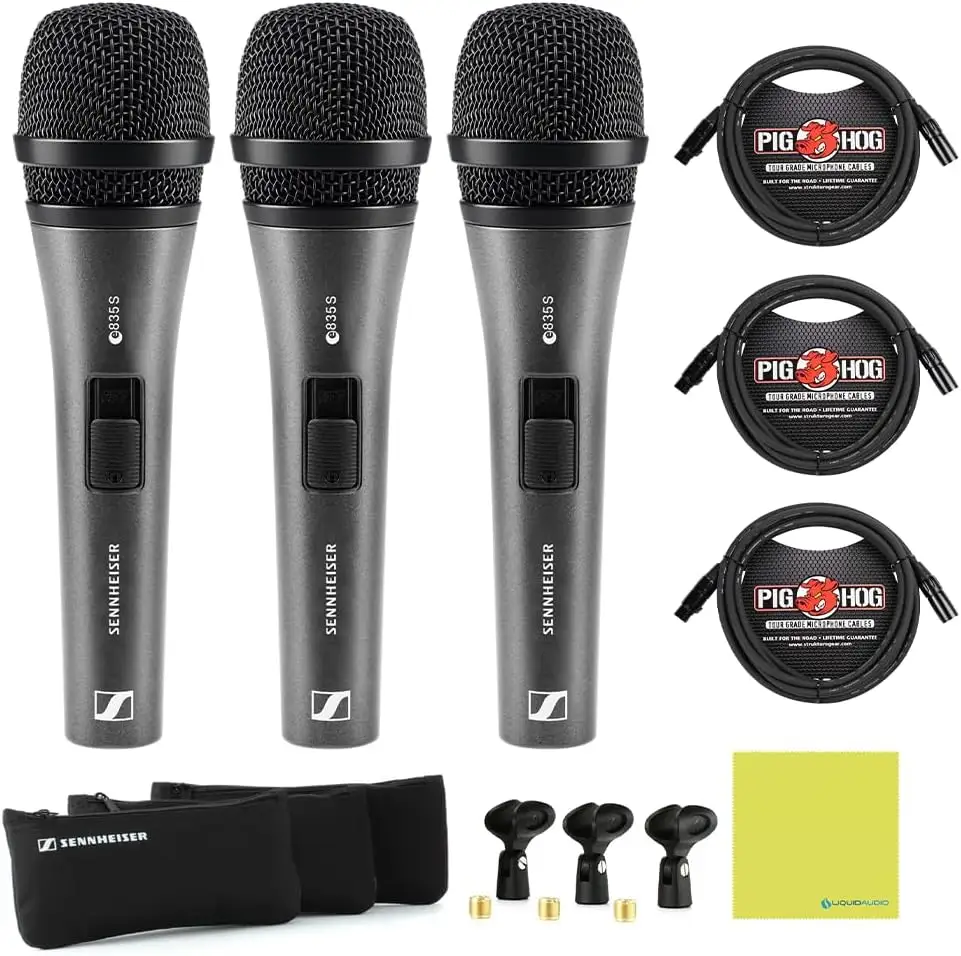
Community buying tips include grabbing the three-pack if outfitting multiple vocalists, and opting for the “S” variant if you want an on/off switch—though some prefer the plain version to eliminate accidental mutes mid-song.
FAQ
Q: Does the Sennheiser E 835 work well for studio recording?
A: Yes, especially for vocals on a budget. Reviewers used it for drum overheads and acoustic sets, noting clear and full capture similar to more expensive condensers.
Q: How does it handle feedback in live settings?
A: Feedback rejection is a standout feature. Users report zero issues even when performing directly in front of loudspeakers or subs.
Q: Is the E 835 better than the Shure SM58?
A: Opinion is split. Many engineers and singers say it offers clearer, warmer sound; others stick to SM58 for its forgiving pattern and proven road life.
Q: What’s the main durability concern?
A: Internal coil damage from drops. While some survive many knocks, others fail after a single moderate fall.
Q: Does it require more gain than average mics?
A: On some interfaces, yes. Budget preamps may need extra gain to reach optimal levels.
Final Verdict
Buy if you’re a performer or engineer seeking crystal-clear vocals, strong feedback control, and a competitive price. Avoid if you routinely drop your mics or need a forgiving pickup pattern for mobile singers. Pro tip from community: pair with a windscreen and high-pass filter to curb plosives without sacrificing its striking presence boost. For those ready to move past “good enough” sound, the E 835 delivers night-after-night.