SanDisk Ultra USB 3.0 Review: Value Pick with Caveats
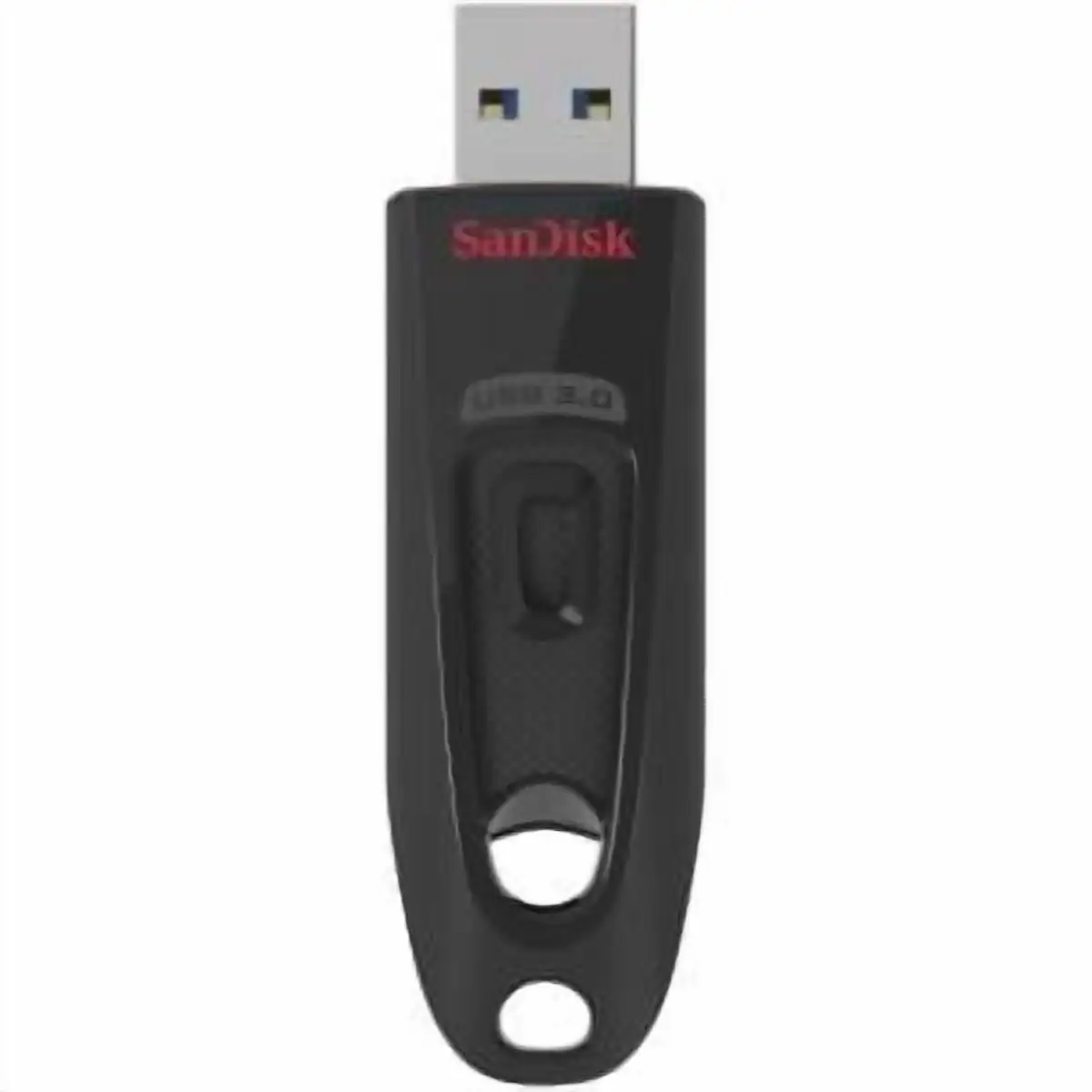
Starting at just under $20 for 256GB, the SanDisk Ultra USB 3.0 Flash Drive Bundle with Lanyard has earned high marks across platforms, with some Best Buy reviewers calling it “a fantastic thumb drive for the price” and Reddit users praising its day‑to‑day reliability. Averaging between 4.6–4.8 stars in major marketplaces, it sits comfortably in the "trusted workhorse" category—though deeper investigation reveals speed inconsistencies and some durability quirks. Verdict: 8.2/10.
Quick Verdict: Conditional
| Pros | Cons |
|---|---|
| Fast read speeds up to 116–150MB/s in optimal conditions | Write speed drops significantly with large transfers |
| Affordable high-capacity options (up to 1TB) | Plastic lanyard loop prone to breaking |
| Password protection & encryption software included | Reports of drive heating up |
| Compact, sleek design options (Ultra Flair, Ultra Fit) | Actual usable capacity less than advertised |
| Reliable for small to medium file transfers | Rare cases of data loss or sudden failure |
| Broad compatibility (USB 3.0 / 2.0 / Type‑A devices) | No activity light on some models |
| Long-term support and warranty | Cloud backup feature requires installed software |
Claims vs Reality
Marketing materials promise “transfer speeds up to 150MB/s” and “full-length movie in less than 30 seconds”. Amazon’s spec sheets and Twitter/X posts echo those numbers, alongside claims of ten times faster than USB 2.0. In reality, while users indeed report fast reads—Best Buy reviewer measured “around 116MB/s read”—large writes tell another story. One SanDisk Forum post details how transferring a 4GB ISO starts at 62MB/s but “drops to 5MB/s then a crawl 350KB/s… says it will take 24 hours to finish”. A full reformat improved performance to ~20MB/s, but still far from maximum claims.
Another official boast involves password protection for your private files. Multiple platforms confirm that bundled Secure Access software effectively encrypts content. A verified BestViewsReviews buyer appreciated “128-bit AES encryption and password protection to keep private files private”. However, Best Buy users caution the plastic casing and lanyard loop “could be more robust”, showing that while security software works, physical security is weaker.
Capacity claims also generate some friction: while marketed at capacities up to 1TB, BestViewsReviews documented frustration over real usable space—“advertised as 512GB but actually has 460GB… loss of 52GB”. That discrepancy, though common in flash storage formatting, still affects buyer trust.
Cross-Platform Consensus
Universally Praised
High read speeds and portability dominate positive sentiment. For photographers and media editors, Reddit’s u/DataHoarder contributor noted owning “a heap of these — never any problems”, relying on them for OS boot drives. Best Buy’s “super thumb drive” review illustrates niche use cases: “I bought to store my music collection… works great and has no issues rapidly transferring the high data FLAC files”. Students and office workers appreciate the small form factor, with Amazon Ultra Fit buyers praising how it “fits into my car’s USB port easily — hidden away” for safe music playback without phones.
Security features, especially for professionals handling sensitive data, get credit. Best Buy’s detailed review mentions using encryption for medical records and imaging files, adding “with a very secure password I won’t worry much if I lose the drive”. The included RescuePro recovery software also wins points: one user easily “recovered all the files… after about an hour” during a test deletion scenario.
Common Complaints
Write speed drops are the single most consistent gripe. The SanDisk forums note chronic slowdowns after initial purchase, with one user unable to exceed “350KB/s” months later. These drops hit hardest for gamers, video editors, or anyone routinely moving gigabytes at once. Heat output is another recurring theme—Amazon Ultra Fit buyers say drives “get very hot during use”. Hardware durability comes up often: Best Buy feedback describes the “plastic enclosure loose and wobbly”, while BestViewsReviews warns the keyring loop “breaks after a short time”.
Usable capacity versus advertised space frustrates some customers, particularly in large drives. The mismatch between marketed and actual format capacity surprised buyers expecting full listed GBs. A few cases of outright failure exist: “it broke the first day, lost all data… could not fix it” (Best Buy).
Divisive Features
Cloud backup via SanDisk Flashback splits opinions. Tech‑savvy users appreciate the ability to access files remotely, but as Best Buy’s longform review stresses, “backing up… only works if you have the flash drive connected to a computer with Flashback installed”. Encryption also divides audiences—security-minded buyers value mainline AES encryption, but backup/sharing limitations of encrypted files (cannot access in cloud) frustrate others. The absence of an activity LED is another polarity point: some don’t mind, others miss the visual cue during transfers.
Trust & Reliability
Scam concerns aren’t rampant, but storage mismatches and performance drops raise eyebrows. BestViewsReviews highlights the industry‑wide chip shortage’s potential link to perceived quality dips. On Reddit, several users keep multiple SanDisk Ultras on rotation and report “never had any bad experiences”, lending credibility. Long-term experience matters—one Best Buy reviewer still uses a decade-old “SanDisk Cruzer Titanium 1GB” in perfect condition.
Conversely, the SanDisk forums expose persistent issues with the 256GB version’s write speed degradation over time, even after different device tests. Physical reliability has limits: plastic loops break, casings feel cheap, and heat concerns hint at stress in sustained usage scenarios.
Alternatives
Within threads, only Samsung emerges as a mentioned competitor: Reddit user notes, “I generally purchase Samsung or SanDisk”. While no deep comparative benchmarks are provided, the implication is that Samsung shares similar reliability but varies in pricing/availability. This makes picking between them a matter of preferred aesthetics, bundle accessories, or sale timing.
Price & Value
Community sentiment calls it “great value”, especially during sales. Best Buy shoppers mention picking up 256GB at $19.99 (down from $34.99), with some buying multiples. eBay listings reveal a wide range—from under $10 for mid‑tier capacities to nearly $485 for high-capacity configurations, indicating strong resale potential for rare/spec bundles. Pro tip from Reddit: buy when online stores run promotions, as “they often go on sale”.
FAQ
Q: Does the SanDisk Ultra USB 3.0 Flash Drive actually reach 150MB/s?
A: Many users report read speeds near that mark under optimal conditions, but large write transfers often drop substantially, sometimes below 20MB/s.
Q: Is the included lanyard durable?
A: Feedback suggests the lanyard loop itself can break easily, making attachment unreliable over prolonged use.
Q: Can I use Secure Access software on non-SanDisk drives?
A: No, the encryption software works exclusively with SanDisk hardware.
Q: Why is my 512GB drive only showing ~460GB usable space?
A: This is due to formatting and file system overhead, common across storage devices.
Q: Does the drive overheat?
A: Several buyers note that it gets hot during extended use, particularly in compact models like Ultra Fit.
Final Verdict
Buy if you’re a student, office professional, or casual media user needing affordable, reliable, and portable USB 3.0 storage with decent read speeds and built‑in encryption. Avoid if your workflow demands sustained high write speeds for massive file transfers or if ruggedized physical build is a necessity. Pro tip from Reddit: hunt for online sales and stock up—keeping multiple drives avoids over-reliance on any single stick during critical work.