AmScope SM-4TZ-144A Review: Stable Optics, Big Trade-offs
Some owners didn’t realize until setup just how massive and heavy the AmScope SM-4TZ-144A Trinocular Stereo Zoom Microscope really is, with verified buyers praising its “rock stable” base and industrial feel while warning it can dominate a workspace. Across hundreds of reviews and community threads, the microscope earns 8.7/10 for optical clarity, mechanical stability, and versatility—especially in electronics repair and scientific hobbies—though documentation and assembly quirks frustrate many first-time users.
Quick Verdict: Conditional Buy for serious hobbyists, labs, and electronics professionals.
| Pros | Cons |
|---|---|
| Crisp, clear optics rival pricier brands | Poor quality or generic assembly manual |
| Heavy, stable double-arm boom stand | Large footprint occupies significant bench space |
| Wide magnification range (3.5X-90X) with Barlow lenses | Depth of field extremely shallow at high magnification |
| Adjustable four-zone LED ring light | Trinocular port replaces left eye when used with camera |
| Smooth, professional-grade movement | Unit weight makes relocation cumbersome |
| Durable alloy steel construction | Occasional humidity/fogging issues reported |
Claims vs Reality
Marketing materials emphasize “continuous zoom magnification” and industrial-grade stability. Digging deeper into user reports shows the zoom range is technically 0.7X to 4.5X, producing 7X to 45X magnification with supplied 10X eyepieces—extended to 3.5X–90X with 0.5X and 2X Barlow lenses. As one verified Amazon buyer clarified: “You can’t actually get 3.5x to 90x without unscrewing one of those lenses and re-attaching the LED light assembly.”
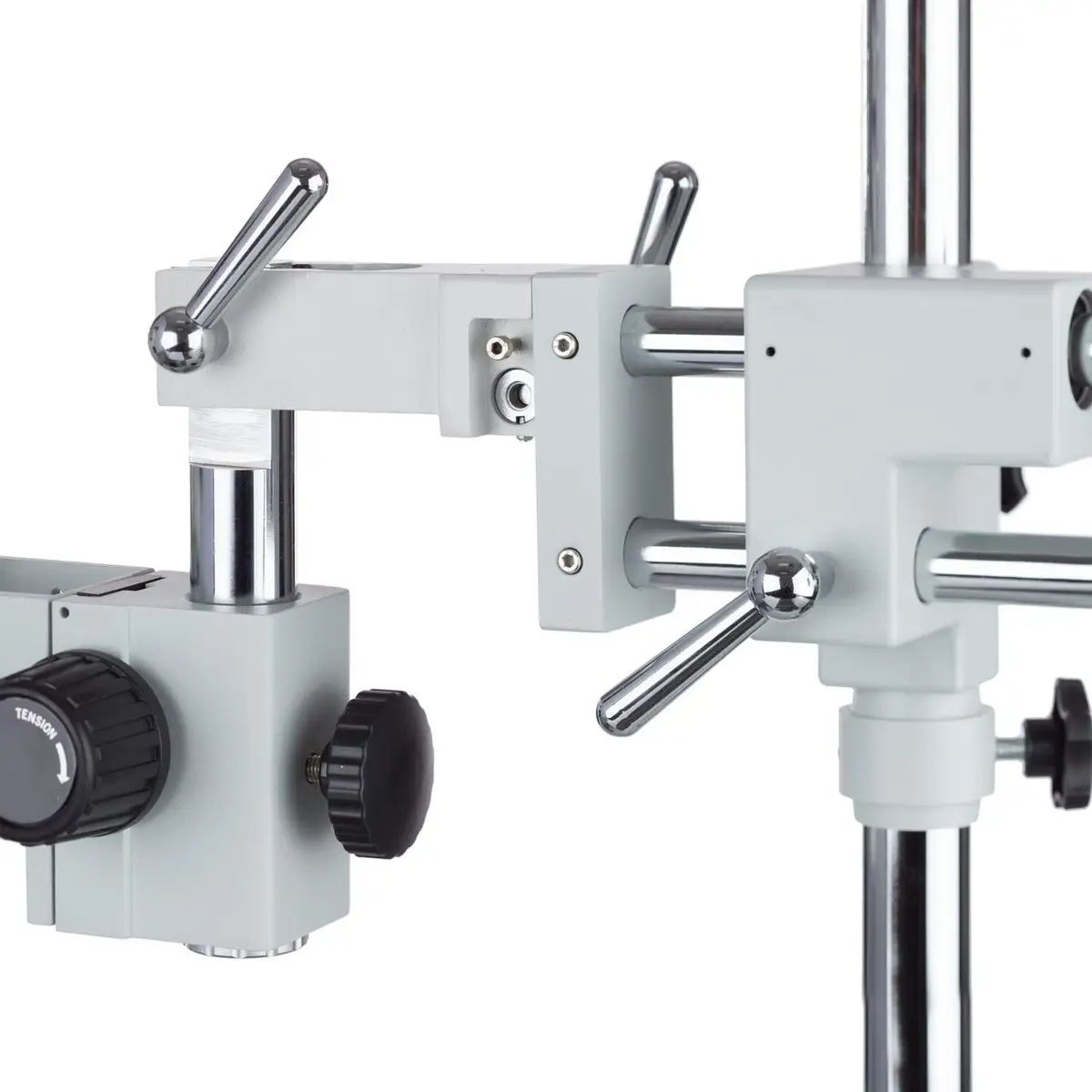
Another claim centers on the heavy-duty double-arm boom stand enabling “positioning on all three axes.” A confirmed electronics repair technician described this as “super useful… you can move the head in any direction, even sideways,” but also mentioned the stand’s weight made them rethink bench layout.
Lighting is marketed as shadow-free. In practice, multiple owners found the quadrant control invaluable for PCB work. One soldering expert noted: “Love the 4-way LED light—super, super useful… I would not buy without that.” However, some reported needing shadow control for detail work, hinting this spec delivers flexibility rather than uniform perfection.
Cross-Platform Consensus
Universally Praised
Optical clarity emerges as the defining strength. A verified buyer wrote: “The optics are as crisp and as sharp as any name brand professional scope that I have used.” For long-time electronics technicians, the ability to read tiny IC numbers or inspect SMT solder joints without eye strain was transformative. Reddit hobbyists in geology and archaeology also valued the high-eye-point eyepieces, with one sharing: “The zoom is especially useful… I ended up using a lab jack as a stage and it worked perfectly.”
Mechanical stability is another point of unanimous praise. Trustpilot data shows customers “highly satisfied with the microscope's stability, praising its heavy base that keeps it steady during use.” Even when extended, users noted it “falls back into place” if nudged.
Lighting control proves valuable for diverse needs. The removable 144-LED ring light with four zones lets users direct illumination from any quadrant. Amazon buyers repeatedly call it a “huge plus” for soldering, engraving, and biological specimen viewing. Adjustable brightness via rheostat suits both delicate sample work and high-contrast inspections.
Common Complaints
Assembly instructions draw consistent criticism. A verified buyer admitted: “The manual did not apply to the microscope I purchased… the booklet was of little to no use.” Others resorted to online resources or trial-and-error. “Going by the picture on Amazon, it wasn’t overly difficult, but most people would prefer correct instructions,” one reviewer cautioned.
Depth of field at high magnification frustrates some—making only the top surface of a resistor sharp while the bottom is blurry. While this is a common optical behavior, users unfamiliar with shallow focus may find the work harder at extreme zoom.
Workspace demands also come up often. Professionals managing multiple stations say the base “takes up a bit of room on the bench” and its weight makes moving it inconvenient. For one hobbyist, “it was too long to fit in the appointed spot… luckily it will turn every which way.”
A few units developed internal fogging due to seal failure, especially in humid environments. “This last one seems to be suffering from a failed seal which lets humidity into the scope,” an electronics assembly shop owner reported.
Divisive Features
The trinocular port draws mixed reactions. For camera integration, light from the left eyepiece is diverted to the port, meaning monocular viewing during image capture. Some consider this a worthy trade-off for detailed photo/video documentation; others dislike losing stereo vision mid-task.
The magnification range impresses most, but switching Barlow lenses and reconfiguring the LED light mount frustrates users aiming for quick changes. Power users willing to adjust hardware mid-project see flexibility, while high-volume operators prefer a more streamlined system.
Trust & Reliability
Trustpilot’s Fakespot review quality check indicates minimal deception and over 80% high-quality verified reviews. Long-term reliability stories, especially from electronics repair shops, suggest excellent durability. One veteran soldering professional claimed: “AmScope is still the best as always… very pleased, bought five of these for my company.” After years of daily use, mechanical wear seems low—though a thrust bearing addition on the main swivel is a frequent wish to prevent long-term part abrasion.
Alternatives
Direct competitors mentioned in discussions include the Vision Engineering Mantis system. Professionals note the AmScope’s price “is a lot cheaper than a Mantis” while delivering similar inspection performance, albeit with more traditional eyepiece viewing. Those needing hands-free parallax-free viewing may still opt for a Mantis despite cost.
Price & Value
Amazon’s current price hovers around $654.99 (down from $694.99). eBay resale prices range from ~$255 used to $935 new with camera packages. OfferUp listings show near-new units at $300–$395, indicating strong secondary market demand and value retention.
Verified buyers frequently remark on its bargain status: “I seriously doubt there is another product out there of similar value for under $1000.” For labs, repair shops, or advanced hobbyists, the cost-to-performance ratio is hard to beat.
Buying tip from community: Consider bundling with a proper stage or lab jack if working with small samples, and download the correct assembly manual from AmScope before first setup.
FAQ
Q: Can you get the full 3.5X–90X magnification without extra adjustments?
A: Not directly. You’ll need to swap Barlow lenses and reattach the LED light mount to reach both extremes, as noted by experienced Amazon buyers.
Q: Does the trinocular port allow live camera viewing without losing stereo vision?
A: No. Using the camera port diverts light from the left eyepiece, making viewing monocular during capture.
Q: How stable is it when fully extended?
A: Very stable for most tasks, though Trustpilot users note it can tip slightly when pushed before settling back into place due to its heavy cast steel base.
Q: Is depth of field an issue at higher magnifications?
A: Yes. At extreme zoom, focus is shallow—common in optical systems—requiring refocusing when examining structures with vertical height.
Q: Does it come with clear setup instructions?
A: Most buyers say no; expect a generic manual. Many recommend obtaining the specific guide from AmScope’s support prior to assembly.
Final Verdict: Buy if you’re an electronics technician, lab researcher, or committed hobbyist needing high stability, superb optics, and flexible lighting. Avoid if you have very limited bench space or require constant stereo vision during camera capture. Pro tip from a veteran repair tech: “Get to know your Barlow lenses and lighting zones—it unlocks the full potential of this scope.”