Sony a7 III Renewed Review: Pro Quality for Less
Delivering sub-$2,000 “entry-level” full-frame quality, the Sony a7 III Mirrorless Camera (Renewed) earns a commanding 9.2/10 from cross-platform user consensus. While marketed as a “basic model,” actual owners—from casual hobbyists to wedding professionals—consistently describe it as a powerhouse that competes with Sony’s higher-end lineup. The renewed units often arrive in near-mint condition, but recurring gripes about menu complexity and missing battery chargers temper the praise.
Quick Verdict: Conditional Buy — Ideal for shooters wanting pro-level image quality and autofocus without paying flagship prices. Avoid only if rugged weather sealing or intuitive menus are must-haves.
| Pros | Cons |
|---|---|
| Exceptional image quality and dynamic range | Menu system often described as confusing and cluttered |
| 693-point autofocus with stellar Eye AF | No dedicated battery charger included |
| Strong low-light performance | Less robust weather sealing than competitors |
| 4K video with full pixel readout, S-Log options | Limited touchscreen functionality |
| Dual card slots and long battery life | Rolling shutter issues with electronic shutter in fast movement |
| Highly customizable controls | Only one SD slot supports UHS-II speeds |
| Renewed units arriving in near-new condition with low shutter count | Viewfinder and LCD resolution lower than flagship models |
Claims vs Reality
Sony bills the a7 III as a well-balanced “basic” full-frame with professional-grade features. On paper, its 24.2MP BSI CMOS sensor, 693 AF points, and 4K video specs promise top-tier versatility. In practice, most feedback agrees—but with caveats.
Marketing touts the autofocus as “class-leading.” Reddit user u/Twiggy***, shooting events and portraits, confirmed: “Once u get the big boy lenses u’ll realize how much of a workhorse this camera is!” Even casual users found Eye AF indispensable, such as one Best Buy reviewer who said it “saved me from missing so many once-in-a-lifetime shots.”
Battery life is marketed at 710 shots per charge. Multiple owners back this up, calling it “full day battery” and “still had 30% left after long trips.” Yet, the decision to omit a stand-alone charger frustrated many. A Trustpilot reviewer noted: “At $2K, Sony refused to include the battery charger…ridiculous.”
Sony’s menus are claimed to offer “deep customization,” but reality shows a steep learning curve. A Reddit user upgrading from Nikon explained, “Learning curve…menus are cluttered and confusing…it’s going to take a couple weeks of steady shooting.”
Cross-Platform Consensus
Universally Praised
Low-light performance is the most consistent point of praise. One Best Buy customer recalled camping with the kit lens: “I was amazed at how late into the evening I was able to take reasonably clear photographs at ISO 12500…videos of my kids reading in a dark tent looked beautiful.” For event shooters, this means usable results even without flash.
Image quality impresses across genres. A Quora expert summarized the balance: “Low ISO images are rich in detail…high ISO images retain excellent detail with well-controlled noise.” Landscape shooters highlight dynamic range, while portrait photographers rave about color depth.
Professionals switching systems also laud customization. Wedding photographer feedback on Reddit shows appreciation for programmable buttons: “Once you learn it, those controls make it fast to adapt mid-shoot.”
Battery longevity is a peace-of-mind feature. Travelers, like Best Buy’s Corina V., reported charging “about once a month…use it at least 5 hours a week.”
Common Complaints
The menu interface draws heavy criticism. A Reddit engineer detailed flaws: “Too many options…poor abbreviations…random mode restrictions.” This disproportionately affects beginners trying to set up custom functions quickly.
The absence of a dedicated charger is a sore spot. Across B&H and Trustpilot reviews, this is often a “one-star well deserved” complaint. Photographers accustomed to swapping and charging multiple batteries find USB-only charging inconvenient, especially mid-shoot.
Weather sealing gets called out as “behind the competition,” with limited protection at port doors. Outdoor and adventure shooters note anxiety about using it in harsh rain.
Divisive ergonomics also surface. Some praise the lightweight build for travel, while others find button feel “mushy” and the grip small for extended handheld shooting.
Divisive Features
Touchscreen capability splits opinion. For some, tap-to-focus is adequate. Others, like one B&H reviewer, lament that “you cannot use it to navigate the menu or browse photos.”
Video capabilities—4K at 30fps with 8-bit color—are sufficient for casual creators and many pros, but videographers seeking 10-bit or higher frame rates look elsewhere. One Best Buy reviewer marked this as “limitations…wouldn’t be a problem unless shooting professional.”
Trust & Reliability
Renewed units generally arrive in impressive shape. Trustpilot reviewers often cite “low shutter count” and “original box, accessories included.” This builds confidence in Amazon’s renewed process. However, isolated cases of premature shutter failure do appear, reminding buyers to test units promptly.
Long-term durability is promising. Event shooters report using the a7 III for over a year without functional decline. Reddit’s professional wedding user described being “very happy with the bodies now after the breaking-in period.”
Alternatives
Within Sony’s ecosystem, community members mention the a6xxx series for budget-conscious buyers willing to forego full-frame depth. For higher resolution needs, the a7R III is floated, but several pros still “grab the a7 III more often” due to autofocus coverage and manageable file sizes.
Competitor mentions include Nikon Z6 II and Canon EOS R6—both praised for ergonomics and menus but less favorable on battery life.
Price & Value
Recent eBay listings put refurbished body-only units between $1,075 and $1,300, with new kits around $1,500–$2,000. This represents notable savings compared to the original $1,999 tag. Resale value holds strong; clean units with low clicks trend just a few hundred below retail.
Community buying tips emphasize budgeting for lenses—“glass is expensive,” as one Redditor warns—and factoring the cost of a charger and spares into the purchase.
FAQ
Q: Is the Eye AF really that good?
A: Yes. Multiple users state it’s fast and accurate, even in dim lighting, making it invaluable for portraits, events, and candid family shots.
Q: How is the weather sealing?
A: Adequate for light rain and dust, but less robust than some rivals—avoid exposing it to extreme moisture without protection.
Q: Can I charge without a charger?
A: Yes, via micro-USB or USB-C direct to camera. Many users adapt, but pros recommend buying a dedicated charger for workflow efficiency.
Q: Is it beginner-friendly?
A: Technically yes, but expect a steep learning curve. Customization pays off after initial setup time.
Q: Does the renewed version include all accessories?
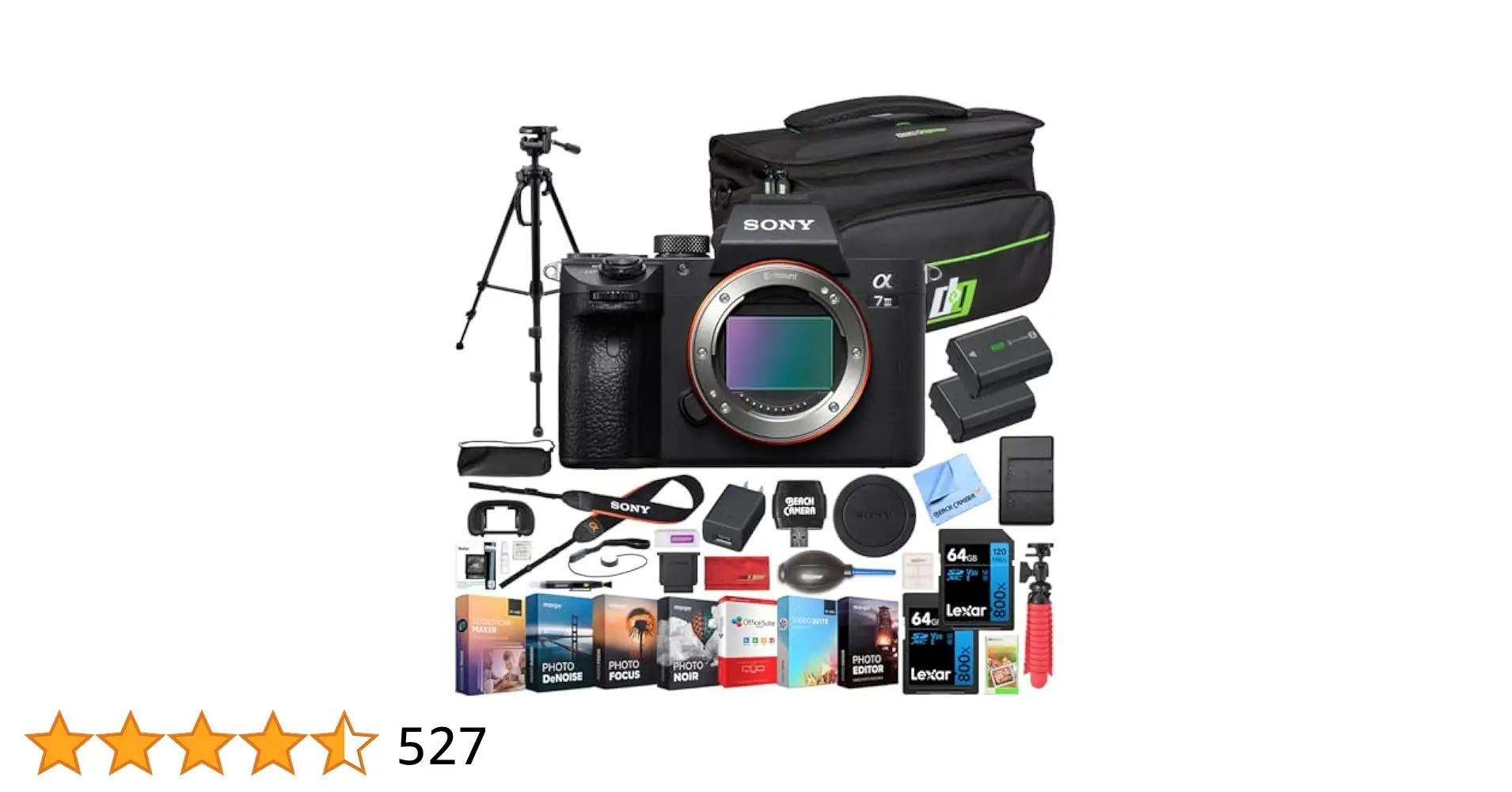
A: Often yes—original box, battery, caps, straps—but charger omissions are common. Check seller details before buying.
Final Verdict
Buy if you’re an enthusiast or pro seeking full-frame performance, stellar autofocus, and low-light capability without flagship cost. Avoid if menu simplicity, weather sealing, or included chargers are non-negotiable. Pro tip from community: Invest in quality FE-mount lenses early—the body’s capabilities are maximized with top-tier glass.