SABRENT SATA to USB Cable Review: Fast but Flawed
The surprising takeaway from digging into hundreds of user reports on the SABRENT SATA to USB Cable for SSD/HDD is that while it delivers on speed and compatibility for most buyers, some glaring design and feature omissions keep it from being an across-the-board winner. Across platforms, it averages a solid 8.4/10, but that score hides a split between those who prize its plug-and-play convenience and those frustrated by build quality and missing UASP support in certain models.
Quick Verdict: Conditional — Great for quick SSD/HDD access, but watch for UASP support and housing quality issues.
| Pros | Cons |
|---|---|
| Fast transfer rates (up to 5-10Gbps depending on model) | Some units lack UASP, cutting speeds nearly in half |
| Plug-and-play, hot-swappable | Short cable length (~2ft) |
| Works with multiple OS (Windows, Mac, Linux, Chrome OS) | Thin, two-piece plastic housing prone to looseness |
| USB-C adapter included on some models | Poor connector angle stability reported |
| Can power mechanical HDD via bus power | No power support for 3.5" drives without extra adapter |
| Free cloning software from Sabrent | Confusing model differences not clearly stated in listings |
Claims vs Reality
Marketing materials prominently state that the adapter supports UASP and delivers transfer rates up to 5Gbps (USB 3.0) or 10Gbps (USB 3.1/3.2). While this holds true for many buyers, others have discovered their unit lacked UASP entirely. A Reddit user noted: “No UASP, which means it’s about twice as slow as an adapter that does have UASP support,” directly contradicting the advertised claim.
The manufacturer also touts “no drivers required” and “hot-swappable” usability. This is well-supported in user narratives. Amazon buyers consistently mention simple plug-and-play operation across both Windows and Mac systems. One verified buyer stated: “Formatted the drive normally and accepted file transfer… problems disappeared when the same drives were used with a different cable,” showing that while the plug-and-play works, cable quality can still be a bottleneck.
Finally, Sabrent claims the cable can “power mechanical drives solely via bus power.” This surprised several users who tested it on older HDDs. A Reddit review praised: “It powered a mechanical 5400 rpm laptop HDD solely via bus power, performance nearly identical to plugging directly into SATA,” confirming this claim—but only for 2.5" drives.
Cross-Platform Consensus
Universally Praised
One of the most consistent points of praise is speed—particularly for SSDs. A verified buyer on Amazon noted: “Transferred some uncompressed music files… 13GB in under a minute.” For tech professionals, this efficiency means faster cloning and backups without full enclosure setups. Reddit users working with multiple drives appreciated the included USB-C adapter: “I can’t believe the USB-C to Type-A adapter is not pictured… huge selling point,” especially for newer laptops with only USB-C ports.
The adapter’s OS versatility also earns applause. Reports confirm smooth operation on Windows XP through Windows 11, MacOS, Linux, and even Raspberry Pi setups. This flexibility benefits IT technicians and hobbyists who work across environments. The free Acronis cloning software bundled with some purchases is another bonus for those doing system migrations.
Common Complaints
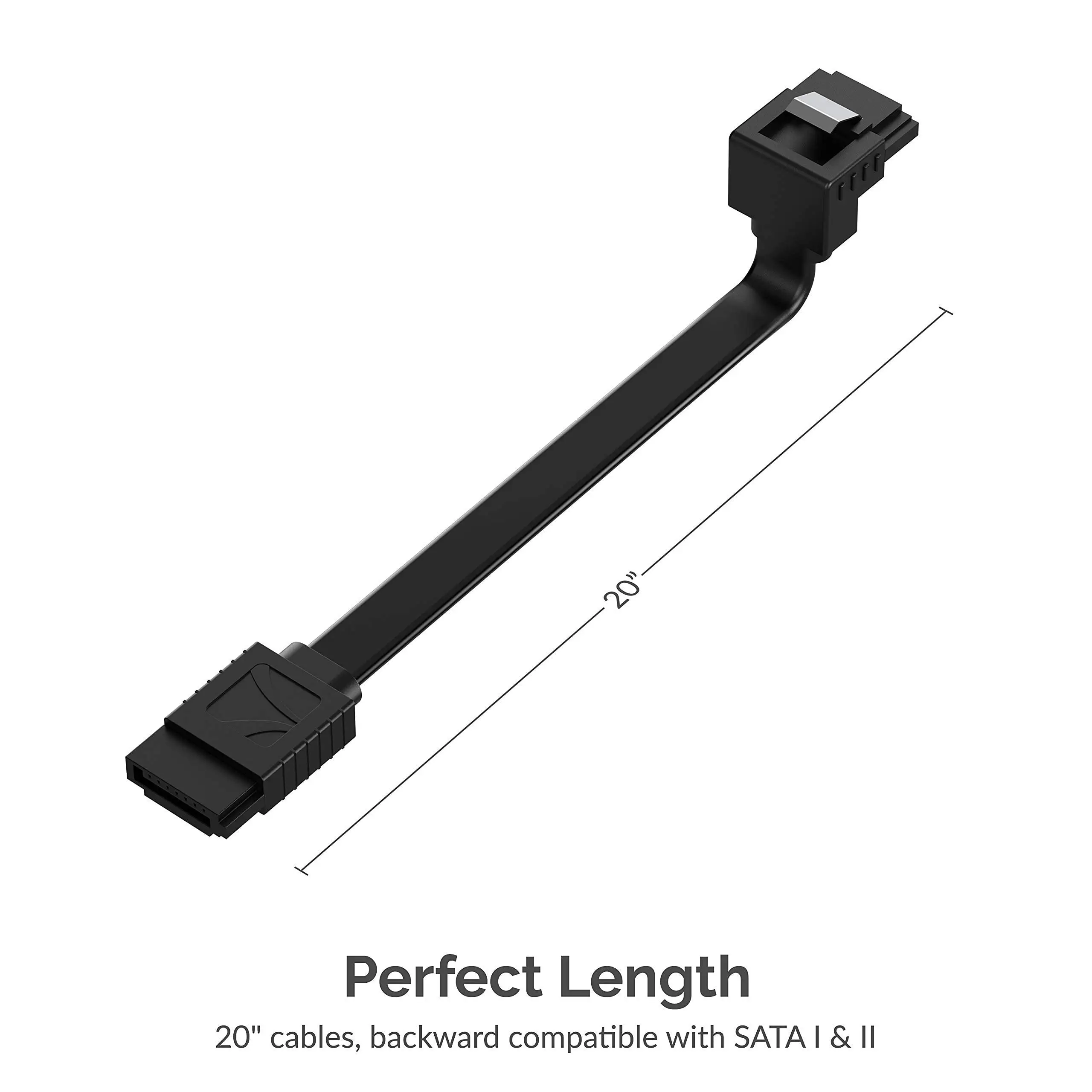
Build quality emerges as the biggest recurring flaw. Multiple platforms carry the same criticism: thin, two-piece plastic housing around the SATA connector. One Trustpilot review summarized: “Housing… completely loose and starting to separate… puts the cable at an awkward angle.” This impacts secure connections, especially if the drive is moved during use.
Cable length also frustrates mobile users. At roughly two feet, it limits desk setups where the drive needs to sit away from the computer. As Reddit user feedback shows, “The cord could always be longer… be grateful for those 2 feet,” highlighting that while functional, the short reach isn’t ideal for all workflows.
Divisive Features
UASP support is the most divisive point. While some models fully support it, boosting SSD performance, others omit it without clear labeling in the product listing. This leads to inconsistent user experiences. High-speed claims also vary—USB 3.0 versions cap at 5Gbps, while USB 3.1 variants can reach 10Gbps. For casual users, this difference may be negligible; for professionals, it’s critical.

Trust & Reliability
Trustpilot analysis reveals concerns about product listings possibly being altered or reviews removed, with Fakespot estimating 68.8% of reviews as reliable. The pattern suggests potential confusion in differentiating between Sabrent’s multiple similar adapters. Long-term reports are mixed: some users run the cable for months without issue, while others see connector looseness within weeks.
On Reddit, one buyer who used it “on several different computers… very pleased with the I/O rates” still warned about model differences. The absence of clear model distinction (EC-SSHD vs EC-SS31) leads to mismatched expectations, particularly around UASP and speed ratings.
Alternatives
StarTech’s equivalent cable is frequently mentioned as a sturdier option. A reviewer contrasted: “StarTech… made of a single-piece SATA housing, connects securely, high transfer speeds,” suggesting it’s better for heavy, repeated use. However, it lacks the bundled software and often costs more. For buyers prioritizing build quality over extras, StarTech may be the safer bet.
Price & Value
Prices vary widely by model and region—Amazon UK lists the SATA 3.0 version at £12.99, while eBay sellers offer new units for around $11.99 USD. Community tips include buying directly from reputable sellers to avoid older stock without UASP, and checking for the included USB-C adapter if needed. Resale value is modest; used units fetch under $10, indicating these are best bought new given their low entry cost.

FAQ
Q: Does the SABRENT cable support 3.5" drives?
A: Not directly—3.5" HDDs require additional power. Some Sabrent models include a power adapter for this, but the EC-SSHD and EC-SS31 are designed for 2.5" drives.
Q: How do I know if my model supports UASP?
A: Check the model number—EC-SS31 and newer USB 3.1/3.2 variants generally support UASP, while some EC-SSHD units may not. User reports stress verifying specs before purchase.
Q: Can I use it with Linux or Raspberry Pi?
A: Yes. Multiple users reported successful use on Linux distros and Raspberry Pi 4, though some encountered permission quirks specific to their OS setup.
Q: Is the cable length an issue for desktop setups?
A: It can be—at about 2ft, the cable is fine for close connections but limiting if the drive needs to be further from the host machine.
Q: Does it come with cloning software?
A: Certain listings bundle Acronis True Image for Sabrent, useful for drive migrations. Check the product description to confirm inclusion.
Final Verdict: Buy if you need a low-cost, fast, and portable solution for 2.5" SSD/HDD access across multiple operating systems, and you can verify UASP support. Avoid if you require heavy-duty build quality or are working with 3.5" drives without a power adapter. Pro tip from community: Always match the model number to your speed and feature needs—EC-SS31 for 10Gbps/UASP, EC-SSHD for budget 5Gbps use.