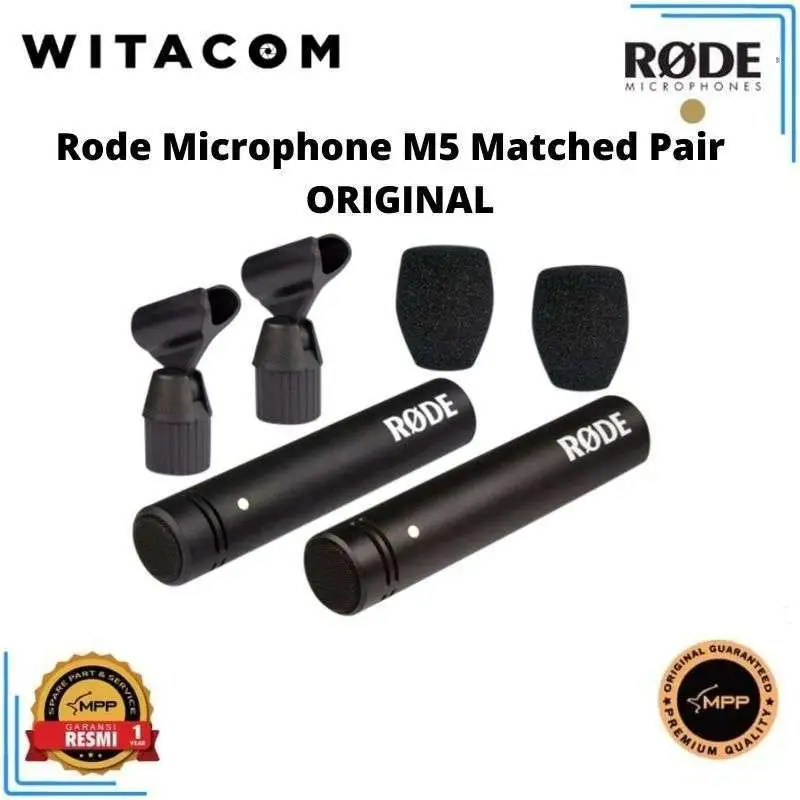
Rode M5 Matched Pair Review: Strong Value, Minor Flaws
Bold claims about precision matching aside, the Rode M5 Condenser Microphone Matched Pair consistently scores around 8.5/10 from musicians, engineers, and hobbyists who praise its stereo imaging, portability, and value. While some users note tonal limitations in the lower mids, others call it “astonishingly good” for budget overheads and acoustic recording.
Quick Verdict: Conditional buy for musicians, podcasters, and budget-conscious recordists.
| Pros | Cons |
|---|---|
| Consistent stereo matching within ±1db | Slight lack of low-mid body |
| Very low self-noise (19 dBA) | No interchangeable capsules |
| Compact and light for easy positioning | Not ideal as sole drum overheads |
| Durable ceramic-coated metal body | Edgy brightness for some tastes |
| Affordable for matched pair | Slightly higher noise floor than NT5 |
| Strong value for acoustic instruments | Packaging praised more than tone by some |
| 10-year warranty with registration | No included stereo bar |
Claims vs Reality
RØDE touts “precision matched pair” tolerances and “ultra-low noise” for the M5, promising professional-grade stereo recordings at accessible prices. Marketing materials emphasize the ≤1db sensitivity variation and robust ceramic coating.
Digging into user reports, the matching claim holds up well. AudioTechnology’s review described running phase cancellation tests and finding “the image stayed very centred… overall they seemed very well-matched across the frequency spectrum.” Reddit user feedback reinforced this, with one student noting: “An XY pair on the 12th fret… has given me great results” across guitar and piano.
The “ultra-low noise” promise is more nuanced. While 19dBA is indeed quiet for budget pencil condensers, Paul Vnuk Jr. from Recording Magazine compared them to the NT5 and found “a higher noise floor and… a tad less sensitive” — but also half the price. For most casual and semi-pro scenarios, sweetwater buyers report the noise level was not a limiting factor: “Room mics” and “Best choir mics” are common praise.
Cross-Platform Consensus
Universally Praised
Their compactness is the most repeated compliment. AudioTechnology noted, “They’re tiny at 10 cm long, featherweights… you’re not going to battle a serious case of the droops.” This opens stereo miking options in tight spaces without bulky mounts. For buskers or field recordists, portability equals fewer logistical headaches.
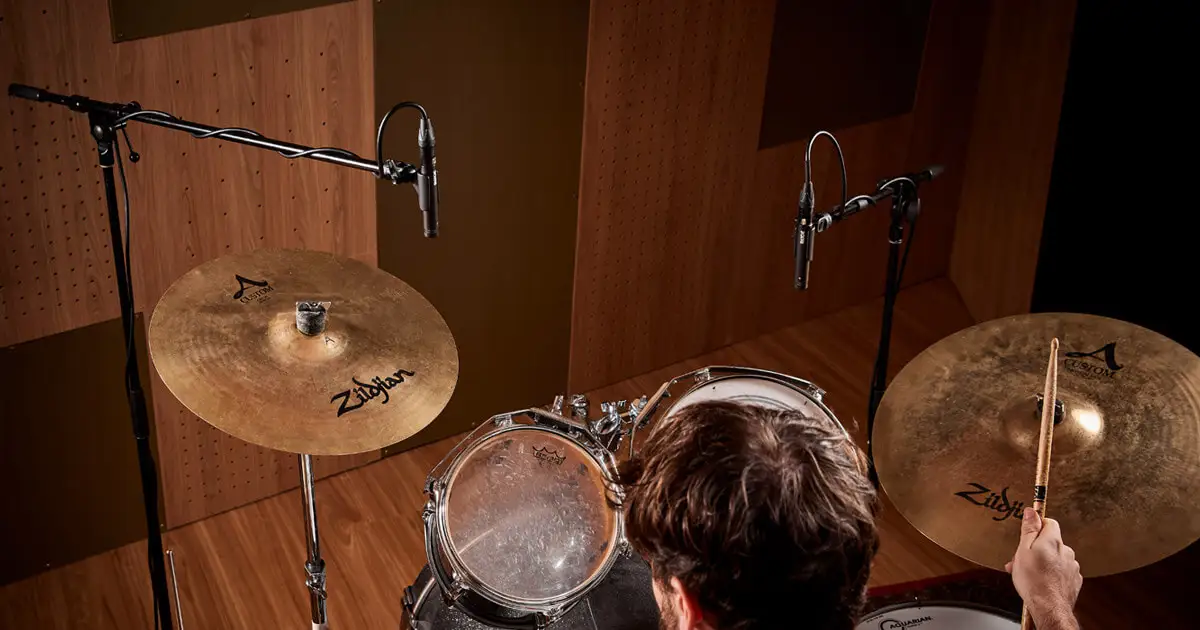
Stereo matching accuracy benefits orchestral and acoustic captures. A verified buyer on Amazon wrote: “Works great with guitars, percussion, strings, woodwinds, brass, and more.” Trustpilot reviewers echo that for cymbal overheads, “small size makes hanging as stereo pair… much easier on your mic stands,” freeing up positioning options.
Versatility is another asset. Reddit user u/unknown*** summarized: “Very versatile and will get a great sound considering how cheap they are,” having used the pair for acoustic guitar, piano, and drum overheads.
Common Complaints
The primary tonal critique revolves around low-mid response. AudioTechnology found them “lacking a little low mid body,” which in drum overheads translated to snares not sitting well in the mix. Users mitigated this by EQ’ing “a bit of low-mids back in… without it getting boxy.”
Brightness divides opinion. Trustpilot lists “bright sounding… perfect for over-head mic-ing of cymbals” as a pro, but some caution that “even as a bargain, these are edgy.” In certain applications, that added bite benefits percussive clarity; in others, it edges towards harshness.
No capsule interchangeability limits experimentation. Some studio engineers accustomed to variable polar patterns felt locked in with cardioid-only options.
Divisive Features
The included WS5 windshields and RM5 clips are handy, but lack of an included stereo bar is a missed opportunity. AudioTechnology praised Rode’s optional ABS stereo bar, but without it, users improvising stereo arrays sometimes struggle.
Aesthetic durability — the matte ceramic coating — earns admiration for scratch resistance, but a Trustpilot reviewer quipped Rode “should take the money from these mic’s immaculate gold foil packaging” and invest elsewhere. It’s a subtle signal that flashy presentation doesn’t necessarily convince more discerning ears.
Trust & Reliability
Long-term durability emerges as a strength. Reddit users report six months of regular use without degradation, and Trustpilot verified buyers note “pleasantly surprised at the quality of sound they produced” even after multiple setups.
No credible scam complaints surface, but the Trustpilot Fakespot entry does flag hype-heavy marketing copy. Shipping delays (FedEx in one case) were logistical rather than product defects. The 10-year warranty — with registration — reassures buyers planning frequent use in live environments.
Alternatives
Two frequent comparisons are the Audio-Technica Pro37 and Oktava MK-012. The Pro37 wins favor from some guitarists: “Can’t believe how good it is for the money.” Oktava MK-012 offers “a tad on the warm side” sound, ideal for strings, contrasting with the M5’s brighter high-frequency profile. Rode’s own NT5 delivers lower noise and more sensitivity but at twice the price, making the M5 a value play despite small compromises.
Price & Value
Prices fluctuate from $165 on Sweetwater (lowest in 90 days) to $199 on eBay US, with higher listings like $322 in Japan including shipping. Buyers consistently frame value around the stereo matching and versatility at this price tier. Trustpilot sums it: “For the price, I don’t think you could beat these little condenser wonders.” Resale trends suggest matched pairs hold value better than solo units due to stereo recording demand.
Buying tip from seasoned Redditors: grab the optional Rode stereo bar for consistent XY/ORTF setups in seconds — the added precision boosts the matched pair’s inherent strengths.
FAQ
Q: Is the Rode M5 good for acoustic guitar?
A: Yes. Many users report excellent results in XY at the 12th fret, capturing balanced detail and stereo image. Bass extension is modest, so EQ can help add warmth.
Q: Can these be used as drum overheads?
A: In a pinch, yes — bright cymbal capture is strong, but snares may lack presence. Pairing with close mics for body is recommended.
Q: How does it compare to NT5?
A: NT5 offers lower noise and higher sensitivity, but M5 is half the price. Most users find the difference negligible in budget or semi-pro contexts.
Q: What power supply is needed?
A: P24 or P48 phantom power from an audio interface or mixer is required.
Q: Is the stereo bar included?
A: No. It’s optional but recommended for consistent positioning.
Final Verdict
Buy if you’re a musician, podcaster, or home recordist seeking a travel-friendly, budget-matched pair for acoustic sources, choirs, or stereo flair. Avoid if you need interchangeable patterns or authoritative low-mid capture without EQ. Community pro tip: “Do yourself a favour and grab some of these… especially with the stereo bar, because they’re so simple to wrangle.”