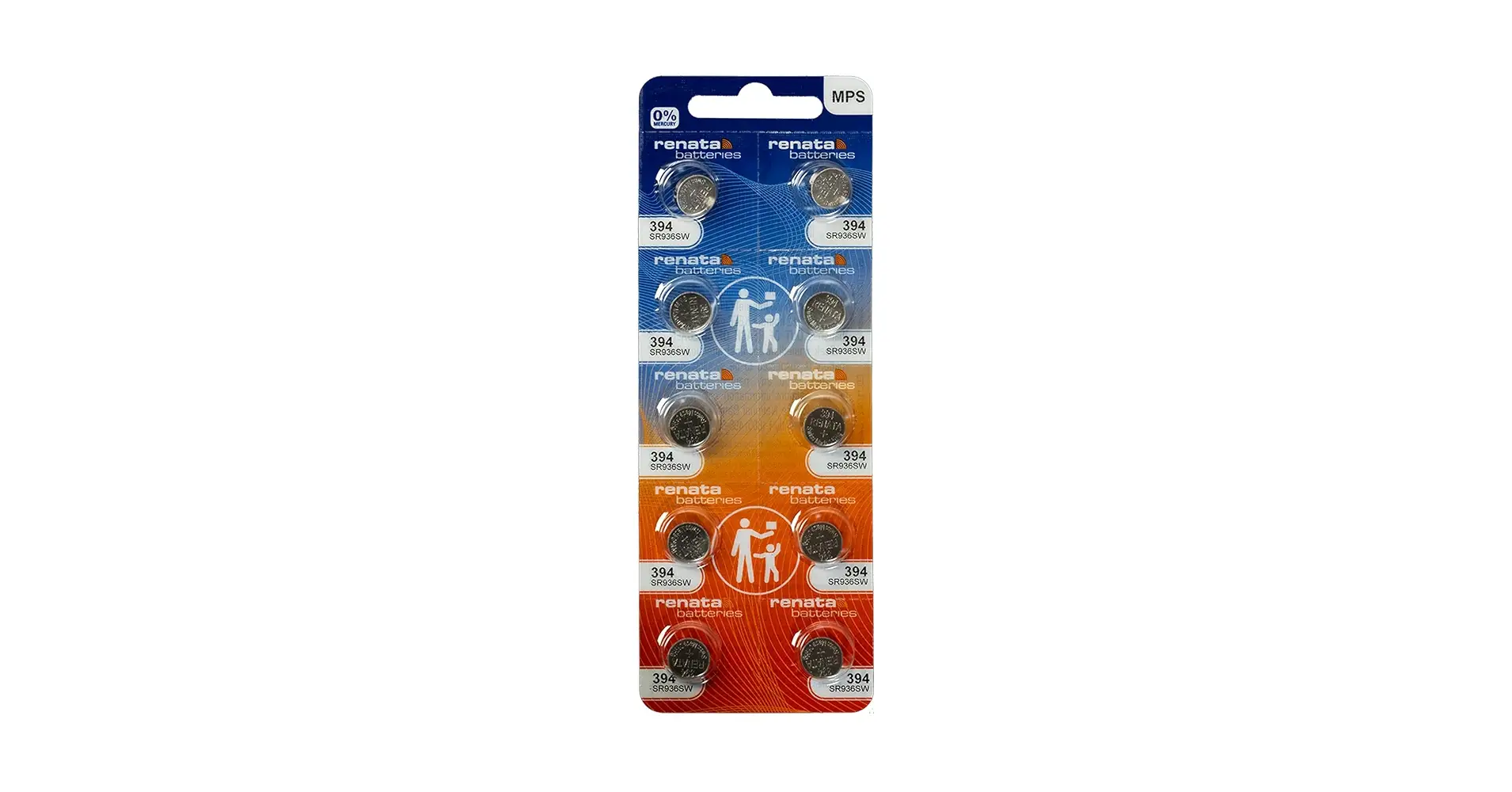
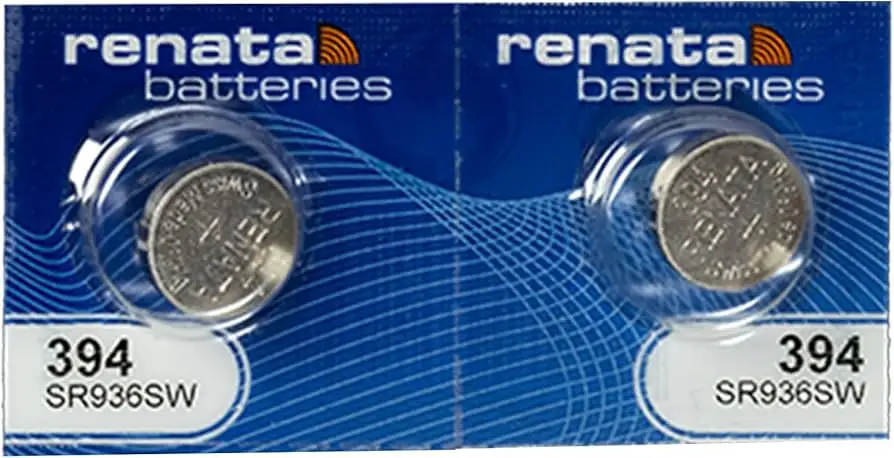
Renata 394 SR936SW Batteries Review: Worth It? 8.6/10
“Perfect…almost three years until expiration” is the praise that keeps coming up—until you hit the outliers who say it arrived “dead.” Renata 394 SR936SW Watch Batteries (2 Count) lands as a strong buy for most watch owners, with a nagging quality/packaging caveat. Verdict: 8.6/10
Quick Verdict
Yes (with a small risk caveat). Most buyers describe fresh stock, correct fit, and immediate watch revival; a minority report dead-on-arrival cells or flimsy shipping.
| What shows up most | What it means for you | Evidence (platform) |
|---|---|---|
| Works immediately | Good for DIY battery swaps | A verified buyer on Amazon noted: “battery worked out of the package” (Amazon US reviews) |
| Fresh/dated stock | Less worry about old inventory | A verified buyer on Amazon noted: “almost three years until expiration” (Amazon US reviews) |
| Fits like OEM | Safer bet for Swatch/Tissot owners | A verified buyer on Amazon noted: “renata is the oem battery for swatch watches… it works perfectly” (Amazon US reviews) |
| Occasional dead cells | Higher hassle if you need it urgently | A verified buyer on Amazon noted: “this battery arrived dead.” (Amazon US reviews) |
| Shipping/packaging variability | Risk of slow delivery or minimal padding | A verified buyer on Amazon noted: “letter type envelope, no padding” (Amazon US reviews) |
Claims vs Reality
Renata’s positioning around “Swiss made,” silver oxide chemistry, and leak-resistance lines up with what many watch owners are actually chasing: a stable 1.55V cell that won’t wreck a movement. Digging deeper into buyer experiences, the reality is less about headline specs and more about whether the specific unit you received is fresh and well-handled in transit.
One recurring “claim” in community talk is that silver oxide cells are less prone to messy failures than alkaline substitutes. In watch repair discussions, that’s echoed as a practical rule for collectors maintaining many quartz pieces. Reddit user (username not provided in the dataset excerpt) said: “they’re all silver oxide and so don't tend to leak or as badly,” framing Renata as a safer chemistry choice versus alkaline equivalents.
At the same time, “premium reputation” doesn’t eliminate fulfillment problems. Multiple sources include stories of batteries arriving dead or under-voltage. A verified buyer on Amazon noted: “this battery arrived dead.” And a buyer review on an e-commerce site (VseInstrumenty.ru) described a new cell reading “0.7v” on a multimeter and arriving “in a little bag,” while their older battery still measured “1.1v.” While officially rated at 1.55V, multiple users report receiving units that don’t meet expectations out of the package.
Cross-Platform Consensus
Universally Praised
“Watch starts immediately” is the simplest, most repeated win—and it matters most for DIYers who are tired of paying a jeweler fee for a 2-minute swap. A verified buyer on Amazon noted: “battery worked out of the package and arrived on time,” summarizing the best-case experience: it shows up, the watch runs, you move on. For someone rotating through multiple quartz watches, that low-friction success is the entire point.
Freshness and visible dating also gets real enthusiasm because it reduces uncertainty. A verified buyer on Amazon noted: “battery received in a very good shape and almost three years until expiration. i checked the voltage using my multimeter and it is perfectly fine.” For careful hobbyists with tools, that extra step—checking voltage—turns the purchase into a confident install rather than a gamble.
Brand-as-OEM comes through most clearly with Swatch owners who want the “right” cell rather than a close substitute. A verified buyer on Amazon noted: “i found that renata is the oem battery for swatch watches… it works perfectly.” On the Russian retail review page, another buyer used it in a Tissot and emphasized authenticity cues: “по упаковке оригинал. часы ходят,” i.e., the packaging looked original and the watch runs. For owners of recognizable Swiss brands, the emotional payoff is “it fits and feels correct,” not just that it produces voltage.
Some users also highlight leak anxiety—especially relevant for watches stored for long periods. In the same Russian review set, a buyer wrote: “не разливает электролит по прибору… не помню, чтобы ренаты окислялись,” describing Renata as less associated with corrosion/cleanup. On Reddit’s watch repair discussion, the safety framing is even more explicit: Renata is preferred because it’s “less risk to the internals if there is a leak.”
After those narratives, the common “pros” consolidate into a few themes:
- Immediate functionality (“works perfectly,” “watch works like a charm”)
- Fresh stock/expiry confidence (“almost three years until expiration”)
- OEM/fit confidence (especially for Swatch and Tissot)
- Reduced leak worry versus alkaline alternatives (community guidance)
Common Complaints
The most damaging complaint is simple: a dead battery on arrival. That’s a worst-case scenario for anyone replacing a battery because their watch is already down. A verified buyer on Amazon noted: “this battery arrived dead.” The Russian retailer review includes an even more diagnostic story: the buyer swapped it into the watch, it didn’t start, and the multimeter showed “0,7 v,” leading to the conclusion: “не работает.” For a user who bought specifically to resurrect a watch immediately, this turns a low-cost fix into a delay plus troubleshooting.
Shipping and packaging are the next recurring friction point. Even when the cell works, buyers sometimes dislike how it arrives. A verified buyer on Amazon noted: “it took two weeks to arrive… in a letter type envelope, no padding around the battery.” Another Amazon reviewer complained about logistics visibility rather than the product: “fast shipping, but tracking didn't track,” followed by confusion about where the package was. These issues disproportionately hit users on a deadline—gifts, travel, or a daily-wear watch that can’t sit idle.
There’s also a softer but persistent complaint around expiration horizons. Some buyers are satisfied, but others want longer “best before” windows—especially if they’re stocking spares. A verified buyer on Amazon noted: “wish the expiration date was further out.” That’s not a performance failure, but it changes the value proposition for bulk buyers versus someone who needs a single replacement right now.
After those stories, the main “cons” look like:
- Dead-on-arrival risk (small but real)
- Slow delivery or weak packaging in mailers
- Expiration date sometimes shorter than expected
Divisive Features
Renata’s reputation itself is divisive: some buyers treat it as the “safe default,” while others see “a battery is a battery” as long as it fits. One Amazon reviewer put it bluntly: “it’s a battery - it works.” Meanwhile, the watch-repair community argues there is a meaningful difference between silver oxide and alkaline, with the Reddit thread warning that alkaline equivalents “will be more prone to leaks and more destructive leaks.” The divide isn’t about the 394 size—it’s whether the brand/chemistry is worth paying attention to.
Quantity is another split point, especially when the product is sold in small counts like a 2-pack versus multi-packs. Some people specifically want minimal extras. A verified buyer on Amazon noted: “i didn’t want to buy multiples since i only have one thing that requires this battery size.” Others in community discussions (and across marketplaces) talk like collectors, doing many swaps and preferring to stock up—but that preference shows up more as context than direct praise of the 2-count format.
Trust & Reliability
Digging deeper into trust signals, the strongest “reliability” stories come from people checking dates and voltage. A verified buyer on Amazon noted: “i checked the voltage using my multimeter and it is perfectly fine,” which reads like a method to protect yourself against old stock. The flip side is that “dead-on-arrival” reports create suspicion about inventory handling rather than the chemistry itself.
Third-party analysis sites add a different kind of trust signal: Fakespot’s page summarizes buyer themes like “fresh battery with expiration date” and also captures the downside: “unfortunately it doesnt match my watch” and complaints about USPS delays. That aligns with the broader pattern: the biggest risks are fulfillment/fit mistakes and occasional dud cells, not widespread fraud claims in the provided data.
Long-term durability stories are present but not always glowing. On VseInstrumenty.ru, one buyer said the battery lasted “almost two years” in a chronograph while they expected three: “проработала… почти два года, хотя ожидал… три.” For high-drain chronographs, that “shorter than hoped” result is a reminder that watch type matters as much as brand.
Alternatives
If you’re deciding whether Renata is “better,” the alternatives that appear in user discussions are Energizer, Varta, Seiko/Seizaiken, and even Sony/Murata-style watch cells. The most practical comparisons in the data are experiential rather than laboratory-style.
For Swatch owners, Renata’s edge is the OEM association. A verified buyer on Amazon said they previously used “an energizer 394/380,” but switched after learning “renata is the oem battery for swatch watches,” and reported: “it works perfectly.” That story suggests the “alternative” is viable, but Renata buys peace of mind for brand-correct replacements.
For Fossil owners, brand switching is portrayed as routine. A verified buyer on Amazon noted their original was “a varta v 394… exact same type… different brand,” and after installing Renata: it arrived with an expiration date and “i would definitely order this product again.” That points to compatibility being broad—as long as the cell is actually fresh and correct.
For collectors and DIY repairers, Seiko-branded cells appear as a default when working on Seiko watches. In the Reddit thread, one participant said: “i do mostly seiko watches and therefore use seiko batteries,” while another framed Renata as “all the way” for large battery-change batches. The “best” alternative depends on whether you’re matching OEM conventions or just seeking reliable silver oxide.
Price & Value
Pricing in the provided data shows small-ticket variability depending on where you buy and in what quantity. On Amazon US, the single-cell listing is shown at about $3.90 (specs page), while other listings and markets show different prices and pack sizes. That matters because shipping and freshness can outweigh a small per-unit savings.
Value narratives from buyers focus on avoiding service fees and hunting hard-to-find sizes locally. One Amazon reviewer described the 394 as “surprisingly hard to find locally,” which makes online purchasing feel justified even if shipping is slower. Another buyer frames value in DIY terms: changing it yourself is the win, not the few dollars saved on the cell.
On resale/market trends, eBay listings show the 394/SR936SW as widely available with many sellers and a range of multi-pack options; that breadth can be good for price shopping, but it also increases the importance of checking “exp” dates and seller credibility since dead stock is a known complaint theme across platforms.
Community-style buying tips embedded in the reviews point to three practical moves:
- Check the “best before”/expiration date on arrival (buyers mention it directly).
- If you have a multimeter, verify voltage before installing (some buyers do).
- If you’re on a deadline, avoid options known for slow mailers or weak packaging.
FAQ
Q: Are Renata 394 (SR936SW) batteries better than other brands?
A: Conditionally. In a watch repair discussion, Reddit user (username not provided in the dataset excerpt) said: “they’re all silver oxide and so don't tend to leak or as badly,” and warned alkaline equivalents can be “more prone to leaks.” Amazon buyers also cite OEM fit for Swatch: “renata is the oem battery.”
Q: Do these arrive fresh, or are they old stock?
A: Often fresh, but not guaranteed. A verified buyer on Amazon noted: “almost three years until expiration,” and another highlighted the packaging showed a “best before” date. However, another verified buyer reported: “this battery arrived dead,” suggesting occasional inventory/handling issues.
Q: Will it fit my watch if it uses 394/380 or V394?
A: Usually, but verify your exact spec. An Amazon buyer replaced a “varta v 394” with Renata and said it’s the “exact same type.” Another buyer previously used “energizer 394/380” but moved to Renata for OEM reasons. Fit complaints exist in third-party summaries, so double-check model requirements.
Q: How long does a Renata 394 typically last in real use?
A: Reports vary by watch and usage. One buyer on VseInstrumenty.ru said it lasted “almost two years” in a chronograph, though they expected three. Other Amazon feedback focuses more on immediate success than lifespan, suggesting many users don’t track long-term duration closely.
Q: What’s the biggest downside buyers mention?
A: Dead-on-arrival units and shipping/packaging quirks. A verified buyer on Amazon stated: “this battery arrived dead.” Another described a “letter type envelope, no padding,” and long delivery time. If your watch is mission-critical, that small risk is the main tradeoff.
Final Verdict
Buy if you’re a DIY watch owner who wants an OEM-leaning, silver oxide 1.55V replacement and you care about seeing a clear “best before” date—especially for Swatch or Tissot-style use cases. Avoid if you need guaranteed immediate success with zero DOA risk or you’re on a tight deadline where slow mail delivery ruins the value.
Pro tip from the community: if you have one, use a multimeter—an Amazon verified buyer said: “i checked the voltage using my multimeter and it is perfectly fine,” which is the quickest way to catch the rare dud before you open up the watch again.