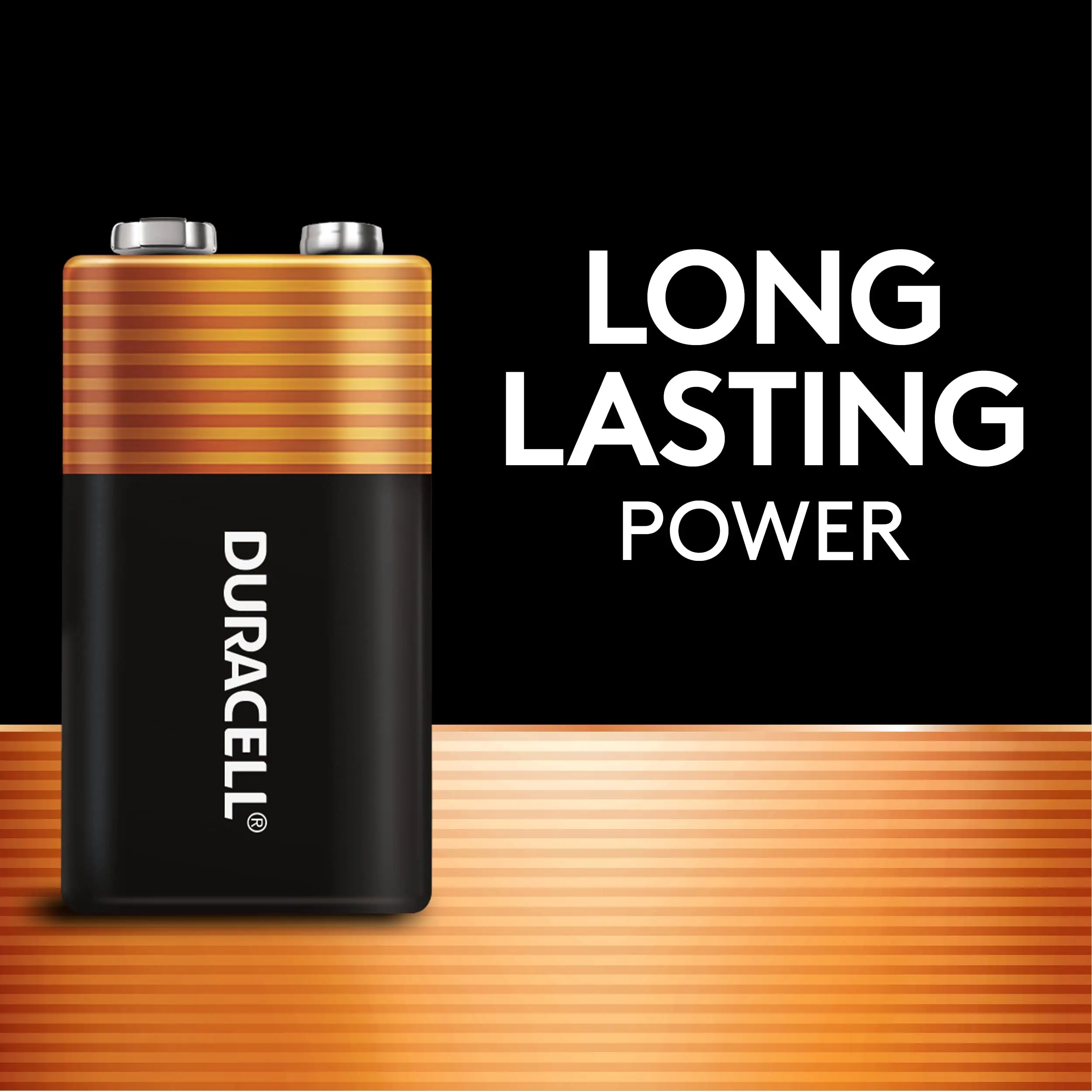
Duracell Coppertop 9V 6-Pack Review: 8.7/10 Value
A “4.8 out of 5 stars” average on Amazon sets a loud expectation for the Duracell Coppertop 9V Battery, 6 Count—and most of the available commentary reinforces a simple takeaway: dependable, everyday 9V power with a few recurring gripes around packaging and occasional shorter-than-expected longevity. Verdict: 8.7/10.
Quick Verdict
Yes (Conditional). If you want a mainstream 9V alkaline for household or office devices—especially smoke alarms and other “must work” gear—this is broadly framed as a safe pick. The “conditional” comes from scattered mentions of “packaging issues” and rare cases where batteries “not lasting as long as expected.”
| What mattered | What people liked | What people disliked |
|---|---|---|
| Reliability | “reliable and durable” messaging gets echoed across summaries | rare “shorter life spans in specific uses” |
| Storage life | aligns with “up to 5 years in storage” positioning | advice to “check expiration dates” keeps coming up |
| Everyday devices | commonly framed for smoke alarms, clocks, radios, alarms | none specific beyond general longevity variance |
| Corrosion concern | some third-party content claims reduced corrosion risk | not consistently corroborated by direct user quotes |
| Value | “6-pack quantity” seen as convenient for stocking up | price not “cheapest option” in at least one anecdote |
Claims vs Reality
Duracell and retailers lean hard on “long-lasting,” “reliable power,” and “5 years in storage.” Digging deeper into the provided sources, most of what’s available is product-copy-heavy—but a few cross-site summaries and one first-person anecdote clarify where reality tends to match the promise and where it wobbles.
Claim 1: “Guaranteed for 5 years in storage.”
Officially, the listing says Duracell “guarantees each Coppertop 9-volt alkaline battery to last 5 years in storage.” Third-party Q&A-style coverage echoes that sentiment and frames it as ideal for “emergency gear or devices you don't use every day but need to work whenever you need them.” A ShopSavvy Answers page advises buyers to “check expiration dates to ensure you're getting a fresh batch,” suggesting that shelf-life confidence is strongest when buyers verify date codes rather than assuming every pack is equally fresh.
For preparedness-minded users—storm-season kits, backup smoke alarms, or rarely-used radios—the implied value is fewer unpleasant surprises. The same ShopSavvy Answers summary reinforces that many people like “their long shelf life and steady power,” but it also concedes “a few minor complaints” exist.
Claim 2: “Reliable power for everyday devices.”
Duracell’s positioning is broad: “toys, remote controls, flashlights, clocks and radios, portable electronics.” Multiple third-party blurbs repeat this and specifically call out smoke alarms and alarm systems as typical use cases. That framing matters because those devices punish inconsistency—no one wants a smoke detector chirping at 2 a.m.
A musician-focused anecdote on Sharvibe goes further than generic copy and offers a narrative of consistent performance across both “effects pedals and tuners” and home devices. The author, Rachel Cooper, wrote: “Duracell Copper tops consistently outlast the competition,” and also claimed they were “rock-solid in our smoke detectors (no annoying midnight chirps!).” That’s one of the few direct, experience-based statements in the dataset.
Claim 3: “Long-lasting” (in practice).
Here’s where the most nuance appears. While the general story is positive—high average ratings and repeated “dependability” language—ShopSavvy’s summary acknowledges exceptions: “the batteries not lasting as long as expected in certain cases,” and mentions that some people noticed “shorter life spans in specific uses.” While not tied to a named reviewer in the data provided, it signals that “long-lasting” is context-dependent, especially if the application is more demanding than a low-drain smoke alarm or clock.
Cross-Platform Consensus
Universally Praised
A recurring pattern emerged across retailer descriptions and aggregator-style summaries: these 9V Coppertops are repeatedly positioned as the “default reliable option” for a wide set of devices, with smoke alarms and household electronics popping up again and again. For homeowners, that translates into fewer emergency runs to the store and less anxiety about the one device you can’t afford to have fail.
On Amazon, the available data emphasizes “long-lasting batteries designed for dependability,” and highlights that it’s meant to “power everyday devices throughout the home.” Even when the text is clearly marketing language, the same themes are echoed in secondary sources. ShopSavvy Answers says these batteries are “pretty versatile,” and that they’re “known for their reliability, especially in important devices like smoke detectors and other emergency equipment.” For a parent setting up multiple smoke detectors, or a renter swapping a building’s required 9V alarms, that kind of “known for reliability” framing is the core reason people gravitate toward a brand-name pack rather than bargain generics.
Stock-up convenience is another consistent angle. The Kiitn post (promotional in tone) claims “users appreciate the 6-pack quantity, making it convenient for stocking up and minimizing storage needs.” The same idea is implicit in the product itself: a 6-count 9V pack is aimed at people maintaining multiple devices—smoke detectors, alarm systems, and spare drawers—rather than single-device replacement.
One of the only detailed first-person narratives comes from Sharvibe. While it reads like a blog-style testimonial rather than a verified marketplace review, it still provides a concrete user story about why a certain type of buyer chooses Coppertop. Rachel Cooper wrote: “As a musician who's constantly burning through 9Vs in effects pedals and tuners, I've tried them all—but Duracell Copper tops consistently outlast the competition.” For gigging musicians, the implied benefit is simple: fewer failures mid-set and fewer battery swaps between rehearsals.
After those narratives, the praise clusters into a few repeatable themes:
- Dependability in “must-work” devices (smoke alarms, alarms)
- Practical value of buying a multi-pack
- Brand trust and familiarity driving repeat purchases
Common Complaints
The dataset doesn’t include a rich set of named, negative reviews, but it does contain repeated references to two complaint categories: packaging/age freshness, and occasionally disappointing runtime.
ShopSavvy Answers flags “packaging issues” and says “some have mentioned getting batteries with outdated packaging,” which is less about the battery chemistry and more about the buying experience—especially for shoppers who assume a popular listing always ships the newest stock. For emergency-prep buyers who might stash batteries for years, the worry isn’t cosmetic packaging; it’s confidence that the “5 years in storage” claim begins from a truly fresh manufacture date. That’s why the same source advises: “Just make sure to check expiration dates to ensure you're getting a fresh batch.”
The second complaint theme is longevity variance. Again, ShopSavvy Answers notes “the batteries not lasting as long as expected in certain cases,” and references “shorter life spans in specific uses.” For users putting 9V batteries into higher-drain devices—some audio gear, active instruments, or certain test equipment—that gap between expectation and reality is where frustration would concentrate, even if those cases are described as “pretty rare compared to the abundance of positive experiences.”
Summarizing what’s actually present (without inventing missing voices), the complaint pattern looks like this:
- “Packaging issues” that make buyers question freshness
- Rare reports of “shorter life spans” depending on the device
Divisive Features
Price and “value” come through as the most divisive theme in the provided content. The product is repeatedly presented as reliable and trusted, but not always the cheapest.
Sharvibe’s Rachel Cooper frames the tradeoff directly: “While not the cheapest option, the extended lifespan makes them more economical in the long run.” That’s the pro-price argument: pay more upfront for fewer replacements and fewer failures. On the other side, deal-driven posts like Kiitn highlight discounts and “affordability,” suggesting that at least some buyers are waiting for promotions to make the purchase feel like a bargain.
In other words, buyers who treat 9V batteries as a commodity may balk at per-battery cost, while those powering smoke detectors or mission-critical devices justify it as a reliability premium.
Trust & Reliability
Digging deeper into trust signals, the strongest “reliability” indicator in the dataset is the high Amazon rating context (4.8/5 shown on the product listing data). The narrative around “#1 trusted battery brand” appears repeatedly in manufacturer copy, and it’s reinforced by the way third-party summaries talk about these batteries being a common choice for smoke detectors and emergency equipment.
However, the provided “Trustpilot (Verified)” data is not actually Trustpilot reviews—it repeats ShopSavvy Answers content rather than verified buyer narratives. Because there are no concrete scam-pattern reports or verified Trustpilot-style complaint clusters in what you provided, the trust discussion here hinges on two practical cautions that do appear: verify freshness and watch for packaging/stock age. The most actionable trust-related guidance comes straight from ShopSavvy Answers: “check expiration dates to ensure you're getting a fresh batch.”
Long-term durability stories from Reddit also aren’t actually present in the dataset as Reddit user posts; the “Reddit (Community)” section mostly repeats product-copy sources. So while there’s lots of “reliable” language, there aren’t true “6 months later” community updates included here.
Alternatives
Competitors aren’t clearly named in the user-feedback portions of the dataset. The closest comparable mentioned is the general category contrast in the CHOICE battery testing write-up, which notes that “lithium batteries may give you better performance overall,” but argues cost can make them “a poor value proposition” depending on use case. That’s not a named alternative product, but it is a direct competitor category: lithium vs alkaline.
There’s also indirect mention of “Procell” and other Duracell variants in marketplace listings, but those appear as market items rather than user-discussed alternatives. Without explicit user feedback comparing a specific competing 9V brand (like Energizer) in the provided data, the safest comparison is category-level: Coppertop alkaline for general purpose versus lithium for high-drain or extreme reliability scenarios.
Price & Value
The Amazon spec block shows a list price context around $25.25 for a 6-pack (about $4.21/count as displayed), while other scraped retail contexts show different price points (e.g., $22.46 on TopProducts-style pages, and a deal-driven figure of $15.41 mentioned on Kiitn). The spread suggests that “value” depends heavily on timing and retailer.
On resale/secondary markets, eBay listings show lots of Duracell 9V inventory with explicit expiration dates (e.g., “expires 2027,” “exp. March 2029”), which reinforces the community habit of treating freshness/expiry as part of the value equation. For bargain hunters, the buying strategy implied by the market data is to prioritize clearly stated expiration dates and sealed packaging rather than focusing only on per-unit cost.
Buying tips that are directly supported by the dataset:
- ShopSavvy Answers: “check expiration dates to ensure you're getting a fresh batch.”
- eBay listings: seek lots where expiration is clearly disclosed (many listings emphasize it).
FAQ
Q: What devices do people most often use Duracell Coppertop 9V batteries in?
A: Smoke alarms come up repeatedly. ShopSavvy Answers says you’ll “often find these 9v batteries used in things like smoke alarms, clocks, and radios,” and highlights reliability “especially in important devices like smoke detectors and other emergency equipment.”
Q: Do these really last 5 years in storage?
A: The official listing says Duracell “guarantees each Coppertop 9-volt alkaline battery to last 5 years in storage.” ShopSavvy Answers echoes the idea but adds a practical caveat: “check expiration dates to ensure you're getting a fresh batch,” implying storage-life confidence depends on receiving fresh inventory.
Q: What are the most common complaints?
A: The most repeated negatives are “packaging issues” and occasional disappointment with runtime. ShopSavvy Answers notes “a few minor complaints” including “getting batteries with outdated packaging” and “the batteries not lasting as long as expected in certain cases.”
Q: Are these good for musicians and audio gear?
A: At least one anecdotal source says yes. Sharvibe author Rachel Cooper wrote: “As a musician who's constantly burning through 9Vs in effects pedals and tuners… Duracell Copper tops consistently outlast the competition.” That’s a single narrative, but it’s one of the few detailed usage stories provided.
Final Verdict
Buy if you’re a homeowner maintaining smoke detectors, alarms, or emergency radios and you want mainstream 9V alkaline reliability backed by a high Amazon rating and consistent “dependability” framing across sources. Avoid if you need guaranteed maximum runtime in higher-drain applications and don’t want any risk of “shorter life spans in specific uses.”
Pro tip from the community: ShopSavvy Answers advises, “Just make sure to check expiration dates to ensure you're getting a fresh batch.”