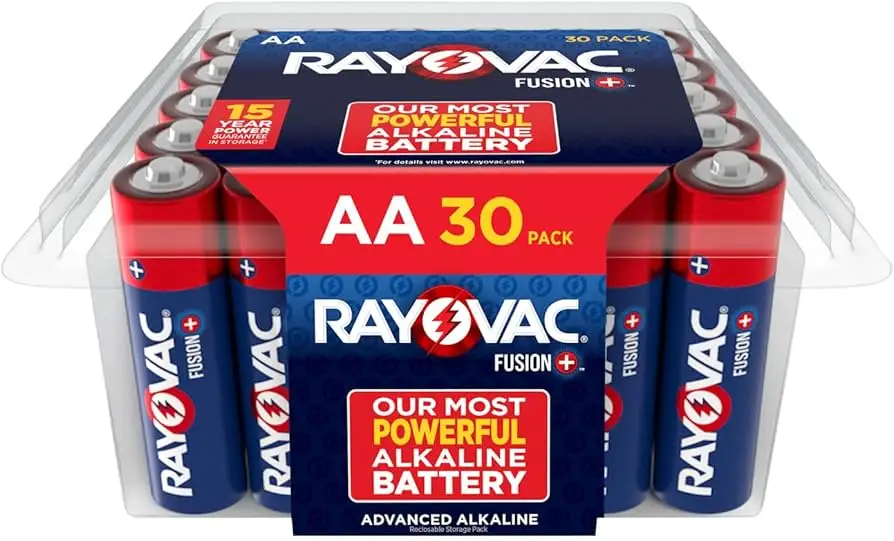
Rayovac Fusion AA Batteries Review: Conditional Buy (7.6/10)
“Damaging leak not prevented!” is the kind of line that turns a routine battery purchase into a device-saving gamble. Rayovac Fusion AA Batteries (30 Pack) lands as a Conditional buy for high-drain use—praised for strong runtime and value, but shadowed by a real (and loudly disputed) leak narrative. Score: 7.6/10
Quick Verdict
Several buyers call these premium alkalines a “mid-priced” alternative that “perform like more expensive competitors,” while a smaller set describe catastrophic leakage and device damage.
| Verdict | Evidence from user feedback |
|---|---|
| Best for | High-use devices (flashlights, security cams, controllers) |
| Not ideal for | Anyone highly risk-averse about leaks in expensive devices |
| Biggest pro | Strong performance at value pricing |
| Biggest con | Leak complaints contradict “designed to prevent” claims |
| Packaging note | Some Amazon shipments arrived as “loose batteries” |
| Overall buy call | Conditional: good value, watch for leakage reports |
Claims vs Reality
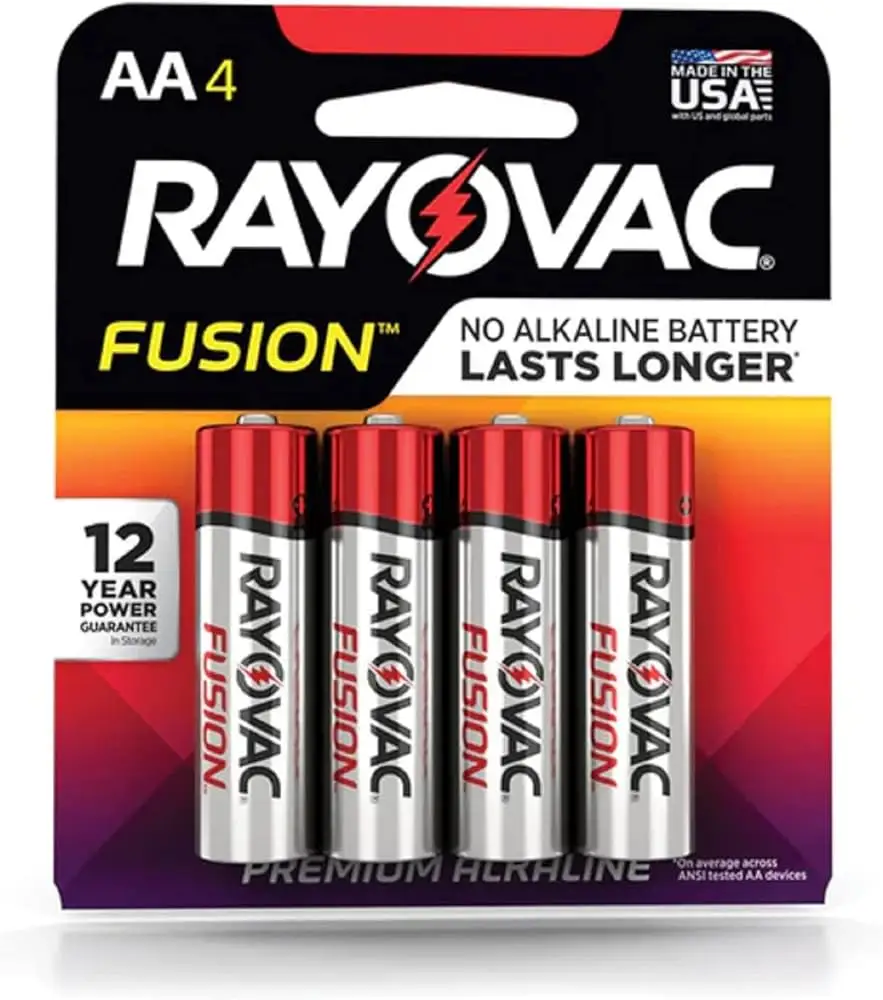
Rayovac’s marketing language leans hard into reliability: “designed to prevent damaging battery leaks,” “tested twice for reliability,” and a long storage promise (10 years in multiple listings, and “15 years in storage” on Rayovac/Walmart pages). Digging deeper into user reports, that story mostly holds—until it doesn’t. The feedback splits between users who say they’ve had “no leakage” at all, and users who say leaks happened quickly and caused device damage.
One major claim is leak prevention. On the positive side, an Amazon reviewer framed these as dependable for continuous-use gear: “have a lot of power… do not leak… wireless security cameras, flashlights…” A Reddit commenter (no username provided in the dataset) echoed the same theme from everyday use: “never seen a leaky aaa or aa in the packs i’ve purchased.” But the contradiction is blunt: an Amazon reviewer warned, “leaked before i even got to use any,” describing “virtually all of these had ‘leaked’” after being stored “in a room-temperature cabinet.”
A second claim is premium, high-drain performance. Here, user feedback is more consistently aligned with the product positioning—especially for people running gear that chews through AAs. A verified buyer on Amazon wrote, “kind of expensive but they last far longer than ‘regular’ batteries,” and another pushed the comparison further: “these batteries beat the best duracell batteries out there.” Yet the community also includes an enthusiast-style capacity test that undercuts the hype. Reddit user feedback (no username provided) claimed: “862 mah for fusion, 930 mah for high energy… so, yeah, not impressed,” adding that “the only really ‘high drain’ alkaline out there is the duracell optimum.”
The storage-life narrative is also messy in the broader product ecosystem. While official pages cite long guarantees (10 years on multiple listings and “15 years in storage” for Fusion+ on Rayovac/Walmart), user feedback focuses less on “still good years later” and more on whether batteries leak while sitting. That’s where the stakes rise: one Amazon reviewer found widespread leakage within “8-10 weeks,” a timeline that clashes with any long-storage promise.
Cross-Platform Consensus
A recurring pattern emerged across platforms: when these batteries work well, they’re described as a value substitute for pricier “name brand” cells in high-use devices. When they go wrong, the complaints aren’t subtle—they involve leakage, corrosion, and device damage. That makes the purchase decision feel less about raw runtime and more about tolerance for risk.
Universally Praised
Power delivery in real devices is the headline for supporters. For people running flashlights, security equipment, and other always-on or high-demand electronics, users repeatedly framed Fusion AAs as strong performers. A verified buyer on Amazon described them as “excellent batteries for flashlights and heavy-use devices like security cameras,” emphasizing they “have a lot of power” and are “more than capable of running electronics that require continuous use.” For a homeowner relying on wireless security cameras, that kind of comment translates into fewer battery swaps and less downtime—especially compared with “regular” alkalines.
Value is the second pillar. Multiple reviewers argued the “mid-priced” positioning is exactly the point: you get performance that rivals premium brands without the premium sticker. A verified buyer on Amazon summarized it as “mid-priced batteries perform like more expensive competitors,” pointing out that price-per-cell matters but so does “longevity and reliability.” Another buyer went more personal: “i will never buy energizer… or any other brand… these are best,” adding that they “beat changing them out so often.” For families burning through AAs in toys and remotes, the promise is simple: fewer emergency battery runs.
Real-world dependability shows up in niche use cases too. A verified buyer on Amazon tied Fusion AAs to live performance gear: “in our band we go through a lot of batteries… i use these for in ear monitors. they are fantastic! they last longer than the name brand batteries and are significantly cheaper.” That story matters because musicians often treat battery failure as show-stopping, not just inconvenient. The same reviewer added that their “son loves these batteries for his xbox controller,” saying they “seem to last much longer than rechargeable batteries or other name brand batteries,” highlighting a common household scenario: controllers that die at the worst possible moment.
After the narrative, the praise clusters into a few repeatable themes:
- Strong output for “heavy-use” gear (flashlights, wireless security cameras)
- Value compared with “more expensive competitors”
- Confidence from users replacing Energizer/Duracell for routine needs
Common Complaints
Leakage is the complaint that changes the tone from bargain-hunting to damage control. While marketing says “designed to prevent damaging leaks,” multiple Amazon reviewers described the opposite. One verified buyer wrote: “leaked before i even got to use any,” claiming that after “8-10 weeks” of room-temperature storage, “virtually all of these had ‘leaked’… dried-out electrolyte” on terminals. For anyone stocking up a 30-pack for emergency preparedness, that story hits hard: the batteries weren’t even deployed before they became suspect.
Other users reported not just leakage, but device damage. A verified buyer on Amazon warned: “damaging leak not prevented!” adding, “this particular brand has caused more damaging leaks on several of my devices than any other brand i have ever used,” citing damage to “a tv remote control that is used everyday.” For owners of expensive electronics, that kind of complaint reframes the purchase as a risk equation: saving money per AA isn’t worth it if a remote, camera, or smart device gets corroded contacts.
A smaller but still real pain point is fulfillment and packaging rather than battery chemistry. One Amazon reviewer praised performance—“good performance at a good price”—but complained about shipping: “deliver these in an envelope instead of a box… i basically got a gag full of loose batteries.” It’s not a product flaw in the strictest sense, but it affects perceived quality and raises questions for giftability or long-term storage if packaging arrives damaged.
Common complaint themes, distilled:
- Reports of early leakage even in storage
- Reports of corrosion and device damage
- Shipping/packaging complaints (“loose batteries”)
Divisive Features
“Leak resistance” is the most divisive feature because it produces mutually exclusive outcomes. Some users frame leakage as a non-issue and even a reason to buy. A verified buyer on Amazon listed “do not leak” as a key benefit, and Reddit user feedback (no username provided) said they’d “never seen a leaky aaa or aa in the packs i’ve purchased.” For these users—often running remotes, locks, or routine household gear—Fusion AAs come off as a safe alternative to pricier brands.
But other users describe the exact opposite experience. A verified buyer on Amazon called the leak-prevention claim out directly: “these batteries ‘claim’… ‘designed to prevent leaks’,” then concluded, “i will not buy this brand again.” The contradiction isn’t subtle: while the official line is prevention, multiple user reports describe leaks as a defining failure mode.
High-drain superiority is also debated. Some buyers feel Fusion legitimately “lasts longer than ‘regular’ batteries,” but at least one Reddit commenter (no username provided) dismissed the performance delta after capacity testing: “so, yeah, not impressed,” arguing Fusion wasn’t meaningfully better than Rayovac “high energy,” and that “duracell optimum” is the only standout—“for a lot of extra money.” For shoppers trying to pick “the best AA for high drain devices,” the community doesn’t agree that Fusion is automatically the top alkaline.
Trust & Reliability
The long-term trust question revolves around leakage—because users aren’t just debating minutes of runtime, they’re debating whether a battery can quietly destroy devices. Digging deeper into the strongest negative Amazon account, the reviewer didn’t just complain; they described a customer-service process: the company requested “photos of the batteries showing date codes… batch codes,” then sent “two $10 coupons.” That story ends with frustration about coupon restrictions (“only use one coupon per package”), which for that buyer compounded the original failure into a brand-trust break.
On the other side, Reddit community chatter includes durability-style reassurance—people using them “exclusively” for specific recurring needs. One commenter (no username provided) said: “i use them exclusively for my remote door locks… they seem to stand up much better than the hdxs we had been using.” That kind of “daily life” use case signals confidence built over repeat cycles, not just a single fresh pack.
What isn’t present in the provided data is a clear Trustpilot pattern for Rayovac itself; the Trustpilot row repeats the Gun Values Board review text rather than distinct verified-customer trust complaints. So the reliability picture here is driven primarily by Amazon customer reviews and Reddit community anecdotes, and it remains sharply split between “no leakage” experiences and “device-damaging” leak reports.
Alternatives
The most direct alternatives come from what users themselves brought up: Duracell, Energizer, and Duracell Optimum. For shoppers coming from “plain ol’ Duracells,” the Reddit discussion captures the curiosity and skepticism. One commenter (no username provided) framed Fusion as “rated for high drain devices,” but suggested even “the yellow rayovacs… seem to work just as well” when on sale—implying that Rayovac’s own lineup can overlap in practice depending on pricing.
For people chasing the absolute best high-drain alkaline performance, Reddit user feedback (no username provided) singled out one product: “the only really ‘high drain’ alkaline out there is the duracell optimum,” but acknowledged it comes “for a lot of extra money.” Meanwhile, Amazon reviewers who love Fusion often frame it as beating or matching big brands: one said Fusion “beat the best duracell batteries out there,” while another band user said they last longer than “name brand batteries” and are “significantly cheaper.” The alternative decision, based on this dataset, hinges on whether you prioritize maximum performance (Optimum) or a value-performance blend (Fusion), and how much weight you place on leak anecdotes.
Price & Value
The value narrative is strongest when shoppers look at cost per cell. The Amazon listing data shows a 30-pack around $16 (about $0.53 per battery), while Walmart’s listing shows a lower current price ($11.36, about $0.379 per battery). That spread matters because people often buy 30-packs specifically to stockpile, and small per-cell differences add up.
Community perception of value is consistent: even when some call them “a bit more $$,” the defense is longevity. A verified buyer on Amazon wrote, “kind of expensive but they last far longer,” and another said paying more “beats changing them out so often.” For high-drain users—flashlights, security cameras, Xbox controllers—those comments translate into fewer replacements and lower hassle cost.
Resale trends (from eBay listings) show wide pricing variability, including higher-priced listings with shipping that can dwarf the battery cost. That suggests a practical buying tip: in this category, resale/marketplace pricing can be irrational compared to mainstream retail. If you’re buying for routine household use, the dataset points toward watching big-box pricing swings rather than paying inflated marketplace totals.
Buying tips implied by user chatter:
- If you’re comparing “high drain” alkalines, some users only see a big leap with Duracell Optimum—but at a premium.
- If you’re stocking up, pay attention to retailer price swings (Amazon vs Walmart pricing in the data varies a lot).
- If shipping quality matters, note the Amazon complaint about “loose batteries” in an envelope.
FAQ
Q: Are Rayovac Fusion AA batteries actually good for high-drain devices?
A: Yes—many users describe strong results in “heavy-use devices like security cameras” and flashlights. A verified buyer on Amazon said they’re “more than capable of running electronics that require continuous use.” Some Reddit feedback is skeptical, claiming test results were “not impressed” versus other alkalines.
Q: Do they really prevent leaks like the packaging claims?
A: Conditional. Some buyers explicitly praised that they “do not leak,” but others reported the opposite. A verified buyer on Amazon wrote “leaked before i even got to use any,” and another said “damaging leak not prevented!” While marketed as leak-resistant, user experiences conflict.
Q: Are they a better value than Duracell or Energizer?
A: Often yes, according to the reviews provided. A verified buyer on Amazon called them “mid-priced batteries” that “perform like more expensive competitors,” and a band user said they last longer than “name brand batteries” while being “significantly cheaper.” Others still prefer premium options like Duracell Optimum.
Q: What devices do people use them in most?
A: The feedback highlights flashlights, wireless security cameras, Xbox controllers, and in-ear monitor packs for band gear. A verified buyer on Amazon specifically cited “wireless security cameras,” while another described using them for “in ear monitors,” and mentioned an “xbox controller” lasting longer than other options.
Q: Any issues with ordering online?
A: Some buyers complained about fulfillment rather than battery performance. A verified buyer on Amazon said the batteries arrived “in an envelope instead of a box,” resulting in “loose batteries.” If storage condition and packaging matter to you, that shipping experience may be a factor.
Final Verdict
Buy if you’re a high-drain, high-usage household—security-camera owners, flashlight users, gamers—who wants a value-priced premium alkaline. A verified buyer on Amazon summed up the upside: “good performance at a good price,” and another argued they “last far longer than ‘regular’ batteries.”
Avoid if you’ve had past device damage from battery leaks or you’re placing AAs in expensive or hard-to-clean electronics. The strongest warnings are explicit: “leaked before i even got to use any” and “damaging leak not prevented!”
Pro tip from the community: if you’re chasing the very best “high drain” alkaline regardless of price, Reddit feedback (no username provided) points to “duracell optimum” as the standout—“for a lot of extra money.”