Rayovac C Batteries 12 Count Review: Conditional Buy 7.8/10
“Perfect for the devices I needed to power up,” one Best Buy reviewer wrote—yet another Home Depot shopper says a “new” Rayovac battery made their detector “flashed low battery” after just minutes. That gap between confidence and doubt is the real story around Rayovac C Batteries, 12 Count—a value-leaning C-cell pack that many buyers treat as “as good as other brands,” but not everyone trusts for mission-critical use. Verdict: Conditional buy — 7.8/10.
Quick Verdict
A recurring pattern emerged across retailer feedback: people like the “good price” and everyday performance in common devices, but a minority report early warnings in detectors and remain cautious about reliability in sensitive gear. The official listings emphasize professional use, leak resistance, and long shelf life, while some user stories focus more on whether they simply “work great” where it counts.
The most consistent positive theme is practical: shoppers buying bulk C batteries for “vintage toys,” flashlights, or household electronics often feel they’re getting name-brand-like performance for less. On the flip side, a few comments around detectors and battery freshness highlight why some buyers treat these as “everyday” cells rather than “trust-your-safety-device” cells.
Yes/No/Conditional: Conditional — great for routine devices; be cautious for sensitive detectors if you’ve had early-low-battery issues before.
| What users emphasize | Pros (from feedback) | Cons (from feedback) |
|---|---|---|
| Value vs big brands | “good price…as good as other brands” (Best Buy) | Some feel premium brands may be safer for critical use |
| Everyday performance | “batteries work great…perfect for the devices I needed” (Best Buy) | One report: detector “flashed low battery” quickly (Home Depot) |
| Longevity in low/medium drain | Clock ran “four months” vs others “two months” (Home Depot) | Non‑rechargeable (TheGunZone review) |
| Storage/packaging | Reclosable packaging noted in listings (Amazon) and praised as easy to store (TheGunZone) | Not a frequent complaint in provided user quotes |
Claims vs Reality
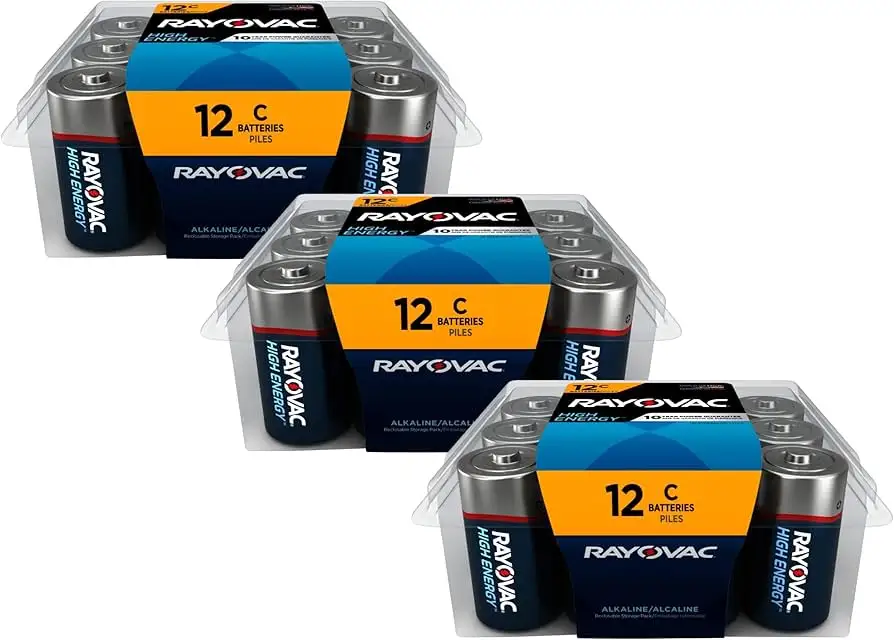
Rayovac’s product pages frame these as “specially engineered for professional use” with “reclosable” packaging and a “10 year” storage life (Amazon listings). The marketing is clear: buy in bulk, store them neatly, count on long-lasting alkaline power in devices like flashlights and wireless equipment. Digging deeper into user reports, many shoppers echo that everyday competence—especially when they’re powering typical household gear.
But the “professional” positioning collides with a few reports that read like caution flags. A Home Depot reviewer described installing a “new battery in new stud detector” and said they “used it for 5 minutes and detector flashed low battery.” That’s not a lab test, but it’s exactly the kind of moment that shapes trust: if your device is sensitive to voltage sag or battery freshness, one bad experience can outweigh dozens of normal ones.
Another major claim across listings is leak protection. Amazon copy says these batteries are “designed to prevent damaging battery leaks & tested twice prior to shipment” and “hold power up to 10 years in storage.” In the provided community-style review hosted on TheGunZone, the writer reinforces that peace-of-mind angle, saying: “I have not experienced any leaking with these batteries, which is a great plus.” While that’s one anecdote, it aligns with the broader marketing story—leakage anxiety is a real driver for buyers stocking cells for flashlights, radios, and emergency kits.
Finally, Rayovac repeatedly positions itself as comparable to major brands. One Amazon spec section claims “Rayovac lasts as long as Energizer Max,” and a Best Buy reviewer similarly summarized the value proposition as “as good as other brands.” Still, that “as good” framing isn’t universal; the most pointed pushback in the dataset comes from those early-warning detector stories, where performance isn’t judged by “how long a toy runs,” but by whether an alarm accepts the battery as healthy.
Cross-Platform Consensus
Universally Praised
“Good price” isn’t just a throwaway phrase—it’s the backbone of why shoppers keep returning to these packs. On Best Buy, one reviewer said: “batteries - good price…batteries at a good price as good as other brands.” For households that burn through C-cells in multiple devices, that message translates into a simple buying behavior: stock up, keep spares handy, and stop paying a premium for brand labels.
Performance in everyday devices is the second theme that shows up repeatedly in plain, practical language. That same Best Buy review adds: “batteries work great…perfect for the devices I needed to power up.” For users powering “vintage toys and electronics” (Best Buy product description), that reliability matters because kids’ toys, portable radios, and lanterns don’t tolerate constant battery swaps. The story here isn’t about chasing maximum runtime; it’s about avoiding the annoyance of dead batteries at the wrong time.
Longer life in low/steady drain use also appears in a concrete Home Depot comparison. One shopper wrote: “i have rayovac c-cell for a mantle clock…and it has been in service for four months. duracell and eveready c-cells last two months before the clock loses time.” For buyers with clocks, radios, or similar steady-draw devices, that’s a compelling narrative: fewer replacements, fewer interruptions, and less time fiddling with battery doors.
Some feedback also praises storage practicality, which matters more than it sounds for bulk packs. The TheGunZone reviewer emphasized they “really appreciate the packaging…how easy they are to store without the packaging falling apart,” and Rayovac’s own listings highlight a “reclosable container” designed to “organize and protect” cells (Amazon). For people keeping a household battery drawer or an emergency kit, storage convenience becomes a real feature, not marketing fluff.
Praised themes (from provided feedback):
- Value: “good price…as good as other brands” (Best Buy)
- Everyday reliability: “batteries work great” (Best Buy)
- Longevity in clocks: “in service for four months” (Home Depot)
- Storage convenience: “easy to store” (TheGunZone)
Common Complaints
The sharpest complaint in the dataset is about early low-battery indicators in detectors. A Home Depot reviewer described a short test: “used it for 5 minutes and detector flashed low battery.” For users relying on stud detectors, smoke detectors, or other electronics that are picky about voltage thresholds, this kind of story lands hard. It suggests that even if most cells are fine, a weak unit in a multi-pack can trigger false alarms or immediate replacement.
Another “complaint,” though more of a tradeoff, is non-rechargeability. The TheGunZone review lists as a con: “non‑rechargeable: requires replacement once depleted, adding to waste.” For frequent battery users—camping lantern owners, workshop flashlights, or people maintaining lots of devices—that means ongoing cost and disposal. It’s not a Rayovac-specific flaw, but it does show up as a practical negative in the provided feedback.
Finally, while many people call them comparable to top brands, not everyone frames them as the best option for critical use. Even in positive retailer quotes, the language tends to be about adequacy—“as good as other brands”—rather than “better than everything else.” That matters because it implies many buyers view these as sensible staples for household needs, not necessarily premium cells for high-stakes equipment.
Complaint patterns (from provided feedback):
- Sensitive device warnings: “detector flashed low battery” quickly (Home Depot)
- Environmental/cost tradeoff: “non‑rechargeable” (TheGunZone)
Divisive Features
Brand equivalence is the biggest dividing line: some buyers treat Rayovac C batteries as essentially interchangeable with Duracell or Energizer in day-to-day use, while others implicitly reserve trust for the premium brands when devices are finicky. One Best Buy review describes them as “as good as other brands,” and another Best Buy snippet in the “Energizer C Battery” page context goes further, calling them “as good as duracell or energizer…never let me down…last long and well built.”
Yet the detector story from Home Depot pulls the other direction. Even if it’s a single report in the provided data, it represents the type of experience that can make buyers split their purchasing strategy: Rayovac for toys/flashlights, premium brands for alarms and detectors.
Another divisive point is “economy.” The TheGunZone reviewer flags that they “may not be the most economical” depending on retailer pricing, even while praising performance. That’s a reminder that “value” depends heavily on where you buy: the same 12-count pack can feel like a bargain in one listing and overpriced in another.
Trust & Reliability
A trust thread runs through the safety-device comments. The Home Depot dataset includes both confidence and skepticism: one reviewer said, “works well in smoke detectors,” while another described an immediate low-battery flash in a detector after minutes. Digging deeper into what that means for buyers: if you’re outfitting smoke alarms or water alarms across a condo, a single weak battery can create repeated chirps and false warnings—exactly the kind of nuisance that erodes trust.
Long-term reliability stories in the provided Reddit/community-style content (hosted on TheGunZone) skew positive, focused on consistent output and no leakage. The reviewer said they used them “daily” in a portable radio and that “the battery life has significantly outlasted cheaper alternatives,” adding: “I have not experienced any leaking with these batteries.” While it’s a single narrative, it aligns with the official “leak resistant” positioning (Amazon listings) and suggests many users experience the intended baseline: steady power and no mess.
Alternatives
The only clearly referenced competitors in the provided data are Energizer and Duracell (plus “Eveready” in the clock comparison). For buyers who prioritize absolute confidence in detector behavior, the premium-brand route is often chosen specifically to avoid early chirps and compatibility quirks. Still, the Rayovac value story is compelling when the use case is everyday: the Home Depot clock owner directly compared outcomes and found Rayovac lasting “four months” versus “two months” for Duracell and Eveready in their mantle clock.
For shoppers trying to choose based on reputation alone, the dataset shows two coexisting beliefs: Rayovac is “as good as duracell or energizer” for many, but some would still pick the premium option when a device is sensitive or the consequences of a weak cell are high.
Price & Value
On Amazon, the Rayovac UltraPro Industrial C 12-pack listing shows a discounted price of $10.19 (about $0.85/count) alongside a high star rating and large review volume (Amazon specs). Another Amazon Rayovac C 12-count listing is shown at $19.89 (about $1.66/count), illustrating how the exact SKU and seller can swing “value” dramatically even within the same brand and size.
Resale/market pricing snapshots from eBay list Rayovac C battery packs and related listings at varying prices (eBay market data), but these are market listings—not user reviews—so they mainly help illustrate that bulk and expiration dates can influence what people pay. One eBay listing explicitly highlights an expiration year (“EXP 2024”), which mirrors why some users care about freshness: for storage and emergency use, “manufacture dates” and shelf-life claims matter.
Buying tips implied by the feedback are simple: if you’re buying for a battery drawer, look for the best per-cell price and reclosable packaging; if you’re buying for detectors, consider testing a couple immediately—because the most frustrating stories start when a “new” battery triggers a low-battery warning right away.
FAQ
Q: Are Rayovac C batteries as good as Duracell or Energizer?
A: Sometimes, according to buyers. A Best Buy reviewer said they’re “as good as other brands,” and another described them as “as good as duracell or energizer…never let me down.” But one Home Depot user reported a detector “flashed low battery” quickly, suggesting results can vary by device.
Q: Do these Rayovac C batteries last a long time in low-drain devices like clocks?
A: Some users say yes. A Home Depot reviewer wrote their Rayovac C-cell in a mantle clock has been “in service for four months,” while “duracell and eveready” lasted “two months” before the clock lost time. That’s one user’s experience, but it’s a concrete long-run story.
Q: Are these good for flashlights, toys, and everyday household electronics?
A: Yes, based on multiple shopper comments. A Best Buy reviewer said the batteries “work great” and were “perfect for the devices I needed to power up.” Product descriptions also position them for toys and electronics, matching why many buyers choose a 12-pack.
Q: Do users mention leakage issues with Rayovac C batteries?
A: One provided long-form review reported no leaks. TheGunZone reviewer said, “I have not experienced any leaking with these batteries,” and official listings highlight leak-resistant design. The dataset provided doesn’t include a direct user complaint about leaking for this C-cell pack.
Q: Are Rayovac C batteries rechargeable?
A: No. TheGunZone review lists “non‑rechargeable” as a con, and the product listings describe them as single-use alkaline. For people burning through lots of batteries, that can mean more replacements and more waste compared with rechargeable options.
Final Verdict
Buy if you’re a value-focused household stocking C cells for flashlights, “vintage toys,” portable radios, or clocks—and you like the idea of “good price…as good as other brands,” as a Best Buy customer put it. Avoid if you’re highly sensitive to early low-battery warnings in detectors; one Home Depot user said their detector “flashed low battery” after “5 minutes.”
Pro tip from the community: if you’re buying a 12-pack for storage, lean into the “reclosable” pack concept and keep them organized—because, as one reviewer summed up, they’re “perfect for the devices I needed to power up,” but the most cautious users still test them first in picky devices.